
作者: admin

  • Gang faces trial over Dh1.26-million heist in fake police patrol robbery in Dubai

    Gang faces trial over Dh1.26-million heist in fake police patrol robbery in Dubai

    Dubai’s judicial system is prosecuting a criminal syndicate for orchestrating an elaborate robbery scheme involving police impersonation and the theft of Dh1.26 million. The incident, which occurred on December 14, 2025, targeted an Afghan businessman returning from Al Ain with substantial cash proceeds collected from various commercial establishments.

    According to prosecution documents, the perpetrators employed a sophisticated deception strategy by utilizing a white SUV equipped with unauthorized flashing red and blue emergency lights. The victim, traveling with his wife along the Dubai-Al Ain Road near Margham bridge, mistakenly identified the vehicle as an official police patrol and complied with instructions to pull over.

    One accomplice, dressed in traditional Emirati attire, approached the vehicle claiming affiliation with police investigations. Under the pretense of legitimate law enforcement activity, the victim was instructed to transfer to the suspects’ vehicle while another gang member assumed control of his Toyota Corolla. Both vehicles proceeded to a secondary location near a mosque where the criminals conducted an illegal search and confiscated a bag containing the substantial cash amount.

    Dubai law enforcement agencies initiated a comprehensive investigation following the victim’s formal complaint, resulting in the successful identification and apprehension of the suspects. During interrogation, the defendants admitted to deliberately impersonating police personnel and utilizing fraudulent emergency equipment to exploit public trust in law enforcement institutions.

    The prosecution has emphasized the calculated nature of the criminal operation, noting the deliberate exploitation of police authority symbolism to facilitate the robbery. The case highlights ongoing challenges in combating sophisticated impersonation crimes and demonstrates Dubai’s rigorous approach to maintaining public security. All implicated individuals now face severe legal consequences including charges of official impersonation and organized theft.

  • Danish veterans stage protest outside US Embassy

    Danish veterans stage protest outside US Embassy

    COPENHAGEN — Hundreds of Danish military veterans assembled in a solemn silent demonstration outside the U.S. Embassy in Copenhagen on Saturday, expressing profound dismay over the Trump administration’s controversial remarks regarding Greenland and perceived disrespect toward Denmark’s combat contributions to joint international operations.

    The gathering, organized by Danish Veterans & Veteran Support, commenced at a memorial dedicated to fallen Danish service members before participants marched silently to the embassy grounds. There, they observed five minutes of symbolic silence—each minute honoring a different branch of Denmark’s defense and security forces: army, air force, navy, emergency management agency, and police.

    In an official statement, the veterans’ organization articulated deep disappointment with the current U.S. administration: “Denmark has consistently stood alongside the United States, responding to calls for support in global crisis zones. We now feel both betrayed and mocked by a White House that deliberately overlooks Denmark’s combat partnership with American forces.”

    The statement further emphasized the emotional impact: “No words can adequately convey our pain at seeing Denmark’s sacrifices in the struggle for democracy, peace, and freedom being dismissed in Washington.”

    The protest reflects escalating tensions between the two NATO allies, particularly regarding U.S. suggestions about acquiring Greenland and questioning Denmark’s capability to protect Western security interests in the Arctic region. These diplomatic frictions intensified earlier in the week when U.S. Embassy staff removed 44 Danish flags placed to honor each Danish soldier killed in Afghanistan—the highest per capita casualty rate among coalition forces. While the State Department explained the removal as standard protocol following demonstrations, the action further aggravated diplomatic sensitivities.

  • US Justice Dept releases documents, images, videos from Epstein files

    US Justice Dept releases documents, images, videos from Epstein files

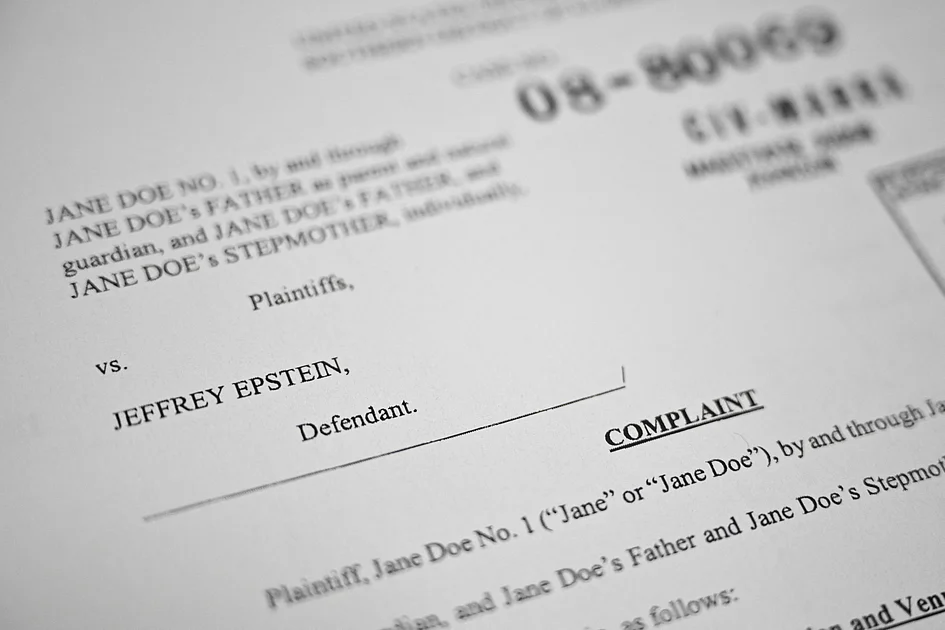
    The U.S. Justice Department initiated the substantial release of documents from the Jeffrey Epstein case on Friday, disclosing millions of pages alongside photographs and video evidence. This development intensifies the politically charged atmosphere surrounding President Donald Trump, who has been persistently linked to the controversial financier.

    Deputy Attorney General Todd Blanche emphasized the administration’s non-interference during a press conference, stating, “The White House played no role in directing our review process—including decisions regarding redactions.” He further asserted that no protective measures were extended to President Trump or any other individuals mentioned in the files.

    Among the released materials are over three million documents, 180,000 images, and 2,000 videos. The Justice Department noted that some submissions contained what it characterized as “untrue and sensationalist claims” about the 79-year-old president, which were presented to the FBI prior to the 2020 election.

    Blanche confirmed that all images of female victims, except those of convicted accomplice Ghislaine Maxwell, have been redacted to protect identities. However, a coalition of 19 survivors issued a statement contending that their identifying information remains inadequately protected, while the men implicated in the abuse continue to be shielded.

    Jeffrey Epstein, the financier accused of orchestrating a widespread sex trafficking operation, died in prison in 2019 under circumstances ruled a suicide. Previous document releases have revealed associations with high-profile figures including business leaders, celebrities, and politicians such as Bill Gates, Woody Allen, and former President Bill Clinton.

    Notably, a draft email within the files contained allegations about Gates’ personal life, which the Gates Foundation vehemently denied as “absurd and false.” Other communications detailed Epstein’s introductions involving Steve Tisch, a prominent film producer and co-owner of the New York Giants.

    The disclosure follows the Epstein Files Transparency Act, which mandated full document release by December 19. Blanche attributed delays to the extensive redaction process necessary to safeguard the identities of Epstein’s alleged victims, believed to number over 1,000.

  • Pokémon cancels event at controversial Japan shrine following backlash

    Pokémon cancels event at controversial Japan shrine following backlash

    A planned Pokémon trading card tournament at Tokyo’s Yasukuni Shrine has been abruptly canceled following significant backlash from China and subsequent apologies from The Pokémon Company. The event, organized by a third-party vendor but promoted on the official Pokémon website, was scheduled to take place at the controversial shrine that honors Japan’s war dead—including convicted war criminals from World War II.

    The Pokémon Company issued a formal statement on Friday acknowledging the incident as a serious oversight. ‘The event should not have been held in the first place,’ the company declared, attributing the promotional error to ‘a lack of due diligence.’ The statement continued: ‘After the incident was discovered, the event was promptly cancelled. We sincerely apologise for the various reactions and opinions that have been generated.’

    Yasukuni Shrine remains a deeply contentious symbol in East Asia. While it memorializes approximately 2.5 million Japanese war casualties, its inclusion of over 1,000 individuals convicted of war crimes by Allied tribunals has made it a recurring flashpoint in international relations, particularly with China and South Korea.

    The cancellation occurs against a backdrop of deteriorating Sino-Japanese relations. Recent tensions escalated following comments by Japanese Prime Minister Sanae Takaichi in November suggesting Tokyo could deploy its Self-Defense Forces should China attack Taiwan. Beijing, which claims Taiwan as part of its territory, has not ruled out using force to achieve unification.

    Chinese state media responded vehemently to the planned Pokémon event. The People’s Daily, official newspaper of the Chinese Communist Party, warned that ‘brands that disregard history and hurt the feelings of the Chinese people will ultimately be abandoned.’ The Global Times, another state-run publication, praised Chinese netizens for their criticism, calling events at the shrine ‘an open affront to historical truth.’

    The diplomatic strain has already impacted cultural exchanges, with two Japanese film releases postponed in China and both governments issuing travel advisories. The Pokémon Company has committed to strengthening its approval processes to prevent similar incidents, highlighting how entertainment brands navigate complex historical and political landscapes in global markets.

  • Capital accelerates humanoid robot mass production

    Capital accelerates humanoid robot mass production

    Beijing has inaugurated a groundbreaking pilot manufacturing and validation platform for humanoid robotics, marking a significant leap from small-batch prototyping to large-scale production capabilities. The Beijing Innovation Center of Humanoid Robotics unveiled this first-of-its-kind facility in the capital on Thursday, equipped with 500 sets of specialized production and testing equipment capable of producing up to 5,000 embodied humanoid robots annually.

    The comprehensive platform addresses critical industry bottlenecks by providing end-to-end services including prototyping, performance validation, process optimization, module assembly, and complete robot testing. This initiative comes at a crucial juncture as the global humanoid robotics sector transitions from research and development phases to practical application scenarios and commercial deployment.

    Liu Yizhang, head of the pilot platform, identified the primary industry challenges: “The main bottlenecks lie in pilot manufacturing readiness, standardized production protocols, and insufficient data continuity from development to scale-up phases.” He noted that research institutions and startups typically rely on costly, inefficient small-scale trial lines with inconsistent quality standards and inadequate testing systems.

    The platform’s digital infrastructure represents a core innovation, featuring a unified master data system and open interfaces that connect information, logistics, and data flows throughout the production cycle. This integrated digital operation system enables seamless tracking from design and process planning to production and test feedback, significantly shortening iteration cycles.

    Located in Beijing’s Economic-Technological Development Area (E-town), the 9,700-square-meter facility aligns with national industrial priorities. In November 2025, China’s Ministry of Industry and Information Technology had specifically identified humanoid robotics as requiring accelerated development of manufacturing validation platforms to convert technological advances into productive capacity.

    The Beijing municipal government has established a tiered support system for such platforms, offering subsidies of up to 100 million yuan ($14.39 million) for newly established facilities. This policy framework complements the city’s growing robotics sector, which saw nearly 40% revenue growth in 2025 and leads the nation in specialized robotics enterprises.

  • In an increasingly hostile world, migrants are hopeful as Spain moves to integrate them

    In an increasingly hostile world, migrants are hopeful as Spain moves to integrate them

    In a landmark policy shift that diverges from restrictive immigration trends elsewhere in Europe and the United States, Spain has unveiled a sweeping regularization program for its undocumented population. The Spanish government announced this week it will grant residency and work permits to all foreign nationals who entered the country before December 31, 2025, provided they have resided in Spain for at least five months and maintain a clean criminal record.

    Prime Minister Pedro Sánchez, in a social media address, characterized the move as recognizing the substantial contributions of immigrants who have ‘built progress in this country together with us.’ The policy directly addresses the plight of an estimated half-million ‘sin papeles’ (without papers) who form an invisible workforce in agriculture, domestic care, and hospitality sectors—jobs typically shunned by Spanish citizens.

    This humanitarian approach stands in stark contrast to the intensified deportation measures and anti-immigrant rhetoric gaining traction elsewhere. The policy’s implementation window is notably brief, with applications accepted only between April and June 2024, creating both urgency and administrative challenges.

    The human impact is illustrated through several narratives: Ale Castañeda, a Colombian asylum-seeker fleeing anti-LGBTQ+ violence, expressed relief after living with ‘constant anxiety’ about his expiring permit. Paulina Valenzuela, a Chilean architect reduced to cleaning jobs after her professional credentials went unrecognized, described the announcement as hope she ‘didn’t have before.’ Hussain Dar, a Pakistani graduate left homeless after exhausting his savings, celebrated the opportunity to work legally and contribute taxes to the Spanish economy.

    Despite widespread celebration among immigrant communities, significant practical hurdles remain. Consulates face unprecedented demand for documentation, particularly criminal record certificates. Immigration offices, already notorious for appointment backlogs exploited by criminal networks selling slots for €50, must process hundreds of thousands of applications within months. Migration Minister Elma Saiz has pledged additional resources to ensure smooth implementation, stating ‘We want this to be a success.’

  • Vintage Djokovic dethrones Sinner to set up Alcaraz final at Australian Open

    Vintage Djokovic dethrones Sinner to set up Alcaraz final at Australian Open

    In a stunning display of veteran prowess, Novak Djokovic delivered a masterclass performance to overcome reigning champion Jannik Sinner in a gripping five-set semifinal clash at the Australian Open. The 38-year-old Serbian legend battled for over four hours at Rod Laver Arena to secure a 3-6, 6-3, 4-6, 6-4, 6-4 victory that propels him into his eleventh Melbourne final.

    The match represented a significant reversal of fortunes for Djokovic, who had suffered five consecutive defeats against the Italian world number two prior to this encounter. Displaying the mental fortitude that has defined his career, Djokovic overcame multiple break points in the decisive fifth set before finally breaking Sinner’s serve at 3-3. The tension reached its peak when Djokovic saved three additional break points in the subsequent service game, eventually holding with a crucial ace.

    Djokovic acknowledged the match’s intensity in his on-court remarks, drawing parallels to his legendary six-hour final against Rafael Nadal in 2012. ‘The level of intensity and quality was high, and that was the only way to have a chance to win,’ he stated. ‘He had my mobile number, so I had to change my number tonight.’

    The victory sets up a championship showdown against current world number one Carlos Alcaraz, who prevailed in the tournament’s longest semifinal against Alexander Zverev. Sunday’s final will see Djokovic pursuing an unprecedented 25th Grand Slam title and a record-extending 11th Australian Open championship, eighteen years after his first Melbourne triumph.

    This remarkable achievement makes Djokovic the oldest male finalist in the professional era at the Australian Open, demonstrating his enduring dominance in the sport despite approaching his 39th birthday.

  • US approves more than $6.5 billion in potential military sales to Israel, Pentagon says

    US approves more than $6.5 billion in potential military sales to Israel, Pentagon says

    The United States has authorized a significant military procurement package for Israel totaling over $6.5 billion, according to an official announcement from the Pentagon on Friday. The Defense Department confirmed the State Department’s approval of three distinct arms transactions that collectively represent one of the substantial defense agreements between the allied nations this year.

    The comprehensive arms package includes a $1.98 billion transaction for Joint Light Tactical Vehicles and associated equipment, with AM General LLC serving as the primary contractor. Additionally, the arrangement features a substantial $3.8 billion allocation for AH-64E Apache Helicopters, manufactured through a collaborative effort between aerospace giants Boeing and Lockheed Martin. A third contractual agreement, valued at $740 million, completes the military procurement package.

    This strategic defense arrangement occurs amidst ongoing regional tensions and demonstrates the continued strengthening of military cooperation between Washington and Tel Aviv. The advanced Apache helicopters represent some of the most sophisticated attack aircraft in the U.S. arsenal, while the Joint Light Tactical Vehicles are designed to provide enhanced protection and mobility for ground forces operating in diverse combat environments.

    The approval process for such significant arms transfers typically involves rigorous congressional review, though specific legislative details regarding this particular authorization were not immediately disclosed in the initial Pentagon statements. The transactions underscore the depth of the U.S.-Israel defense partnership and the continued flow of military technology between the two nations.

  • Video series unveils Hebei’s breathtaking ecology, landscape

    Video series unveils Hebei’s breathtaking ecology, landscape

    Northern China’s Hebei province has become the subject of an exquisite visual presentation through the launch of an innovative video series showcasing its remarkable ecological and cultural assets. Titled “Beautiful Hebei,” this ambitious photographic project represents a collaborative effort spearheaded by the Hebei Photographers Association to highlight the region’s diverse attractions.

    The comprehensive compilation features 198 meticulously curated photographs sourced from the association’s extensive image archives, specialized submissions, and targeted collections from prominent photographic organizations and accomplished visual artists. These images have been masterfully woven into eleven distinct video episodes, each designed to offer viewers an immersive visual experience.

    Organized around three fundamental themes, the series explores different dimensions of Hebei’s character. The first segment, comprising three episodes dedicated to “Natural Beauty,” captures the province’s dramatic topographical features—from soaring mountain ranges and meandering rivers to expansive forest ecosystems. Another three-episode segment titled “Ecological Beauty” documents Hebei’s environmental conservation initiatives and the successful integration of human development with natural preservation.

    The remaining five episodes, grouped under “Humanistic Beauty,” delve into the region’s profound historical legacy and cultural traditions. This section offers particularly detailed examinations of significant heritage sites including the Great Wall, the Grand Canal’s cultural influence, and ancient ceremonial practices that have endured through centuries.

    Serving as both an artistic achievement and promotional tool, the video series provides a compelling visual narrative of Hebei’s geographical wonders, environmental progress, and cultural richness. The project aims to enhance domestic and international appreciation for this strategically important province that borders China’s capital Beijing and the major municipality of Tianjin. The series continues to roll out with the second ecological installment released recently.

  • Venezuela’s Rodriguez announces mass amnesty proposal, plans to close El Helicoide prison

    Venezuela’s Rodriguez announces mass amnesty proposal, plans to close El Helicoide prison

    In a landmark address at Venezuela’s Supreme Court, Acting President Delcy Rodriguez unveiled transformative national reconciliation measures, including a comprehensive amnesty proposal and the planned closure of the notorious El Helicoide prison. The announcement marks the most significant reform initiative since the U.S.-led ouster of authoritarian leader Nicolas Maduro just weeks ago.

    Rodriguez detailed legislation that would grant general amnesty covering the entire period of political violence from 1999 to present, encompassing both the Hugo Chavez presidency and Maduro’s subsequent authoritarian rule. “This law will serve to heal the wounds left by political confrontation, fueled by violence and extremism,” Rodriguez declared before assembled government officials, framing the measure as essential for restoring judicial integrity.

    The acting president simultaneously announced plans to convert the infamous El Helicoide detention facility—where human rights organizations documented systematic torture of political prisoners—into a multipurpose community center. The massive structure, originally constructed as a shopping mall, will be repurposed as a “sports, cultural and commercial centre for police families and neighboring communities.”

    The reforms generated immediate emotional responses from affected families. Betsy Orellana, 63, expressed overwhelming joy at the prospect of her son’s release after six months without communication: “It’s wonderful! This is a huge joy, it’s an amnesty, my God, it’s total liberation.”

    These developments follow Rodriguez’s rapid implementation of U.S.-backed reforms since assuming power less than four weeks ago. The government has already passed legislation opening Venezuela’s critical oil sector to private investment—a key Washington demand—prompting the immediate rollback of U.S. sanctions targeting Venezuelan petroleum.

    However, opposition figures remain cautiously optimistic. Nobel Peace Prize laureate Maria Corina Machado characterized the amnesty as a response to American pressure rather than voluntary regime action, while opposition lawmaker Tomas Guanipa expressed hope that the measure would terminate “an era of repression” and initiate a genuine democratic transition.

    Concurrently, U.S. authorities confirmed the release of all known American prisoners in Venezuela, including Peruvian-American Arturo Gallino Rullier. In further normalization steps, the Trump administration lifted flight bans to Venezuela and prepared to reestablish diplomatic presence in Caracas, with seasoned diplomat Laura Dogu appointed as charge d’affaires.