作者: admin

  • Academicians pledge to advance scientific innovation

    Academicians pledge to advance scientific innovation

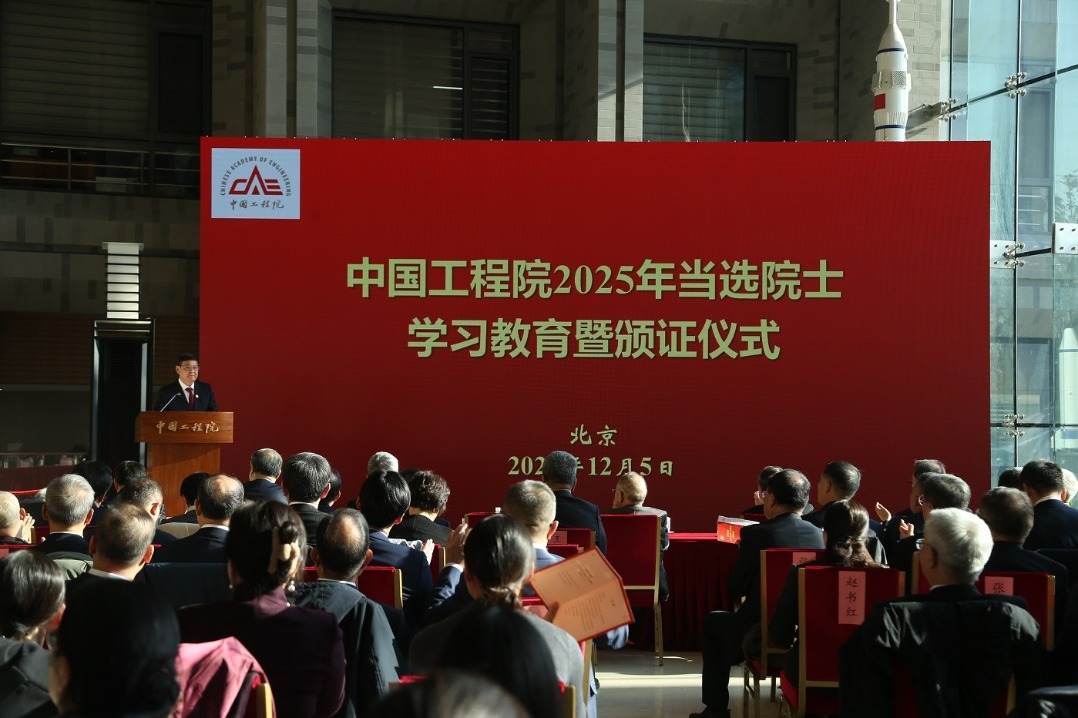
    In a significant ceremony held in Beijing on Friday, China’s newly elected academicians pledged their commitment to advancing scientific innovation and accelerating the transformation of research into practical applications. The event marked the formal induction of 144 new domestic members and 51 international members into the nation’s prestigious academies.

    Leadership from both the Chinese Academy of Sciences (CAS) and Chinese Academy of Engineering (CAE) emphasized the dual nature of the academician title as both honor and profound responsibility. CAS President Hou Jianguo challenged the new members to contribute to achieving high-level self-reliance in science and technology, positioning their work within the broader context of national rejuvenation goals.

    CAE President Li Xiaohong highlighted the strategic alignment of the election process with national needs, particularly emphasizing the role of scientific innovation in developing new quality productive forces. The selection criteria prioritized candidates whose expertise addresses China’s most pressing strategic requirements.

    Several newly elected academicians shared their perspectives on their expanded responsibilities. Professor Peng Chengzhi from the University of Science and Technology of China’s Quantum Physics Division described the appointment as representing “national trust and public expectation,” committing to align personal research goals with national development objectives.

    Tsinghua University chemistry professor Li Jun emphasized the practical application of theoretical science, using rare earth elements—which he termed “industrial vitamins”—as an example of how resource advantages must transform into technological prowess for strategic sectors including renewable energy and semiconductor manufacturing.

    Zhejiang University’s neuroscience expert Hu Hailan stressed the human-centered nature of life sciences, stating that scientific research ultimately serves human well-being, particularly in protecting mental health.

    Representing private enterprise, Huang Xianbo, chief engineer at advanced materials supplier Kingfa, highlighted the importance of industry-academia collaboration in converting technological achievements into productive forces, especially in cutting-edge research areas aligned with national strategy.

    The expanded academician roster reinforces China’s systematic approach to building scientific capacity, with members expected to play crucial roles in strategic research consultation and advancing the nation’s technological ambitions.
  • New records substantiate truths of war

    New records substantiate truths of war

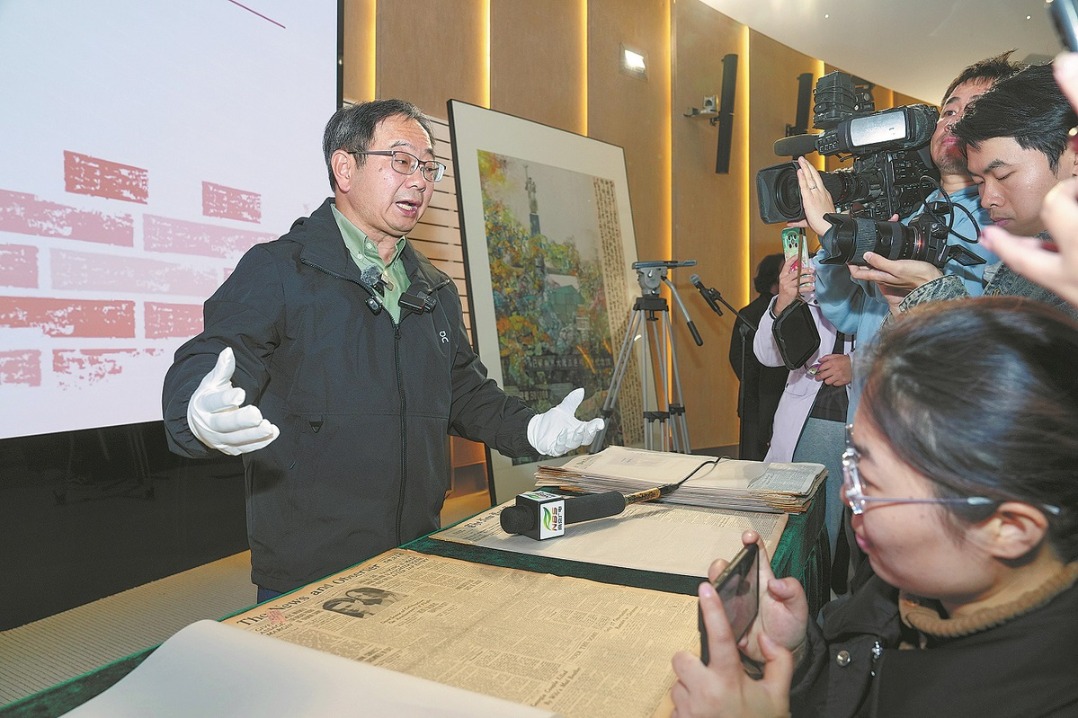
    In a significant development for historical documentation, the Memorial Hall of the Victims in Nanjing Massacre by Japanese Invaders has unveiled 13 newly acquired sets of cultural relics and historical materials. These artifacts, presented on the 88th anniversary of the tragic events, offer compelling evidence from multiple perspectives that substantiates the historical truth of one of World War II’s most horrific chapters.

    The collection features unprecedented primary sources including personal letters from Japanese soldiers, post-occupation photographs of Nanjing, archival materials of a Chinese military doctor killed in defense operations, a Japanese army album, and international publications in English and French. Particularly striking are two soldier letters that describe atrocities in chilling detail, with one January 1938 correspondence expressing disturbing satisfaction at the execution of Chinese prisoners and disposal of bodies in the Yangtze River.

    Researchers emphasize the critical importance of these materials in countering revisionist narratives. Professor Wang Weixing of Jiangsu Provincial Academy of Social Sciences noted the psychological significance of the perpetrators’ language, describing how the soldiers casually referenced killing as ‘enjoyable’ activities. The photographic evidence, donated by a father-son duo from Henan province, captures specific dates and locations of destruction following the Japanese occupation in December 1937.

    International publications from the period provide third-party verification, including a French newspaper documenting Nanjing’s population before the massacre and American magazines exposing Japanese war crimes. Nanjing University historian Zhang Sheng highlighted how these materials effectively counter arguments made by Japanese right-wing groups regarding population figures.

    The evidence collectively represents a multinational effort to preserve historical memory, with contributions coming from Japanese, Chinese, and Chinese-American donors. This comprehensive documentation serves both as memorial to the victims and as an educational resource for future generations about the importance of historical accountability.

  • China and US advance counternarcotics efforts

    China and US advance counternarcotics efforts

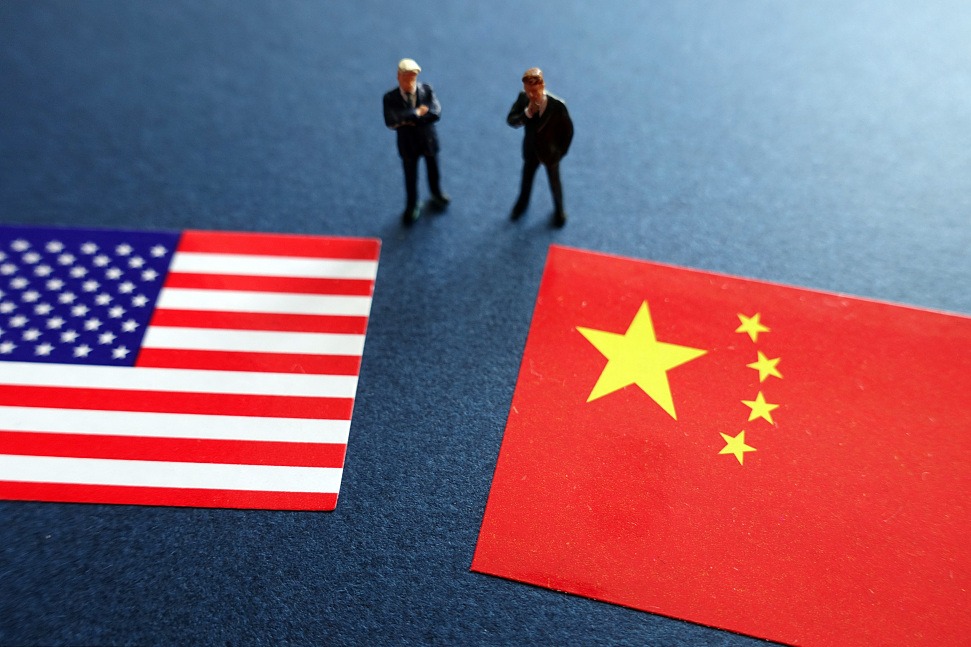
    Chinese and American narcotics control authorities have made significant strides in implementing the bilateral agreement established during the October summit between President Xi Jinping and U.S. President Donald Trump in Busan, South Korea. The Ministry of Public Security confirmed on Friday that both nations have achieved substantial progress in their joint anti-drug initiatives.

    According to official statements, the cooperation has yielded concrete operational results, with multiple joint investigations currently underway. The specialized counternarcotics teams from both countries have maintained consistent communication channels, recently conducting a video conference to assess current progress and identify priority areas for future collaborative efforts.

    A spokesperson for China’s Ministry of Public Security emphasized that Beijing remains committed to addressing global drug challenges through partnerships based on mutual respect and equal footing. This diplomatic framework established during the Busan meeting has provided the necessary foundation for enhanced operational coordination.

    The expanded cooperation represents a continuation of growing anti-narcotics collaboration between the two nations in recent years. The development coincides with China’s domestic strengthening of international verification protocols and export-control measures, as highlighted during Wednesday’s national video conference on narcotics control chaired by State Councilor Wang Xiaohong, who also heads the national anti-drug committee.

    Wang’s address called for reinforced cross-regional and international collaboration, signaling China’s comprehensive approach to combating drug trafficking through both bilateral partnerships and strengthened internal mechanisms.

  • American playwright Jeremy O. Harris arrested in Okinawa on suspicion of drug smuggling

    American playwright Jeremy O. Harris arrested in Okinawa on suspicion of drug smuggling

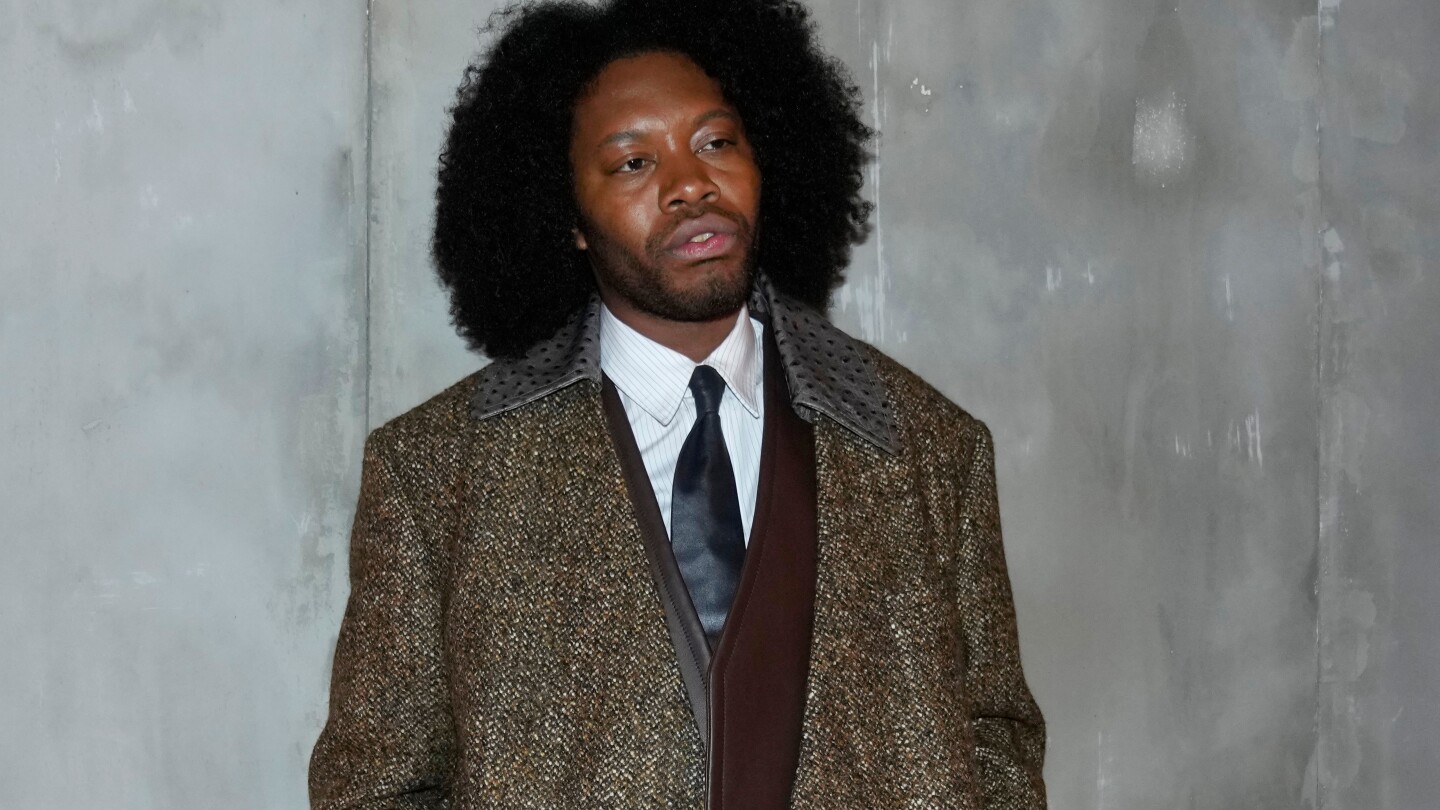
    TOKYO — Jeremy O. Harris, the celebrated American playwright and actor renowned for his Tony Award-nominated theatrical production ‘Slave Play,’ faces serious legal challenges in Japan following his arrest on charges of narcotics smuggling. Japanese customs authorities confirmed the incident this Saturday.

    According to official reports from Okinawa Regional Customs spokesperson Tatsunori Fukuda, Harris was apprehended at Naha Airport on November 16th while entering Japan’s southern Okinawa prefecture. Customs inspection revealed approximately 0.78 grams of crystallized MDMA, commonly known as ecstasy, concealed within a container in his carry-on tote bag. The discovery triggered an immediate arrest for violation of Japan’s stringent Customs Law.

    Fukuda detailed that the 36-year-old artist had commenced his journey from London’s Heathrow Airport two days prior, with a transit stop at Taiwan’s Taoyuan International Airport before his final destination in the popular resort region of Okinawa. Following his detention at the airport, Harris was transferred to the custody of Tomishiro police authorities.

    The case has been formally referred to the Naha District Public Prosecutors Office as of Thursday, initiating a comprehensive investigation that may lead to formal indictment. While officials confirmed no additional substances were discovered in his luggage and preliminary assessment suggests the drugs were for personal use, the legal proceedings continue to develop. Authorities have declined to disclose any statements Harris may have provided during interrogation.

    Japan maintains some of the world’s strictest anti-drug legislation, with convicted smugglers potentially facing extended prison sentences. The incident casts a shadow over the career of an artist who rapidly ascended to theatrical prominence with ‘Slave Play’—a graduate school project during his time at Yale School of Drama that evolved into a controversial Broadway production examining complex themes of race, sexuality, and social class.

    Beyond his theatrical achievements, Harris has expanded into television with cameo appearances in the ‘Gossip Girl’ revival and credit as co-producer for HBO’s acclaimed series ‘Euphoria.’ The international arts community now watches as this legal situation unfolds in Japan’s rigorous judicial system.

  • More Americans choose China as destination amid travel rebound

    More Americans choose China as destination amid travel rebound

    China is experiencing a significant resurgence in American tourism as global travel patterns normalize, with industry leaders highlighting the country’s strategic initiatives to position itself as a premier destination. The recovery marks a notable turnaround from pandemic-era restrictions and geopolitical tensions that previously limited travel between the nations.

    At the recent United States Tour Operators Association Annual Conference in Maryland, Chinese tourism officials unveiled comprehensive measures designed to attract international visitors. These include an expanded visa-free transit program that now permits citizens from 55 countries, including the United States, to stay for up to 240 hours (10 days) when transiting through designated ports across more than 20 Chinese regions. The policy requires only valid travel documents and confirmed onward tickets.

    Tourism statistics reveal impressive recovery metrics, with China welcoming 132 million international visits in 2024 generating approximately $94.2 billion in tourism revenue—reaching nearly 97% of pre-pandemic levels. Industry professionals attribute this rebound to China’s multi-faceted approach combining streamlined entry procedures, enhanced digital payment infrastructure, and a renewed emphasis on experiential tourism.

    Terry Dale, President and CEO of USTOA, noted that American travelers increasingly view China as “a unique opportunity—an experience of a lifetime.” This sentiment is echoed by tour operators reporting measurable increases in bookings, particularly for cultural immersion experiences that extend beyond traditional destinations like Beijing and Shanghai.

    The tourism revival encompasses diverse attractions ranging from ancient cultural sites to contemporary technological showcases like the World Robot Contest and seasonal spectacles such as the Harbin Ice and Snow Festival. Educational travel has emerged as a particularly strong segment, with growing numbers of American students and adults seeking authentic cultural immersion experiences.

    Brian Hoyt of EF World Journeys observed that “China represents a massive opportunity for more North Americans” seeking meaningful educational exchanges. The industry-wide consensus indicates that recent policy adjustments have successfully reopened channels for people-to-people connections that transcend mere economic transactions, fostering deeper cross-cultural understanding between the two nations.

  • Conceptual design of nuclear-powered icebreaker unveiled

    Conceptual design of nuclear-powered icebreaker unveiled

    China State Shipbuilding Corporation (CSSC), the world’s largest shipbuilding conglomerate, has revealed a groundbreaking conceptual design for a nuclear-powered multirole icebreaker capable of transporting both passengers and cargo through Arctic waters. The innovative vessel received formal design validation through an “approval in principle” certificate issued by Italian classification society RINA.

    Designed by CSSC’s Marine Design and Research Institute in Shanghai, the icebreaker measures approximately 165 meters in length with a 30-meter beam and displaces nearly 30,000 metric tons. The vessel is engineered for global operational capabilities with capacity for 150 polar tourists and maximum accommodation for 250 persons.

    The icebreaker incorporates specialized polar environment adaptations including advanced cold insulation systems and sophisticated noise and vibration control technologies. These features, combined with high-standard ventilation, air conditioning, and luxury accommodations, are designed to create what engineers describe as a “luxurious, immersive and safe” polar travel experience.

    Beyond passenger transport, the vessel demonstrates substantial cargo capacity with space for 300 standard 20-foot containers. Its flexible modular design enables transportation of oversized and irregularly shaped cargoes, enhancing its commercial versatility.

    The icebreaker’s technical specifications include capability to break through 2.5-meter-thick ice at speeds of 3.7 kilometers per hour. Its propulsion system represents a significant technological advancement, utilizing molten salt reactor technology combined with supercritical carbon dioxide systems to enhance thermoelectric conversion efficiency and improve nuclear safety parameters. Design engineers confirm the vessel strictly adheres to international nuclear safety standards and regulations.

    According to polar vessel engineer Cui Meng, the icebreaker is expected to play a crucial role in seasonal Arctic transportation, high-end polar tourism, and supply/emergency support operations in both Arctic and Antarctic regions. Researcher Yu Yun emphasized the strategic importance of Arctic routes, noting they can reduce voyage distances between Asia, Europe and North America by 30-40% compared to traditional Suez Canal routes, potentially shortening East Asia-Europe journeys by approximately 7,000 kilometers and reducing sailing time by 10-15 days.

  • Sino-US soybean trade discussed in Washington

    Sino-US soybean trade discussed in Washington

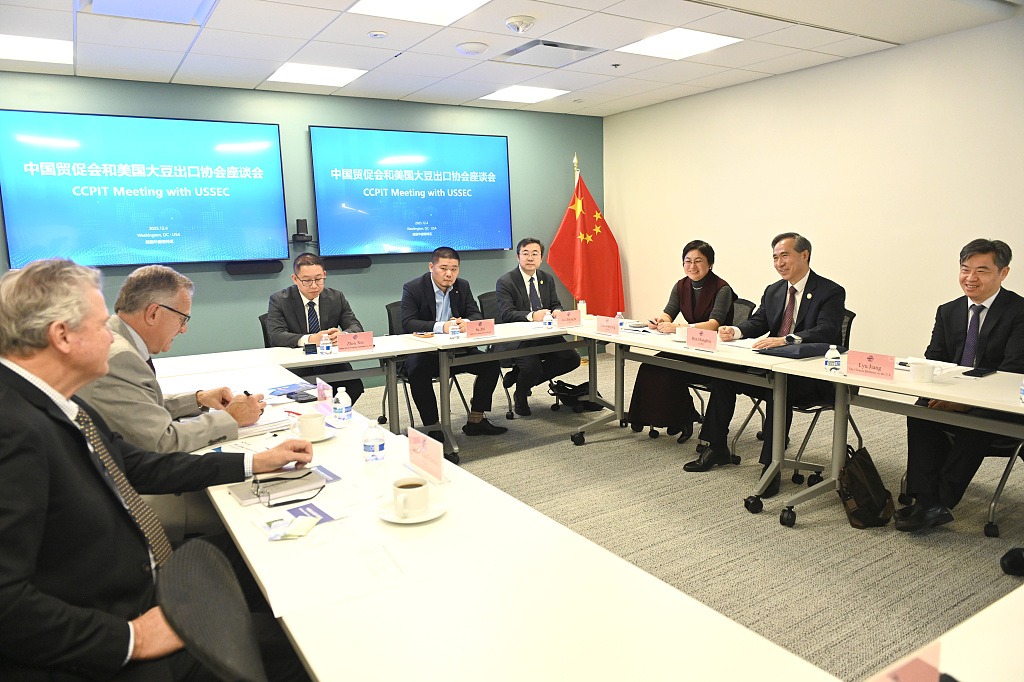
    In a significant development for agricultural trade relations, a high-level Chinese trade delegation convened with United States soybean industry leaders in Washington to discuss revitalizing bilateral soybean commerce and implementing recent high-level agreements. The meeting, led by China Council for the Promotion of International Trade President Ren Hongbin, featured substantive discussions with US Soybean Export Council CEO Jim Sutter and other agricultural representatives.

    The dialogue represents a concrete step toward implementing the consensus reached during the October meeting between President Xi Jinping and US President Donald Trump in Busan, South Korea. Both parties expressed strong commitment to rebuilding trade channels that have experienced significant disruption in recent years.

    Sutter characterized China as “the world’s largest and most irreplaceable soybean market” for American farmers, expressing robust optimism about the long-term relationship. He proposed that soybean trade could serve as a model for broader US-China cooperation, stating, “Soybeans and the soybean trade between these two countries can be a good example for how the countries can work together.”

    The human impact of trade tensions was articulated by USSEC Vice-Chair Mike McCranie, an active soybean farmer, who described the “painful” consequences of tariffs while emphasizing mutual dependency: “In my state, seven out of every ten rows grown are exported, and three-and-a-half of those go to China. We need one another.”

    The discussions extended beyond immediate trade resumption to include sustainable agriculture collaboration. Ren specifically encouraged joint development of green and low-carbon agricultural proposals for the 2026 APEC meeting in Shenzhen, building on previous successful cooperation on global supply-chain security at last year’s APEC summit in Lima.

    Chinese commercial enterprises demonstrated strong purchasing intent, with COFCO Oils & Fats representative Wang Bei confirming readiness to increase US soybean purchases as bilateral conditions improve. Additional companies proposed hosting dedicated USSEC seminars at the June 2026 China International Supply Chain Expo to promote sustainable US soy to Chinese buyers.

  • Xi, Macron enjoy friendly exchanges

    Xi, Macron enjoy friendly exchanges

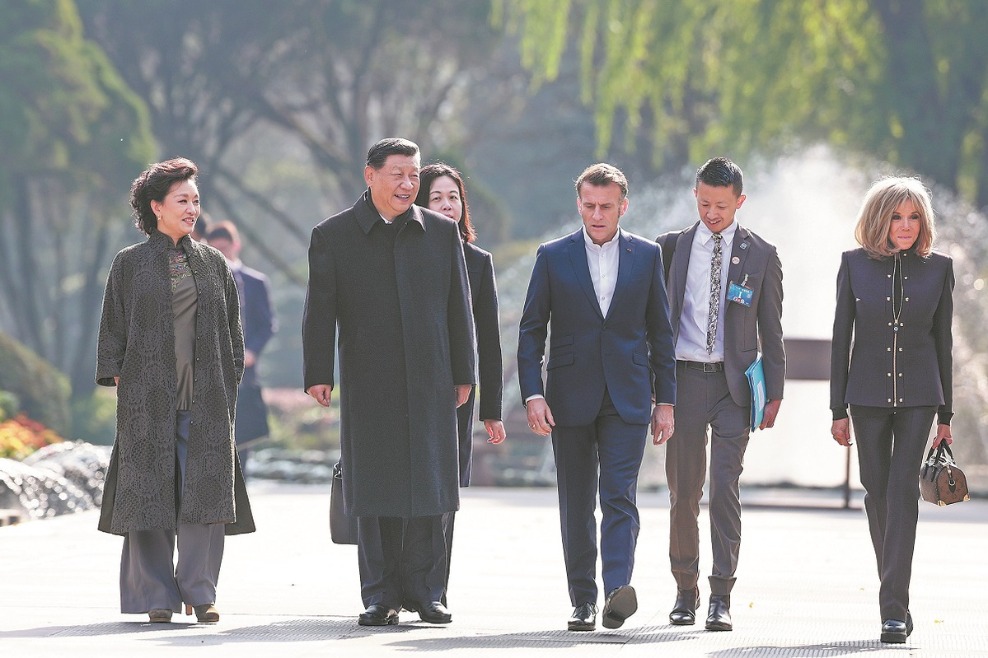
    President Xi Jinping and French President Emmanuel Macron deepened their diplomatic engagement through a symbolic meeting at the 2,000-year-old Dujiangyan irrigation system in Chengdu on Friday. This unconventional summit location, marking their second encounter during Macron’s three-day state visit, provided a profound backdrop for discussing global governance principles rooted in ancient wisdom.

    President Xi articulated how the ancient hydraulic achievement embodies China’s historical philosophy of harmonious coexistence with nature, emphasizing its continuing relevance to modern statecraft. ‘This spirit still offers insights for state governance today,’ Xi remarked, highlighting the Chinese nation’s enduring values of adaptation, perseverance and innovation.

    The two leaders recognized their nations as representing distinct civilizational traditions that share fundamental aspirations. ‘China and France, as two major nations distinguished by their histories and cultures, can make greater contributions to global peace, stability and human progress through dialogue and cooperation,’ Xi stated, particularly noting both countries’ spirit of independence stemming from profound cultural heritage.

    President Macron acknowledged the significance of cultural understanding in bilateral relations, praising Chinese diligence and wisdom while emphasizing France’s commitment to strengthening coordination with China amid global uncertainties. ‘Given the rapidly evolving international landscape full of uncertainties, France is willing to strengthen communication and coordination with China,’ Macron affirmed.

    The meeting produced substantial diplomatic outcomes, including agreements on exhibiting Sichuan’s Sanxingdui artifacts in France and joint statements addressing global governance, climate response, nuclear energy cooperation, and regional conflicts. Experts noted that choosing culturally significant locations beyond capitals expands the relationship’s breadth, particularly in people-to-people and cultural engagement, while providing leaders more time for strategic communication essential for building political mutual trust.

    This meeting continued a established pattern of unconventional summit diplomacy between the two leaders, following previous encounters in Shanghai’s Yuyuan Garden (2019) and Guangzhou’s Pine Garden (2023) during Macron’s earlier visits to China.

  • AMD’s MI308 chips may face H20‑like headwinds in China

    AMD’s MI308 chips may face H20‑like headwinds in China

    Advanced Micro Devices (AMD) has received official authorization from U.S. authorities to export its MI308 AI accelerators to China, with CEO Lisa Su confirming the company’s readiness to comply with Washington’s revised licensing framework, including payment of a mandatory 15% tariff. This development enables AMD to re-enter the strategically sensitive Chinese semiconductor market despite ongoing security investigations targeting Nvidia’s comparable H20 chip for potential vulnerabilities.

    The approval emerges alongside remarkable investor enthusiasm for China’s domestic chip manufacturers, highlighted by Moore Threads Technology’s extraordinary market debut. The company’s shares skyrocketed 425% during its Friday listing in Shanghai, following a successful ¥8 billion (approximately $1.13 billion) capital raise—the most substantial first-day performance for a major IPO since China’s 2019 financial market reforms. Retail investor demand reached unprecedented levels, with subscriptions exceeding available shares by nearly 2,750 times even after activating clawback provisions.

    This market phenomenon eclipsed Semiconductor Manufacturing International Corp’s (SMIC) 2020 debut performance of 202%, establishing a new benchmark for offerings surpassing the $1 billion threshold. The simultaneous occurrences highlight the growing divergence between U.S. export-compliant hardware and China’s rapidly advancing domestic semiconductor capabilities.

    Chinese officials maintained their consistent position regarding U.S. chip export policies. Foreign Ministry spokesperson Lin Jian reiterated Beijing’s opposition to American restrictions when questioned about China’s potential acquisition of AMD’s newly approved MI308 processors. “China has repeatedly clarified its stance regarding U.S. chip exports to China. We urge the United States to demonstrate concrete actions toward maintaining global industrial and supply chain stability,” Lin stated during a regular press briefing.

    Despite regulatory clearance, industry analysts express skepticism regarding AMD’s potential market success. Chinese experts contend that MI308 shipments will encounter identical policy constraints faced by Nvidia’s H20, operating within an environment that increasingly prioritizes domestic AI chip development while limiting foreign suppliers’ long-term commercial prospects.

    A Jiangsu-based technology columnist (identifying as a software engineer at robotics firm Fortucky) noted that AMD’s MI308 chips operate under explicit performance limitations that render them unsuitable for training large language models like ChatGPT. According to this analysis, the chips will primarily serve inference tasks, specialized vertical AI applications, and limited research environments, as U.S. regulations continue blocking technology transfers that could significantly advance China’s frontier AI capabilities.

    This development occurs within broader geopolitical tensions surrounding semiconductor technology. Washington initially banned exports of both Nvidia’s H20 and AMD’s MI308 chips to China in April citing national security concerns, with both products specifically engineered to meet U.S. Commerce Department export control thresholds. The restrictions positioned these chips as inferior alternatives rather than strategic computational assets for advanced AI development.

    Following June negotiations between U.S. and Chinese officials in London, Washington agreed to resume Nvidia H20 shipments in exchange for Beijing restoring rare earth mineral exports to the United States. However, this détente proved temporary, as China’s Cyberspace Administration subsequently summoned Nvidia regarding H20 security risks and issued advisories discouraging domestic adoption.

    Chinese commentators have employed increasingly vivid metaphors to describe the perceived risks of foreign hardware dependency. Multiple analysts recently compared using Nvidia’s H20 to “drinking poisoned wine”—addressing immediate needs while causing long-term damage. Similarly, proposed exports of Nvidia’s more powerful H200 chips were characterized as “sugar-coated bullets” that might appear beneficial while ultimately hindering domestic chip development.

    Market observers note that during the April-July suspension of Nvidia chip exports, Huawei’s Ascend 910B chips dramatically increased market share from 12% to 37%. Some analysts suggest Washington’s approval of AMD exports might constitute a strategic effort to slow Huawei’s accelerating adoption rates and provide alternatives to domestic options from Kunlun, MetaX, and Moore Threads.

    Industry segmentation appears increasingly likely, with cloud service providers potentially favoring Nvidia for its CUDA ecosystem, while financial institutions and government entities prioritize domestic chips for compliance reasons. Large corporations might employ hybrid approaches using foreign chips for performance and local chips for regulatory compliance, while smaller firms could opt exclusively for domestic solutions to avoid future uncertainty.

  • ILT20: Desert Vipers overcome Abu Dhabi Knight Riders in thriller

    ILT20: Desert Vipers overcome Abu Dhabi Knight Riders in thriller

    In a nail-biting encounter at the Sharjah Cricket Stadium on Friday, the Desert Vipers secured their second consecutive victory in the International League T20 (ILT20) with a dramatic two-wicket triumph over the Abu Dhabi Knight Riders. The match culminated with just three balls remaining, showcasing exceptional late-order batting under pressure.

    The Knight Riders posted a competitive total of 171/6, powered by Alex Hales’ commanding 53 off 37 deliveries, featuring three sixes and four boundaries. Andre Russell contributed a brisk 36, while Qais Ahmad and Noor Ahmad claimed two wickets each for the Vipers.

    Facing a challenging chase, the Vipers encountered early setbacks, losing three wickets during the powerplay. The middle-order partnership between Shimron Hetmyer (48 off 25 balls) and Dan Lawrence (35 off 31) revitalized the innings. However, the decisive moment arrived during the final overs when Khuzaima Tanveer’s explosive 31-run cameo from just 12 deliveries sealed the victory despite the team being eight wickets down.

    Stand-in captain Sam Curran praised his team’s resilience, stating: ‘This was a fortunate escape but an outstanding result. ADKR possesses a formidable batting lineup, and our bowlers performed exceptionally throughout. The team demonstrated remarkable composure during critical phases.’

    Conversely, Knight Riders’ captain Sunil Narine attributed the loss to a below-par batting performance and challenging dew conditions: ‘We were approximately 15-20 runs short. The dew factor significantly hampered our spinners’ effectiveness during the latter stages.’

    Shimron Hetmyer received Player of the Match honors for his match-changing innings that ultimately propelled the Desert Vipers to their thrilling victory.