作者: admin

  • Harbin kicks off annual Ice Harvest Festival on Songhua River

    Harbin kicks off annual Ice Harvest Festival on Songhua River

    Harbin launched its sixth annual Ice Harvest Festival this Sunday along the frozen expanse of the Songhua River, strategically timed to coincide with Daxue, the traditional Chinese solar term marking ‘Major Snow.’ The ceremony unfolded with deep cultural reverence as workers adorned in historical costumes performed the ritual extraction of the inaugural ice block from the river’s thick frozen surface.

    The opening ceremony featured a formal blessing reading that paid homage to ancient traditions before the skilled harvesters commenced their work. This ceremonial commencement signals the official start of Harbin’s winter tourism season, drawing both domestic and international visitors to witness this unique cultural spectacle.

    The Ice Harvest Festival serves multiple purposes: preserving northeastern China’s winter cultural heritage, boosting local tourism during the cold months, and providing raw materials for the city’s world-renowned ice sculpture exhibitions. The harvested ice blocks, known for their exceptional clarity and structural integrity from the Songhua River’s pristine waters, will be transformed into elaborate artistic installations throughout the city.

    This year’s festival continues Harbin’s legacy as China’s ‘Ice City,’ combining traditional practices with modern tourism development. The event showcases how ancient winter survival techniques have evolved into celebrated cultural practices that attract global attention and contribute significantly to the regional economy during the winter season.

  • ‘Record high’ number of Palestinians died in Israeli prison as a result of Ben Gvir’s policies

    ‘Record high’ number of Palestinians died in Israeli prison as a result of Ben Gvir’s policies

    Israeli media outlet Walla has revealed a disturbing surge in Palestinian fatalities within Israeli detention facilities, documenting 110 deaths over the past two and a half years under the restrictive policies of far-right National Security Minister Itamar Ben Gvir. This figure represents a dramatic escalation when compared to historical data, which recorded approximately 187 Palestinian detainee deaths between 1967 and 2007—an average of fewer than five per year. The current rate equates to nearly one death per week, a pace described as a “record high” by the report.

    The investigation attributes this alarming mortality rate to a series of severe measures implemented by Ben Gvir. These include significantly reduced food rations, deprivation of sunlight, limitations on warm clothing and access to showers and hygienic products, and systematic violent beatings and cell raids. While Walla’s data indicates that most deaths occurred in hospitals during treatment rather than inside detention centers, the conditions leading to these medical emergencies are directly linked to prison policies.

    Human rights organizations have long documented the mistreatment of Palestinian detainees, but reports confirm that abuses have intensified sharply since the onset of Israel’s war on Gaza in October 2023. Systemic torture and abuse have reached unprecedented levels, with at least 100 prisoner deaths documented under these conditions. Both international and Israeli human rights groups, including B’Tselem, have condemned the situation, with the latter referring to the prisons as “torture camps.”

    Israel’s Public Defender’s Office recently reported on deteriorating conditions, noting that Palestinians endure extreme hunger, overcrowding, and systematic violence by prison staff. This assessment was corroborated by a UN Committee Against Torture report last month, which found the use of torture by the Israeli state to be “organised and widespread” and noted a grave intensification since October 2023.

    An estimated 9,250 to 10,000 Palestinians are currently held in Israeli prisons, with nearly half detained without charge or trial under indefinitely renewable administrative detention orders. This reporting on prison deaths emerges alongside deliberations on a new bill, championed by Ben Gvir, that would allow the death penalty for Palestinian prisoners convicted on “nationalistic” grounds—a penalty that would not apply to Israelis under similar circumstances. The bill has advanced through a preliminary reading in the Knesset, with Ben Gvir symbolically wearing a noose pendant during discussions to emphasize his commitment to the legislation.

  • Watch: President Trump hosts the Kennedy Center Honors

    Watch: President Trump hosts the Kennedy Center Honors

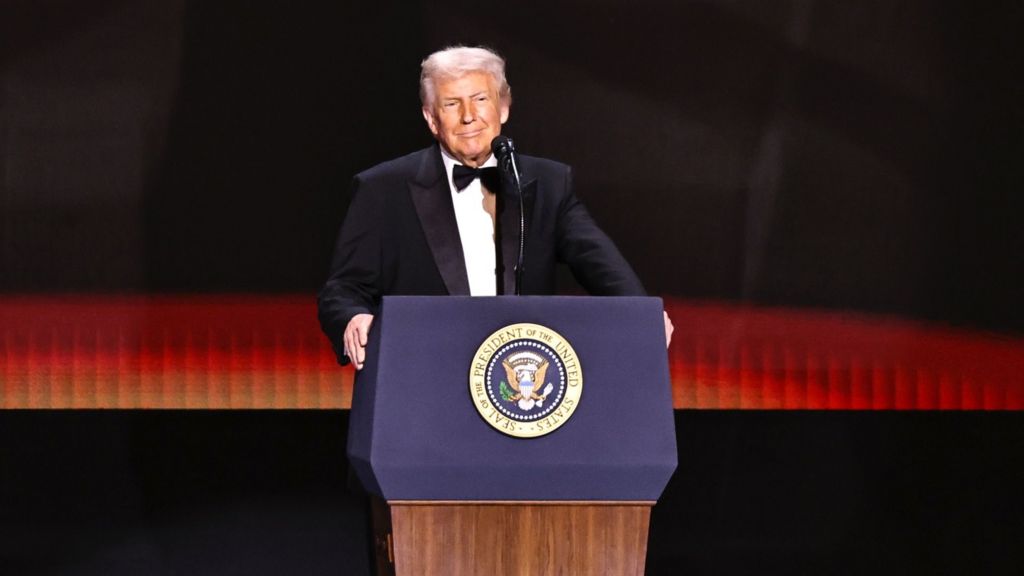
    In an unprecedented move within American cultural history, President Donald Trump assumed the role of host for the prestigious Kennedy Center Honors ceremony this year. This marks a significant departure from tradition, as Trump becomes the first sitting U.S. president to personally oversee the event honoring artistic excellence. The ceremony, held at the iconic Kennedy Center for the Performing Arts in Washington D.C., recognizes distinguished artists for their lifetime contributions to American culture through the performing arts. The presidential hosting role carries particular symbolic weight, representing the administration’s engagement with the nation’s cultural institutions. Historically, while the presidency has maintained a relationship with the Kennedy Center Honors, previous commanders-in-chief have typically participated in more limited capacities rather than taking center stage as host. This development reflects the current administration’s distinctive approach to blending political leadership with cultural recognition, creating a new chapter in the intersection of American politics and arts appreciation.

  • ‘We got rid of a tyrant’: Syria’s tumultuous first year without Assad

    ‘We got rid of a tyrant’: Syria’s tumultuous first year without Assad

    December 8, 2024, marked a seismic shift in Syrian history as Bashar al-Assad’s five-decade dynastic rule abruptly collapsed under a lightning rebel offensive. The overnight disappearance of his regime transformed Damascus from a surveillance state to a city of liberation, with Assad’s omnipresent portraits replaced by revolutionary martyrs’ memorials.

    The initial euphoria saw prisoners emerging from notorious detention centers while citizens celebrated in streets once patrolled by leather-jacked security forces. Yet this victory remains bittersweet for families like that of content creator Abd al-Hadi Safi, whose brother vanished into Assad’s prison system in 2012. “We got rid of a tyrant, but without justice, this story isn’t finished,” Safi told Middle East Eye, echoing sentiments of thousands seeking accountability.

    President Ahmad al-Sharaa’s transitional government faces monumental challenges in reconciling sectarian divisions that erupted violently throughout the year. Alawi communities suffered retaliatory massacres despite comprising only 10-15% of the population, while July’s Sweida province operations triggered catastrophic Druze-Bedouin violence that killed hundreds and required tribal peace agreements.

    The Kurdish northeast presented different complications, with nominal reintegration agreements masking deep distrust between the Syrian Democratic Forces and Damascus. While Sharaa’s administration canceled millions of Assad-era travel bans and formed transitional justice committees, many victims’ families perceive continued impunity for former regime officials.

    Internationally, Syria’s diplomatic transformation has been remarkable. Sharaa’s pragmatic approach—dismantling Assad’s captagon empire, confronting Hezbollah supply lines, and cooperating on counterterrorism—earned him an unprecedented Oval Office meeting and gradual sanctions relief. Analyst Kamal Alam notes: “Sharaa understood the previous regime never compromised and paid the price. He has been the opposite—flexible, pragmatic.”

    One year into this transition, Syria stands between celebration and reckoning—having toppled a dictator but not yet built a fully just state from the ruins of his police regime.

  • DiCaprio’s One Battle After Another leads Golden Globe nominations

    DiCaprio’s One Battle After Another leads Golden Globe nominations

    Leonardo DiCaprio’s latest cinematic offering, ‘One Battle After Another,’ has emerged as the frontrunner for the 2025 Golden Globe Awards, securing an impressive nine nominations. The film, a thriller centered on the abduction of a former revolutionary’s daughter, earned a Best Musical/Comedy Film nod, while its stellar cast—including DiCaprio, Sean Penn, Teyana Taylor, Benicio Del Toro, and Chase Infiniti—all received individual acting nominations.

    Hot on its heels is the multi-language family drama ‘Sentimental Value’ with eight nominations, showcasing the Globes’ continued appreciation for international storytelling. Other notable contenders include the vampire thriller ‘Sinners’ (7 nominations), the Maggie O’Farrell adaptation ‘Hamnet’ (6 nominations), and Guillermo Del Toro’s ‘Frankenstein’ (5 nominations).

    Despite its commercial success, the highly anticipated sequel ‘Wicked: For Good’ was surprisingly omitted from the Best Musical/Comedy category, though it remains in contention for the newly introduced Box Office Achievement award. This category pits blockbusters like ‘Avatar: Fire and Ash,’ ‘Mission: Impossible – The Final Reckoning,’ and ‘Zootopia 2’ against each other.

    The television categories saw British limited series ‘Adolescence’ dominate with five nominations, including acting nods for Stephen Graham, Owen Cooper, Erin Doherty, and Ashley Walters. It faces stiff competition from HBO’s ‘The White Lotus,’ which leads the TV section with six nominations.

    This year’s nominations highlighted several industry trends: strong recognition for international cinema, continued acclaim for established A-listers like George Clooney (earning his 14th nomination), and breakthrough recognition for emerging talents like indie filmmaker Eva Victor. The ceremony, hosted once again by Nikki Glaser, will take place in Los Angeles on January 11th, setting the stage for the upcoming Oscar season.

  • US Supreme Court hears fight over Trump’s power to fire federal agency official

    US Supreme Court hears fight over Trump’s power to fire federal agency official

    The U.S. Supreme Court commenced hearings on Monday in a pivotal case that challenges the traditional independence of federal regulatory agencies from presidential control. The litigation, formally designated as Trump v. Slaughter, originated from President Donald Trump’s March termination of Rebecca Kelly Slaughter, a Democratic commissioner of the Federal Trade Commission (FTC).

    Central to the legal dispute is the interpretation of statutory provisions that restrict presidential removal of FTC commissioners solely to instances of ‘inefficiency, neglect of duty, or malfeasance in office.’ Trump dismissed Slaughter citing her stance as ‘inconsistent with [the] Administration’s priorities,’ prompting her to initiate legal action against the former president.

    A lower court previously determined that Slaughter’s removal violated established law, a decision that the Trump administration subsequently appealed to the nation’s highest court. In a preliminary 6-3 ruling in September, the conservative-majority bench issued an emergency order sustaining Slaughter’s dismissal pending full judicial review.

    The case represents a significant constitutional confrontation regarding the extent of presidential authority over independent agencies created by Congress to operate with limited executive interference. Established in 1914, the FTC was designed to protect consumers from deceptive business practices and anti-competitive behavior through bipartisan leadership—its five-member commission structure prohibits more than three commissioners belonging to the same political party.

    This legal challenge revisits foundational administrative law principles established in Humphrey’s Executor v. United States (1935), wherein the Supreme Court affirmed that certain federal agencies exercise ‘quasi-judicial and quasi-legislative’ functions distinct from purely executive operations, thereby limiting presidential removal authority.

    The Court’s decision could potentially reshape the operational independence of numerous federal agencies, including the National Labor Relations Board and others with similar statutory protections. Concurrently, the justices are preparing to review a related case concerning Trump’s removal of Lisa Cook from the Federal Reserve Board of Governors, indicating broader implications for administrative governance structures.

  • Why Alonso’s chances of survival at Real Madrid are slim

    Why Alonso’s chances of survival at Real Madrid are slim

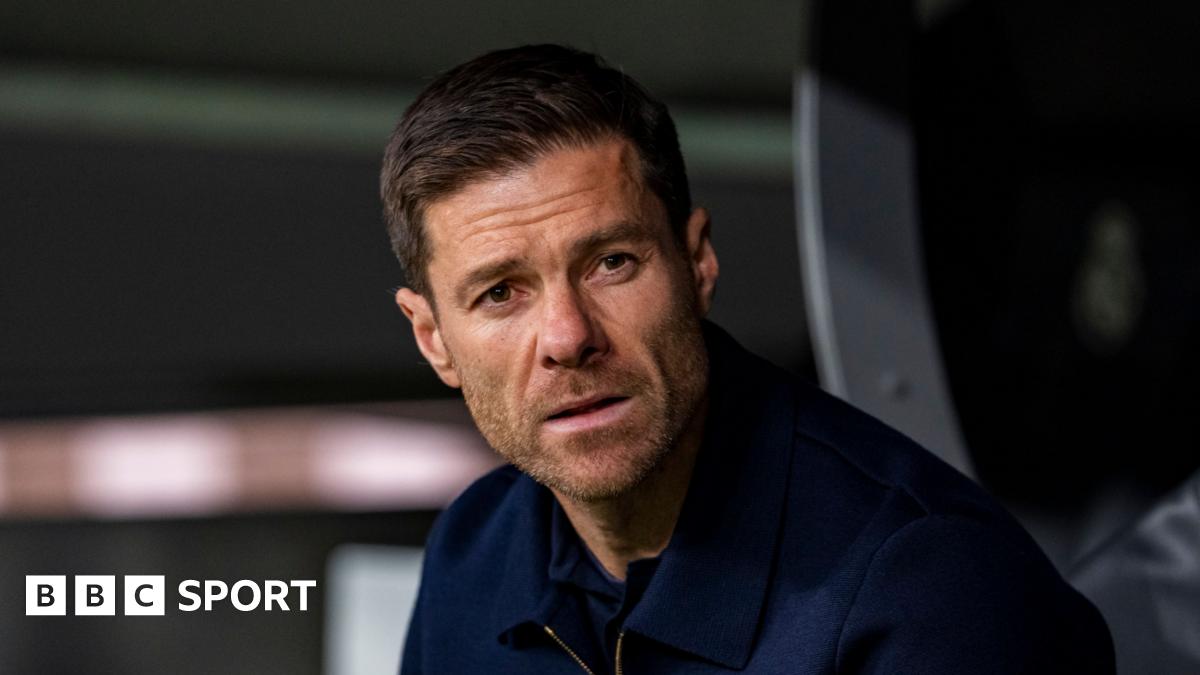
    Real Madrid faces a defining moment in their season as manager Xabi Alonso’s tenure reaches a critical juncture following a disastrous 2-0 La Liga defeat to Celta Vigo. The loss—met with thunderous boos from the Bernabéu faithful—prompted emergency meetings among the club’s hierarchy, casting serious doubt on Alonso’s future just months into his ambitious project.

    The Spanish giants have won only one of their last five league matches, leaving them four points behind rivals Barcelona despite a strong start that included a victory over Barça in October. Alonso, who arrived promising a modern, high-intensity style he dubbed “rock and roll” football, now confronts a squad struggling to execute his tactical vision.

    Internal tensions have reached boiling point. The dressing room erupted in frustration after Sunday’s match, with reports of thrown objects and heated exchanges. While Alonso criticized officiating, players immediately dismissed such excuses, acknowledging deeper systemic issues.

    The core problem appears to be a fundamental disconnect between Alonso’s meticulous methodology and the players’ execution. Despite preparing specific strategies like high pressing and rapid tempo control, the team has consistently failed to implement these plans during matches—a concern previously warned by former manager Carlo Ancelotti.

    Complicating matters are individual agendas within the squad. Kylian Mbappé’s pursuit of personal records, Vinícius Júnior’s concerns about team authority, and Federico Valverde’s positional preferences have created conflicting interests. Jude Bellingham’s adaptation to a midfield role has also proven challenging, limiting his effectiveness.

    Defensive injuries have forced Alonso to use 20 different lineups in 21 matches, with Eder Militão now joining the casualty list for 3-4 months. The attack has similarly struggled—when Mbappé doesn’t score, others rarely contribute, with Vinícius enduring an 11-game drought and Rodrygo going 33 matches without a goal.

    President Florentino Pérez, who never fully embraced this philosophical shift, now faces a familiar dilemma. His historical preference for less interventionist coaches like Ancelotti or Zinedine Zidane suggests Alonso’s detailed approach may prove his undoing.

    Wednesday’s Champions League clash against Manchester City now represents more than just a tournament fixture—it could determine Alonso’s fate. Should Madrid part ways with their manager, potential successors include Zidane and current B-team coach Álvaro Arbeloa.

  • India’s Goa state orders probe after nightclub fire kills 25

    India’s Goa state orders probe after nightclub fire kills 25

    A catastrophic nightclub fire in India’s popular coastal state of Goa has resulted in 25 fatalities, triggering an immediate government response including a formal investigation and victim compensation packages. The blaze erupted at the Birch by Romeo Lane establishment in the village of Arpora during the early hours of Sunday morning, marking one of the deadliest entertainment venue incidents in recent Indian history.

    Goa Chief Minister Pramod Sawant confirmed the initiation of a magisterial inquiry to determine the fire’s origins and establish accountability. ‘I have ordered a comprehensive judicial investigation to identify the cause and fix responsibility for this tragedy,’ Sawant stated via social media platform X, noting that six injured individuals remained in stable condition under medical supervision.

    Indian Prime Minister Narendra Modi expressed his condolences to bereaved families following personal communications with state leadership. The Prime Minister’s Office announced substantial compensation packages, committing 200,000 rupees (approximately $2,200) to each victim’s family and 50,000 rupees to those injured in the devastating incident.

    Local authorities reported receiving emergency alerts at 12:04 a.m. local time (1834 GMT Saturday), with firefighting teams working throughout the night to contain the blaze. Police officials confirmed to media outlets that all victims had been recovered from the scene, with preliminary reports indicating at least four tourists and fourteen club staff among the deceased.

    The tragedy strikes at the heart of Goa’s vital tourism industry, which has welcomed approximately 5.5 million visitors during the first half of the year, including over 271,000 international travelers according to government statistics. The coastal region, renowned for its picturesque beaches and vibrant nightlife, faces renewed scrutiny regarding safety protocols within its entertainment establishments as investigation proceedings commence.

  • Paramount launches rival bid for Warner Brothers Discovery

    Paramount launches rival bid for Warner Brothers Discovery

    In a dramatic escalation of the streaming wars, Paramount Skydance has launched a direct counter-offer to acquire Warner Bros Discovery, challenging Netflix’s previously announced bid. Backed by the billionaire Ellison family, Paramount is proposing a $30-per-share cash offer directly to shareholders, valuing the entire company at approximately $108.4 billion.

    The move positions Paramount’s proposal as a ‘superior alternative’ to Netflix’s $83 billion offer, which specifically targets Warner’s studio assets and streaming networks including HBO. Paramount emphasizes that its bid delivers more immediate cash to shareholders and presents a clearer path to regulatory approval—a significant consideration given growing antitrust concerns.

    Political dimensions entered the corporate battle as President Donald Trump expressed reservations about Netflix’s potential acquisition, stating ‘there could be a problem’ with competition implications. Paramount CEO David Ellison amplified these concerns in a CNBC interview, characterizing Netflix’s bid as ‘anti-competitive’ and warning that it would grant the streaming giant excessive control over industry talent and distribution channels.

    ‘It’s a horrible deal for Hollywood,’ Ellison asserted, revealing he has held ‘great conversations’ with Trump regarding competition policy. The Paramount executive simultaneously criticized Warner’s planned spin-off of non-core assets as part of the Netflix deal, predicting the separated entities would struggle independently and diminish shareholder value.

    Despite both Netflix and Warner Bros Discovery boards endorsing the original acquisition framework on Friday, Paramount’s aggressive counterbid—coupled with regulatory headwinds—introduces substantial uncertainty into what would represent one of the largest media consolidations in history.

  • How much have Europe and the US given to Ukraine?

    How much have Europe and the US given to Ukraine?

    London recently hosted high-level discussions concerning the ongoing war in Ukraine, with the leaders of the United Kingdom, France, and Germany reiterating their steadfast support for President Volodymyr Zelensky. Concurrently, US President Donald Trump expressed disappointment that President Zelensky had not reviewed his newest proposition to terminate the hostilities.

    President Trump has historically criticized European nations for their perceived insufficient contributions to Ukraine, frequently contrasting them with American expenditures. BBC Verify has undertaken a detailed examination of the financial support provided by both Europe and the United States since Russia’s full-scale invasion began in February 2022.

    According to data from the Germany-based Kiel Institute, which meticulously tracks international aid to Ukraine, the United States allocated a total of $130.6 billion between January 24, 2022, and August 31, 2025. Alternatively, the US government cites a broader figure of $187 billion appropriated for Operation Atlantic Resolve—a comprehensive response encompassing military training in Europe and the replenishment of US defense stocks—though this data only runs through June 2025.

    In July, President Trump unveiled a new strategy requiring NATO allies to purchase US weaponry for subsequent transfer to Ukraine. During a February meeting with French President Emmanuel Macron, Trump asserted, “We’ve spent more than $300bn and Europe has spent about $100bn—that’s a big difference.” BBC Verify’s analysis at the time determined these figures were inaccurate, a conclusion that remains valid ten months later.

    The Kiel Institute’s calculations reveal that while the US is indeed the largest single-nation donor, European countries collectively have committed more substantial resources. Europe’s total contribution reached $201.7 billion during the same period, surpassing US expenditures by a significant margin. This European aid comprises direct EU support alongside bilateral agreements from both member and non-member states, covering military, financial, and humanitarian assistance.

    The composition of aid has emerged as another point of transatlantic divergence. President Trump previously suggested European contributions were primarily loans that would be repaid, prompting President Macron to clarify that both Europe and the US provided a combination of grants and loans. Kiel Institute data confirms Macron’s statement, though it also indicates the US has delivered more grants while the EU has extended more loans.

    The EU reports its members have provided approximately $197 billion as of November 19, with loans constituting 35% of this total. These loans feature highly favorable terms for Ukraine, with reduced interest rates and, in certain cases, repayments funded through revenues from frozen Russian assets.

    Regarding individual European contributors, the United Kingdom ranks as one of the most significant national donors with $21.2 billion in verified support, though the UK government references a higher figure of $29 billion that includes future commitments. Only the United States and Germany have provided more substantial aid packages according to Kiel data, though both European nations’ contributions remain substantially smaller than America’s singular contribution.