作者: admin

  • McDonald’s pulls AI Christmas ad after backlash

    McDonald’s pulls AI Christmas ad after backlash

    McDonald’s Netherlands has retracted a controversial Christmas advertisement created entirely with artificial intelligence technology following significant online criticism. The 45-second commercial, which premiered on the fast food chain’s YouTube channel on December 6th, utilized generative AI clips to portray holiday mishaps under the ironic slogan ‘the most terrible time of the year.’

    The advertisement immediately drew sharp criticism across social media platforms, with viewers describing the visual aesthetics as ‘creepy’ and condemning the apparent poor editing quality. Particular attention was drawn to the uncanny appearance of AI-generated characters and the visibly stitched-together nature of multiple short clips, a technical limitation inherent in current AI video generation systems.

    Beyond aesthetic concerns, the advertisement sparked serious discussions about AI’s potential impact on creative industries. Numerous commenters expressed alarm about job displacement, with one Instagram user noting the absence of traditional production roles: ‘No actors, no camera team… welcome to the future of filmmaking.’

    Despite the backlash, production company The Sweetshop defended their creative process. Chief Executive Melanie Bridge revealed the project required seven weeks of intensive work, involving thousands of generated takes that were meticulously edited through traditional high-craft production methods. ‘This wasn’t an AI trick,’ Bridge asserted in statements to Futurism. ‘It was a film.’

    McDonald’s Netherlands acknowledged the situation as ‘an important learning’ in their exploration of AI’s effective application in advertising. The company explained the advertisement’s intended purpose was to reflect stressful holiday moments while suggesting McDonald’s as a comforting solution.

    This incident occurs amidst growing adoption of AI-generated content by major brands seeking to reduce production timelines. While Coca-Cola has reportedly achieved 61% positive sentiment with its AI Christmas campaigns, other luxury brands including Valentino have faced similar criticism for AI implementations deemed ‘cheap’ and ‘lazy’ by critics.

    The controversy highlights ongoing tensions between technological innovation and creative quality standards in digital advertising, particularly during high-stakes seasonal marketing campaigns.

  • Nobel Peace Prize winner will be in Oslo but won’t make awards ceremony

    Nobel Peace Prize winner will be in Oslo but won’t make awards ceremony

    In a dramatic development surrounding this year’s Nobel Peace Prize ceremonies, Venezuelan opposition leader María Corina Machado will miss the official award presentation in Oslo despite confirming her imminent arrival in Norway. The Nobel Institute announced that while the laureate is “safe” and en route to the Norwegian capital, her arrival timeframe between Wednesday evening and Thursday morning would preclude attendance at the scheduled 12:00 GMT ceremony.

    Machado, honored for her courageous struggle to achieve a peaceful democratic transition in Venezuela, has been living underground since July 2024 following contested presidential elections that saw Nicolás Maduro sworn into a third term. The elections were widely condemned both domestically and internationally as fraudulent, sparking widespread protests and resulting in approximately 2,000 arrests, including numerous members of Machado’s opposition coalition.

    In an audio recording released by the Nobel Institute, Machado asserted: “I will be in Oslo, I am on my way.” Her daughter, Ana Corina Sosa, is expected to accept the prestigious award on her behalf and deliver the speech Machado prepared for the occasion.

    The opposition leader’s last public appearance occurred on January 9th at a rally protesting Maduro’s inauguration. Since entering hiding, Machado has maintained communication with supporters through social media videos and interviews, consistently urging continued resistance against what she characterizes as an authoritarian regime.

    The Nobel Institute’s earlier uncertainty about Machado’s whereabouts had generated significant concern among her international supporters. The extraordinary secrecy surrounding her travel arrangements—including how she evaded travel restrictions and departed her hiding place—remains intact.

    Adding emotional depth to the situation, two of Machado’s children and her mother await her arrival in Oslo, anticipating their first reunion in over a year. The Nobel Peace Prize recognition has galvanized Machado’s supporters and drawn global attention to Venezuela’s ongoing political crisis.

  • At least 19 killed in building collapse in Morocco

    At least 19 killed in building collapse in Morocco

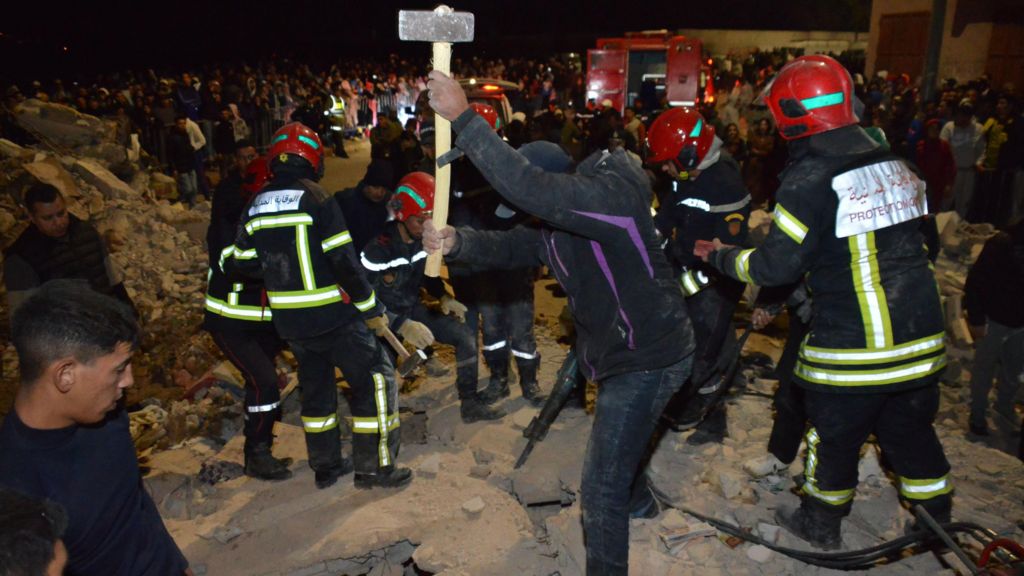
    A devastating structural failure in the Moroccan city of Fez has resulted in significant casualties, with authorities confirming at least 19 fatalities and 16 individuals injured. The catastrophe occurred in the early hours of Wednesday when two adjacent four-story residential buildings suddenly collapsed in the Al Massira suburb, located in the newer southwestern district of the ancient city.

    According to official statements carried by state media, the collapsed structures housed eight families, raising concerns about the potential for additional casualties as emergency teams continue search and rescue operations. Multiple Moroccan news outlets have reported that both buildings had exhibited visible signs of structural deterioration for several years prior to the incident, suggesting possible maintenance issues or regulatory oversights.

    Fez, renowned as one of Morocco’s oldest urban centers with historical sections dating to the 8th century, now faces urgent questions about building safety standards in its modern developments. Emergency personnel worked through the night using heavy machinery and manual efforts to search for survivors trapped beneath the rubble. Distressing footage from the scene, including video published by news outlet Akhbarona, shows rescue workers carrying victims on stretchers amid the extensive debris field.

    As a precautionary measure, authorities have evacuated residents from neighboring buildings while medical facilities treat those injured with varying severity of wounds. This tragedy represents the third major building collapse in Fez within recent memory, following a May incident that killed nine people in a condemned structure and a February 2024 event that claimed five lives in the old city following severe weather conditions.

    The repeated structural failures in this historically significant North African city, which ranks as Morocco’s third most populous urban center, have raised serious concerns about building safety regulations, maintenance enforcement, and urban development practices in rapidly growing areas.

  • Tariffs add strain to US holiday season

    Tariffs add strain to US holiday season

    The traditional period from Thanksgiving through Christmas and New Year’s celebrations, typically marked by robust consumer spending in the United States, is experiencing unprecedented pressure due to ongoing tariff implementations. Recent policy measures have begun translating into tangible economic effects, with American shoppers confronting higher prices across numerous product categories during what is historically the nation’s most significant retail period.

    Market analysts observe that the cumulative impact of tariff structures is now permeating consumer markets, creating financial strain for households attempting to maintain their holiday shopping traditions. The increased costs, originating from international trade policy decisions, are affecting a wide spectrum of goods including electronics, clothing, and household items that typically see heightened demand during seasonal celebrations.

    Economic observers note that this development introduces additional complexity to consumer decision-making processes, potentially altering spending patterns and budget allocations for festive purchases. Retail sector representatives have expressed concern regarding the potential long-term implications for consumer confidence and spending behavior, particularly during this critical revenue generation window for many businesses.

    The situation presents a challenging environment for both retailers and consumers, as adaptation strategies are being implemented across the market ecosystem. Some retailers are absorbing portions of the cost increases while others are passing them along to consumers, creating a varied landscape of pricing approaches throughout the industry.

  • Man charged with attempted murder over shooting of NFL player

    Man charged with attempted murder over shooting of NFL player

    In a dramatic conclusion to a three-week manhunt, law enforcement authorities have apprehended 20-year-old Frederick Green from the Bronx, charging him with the attempted murder of New York Jets cornerback Kris Boyd. The shocking incident unfolded in the early hours of November 16th outside a prominent Midtown Manhattan restaurant, where what began as verbal taunting escalated into a violent physical confrontation.

    According to police reports obtained by CBS News, the altercation occurred when Boyd and two fellow Jets players, accompanied by an additional friend, were confronted by a group of strangers. The situation rapidly deteriorated into physical violence, during which Green allegedly discharged his weapon twice, striking Boyd in the abdominal region. One bullet penetrated the athlete’s lung before becoming lodged in his pulmonary artery, creating life-threatening injuries that required immediate critical care hospitalization.

    Surveillance footage from the vicinity captured Green fleeing the scene and entering a vehicle operated by an accomplice, initiating an extensive search operation. The breakthrough came on December 8th when U.S. Marshals tracked Green to his girlfriend’s apartment in Buffalo, approximately 360 miles from the crime scene. Law enforcement officials noted that Green had substantially altered his physical appearance in an attempt to evade detection.

    The arrest operation involved tactical teams surrounding the residential building, with marshals observing Green “peeking out the apartment window seeking potential escape routes before retreating upon noticing the presence of law enforcement and canine units.” The standoff concluded peacefully when Green surrendered with his hands raised.

    Boyd, who has since been discharged from medical care, recently visited his Jets teammates at their practice facility, signaling positive progress in his recovery. The 29-year-old defensive back joined the Jets earlier this year following two seasons with the Houston Texans, preceded by tenures with the Arizona Cardinals and Minnesota Vikings. Boyd had been on injured reserve since August due to a shoulder injury sustained during team practice.

    The case continues to develop as prosecutors prepare additional charges, including assault and criminal weapon possession, against the apprehended suspect.

  • US could ask foreign tourists for five-year social media history before entry

    US could ask foreign tourists for five-year social media history before entry

    The United States Department of Homeland Security (DHS) and Customs and Border Protection (CBP) have introduced a controversial proposal mandating visa-free tourists to submit five years of social media history as a new condition for entry. This significant policy shift, published in the Federal Register, would impact citizens from approximately 40 countries participating in the Visa Waiver Program, including the United Kingdom, Australia, Japan, and European Union nations.

    The proposed regulation expands the existing Electronic System for Travel Authorization (ESTA) requirements beyond the current $40 fee and basic biographical information. Applicants would now need to provide comprehensive digital footprints including all social media identifiers used over the past five years, telephone numbers from the previous decade, and extended family member details. The measure specifically affects those eligible for 90-day visa-free visits under the ESTA program.

    This initiative stems from President Donald Trump’s January executive order titled ‘Protecting the United States From Foreign Terrorists and Other National Security and Public Safety Threats.’ The administration has previously implemented similar requirements for student and H1B skilled worker visas, now extending digital scrutiny to tourist admissions. Officials cite enhanced national security screening as the primary motivation, particularly following recent security incidents including a Washington DC shooting involving an Afghan suspect.

    The proposal emerges as the United States prepares for major international events including the 2026 FIFA World Cup (co-hosted with Canada and Mexico) and the 2028 Los Angeles Olympics, potentially affecting millions of prospective visitors. A 60-day public comment period has commenced, during which privacy advocates and immigration experts are voicing substantial concerns.

    Digital rights organizations including the Electronic Frontier Foundation have condemned the measure as potentially exacerbating civil liberties violations. Immigration law firm Fragomen warns of practical consequences including extended ESTA processing times and administrative complications. The proposal follows documented declines in international tourism to the United States, with industry analysts noting a concerning trend of reduced visitor spending and Canadian boycott movements protesting Trump administration policies.

  • European nations agree to consider weakening protections for migrants dating to WWII

    European nations agree to consider weakening protections for migrants dating to WWII

    BRUSSELS (AP) — In a significant policy shift reflecting Europe’s evolving political landscape, 46 member states of the Council of Europe have initiated deliberations that could substantially reinterpret human rights protections for migrants. The discussions, held Wednesday in Strasbourg, France, signal a growing consensus toward modifying the application of the European Convention on Human Rights—a foundational document established post-World War II.

    Council of Europe Secretary General Alain Berset characterized the 75-year-old convention as a ‘living instrument’ while acknowledging nations’ responsibility to ‘safeguard national vital interests such as security.’ This development emerges as mainstream political parties across Europe increasingly adopt stricter migration policies to counter far-right political advances, despite data showing a 22% decrease in irregular border crossings into the EU this year.

    The movement gained momentum last year when nine nations signed a letter seeking to curtail the powers of the European Court of Human Rights—the council’s independent judicial arm. Critics, including Italy, Denmark and the United Kingdom, argue the court’s interpretations hinder their ability to deport migrant criminals and ensure national security. On Wednesday, 27 nations endorsed a separate statement advocating for less restrictive legal interpretations.

    Andrew Forde, co-founder of the AGORA legal academic group and former council employee, noted this represents the first time in the Council of Europe’s history that member states have explicitly identified a specific population segment for reduced rights protections.

    Concurrently, European Commission President Ursula von der Leyen pledged in Brussels to dismantle human smuggling networks, declaring: ‘Our goal is simple. We want to bankrupt their businesses through all means available.’ This commitment came during the second anniversary observance of the EU-led Global Alliance to Counter Migrant Smuggling.

    Paradoxically, while migration dominates political discourse, European nations simultaneously invest in programs to attract foreign workers to address aging populations and labor shortages, highlighting the continent’s complex relationship with migration policy.

  • Elon Musk says Doge was ‘somewhat successful’ but he would not do it again

    Elon Musk says Doge was ‘somewhat successful’ but he would not do it again

    In a revealing podcast interview, Elon Musk disclosed he would not reassume leadership of the Department of Government Efficiency (Doge) if given the opportunity, citing negative consequences for his corporate empire. The Tesla and SpaceX CEO made these remarks during an hour-long conversation on The Katie Miller Podcast, reflecting on his tumultuous tenure leading the Trump administration’s cost-cutting initiative.

    Musk departed Doge in May after initially pledging to save approximately $2 trillion annually through aggressive federal workforce reductions and program eliminations. The organization’s website claims $214 billion in savings this year, though Musk characterized the overall effort as only “a little bit successful” in achieving its objectives.

    When asked by host Katie Miller—a former White House adviser and Doge spokesperson—whether he would repeat his government service, Musk responded unequivocally: “I mean no, I don’t think so.” He indicated he would have preferred focusing exclusively on his companies, noting “they wouldn’t have been burning the cars” in reference to vandalism attacks targeting Tesla facilities and vehicles earlier this year.

    The billionaire’s high-profile political role sparked global protests and consumer boycotts against Tesla, contributing to the company’s sales plummeting to their lowest level in three years. Tesla warned investors that “changing political sentiment” continued to negatively impact demand.

    Despite his regrets, Musk defended Doge’s mission, stating: “You really want the least amount done by government as possible.” He asserted the advisory group—created through executive order on Trump’s first day back in office—had “stopped a lot of funding that really just made no sense,” including pushing for massive federal workforce reductions and attempting to shutter agencies like USAID.

    Musk revealed the unconventional name “Doge” originated from “internet suggestions,” acknowledging the group’s unofficial status within government. Several of its initiatives faced legal challenges or swift reversals, including the firing and subsequent rehiring of USDA bird flu officials.

    The Tesla CEO’s government service also strained his relationship with President Trump, culminating in a June falling-out when Musk criticized a Trump-backed spending bill. This triggered a public war of words on social media, with Trump threatening to investigate Musk’s government contracts.

    The relationship has since mended, with Musk attending a White House dinner in November and speaking positively of Trump’s “great sense of humor” during the podcast interview.

  • Ukraine to give revised peace plans to US as Kyiv readies for more talks with its coalition partners

    Ukraine to give revised peace plans to US as Kyiv readies for more talks with its coalition partners

    In a significant diplomatic development, U.S. President Donald Trump revealed Wednesday that he had engaged in substantive discussions with European counterparts regarding potential pathways to end the Ukraine conflict. The phone consultation with German Chancellor Friedrich Merz, British Prime Minister Keir Starmer, and French President Emmanuel Macron addressed what Trump characterized as “pretty strong terms” for a settlement, with a proposed follow-up meeting this weekend involving U.S. and Ukrainian representatives.

    The negotiations have reached what European leaders describe as “a critical moment” as Washington pursues a swift compromise to conclude hostilities that began with Russia’s full-scale invasion in 2022. This American urgency has reportedly constrained Kyiv’s diplomatic flexibility, placing President Volodymyr Zelenskyy in a delicate position where he must simultaneously safeguard national interests while demonstrating willingness to compromise to the Trump administration.

    Zelenskyy confirmed that Ukraine was preparing to submit its latest peace framework to U.S. negotiators, coinciding with planned virtual discussions Thursday with approximately 30 supporting nations dubbed the “Coalition of the Willing.” These allies have reinforced Zelenskyy’s efforts to ensure any settlement both addresses Ukrainian sovereignty and deters future Russian aggression while accommodating European security concerns.

    The Ukrainian leader outlined two primary documents under development: a comprehensive plan for postwar reconstruction and economic development, plus a separate 20-point framework specifically addressing conflict resolution. In a notable shift, Zelenskyy expressed conditional openness to holding presidential elections within 60-90 days if international partners can guarantee security during wartime and necessary legislative adjustments are implemented. This responsiveness follows Trump’s previous questioning of Ukraine’s democratic processes, which echoed similar Russian criticisms.

    The diplomatic landscape is further complicated by the Trump administration’s recently released national security strategy, which explicitly seeks improved relations with Moscow and “reestablished strategic stability with Russia” while characterizing European allies as weak. Russian Foreign Minister Sergey Lavrov praised Trump as “the only Western leader” demonstrating “understanding of the reasons that made war in Ukraine inevitable.”

    Meanwhile, military assistance to Ukraine has declined significantly since the Trump administration mandated that NATO countries fund any further U.S. weapons transfers. According to data from Germany’s Kiel Institute, foreign military aid dropped sharply through 2025, with total support falling to €32.5 billion compared to the €41.6 billion annual average from 2022-2024. While Scandinavian nations and Germany substantially increased contributions, several European countries including Spain and Italy reduced or eliminated their military support.

  • Gunfire as rebels target key DR Congo city despite Trump peace deal

    Gunfire as rebels target key DR Congo city despite Trump peace deal

    Eastern Democratic Republic of Congo faces a severe humanitarian crisis as M23 rebel forces intensify their offensive toward the strategic city of Uvira, triggering massive civilian displacement and raising alarms about potential regional destabilization. According to United Nations estimates, approximately 200,000 residents have fled their homes since fighting erupted earlier this month, with many crossing into neighboring Burundi for safety.

    The situation in Uvira—the last government-held city in the mineral-rich region—remains highly volatile despite conflicting reports about rebel control. Local sources describe chaotic scenes with sporadic gunfire and explosions reverberating through the city, prompting widespread closures of businesses and educational institutions. Terrified civilians have reportedly taken shelter indoors, with some residents describing a climate of fear where ‘every man for himself’ has become the prevailing sentiment.

    This escalation occurs despite a recent US-brokered peace agreement between DR Congo President Félix Tshisekedi and Rwandan leader Paul Kagame. Notably, the M23 rebel group is not party to this agreement and is concurrently engaged in separate mediation talks facilitated by Qatar.

    The international community has expressed profound concern over the deteriorating situation. The United States, European Union, and eight European nations have jointly accused Rwanda of supporting the rebel offensive—an allegation that Rwandan authorities vehemently deny. Instead, Rwanda claims DR Congo and Burundi have violated ceasefire agreements and conducted bombings near its border, displacing over 1,000 civilians into Rwandan territory.

    UN experts have reinforced allegations of Rwandan involvement, stating that Rwanda’s army maintains ‘de facto control of M23 operations.’ The conflict’s roots extend back three decades to the aftermath of the Rwandan genocide, with numerous peace agreements collapsing over the intervening years as armed groups continue vying for control of the region’s substantial mineral wealth.

    Humanitarian costs continue mounting, with at least 74 casualties confirmed—mostly civilians—and 83 wounded requiring hospitalization. A Burundian administrative source reported approximately 8,000 daily refugee arrivals over two days, totaling 30,000 within one week, highlighting the crisis’s rapid escalation.