作者: admin

  • Former CNOOC executive charged in bribery case

    Former CNOOC executive charged in bribery case

    In a significant development in China’s ongoing anti-corruption campaign, Yuan Guangyu, the former deputy general manager of China National Offshore Oil Corporation (CNOOC), has been formally indicted on bribery charges. The Supreme People’s Procuratorate announced on December 11, 2025, that the Xuzhou People’s Procuratorate in Jiangsu Province has filed charges against the 66-year-old former executive.

    The case follows an extensive investigation conducted by the National Supervisory Commission, which concluded its probe and transferred the findings to judicial authorities for prosecution. With jurisdiction designated by the Supreme People’s Procuratorate, Jiangsu Provincial People’s Procuratorate approved Yuan’s arrest on allegations of corruption.

    Prosecutors allege that Yuan exploited his influential positions—including director of CNOOC Bohai Oil Administration Bureau and executive vice-president and president of CNOOC Limited—to provide improper benefits to certain entities and individuals. According to the indictment, he accepted substantial illicit property from others, with the involved amount described as ‘extremely huge’ by judicial authorities.

    During the legal proceedings, judicial officials have followed standard protocol by informing Yuan of his defendant rights, conducting interrogations, and consulting with his defense counsel. The case represents another high-profile prosecution in China’s systematic anti-graft campaign targeting senior corporate executives in state-owned enterprises.

    Yuan, who had spent his entire career within the CNOOC system, was initially placed under investigation in March 2025, marking the beginning of a nine-month process that has now culminated in formal charges.


  • Man sentenced to 4 years in landmark dog poisoning case

    Man sentenced to 4 years in landmark dog poisoning case

    In a groundbreaking legal ruling, a Beijing court has sentenced a 65-year-old man to four years imprisonment for dispersing lethal toxins in a residential community, resulting in the deaths of nine pet dogs. The Chaoyang District People’s Court delivered the verdict on Thursday against defendant Zhang, convicting him of employing hazardous substances in public spaces—marking the first criminal case of its kind in Beijing’s judicial history.

    The tragic incident occurred in September 2022 when eleven dogs were poisoned within a Chaoyang district residential complex. Nine animals succumbed to sodium fluoroacetate, an extremely toxic compound commonly used in rodenticides that proves fatal through minimal contact or ingestion. Among the victims was a 13-year-old West Highland white terrier belonging to Li, who described the pet as her closest companion through her most formative adult years.

    The case gained significant attention as Li resigned from her employment to pursue justice, eventually representing multiple pet owners during October 2023 court proceedings. While Zhang admitted to dispersing the poisonous substance, he provided ambiguous motivations for his actions, citing general antipathy toward dogs while disputing direct responsibility for the fatalities.

    Legal experts highlight the case’s significance in establishing precedent for animal welfare litigation and defining legal boundaries regarding public endangerment through unauthorized use of toxic materials. The defendant has indicated intentions to appeal the verdict to a higher judicial authority.

  • Poland arrests Russian archaeologist wanted in Ukraine

    Poland arrests Russian archaeologist wanted in Ukraine

    Polish authorities have taken into custody a distinguished Russian archaeologist from St. Petersburg’s State Hermitage Museum following an international extradition request from Ukraine. The scholar, identified under Polish judicial protocols as Aleksandr B and publicly acknowledged by Russian officials as Alexander Butyagin, faces serious allegations regarding archaeological activities in Crimea.

    Ukrainian prosecutors assert that between February 2014 and November 2025, Butyagin conducted unauthorized excavations at the ancient Greek settlement of Myrmekion in Kerch. According to official statements, these activities resulted in partial destruction of the archaeological complex, with estimated damages reaching approximately 201.6 million Ukrainian hryvnia ($4.77 million).

    The arrest occurred on December 4th when Butyagin visited Poland to deliver academic lectures on Pompeii. Following detention, he was questioned by Warsaw prosecutors but declined to provide explanations regarding the allegations. Warsaw District Court has authorized his temporary incarceration at the Warsaw-Białołęka detention center for 40 days until January 13th pending extradition proceedings.

    Russia’s Foreign Ministry has condemned the detention as ‘absolute legal tyranny,’ vowing to pursue diplomatic channels to protect their citizen’s interests. The Kremlin identified Butyagin as head of the Ancient Archaeology of the Northern Black Sea region department at the prestigious Hermitage Museum.

    Myrmekion, an Ancient Greek colony established by Ionians in the sixth century BCE, represents significant cultural heritage in contemporary Crimea. Ukraine’s extradition request emphasizes that Butyagin operated without appropriate permits during what they term ‘the temporary occupation of Crimean territory.’

    The Russian Embassy in Warsaw has received official notification and is providing consular assistance to the detained academic, according to Polish judicial authorities.

  • China’s ‘Jiutian’ large drone takes first flight, aims for versatile civil roles

    China’s ‘Jiutian’ large drone takes first flight, aims for versatile civil roles

    China’s aviation sector has achieved a significant milestone with the successful inaugural flight of the ‘Jiutian,’ a large-scale unmanned aerial vehicle (UAV) developed by the state-owned Aviation Industry Corporation of China (AVIC). The demonstration took place on Thursday in Pucheng, located in Shaanxi province, marking a substantial advancement in the country’s indigenous drone capabilities.

    Engineered for exceptional performance metrics, the Jiutian drone features an impressive 16.35-meter length and a 25-meter wingspan. With a maximum takeoff weight of 16 tonnes, the aircraft can carry payloads up to 6,000 kilograms. Its operational specifications include an endurance of 12 hours and an extensive ferry range of 7,000 kilometers, enabling long-distance missions across diverse geographical regions.

    The UAV’s design incorporates advanced features including a high operational ceiling, broad speed range, and short takeoff and landing capabilities. These characteristics make it particularly suitable for challenging environments and various mission profiles. A key innovation is its modular payload system, which allows for rapid reconfiguration to address multiple civilian needs.

    Potential applications span critical sectors including precision logistics for delivering heavy cargo to remote areas, emergency communication support during disasters, comprehensive geographic surveying, and natural resource mapping. This versatility positions the Jiutian as a multi-role platform that could significantly enhance operational efficiency in fields requiring heavy-lift aerial capabilities without human pilot constraints.

    The development represents China’s growing expertise in high-end UAV technology and underscores the expanding applications of drone systems beyond military use into civilian and commercial domains, potentially creating new paradigms in transportation, emergency response, and resource management.

  • An airstrike on a hospital in a rebel-controlled area of Myanmar kills 34 and injures 80

    An airstrike on a hospital in a rebel-controlled area of Myanmar kills 34 and injures 80

    In a devastating escalation of Myanmar’s ongoing civil conflict, a military airstrike has obliterated a critical hospital in Rakhine State, resulting in substantial casualties among patients and medical personnel. The assault occurred Wednesday evening in Mrauk-U township, an area under the control of the ethnic Arakan Army rebel force.

    According to verified reports from rescue workers and independent media outlets, the aerial bombardment killed 34 individuals—17 women and 17 men—while injuring approximately 80 others. Wai Hun Aung, a senior rescue services official in Rakhine, confirmed that a jet fighter deployed two bombs at 9:13 p.m., with one striking the hospital’s recovery ward and another landing adjacent to the main building. The attack reduced most of the medical facility to rubble and damaged nearby vehicles.

    This hospital had served as a vital healthcare lifeline for local communities after most medical facilities in Rakhine shuttered due to prolonged conflict. Doctors had recently regrouped in Mrauk-U to restore essential medical services when the strike occurred.

    The military junta that seized power in Myanmar’s 2021 coup has remained silent regarding the attack. Meanwhile, the shadow National Unity Government—formed by lawmakers barred from office—has strongly condemned the assault and called for international intervention to pressure the military regime.

    The Arakan Army, which captured Mrauk-U in February 2024, represents the armed wing of the Rakhine ethnic minority seeking autonomy from Myanmar’s central government. Their November 2023 offensive has secured 14 of Rakhine’s 17 townships, including a strategically significant regional army headquarters.

    This incident occurs against the backdrop of planned December 28 elections, which opposition groups decry as an attempt to legitimize military rule. The junta has intensified airstrikes against pro-democracy forces ahead of the polls, deepening Myanmar’s political crisis that began with the 2021 power grab.

  • 2 workers trapped in S. Korean construction site collapse

    2 workers trapped in S. Korean construction site collapse

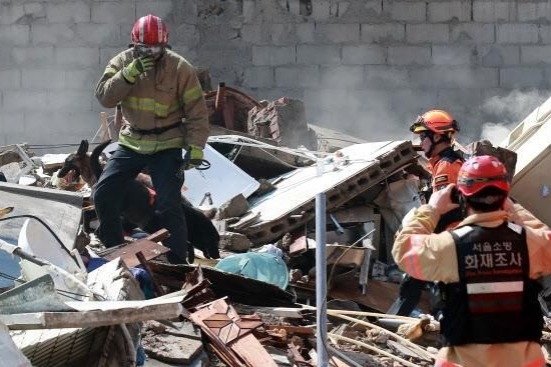
    Emergency response teams in Gwangju, South Korea, are conducting urgent rescue operations following the collapse of a steel structure at a library construction site on Thursday afternoon. The incident occurred at approximately 1:58 PM local time (0458 GMT) in the city located 270 kilometers south of Seoul.

    According to reports from Yonhap News Agency, two construction workers remain trapped beneath the collapsed framework. Fire and rescue authorities immediately deployed to the scene following the structural failure, though specific details regarding the workers’ conditions have not been disclosed.

    The collapse has raised immediate concerns about construction safety protocols at the developing site. Local officials have cordoned off the area while specialized teams work to stabilize the debris and extract the trapped individuals. The library project, part of the city’s urban development initiative, now faces scrutiny as investigators prepare to examine the causes behind the structural failure.

    This incident highlights ongoing challenges in construction safety within rapid development projects across South Korea. The response operation continues as rescue teams work against time to locate and extract the workers from the precarious situation.

  • EU pushes Ukraine membership bid forward despite Hungary’s objections

    EU pushes Ukraine membership bid forward despite Hungary’s objections

    In a significant move demonstrating continued support for Ukraine, the European Union presented Kyiv with a comprehensive reform roadmap during high-level talks in Lviv on Thursday. This development comes despite Hungary’s persistent objections to advancing Ukraine’s membership aspirations during ongoing hostilities.

    EU diplomats and officials, meeting in western Ukraine, established detailed requirements covering approximately half of the necessary reform clusters needed for accession. This approach allows substantive progress while formal negotiations remain stalled due to Budapest’s opposition. Hungarian Prime Minister Viktor Orbán maintains that accession talks should not proceed during wartime, citing concerns about Ukraine’s Hungarian minority and potential economic risks. Hungary notably abstained from sending representation to the Lviv meeting.

    Denmark’s European Affairs Minister Marie Bjerre emphasized the broader EU consensus, stating, ‘Twenty-six member countries envision Ukraine’s future within the EU. The question is not if, but when this will happen.’

    Cyprus, which joined the EU in 2004 as a divided nation, emerges as a potential model for Ukraine’s accession path. As Cyprus prepares to assume the EU’s rotating presidency in January, its officials have pledged to maintain momentum on Ukraine’s bid. Cypriot Deputy Minister for European Affairs Marilena Raouna commended Kyiv’s ‘extraordinary political will’ to implement crucial reforms despite Russia’s ongoing aggression.

    Ukraine’s reform requirements are organized into six comprehensive clusters, with Thursday’s agreement covering three critical areas: rule of law and democratic institutions, internal market regulations, and external relations. Ukrainian Deputy Prime Minister Taras Kachka acknowledged that recent corruption scandals have elevated judicial and anti-corruption reforms as immediate priorities, noting that implementation pace now rests primarily with Kyiv.

    Should Ukraine eventually join the EU, it would become the bloc’s largest member by land area, surpassing France. Its accession would significantly enhance the union’s agricultural capacity, energy security, and geopolitical influence while countering Russian dominance in the region. EU Enlargement Commissioner Marta Kos affirmed that providing Kyiv with a clear roadmap would accelerate transformative changes, asserting that ‘nobody can veto Ukraine from implementing these reforms’ or ultimately block its membership.

  • Austria bans headscarves in schools for under-14s

    Austria bans headscarves in schools for under-14s

    Austria’s parliament has approved landmark legislation prohibiting girls under age 14 from wearing traditional Muslim head coverings, including hijabs and burkas, in both public and private educational institutions. The controversial measure, backed by the center-right coalition government comprising the ÖVP, SPÖ, and Neos parties, takes effect following a phased implementation schedule beginning February 2026.

    Government representatives champion the legislation as a progressive step toward gender equality and female empowerment. Yannick Shetty, parliamentary leader of the liberal Neos party, emphasized that the ban aims to protect young girls from potential oppression rather than target religious practices. Approximately 12,000 children are estimated to be affected by the new regulations.

    Enforcement protocols establish a graduated response system: initial violations trigger mandatory discussions involving school authorities and legal guardians, while repeated non-compliance requires notification to child welfare agencies. The ultimate penalty involves fines up to €800 for families or guardians.

    This legislative action revisits previous legal battles—Austria’s Constitutional Court overturned a similar 2020 ban targeting girls under 10 for specifically singling out Muslim practices. The current government asserts it has crafted the law to withstand constitutional scrutiny, though officials acknowledge potential judicial challenges.

    The far-right Freedom Party (FPÖ) supported the ban while criticizing its limited scope, advocating for expanded prohibitions encompassing all students and school staff. Conversely, opposition Greens and Austria’s Islamic Community (IGGÖ) condemn the legislation as constitutionally questionable and socially divisive. The IGGÖ announced plans to evaluate the law’s constitutionality, citing the 2020 court precedent that found such bans violate equality principles and target religious minorities.

    The measure has ignited intense debate regarding religious freedom, integration policies, and state intervention in cultural practices, reflecting broader European tensions surrounding Islamic symbols in public spaces.

  • Thousands ready to evacuate as flooding hits Pacific Northwest

    Thousands ready to evacuate as flooding hits Pacific Northwest

    The Pacific Northwest faces unprecedented flooding crises as an atmospheric river system unleashes torrential rains across Washington, Oregon, and British Columbia. Meteorological experts warn of potentially record-breaking flood levels along the Skagit and Snohomish river basins, prompting large-scale evacuations on both sides of the US-Canada border.

    Washington Governor Bob Ferguson declared a statewide emergency Wednesday, estimating approximately 100,000 residents might require evacuation as rising waters threaten communities. Skagit County, a vital agricultural region north of Seattle, issued immediate evacuation mandates for floodplain residents. Robert Ezelle, Director of Washington’s Emergency Management Division, confirmed evacuation operations targeting 75,000 people from vulnerable low-lying areas.

    Transportation networks have suffered severe disruptions, with major highways to Vancouver closed due to flooding, debris flows, and elevated avalanche risks. The emergency declaration highlighted concerns about supply chain interruptions and transportation system impacts throughout the affected regions.

    In British Columbia, evacuation orders encompass Tulameen, Eastgate, and several additional communities. Abbotsford authorities directed emergency evacuations for 371 properties late Wednesday as waters continued rising.

    The atmospheric river phenomenon—where evaporated moisture forms skyborne currents resembling terrestrial rivers—has dumped exceptional rainfall across the bi-national region. While the most intense precipitation should diminish by Thursday afternoon, hydrological experts note that water will continue feeding into river systems for days.

    Meteorological models predict another storm system approaching Sunday, compounding an already critical situation where saturated ground and swollen waterways have created potentially catastrophic flooding conditions.

  • Kenyan court suspends ‘landmark’ US health aid deal over data privacy concerns

    Kenyan court suspends ‘landmark’ US health aid deal over data privacy concerns

    A Kenyan high court has issued an interim injunction suspending the implementation of a major $2.5 billion health assistance agreement between Kenya and the United States, citing serious data privacy concerns. The ruling comes in response to a legal challenge filed by consumer rights advocates who argue the pact could enable unauthorized transfer of sensitive medical information.

    The court’s decision specifically prohibits Kenyan authorities from taking any action to implement the agreement insofar as it facilitates “the transfer, sharing or dissemination of medical, epidemiological or sensitive personal health data.” This suspension will remain in effect until the case receives full judicial review, scheduled for February 12.

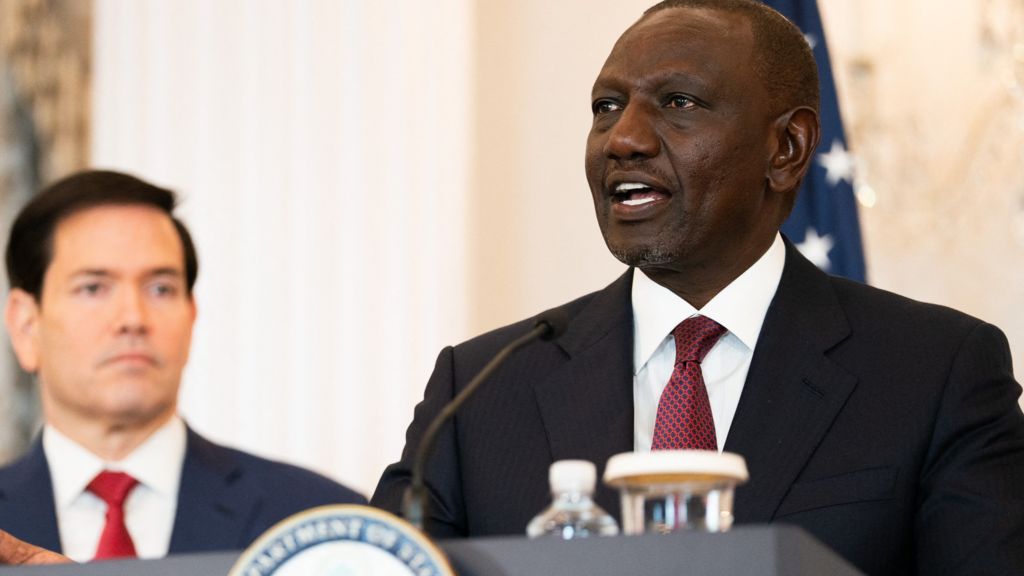
    The health agreement, hailed as “landmark” by US Secretary of State Marco Rubio during last week’s signing ceremony, represents a significant shift in American foreign aid strategy. The Trump administration has been pursuing direct government-to-government health partnerships across Africa, moving away from traditional aid agency channels. Under this new approach, recipient countries must increase their own health spending commitments. In the Kenya arrangement, the US pledged $1.7 billion while Kenya committed $850 million with plans to gradually assume greater financial responsibility.

    Despite government assurances, many Kenyans have expressed apprehension that the deal could grant US authorities access to highly personal medical records, including HIV status, tuberculosis treatment history, and vaccination data. The Consumer Federation of Kenya (Cofek), one of the petitioners, warned that external control over pharmaceuticals for emerging diseases and digital health infrastructure—including cloud storage of raw data—could compromise Kenya’s strategic control of its health systems.

    President William Ruto attempted to reassure citizens, stating that the attorney-general had meticulously reviewed the agreement to ensure Kenyan data protection laws would prevail. The US government has not publicly addressed the data privacy concerns raised by the court case. Similar health agreements have been signed with Rwanda, Lesotho, Liberia, and Uganda as part of the US global health strategy overhaul.