作者: admin

  • Work-life balance tips scales in Xiong’an’s favor

    Work-life balance tips scales in Xiong’an’s favor

    Nine years after China announced the establishment of Xiong’an New Area, this purpose-built city in Hebei province has emerged as a magnet for young professionals, luring talent away from overcrowded megacities with its enviable work-life balance, affordable housing and well-developed public services.

    On a mild March morning, 25-year-old Liu Suying wakes to sunlight spilling through the window of her 70-square-meter rented apartment in Xiongdong District, her pet cat curling against her hand to rouse her. After whipping up a quick breakfast of fried eggs and fresh coffee in her compact kitchen, she climbs into her car for the short commute to her role as a production planning engineer at a local commercial satellite firm. Just seven minutes after leaving home, she arrives at her desk, ready to start the workday.

    A 2024 graduate of Beijing Jiaotong University, Liu is far from alone in choosing to build her career and life in Xiong’an. Her current living arrangement would be out of reach for many young people working in nearby Beijing: she pays just 10,000 yuan ($1,450) annually for a spacious two-bedroom apartment, and receives an additional 1,000 yuan monthly living subsidy from the Xiong’an local government. When Liu told a friend working at a leading tech firm in Beijing about her housing, the friend – who pays 3,000 yuan a month just to share an apartment with others for a single small room – immediately expressed jealousy.

    That such a comfortable, convenient lifestyle is available in Xiong’an marks a dramatic transformation from the area’s origins. When China first unveiled plans for the new area in April 2017, the 100-square-kilometer planned development zone was little more than sprawling farmland and scattered rural villages. Built with a core mission to ease overcrowding in Beijing by relocating non-capital functions outside the city, Xiong’an was designed from the ground up to prioritize quality of life for residents, not just economic growth.

    That deliberate planning has paid substantial dividends. According to local government data, Xiong’an’s permanent resident population hit approximately 1.4 million by the end of 2025, growing by 200,000 over the previous five years as more workers and families moved in. To date, more than 400 branches of China’s central state-owned enterprises have set up operations in the new area, bringing thousands of skilled employees with them and cementing Xiong’an’s reputation as an up-and-coming hub for innovation and career opportunity that doesn’t force residents to sacrifice personal well-being.

  • Most powerful cargo drone takes wing

    Most powerful cargo drone takes wing

    On March 31, 2026, a historic milestone in global unmanned aviation was achieved in Zhengzhou, Henan province, when the Norinco Luca — touted as the world’s most capable heavy cargo drone — completed its first test flight, marking a major breakthrough for China’s domestic unmanned aerial system (UAS) industry.

    Developed by Norinco UAS, a Beijing-based subsidiary of China North Industries Group Corp, the 7-ton prototype, also called Changying-8, lifted off from Zhengzhou Shangjie Airport at 9:30 a.m. local time. The aircraft remained aloft for approximately 30 minutes before a smooth touchdown at the departure airfield. Throughout the entire flight, the drone operated under the control of its on-board intelligent autonomous systems, with ground-based human controllers providing real-time oversight. Engineering teams conducted comprehensive checks of the drone’s flight control, avionics, electronic infrastructure, and power systems during the test, and confirmed all systems performed in line with pre-flight expectations.

    With a length of 17 meters and a wingspan stretching 25 meters, the Norinco Luca boasts an unmatched maximum payload capacity of 3.5 metric tons — a figure roughly equal to the combined weight of 50 average-sized adults. To put that capability in context, the drone can transport more than 1,700 cotton winter coats or 700 disaster relief tents in a single sortie, making it an ideal platform for long-distance logistics delivery. Its maximum operational range exceeds 3,000 kilometers, a distance comparable to a non-stop flight between Beijing and Urumqi in northwest China’s Xinjiang Uygur autonomous region.

    Unlike large manned cargo aircraft that require long, fully paved runways, the Norinco Luca can complete takeoff and landing on runways shorter than 500 meters. This short-field performance allows it to operate from underdeveloped airfields in challenging environments, including high-altitude plateaus and remote island outposts where traditional cargo aircraft cannot reach. The aircraft features an 18-cubic-meter cargo bay with accessible entry points at both the front and rear of the fuselage, enabling ground crews to turn the drone around for its next mission in as little as 15 minutes — a design that dramatically boosts logistics turnover efficiency for high-volume operations.

    To guarantee maximum operational safety, the drone is powered by two domestically manufactured turboprop engines, and incorporates multiple layers of safety redundancy for all critical systems, including flight control, navigation, and power distribution. It also comes equipped with cutting-edge smart aircraft health monitoring and automatic fault diagnosis functions that allow teams to identify and address issues before they impact operations.

    Geng Jianzhong, chief designer of the Norinco Luca, explained that the drone’s flexible modular design, high power output, large payload capacity, and standardized equipment interfaces allow ground personnel to quickly swap out mission payloads to adapt to a wide range of operational scenarios. Beyond routine commercial cargo delivery, the platform can be reconfigured to support emergency communications restoration, weather modification, border patrol, and electronic reconnaissance missions, filling critical capability gaps in remote and high-need environments.

    In the wake of the successful maiden flight, Geng outlined the development team’s next steps: the company will now prioritize completing the drone’s airworthiness certification process, preparing for customer deliveries, and rolling out commercial operations. At the same time, the team will continue advancing research into next-generation safe, efficient, and intelligent low-altitude transportation solutions.

    “Building on the foundation of this platform, we plan to develop even larger, smarter, and more advanced unmanned aerial systems in the coming years,” Geng said. “We also intend to design unmanned helicopters with vertical takeoff and landing capabilities, allowing us to offer fully integrated logistics solutions that meet the diverse operational and transportation needs of customers across a wide range of scenarios.”

  • China is trying to play peacemaker in the Iran war – will it work?

    China is trying to play peacemaker in the Iran war – will it work?

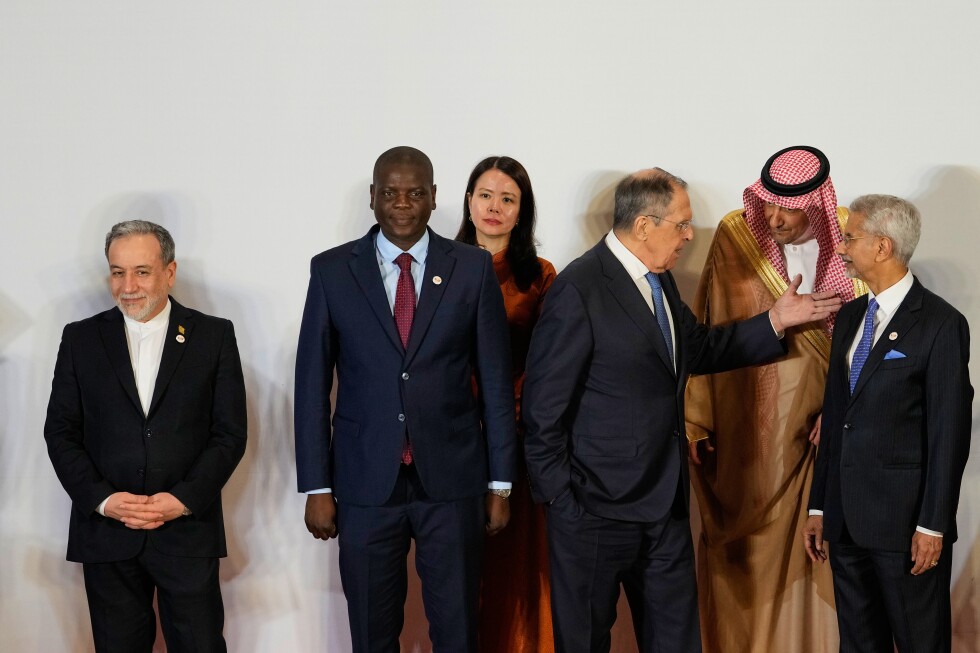
    As the armed conflict in the Middle East stretches into its second month, global energy markets have been thrown into chaos, with oil prices surging to multi-month highs amid disrupted supply chains. In this tense geopolitical landscape, China has emerged as an unexpected peace broker, joining Pakistan to table a five-point peace initiative aimed at securing an immediate ceasefire and reopening the strategically critical Strait of Hormuz, a waterway through which roughly a fifth of the world’s daily oil supplies pass.

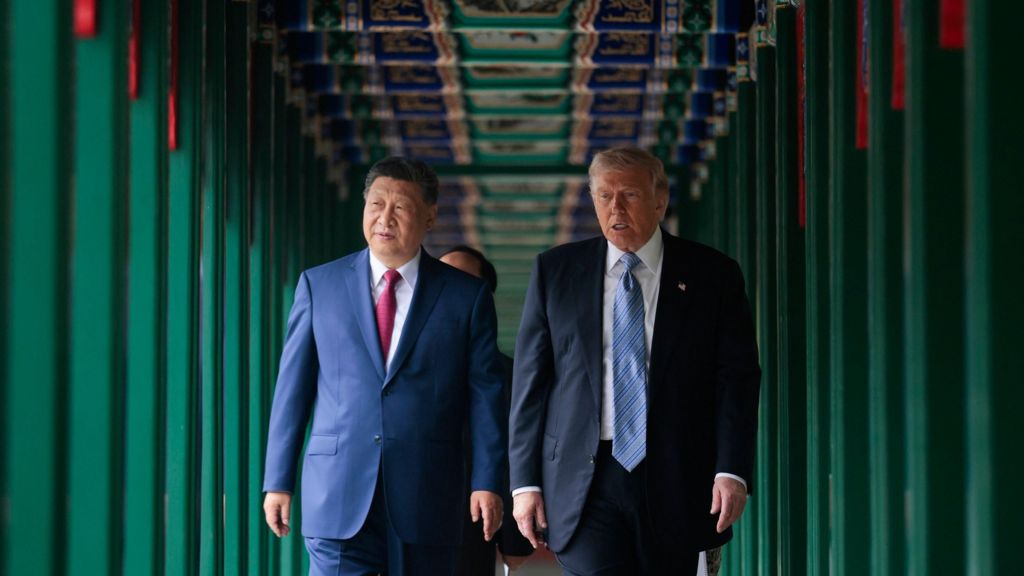
    The move comes as former U.S. President Donald Trump has suggested that direct American military action against Iran could wrap up within two to three weeks, though no clear timeline or post-conflict plan has been laid out to date. Pakistan, a long-time U.S. ally that has positioned itself as an unlikely intermediary in the U.S.-Israel led campaign against Iran, has reportedly already gained Trump’s ear for its mediation efforts. China’s entry into the fray comes just weeks ahead of high-stakes trade talks between Chinese leader Xi Jinping and Trump, placing Beijing directly in a role as a diplomatic counterweight to Washington in the region.

    Zhu Yongbiao, director of the Centre for Afghanistan Studies at Lanzhou University and a leading Chinese expert on Middle East affairs, described Chinese backing for the initiative as “very important.” He noted that “Morally, politically and diplomatically, China is providing comprehensive support with the hope that Pakistan can play a more distinctive role” in de-escalating the conflict. This marks a notable shift for Beijing, which had maintained a relatively muted public response to the war since it began with U.S. and Israeli strikes on Iran in late February.

    The joint peace plan took shape after Pakistan’s foreign minister traveled to Beijing to formally request Chinese backing for Pakistan’s negotiation efforts. Following the meeting, Chinese Foreign Ministry officials confirmed that the two countries were making “new efforts towards advocating for peace,” releasing a joint statement that reaffirmed dialogue and diplomacy as “the only viable option to resolve conflicts” and called for the protection of global key waterways including the blockaded Strait of Hormuz.

    While energy security is a core consideration for Beijing, analysts note that the world’s largest crude importer currently holds enough strategic stockpiles to cover its domestic needs for the next several months. Instead, China’s decision to step into the mediation role is rooted in its broader pursuit of global economic stability, a priority that is closely tied to Beijing’s efforts to reboot its post-recovery sluggish domestic economy. A prolonged energy shock triggered by the conflict would drag down global growth, which would in turn hit Chinese factories and export-dependent sectors that are central to the country’s economic rebound.

    Matt Pottinger, chairman of the Foundation for Defense of Democracy’s China Program, explained that “If the rest of the world begins to slow down economically because of an energy shock, that’s going to be tough for China’s factories and exporters. That’s why I think when I see China’s foreign minister just this week advising Iran that we need to find a way to end this war, I think there’s some sincerity there. I think that Beijing is a little bit worried about where this could lead if it turns into a real energy shock that is protracted.”

    A prolonged crisis would send ripples through China’s sprawling industrial supply chain, from raw material inputs for plastic goods and synthetic textiles to critical components for consumer electronics, electric vehicles and semiconductors – sectors that are foundational to China’s export economy. In recent years, the Middle East has become one of China’s fastest growing export markets, with Chinese sales to the region growing nearly twice as fast as exports to the rest of the world in the last year. The region is the world’s fastest growing market for electric vehicles, and China is the largest foreign investor in regional desalination projects, with major Chinese state-owned energy and infrastructure firms operating across Saudi Arabia, the United Arab Emirates, Oman and Iraq.

    This deepening economic engagement has allowed China to build balanced diplomatic ties across the region, maintaining strong relationships with both U.S. allies such as Saudi Arabia and geopolitical rivals of Washington such as Iran. China and Iran have maintained a close partnership spanning decades, with China serving as Iran’s largest trade partner and purchasing roughly 80% of Iran’s total oil exports.

    This is not the first time Beijing has sought to play the role of peace broker in the Middle East, though previous efforts have yielded mixed results. In 2023, China famously brokered a landmark deal to restore diplomatic relations between longtime regional rivals Saudi Arabia and Iran, a breakthrough that reduced the risk of open conflict between the two powers. A year later, Beijing hosted leaders from 14 competing Palestinian factions, including Fatah and Hamas, resulting in an agreement to form a national unity government for the Palestinian territories. While the agreement was largely an expression of intent rather than a binding final settlement, it further cemented China’s growing diplomatic profile in the region.

    Unlike the United States, which maintains a heavy military presence across the Gulf region, China’s global engagement does not come with formal security guarantees or military alliances. For Beijing, economic development remains the top domestic and foreign policy priority, and Chinese leaders have long avoided direct entanglement in Middle East great power conflicts. This cautious approach also reflects practical limitations: China’s only overseas military logistics facility in the broader region is a small anti-piracy hub in Djibouti, opened in 2017, and it lacks the power projection capabilities that the U.S. maintains across the Gulf. During the 2025 Israel-Iran war, Beijing maintained a largely hands-off approach, highlighting the inherent limits of its regional influence.

    To date, neither Washington nor Tehran has issued an official response to the new five-point peace plan. Analysts note that the initiative nonetheless allows Xi to position himself as a neutral broker and voice for de-escalation, a stark contrast to the Trump administration’s approach of military pressure. Still, Beijing’s credibility as a neutral global actor faces ongoing questions: its close strategic alignment with Russia has sparked widespread skepticism about its commitment to neutrality in regional conflicts, while its authoritarian governance model and expansionist territorial claims have drawn global criticism.

    Despite these caveats, China remains a powerful global actor with clear strategic interests in regional stability, and it has already demonstrated that it can wield meaningful diplomatic influence in the Middle East. For Beijing, the current mediation effort marks another step in its long-term push to expand its geopolitical leverage across the region in the years ahead.

  • IndiGo names former British Airways chief Willie Walsh as CEO

    IndiGo names former British Airways chief Willie Walsh as CEO

    India’s dominant domestic air carrier IndiGo has turned to a global aviation industry stalwart to steady its operations, announcing the appointment of Willie Walsh as its incoming chief executive officer. The move comes just one month after the sudden resignation of former CEO Pieter Elbers, who stepped down from the role effective March 10, with the resignation officially framed as a personal decision. But industry observers and analysts have broadly linked Elbers’ exit to the massive operational crisis that rocked the airline just three months prior, the most severe disruption in the carrier’s 20-year operating history.

    In December 2025, the airline was forced to cancel roughly 4,500 scheduled flights, leaving thousands of passengers stranded across airports throughout India. As India’s largest airline by market share, holding approximately 60% of the country’s domestic aviation segment, the disruption had outsized impacts on Indian travelers. Many passengers missed milestone life events including weddings and funerals, and all affected travelers were forced to quickly source costly, last-minute alternative travel arrangements at a peak travel period.

    The root of the disruption traces back to new national pilot duty and rest regulations rolled out by Indian aviation authorities, designed to cut down on dangerous crew fatigue. In a post-crisis acknowledgment, IndiGo’s leadership admitted it had significantly miscalculated the number of active pilots it would need to maintain full operations after the rules went into effect. Following an investigation into the chaos, India’s civil aviation regulator imposed a $2.45 million fine on the carrier and publicly reprimanded multiple senior company leaders, including Elbers, for poor crisis management.

    After Elbers’ departure, IndiGo co-founder Rahul Bhatia stepped in to serve as interim CEO, a role he will retain until Walsh officially takes over leadership of the airline. Walsh is set to join IndiGo in August 2026, once his current term as Director General of the International Air Transport Association (IATA) concludes.

    Walsh’s 50-year career in aviation is one of steady upward progression from entry-level pilot to global industry leadership. He launched his career in the late 1970s as a cadet pilot with Irish flag carrier Aer Lingus, working his way up through flight operations roles before being named Aer Lingus CEO in 2001. He went on to take the top leadership role at British Airways in 2005, and later became the founding CEO of International Airlines Group (IAG), the parent holding company of both BA and Aer Lingus, holding that role until his retirement from the group in 2020. He stepped into the IATA director general role shortly after leaving IAG.

    In a prepared statement following his appointment, Walsh noted that the global aviation sector is undergoing a period of rapid transformation, adding that IndiGo is uniquely positioned to lead this shift in the South Asian market. IndiGo chairman Vikram Singh Mehta echoed that confidence in the new CEO, highlighting Walsh’s decades of experience leading large-scale global airline operations and navigating volatile, complex market conditions as the exact skill set needed to guide IndiGo into its next phase of strategic growth.

    Today, IndiGo operates a fleet of more than 400 aircraft, running thousands of daily domestic flights across India alongside a growing portfolio of international routes. The carrier has recently made expansion into the premium long-haul international travel segment a core strategic priority, making steady, stable leadership critical to executing that growth plan.

  • Hiker’s dog lost in a wild New Zealand forest rescued by helicopter after strangers fund search

    Hiker’s dog lost in a wild New Zealand forest rescued by helicopter after strangers fund search

    On the rugged, untamed West Coast of New Zealand’s South Island, a dramatic story of community kindness and canine resilience has come to a heartwarming close, nearly a week after a hiking accident left an injured hiker separated from her beloved pet.

    The incident unfolded on March 24, when 34-year-old hiker Jessica Johnston slipped and fell 180 feet (55 meters) from a rocky waterfall along the Arahura River, while trekking through remote native bush with her 4-year-old border collie, Molly. Emergency rescuers were quickly dispatched to the hard-to-reach location, where they found Johnston alive but suffering extensive bruising and deep lacerations across her body. With the hiker’s condition requiring urgent medical care, crews airlifted her to a nearby hospital, but a frantic initial search for Molly turned up no trace of the dog, forcing rescuers to leave the missing canine behind in the unforgiving wilderness.

    For Matt Newton, owner and lead pilot of Hokitika-based Precision Helicopters Ltd — whose operating base sits just a short distance from the Arahura River — the story didn’t end there. After reaching out to Johnston while she recovered in hospital to offer his support, Newton committed to launching his own sustained search for Molly. He made multiple initial flights over the search area, but dense vegetation and tricky terrain blocked all efforts to locate the dog.

    Refusing to abandon the mission, Newton and his family launched a public fundraiser to cover the cost of additional flight time and specialized thermal imaging equipment required for a more thorough search. The appeal resonated deeply with the public, and within days, hundreds of strangers from across New Zealand and beyond contributed more than NZ$11,000 (US$6,300), far exceeding the fundraising goal.

    With funding secured, Newton launched a renewed search on March 31, bringing on board a veterinary nurse, trained volunteer searchers, and a tracking dog named Bingo to assist in the operation. Just an hour after the helicopter took to the skies, the team hit a breakthrough: thermal imaging picked up a heat signature matching a dog near the base of the waterfall, just meters from the spot where Johnston had fallen a week prior.

    The helicopter descended to a narrow ledge near the riverbank, allowing a volunteer and tracking dog Bingo to disembark and coax the scared, hungry Molly out of hiding. Rescuers described the border collie as thin, bedraggled, and hungry, but surprisingly steady; she did not run from the team, and allowed them to approach and secure her safely. Newton later shared that he believes Molly survived her seven days alone in the wild by preying on small feral animals that inhabit the river valley.

    After the successful extraction, Molly was brought back to the Precision Helicopters base, where waiting volunteers had planned to rotate into search crews. Instead, they scrapped the scheduled flight rotations, gathered for an impromptu celebratory barbecue, and took turns greeting and cuddling the rescued dog. Just hours later, Johnston — still recovering from her injuries — was able to travel to the base for an emotional, tearful reunion with her long-lost companion.

    Newton noted that the joy of being reunited with Molly is already giving Johnston a major emotional boost as she recovers. “Having your dog back, that’s for sure… that’ll speed up her healing process a whole lot,” he said. Images released by Precision Helicopters captured the tender reunion, as well as the moments of Molly’s extraction from the remote river edge.

    The story has captured hearts across New Zealand, a testament to the power of collective community goodwill to bring about a happy ending that no one expected after the original hiking accident.

  • Israel strikes Iran’s capital as Trump set to address US on war

    Israel strikes Iran’s capital as Trump set to address US on war

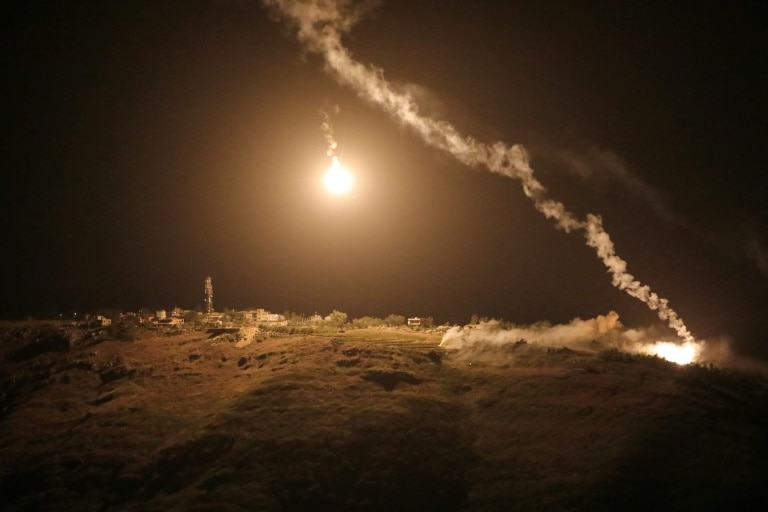
    In a sharp escalation of the month-long Middle East conflict that began with coordinated US-Israeli attacks on Iran on February 28, Israel carried out a wide-ranging wave of airstrikes targeting Iran’s capital Tehran early Wednesday, just hours before US President Donald Trump was set to deliver a highly anticipated national address on the future of the war. The conflict, which has already spread across the region, has sent global energy markets into chaotic volatility and placed the entire global economy at serious risk of disruption.

    Iranian state media first confirmed the assault, reporting loud explosions across northern, eastern, and central districts of the capital. Shortly after the strikes, the Israeli military officially confirmed the operation and later announced it was intercepting a new missile launch launched from Iran — the first retaliatory missile attack from Iran in roughly 20 hours. Beyond the capital, the violence spilled across multiple regional fronts on Wednesday, underscoring the conflict’s rapid expansion.

    Yemen’s Iran-aligned Houthi movement, which joined the conflict over the weekend, fired a missile toward Israel. Israeli air defense systems intercepted the projectile, and no casualties were reported. However, the Houthi’s ongoing threats to disrupt Red Sea shipping have added new strain to global trade, already disrupted after Iran effectively closed the Strait of Hormuz, one of the world’s most critical energy chokepoints. In Lebanon, the Israeli military confirmed it carried out strikes that killed a senior Hezbollah commander, with Lebanon’s health ministry reporting seven civilian fatalities in strikes on southern Beirut and surrounding areas. Since Israel launched its campaign against the Iran-backed militant group, more than 1,200 people in Lebanon have been killed and over a million have been displaced from their homes. To the east across the Gulf, Iran launched retaliatory drone strikes against US-aligned regional nations that Tehran accuses of serving as launching pads for American attacks. Kuwait’s civil aviation authority reported a major fire at fuel storage tanks at Kuwait International Airport following a drone attack, while Bahrain recorded a fire at a commercial facility tied to Iranian aggression, and Saudi air defenses intercepted and destroyed multiple incoming drones. A British maritime security firm also reported that a commercial tanker was hit by a projectile off the coast of Doha, Qatar’s capital, causing structural damage but no reported injuries or deaths.

    On the diplomatic front, the status of any negotiations to end the conflict remains murky. Trump, whose public comments on the war have shifted repeatedly between combative rhetoric and hints of diplomacy, has publicly predicted the conflict will end within two to three weeks. “But we’re finishing the job,” he insisted, ahead of his scheduled 9:00 pm Wednesday address (0100 GMT Thursday), which the White House described as an “important update on Iran.” Iranian President Masoud Pezeshkian responded by confirming his country has the political will to end the war, but only if hostile powers provide guarantees that the conflict will not reignite in the future. In a stark warning to the United States, Iran’s Islamic Revolutionary Guard Corps threatened major damage to 18 leading American technology firms — including industry giants Intel, Tesla, and Palantir — accusing the companies of complicity in previous targeted assassinations of Iranian leaders. The IRGC warned that any further killings of senior Iranian figures would lead to “destruction” for the firms.

    Israeli Prime Minister Benjamin Netanyahu has remained unyielding, saying the Israeli campaign will continue despite his claims that the conflict has already “changed the face of the Middle East” and eliminated Iran’s ballistic missile and nuclear program threats. “We had to act, and we acted,” he said in a televised address on the eve of the Passover holiday. “We will continue to crush the terror regime.” The Israeli military reported Wednesday that it has struck approximately 7,000 targets across the region since the war began, including 4,000 targets inside Iran, and claims to have eliminated more than 2,000 Iranian soldiers and senior commanders.

    US Defense Secretary Pete Hegseth, who recently visited American troops deployed in the Middle East, told reporters Tuesday that the coming days will be the most decisive of the conflict to date. “Iran knows that, and there’s almost nothing they can militarily do about it,” he said. US Central Command also released video Tuesday showing American forces using precision munitions to strike underground military targets deep inside Iranian territory. Trump ramped up pressure on Iran Monday, threatening to “obliterate” Iran’s critical oil infrastructure including its main Kharg Island export terminal, and even civilian water desalination plants, if Tehran refuses to accept a US-brokered deal.

    The Iranian government has repeatedly denied it is engaged in formal negotiations with the United States, though Iranian Foreign Minister Abbas Araghchi confirmed that he still receives direct communications from US envoy Steve Witkoff. “This does not mean that we are in negotiations,” Araghchi told Al Jazeera.

    Global financial markets have reacted sharply to conflicting signals around the conflict. Crude oil prices have jumped amid persistent concerns over the closure of the Strait of Hormuz, through which roughly a fifth of global oil supplies pass daily. However, Asian stock markets rallied Wednesday following Trump’s comments hinting the war could end soon: Japan’s Nikkei 225 index opened more than 3 percent higher, while South Korea’s Kospi gained nearly 5 percent. Trump has drawn criticism for his comments saying that France, China, and other nations dependent on passage through the Strait of Hormuz will have to “fend for themselves” if they refuse to assist the US in securing the waterway during the conflict.

    Domestically, surging fuel prices driven by the regional standoff have emerged as a political liability for Trump. During a stop at a suburban Washington gas station Wednesday, 83-year-old Jeanne Williams expressed widespread public frustration with the rising costs and the conflict itself. “That is horrible,” she said. “I’m just bewildered, confused, unhappy. Because we didn’t ask for this war.” Trump has brushed off concerns about rising prices hurting American consumers, telling reporters that prices will fall rapidly once the US withdraws from the conflict. “All I have to do is leave Iran,” he said. “And we’ll be doing that very soon, and they’ll come tumbling down.”

  • Megan Thee Stallion taken to hospital during Moulin Rouge performance

    Megan Thee Stallion taken to hospital during Moulin Rouge performance

    One of hip-hop’s biggest award-winning stars has hit an unexpected hurdle early into her first Broadway stint. Grammy-winning rapper Megan Thee Stallion was rushed to a local New York hospital mid-show during a Tuesday night performance of *Moulin Rouge! The Musical*, her representative has officially confirmed.

    The 31-year-old artist, who made her highly anticipated Broadway debut March 24 stepping into the iconic role of Harold Zidler — the musical’s unapologetically eccentric emcee — began experiencing unexpected severe illness mid-performance. According to her spokesperson, she was immediately transported to a nearby medical facility for evaluation, where providers are still assessing the cause of her symptoms. “We will share additional updates as more information becomes available,” the representative told multiple U.S. media outlets.

    News of the emergency hospitalization was first shared publicly by Megan Thee Stallion’s long-time hair stylist Kellon Deryck, who posted a plea to fans on the social platform X: “Everyone say a prayer for Megan, we are all at the hospital.”

    The rapper, whose legal name is Megan Pete, had spent weeks building excitement for her limited Broadway run, which is currently scheduled to run through May 19. Ahead of her opening night, she shared her enthusiasm for trading her usual concert tour schedule for a turn in the spotlight of New York’s theater world. After her triumphant opening night performance, she took to social media to shout out her loyal fanbase — known affectionately as “Hotties” — writing, “HOTTIES IM ON BROADWAY!!”

    A multi-platinum global superstar, Megan Thee Stallion rose to mainstream fame with chart-topping hits including *Savage*, *WAP*, and *Body*. In 2021, she made history taking home three Grammy Awards in a single year: Best Rap Song, Best New Artist, and Best Rap Performance. She followed that milestone with a 2022 Album of the Year nomination for her critically acclaimed debut studio album.

    The role of Harold Zidler, which Megan is currently performing in the limited celebrity guest stint, is one of Broadway’s most coveted. The character was originated by Broadway veteran Danny Burstein, who took home the 2020 Tony Award for Best Actor in a Musical for his portrayal. Earlier this year, famous drag artist Bob the Drag Queen held the role for an eight-week limited engagement before Megan stepped into the part.

    The BBC has confirmed it has reached out to Megan Thee Stallion’s representation for additional comment as details of her health condition remain pending.

  • Chinese robotaxis stall in apparent ‘malfunction’: police

    Chinese robotaxis stall in apparent ‘malfunction’: police

    A cluster of Baidu-owned autonomous robotaxis came to an unexpected standstill on roads in central China’s Wuhan city this week, leaving passengers stranded after what local police have preliminarily identified as a system-wide malfunction. The incident, which unfolded on Tuesday evening, prompted a flood of emergency calls to local law enforcement, with reports of multiple Baidu Apollo Go vehicles blocking lanes after becoming immobile.

    Launched as Baidu’s flagship commercial autonomous ride-hailing service, Apollo Go first rolled out paid driverless trips in Beijing back in 2021, and has since expanded its operational footprint to designated zones across dozens of Chinese cities. Wuhan alone hosts more than 500 vehicles from Baidu’s driverless fleet, making it one of the service’s largest domestic hubs.

    In an official statement released Wednesday, Wuhan police confirmed that preliminary investigations point to a system malfunction as the root cause of the simultaneous stalls, though authorities did not disclose the exact number of vehicles affected by the disruption. Footage and posts shared by affected passengers on Chinese social media platforms have offered a first-hand look at the disruption: multiple videos show riders stuck inside stationary robotaxis stuck in active traffic lanes, repeatedly attempting to reach Baidu customer service via in-car tablets with no response. One passenger documented they remained stranded in the middle of a road for more than 30 minutes, with a social media caption questioning if the entire Apollo Go service had been paralyzed.

    As of press time, Chinese tech giant Baidu has not issued an immediate public response or comment to Agence France-Presse’s request for information about the incident. Beyond its domestic operations, Baidu has actively pursued global expansion of its autonomous driving technology in recent years, striking integration deals with major U.S. ride-hailing platforms Lyft and Uber to bring its self-driving systems to international markets.

    Company filings show the service has seen rapid growth in ridership over the past 12 months: in the fourth quarter of 2024, Apollo Go completed 3.4 million fully driverless rides, representing a more than 200% year-over-year increase in total trip volume. The Wuhan malfunction comes as autonomous vehicle technology continues to face ongoing scrutiny around the world over system reliability, emergency response protocols, and public safety as companies scale commercial deployments.

  • Russian women decry plans to therapise them into having children

    Russian women decry plans to therapise them into having children

    Russia’s ongoing demographic decline, marked by the lowest birth rates in two centuries, has pushed the Kremlin to roll out a suite of increasingly coercive policies to push women into having children – but many of the country’s women are pushing back hard, calling these measures cruel, counterproductive, and disconnected from the real barriers to starting families.

    In February, Russia’s Ministry of Health greenlit new clinical guidelines that instruct medical providers to refer women who express no desire to have children to psychotherapists, with the explicit goal of cultivating a “positive attitude toward motherhood”. The policy comes on the heels of broader government restrictions that have already banned so-called “child-free propaganda” in media, outlawing public discussion of choosing to remain childless, and imposed heavy fines of up to 400,000 rubles (roughly $5,000) for violators. In recent years, authorities have also rolled back access to abortion, forcing private clinics across most of the country to stop offering the procedure.

    For decades, Russia has grappled with a persistent fertility gap: its current fertility rate sits at 1.4 children per woman, far below the 2.1 replacement threshold demographers identify as necessary to maintain a stable population size. The crisis has deepened dramatically since the full-scale invasion of Ukraine in 2022, which saw hundreds of thousands of young Russian men deployed to the front line, exacerbating population losses. President Vladimir Putin has repeatedly warned that sustained low birth rates could lead to “veritable extinction” for the country, framing the push for higher birth rates as a matter of national survival.

    But women interviewed by AFP say that instead of addressing the root economic and social barriers that lead many to delay or forgo having children, the government is leaning into coercion that will do nothing to reverse falling birth rates. All women interviewed requested to be identified only by their first names for privacy.

    “I don’t see myself as a mother and I don’t see any reasons why having children would make me happier,” said Maria, a 25-year-old IT professional. “I might change my point of view one day. But the state is doing everything possible to make sure that doesn’t happen.” She dismissed the government’s efforts to pull Russia out of its demographic decline as “pathetic”, adding: “Tightening the screws, making safe abortions inaccessible, brainwashing people, bragging about supposedly huge benefit payments, sending them to a psychologist. It’s cruel and completely ineffective. What women really want is social guarantees, a living wage, affordable housing, and most of all, peace and security.”

    Anastasia, a 29-year-old child rehabilitation specialist who has chosen not to have children due to financial instability, echoed those concerns. Her monthly salary sits at 100,000 rubles, a sum that makes saving for a home nearly impossible amid skyrocketing economic pressures. Since the invasion of Ukraine, sweeping international sanctions have spurred rampant inflation, and mortgage interest rates have jumped to as high as 20%, putting home ownership out of reach for many young Russians. Beyond economic hurdles, Anastasia pointed to a pervasive “lack of a fatherhood culture” in Russia, where few men take active roles in child rearing. The country has one of the highest divorce rates in the world, she noted, and after separation, men often leave women to raise children alone with little to no support. “First, you need to create conditions that make a woman actually want to have a child,” she said. “Not pressure her in every possible way.”

    Margarita, an English teacher who cannot have children for medical reasons, warned the new therapy mandate will cause lasting harm to women’s mental health by framing childless women as social outcasts. Even mothers who already have children are speaking out against the policy. “I believe that a woman has the right not to want to have children,” said Irina, a 45-year-old doctor and mother of two. “Why give birth if you don’t want to? Why force women to bear unwanted children?”

    Not all Russian residents interviewed shared this criticism. Maxim, a 49-year-old man, downplayed the policy, arguing it is only a recommendation, and added that he views the choice to remain childless as “unhealthy”.

  • Friend says Tess Crosley endures ‘endless harassment’ over Lachie Neale marriage split

    Friend says Tess Crosley endures ‘endless harassment’ over Lachie Neale marriage split

    For more than three months, an ordinary Australian mother who found herself accidentally caught in the high-profile marital split of Australian Football League (AFL) star Lachie Neale has been subjected to relentless, invasive harassment from media outlets and online trolls, a close personal associate has revealed.

    Tess Crosley, a former close friend of Neale’s wife Jules, became the center of sensational tabloid speculation after Jules Neale announced the end of her marriage to the Brisbane Lions midfielder three months ago, with widespread rumors linking Crosley to the relationship breakdown. Since that moment, what should have remained a private matter for all involved has spiraled into a campaign of intrusion that has devastated Crosley’s daily life, according to Lyall Mercer, a public relations strategist who knows Crosley personally and has shared her experience in a public LinkedIn post.

    Mercer was clear to emphasize he is not an official representative for Crosley nor is he being compensated for his statement, noting only that he has witnessed firsthand the damage the relentless coverage has inflicted. “No one outside of the three people involved actually knows the full truth of what led to the Neales’ separation,” Mercer wrote. “Yet that hasn’t stopped the entire spotlight from being thrown onto Tess, who never asked for any kind of public attention.”

    The scope of the intrusion goes far beyond sensational news articles, Mercer confirmed. Paid photographers have tracked Crosley for months across every part of her routine, trailing her to the gym, grocery stores, her private home, and even on a road trip from Brisbane to the Gold Coast when she visited her extended family. Media outlets have published photos of her spending private time on the beach with her young son and dropping the child off at his father’s home — moments that carry zero legitimate public interest, but only serve to feed ongoing online vitriol.

    That vitriol has escalated beyond hurtful commentary to direct threats against Crosley’s safety, leaving her in a constant state of anxiety. The constant scrutiny has taken a severe emotional toll on Crosley and her entire family, turning a private situation into a public spectacle that has left the mother feeling constantly vulnerable. Mercer stressed that the level of coverage has clearly crossed a line from acceptable reporting into outright harassment and bullying.

    Mercer added that Crosley has approved and fully supports his statement, and he is calling on media organizations and the public to shift their focus away from the private citizen, respect her right to a normal personal life, and end the campaign of intrusion that has upended her life.