作者: admin

  • Asian shares slip after Wall Street logs its worst day in 3 weeks

    Asian shares slip after Wall Street logs its worst day in 3 weeks

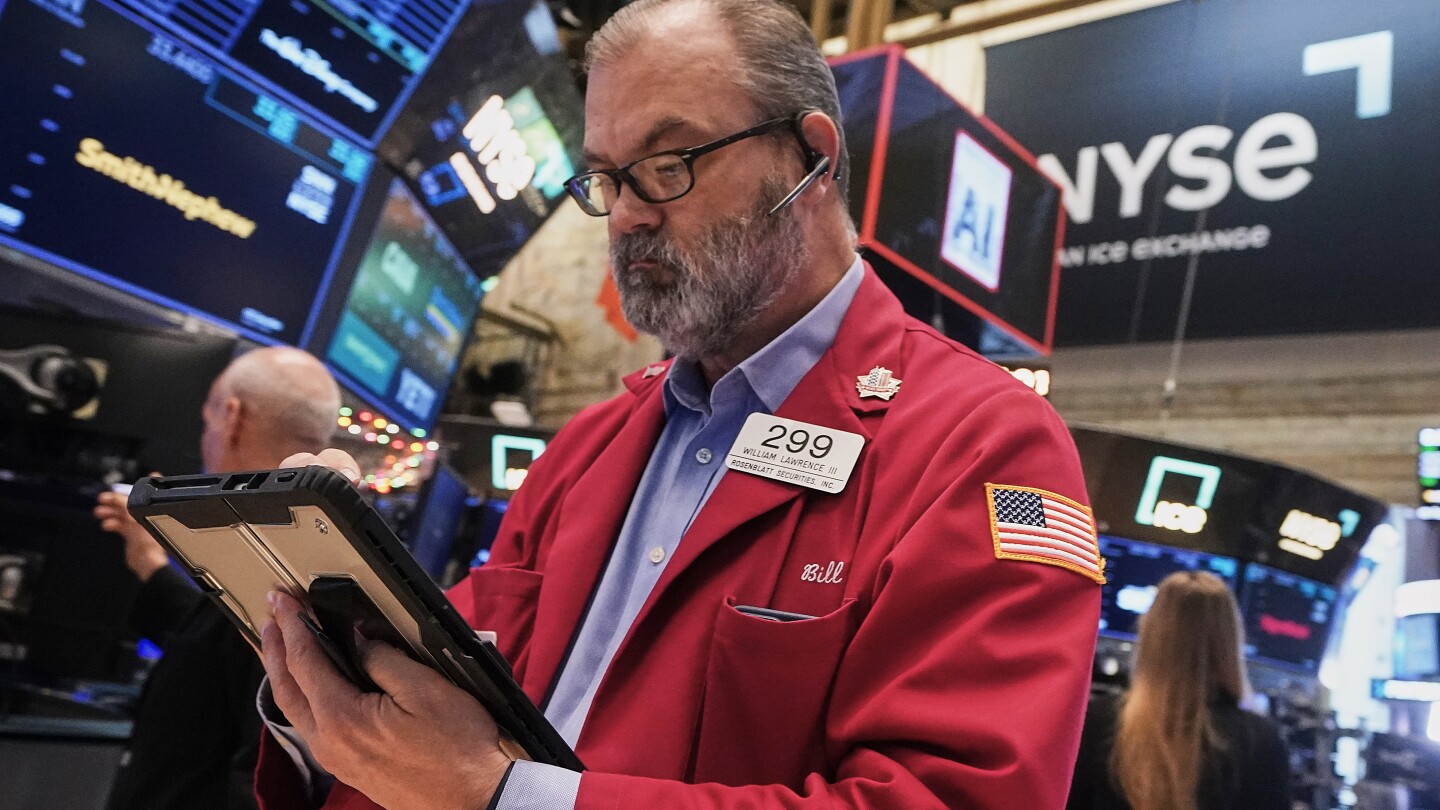
    Asian financial markets opened the week with significant declines as fresh economic indicators from China revealed persistent weakness in the world’s second-largest economy. The regional downturn extended last week’s disappointing performance on Wall Street, where artificial intelligence stocks experienced substantial corrections.

    Japan’s Nikkei 225 index led the regional retreat, dropping 1.5% to 50,092.10 points. Market participants remained cautious ahead of the Bank of Japan’s anticipated interest rate decision this week. Despite the market decline, the BOJ’s latest Tankan survey revealed a modest improvement in sentiment among major manufacturers, with the optimism index climbing to 15 from 14 in the previous quarter—marking the highest level in four years.

    The positive survey results contrasted with Japan’s recent economic contraction, which saw the economy shrink at a 2.3% annual pace in the July-September period—the first decline in six quarters. However, trade stability has been bolstered by the recent U.S.-Japan agreement that limits baseline import duties to 15%, providing relief for major automakers and electronics manufacturers.

    South Korea’s Kospi fell 1.2% to 4,117.68, while Hong Kong’s Hang Seng declined 0.7% to 25,786.45. China’s Shanghai Composite index managed a slight gain of 0.1% to 3,892.45, despite concerning economic data showing fixed-asset investment dropped 2.6% in November year-on-year. Cumulative data revealed an 11.1% decline in such investments through the first eleven months of 2023.

    Additional economic indicators showed retail sales growing 4% year-on-year in January-November, while factory output increased 4.8%. These figures followed China’s recent high-level policy meeting that produced no major economic shifts, maintaining the existing approach to stimulating consumer spending and domestic investment.

    Capital Economics analyst Zichun Huang commented, ‘Policy support should help drive a partial recovery in the coming months, but this probably won’t prevent China’s growth from remaining weak across 2026 as a whole.’

    The broader Asian region mirrored the downward trend, with Australia’s S&P/ASX 200 slipping 0.7% and Taiwan’s benchmark losing 1.1%. Meanwhile, U.S. futures indicated a potential rebound, with S&P 500 and Dow Jones Industrial Average futures both up 0.3%.

    The market weakness followed Friday’s significant tech selloff on Wall Street, where the S&P 500 fell 1.1% from its record high to 6,827.41—marking its worst performance in three weeks. The Nasdaq composite dropped 1.7% to 23,195.17, dragged down by AI-related stocks including Broadcom’s 11.4% plunge despite reporting stronger-than-expected quarterly profits.

    In commodity markets, U.S. benchmark crude oil gained 30 cents to $57.74 per barrel, while Brent crude rose 29 cents to $61.41. Currency markets saw the U.S. dollar slip slightly against the yen to 155.37, while the euro held steady at $1.1739.
  • 2 stabbed at entertainment complex in southern Japan, police arrest a 30-year-old suspect

    2 stabbed at entertainment complex in southern Japan, police arrest a 30-year-old suspect

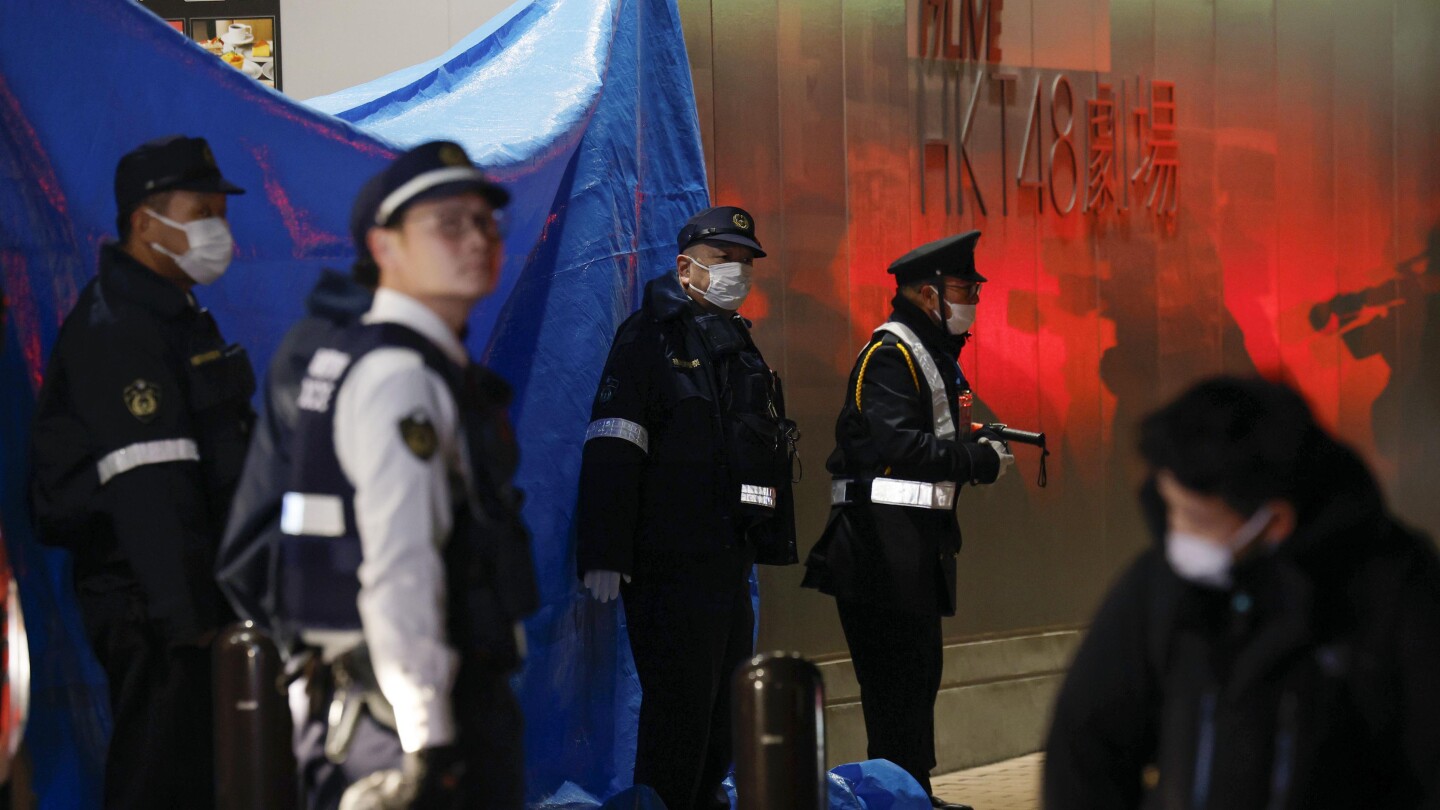
    Japanese authorities in Fukuoka have apprehended a 30-year-old male suspect following a violent incident at a pop culture entertainment venue that houses the renowned female idol group HKT48. The attack occurred on Sunday, resulting in two individuals sustaining non-fatal injuries.

    According to Fukuoka police reports, the suspect allegedly assaulted a 44-year-old male employee with what witnesses described as a kitchen knife, striking him in the chest. The confrontation reportedly began when the employee encountered the suspect in a restricted area and instructed him to leave. While authorities have made an arrest on suspicion of attempted murder, they have maintained discretion regarding potential motives and specific details of the ongoing investigation.

    Japanese media outlets, including Kyodo News, provided additional context indicating a second victim—a 27-year-old woman—was stabbed in the back within an elevator hall as the perpetrator attempted to flee the scene. Both injured parties received prompt medical attention and are expected to recover from their wounds.

    In response to the security breach and ensuing violence, HKT48 management immediately canceled a scheduled fan event that evening. The incident has drawn significant attention due to Japan’s generally low violent crime statistics and stringent weapon control regulations. Nevertheless, this event joins a concerning pattern of notable knife-related attacks and improvised explosive incidents that have emerged in recent years, challenging the nation’s reputation for public safety.

  • Australian Prime Minister Albanese proposes tougher national gun laws after mass shooting in Sydney

    Australian Prime Minister Albanese proposes tougher national gun laws after mass shooting in Sydney

    In response to Australia’s deadliest mass shooting in nearly three decades, Prime Minister Anthony Albanese has announced plans to strengthen national firearm regulations. The proposed reforms come after a father-son duo armed with six legally acquired weapons opened fire on a Hanukkah celebration at Sydney’s iconic Bondi Beach, resulting in 15 fatalities and 38 hospitalizations.

    The attack, which Albanese characterized as a terrorist incident, has triggered intense scrutiny of Australia’s gun licensing system. The prime minister revealed that new restrictions would include limiting the number of firearms a licensed owner can possess and implementing periodic license reviews rather than perpetual approvals. ‘People’s circumstances can change. People can be radicalized over a period of time,’ Albanese emphasized during a press conference.

    Investigations indicate the 50-year-old shooter, who was killed during the incident, legally accumulated his arsenal through a license obtained for target shooting or hunting purposes. His 24-year-old son, wounded in the attack, remains hospitalized and may face criminal charges.

    The victims spanned generations, including a 10-year-old girl, Rabbi Eli Schlanger (an event organizer), Holocaust survivors, and citizens of Israel and France. The tragedy has ignited fierce criticism from Jewish community leaders who question governmental inaction regarding rising antisemitism and security failures.

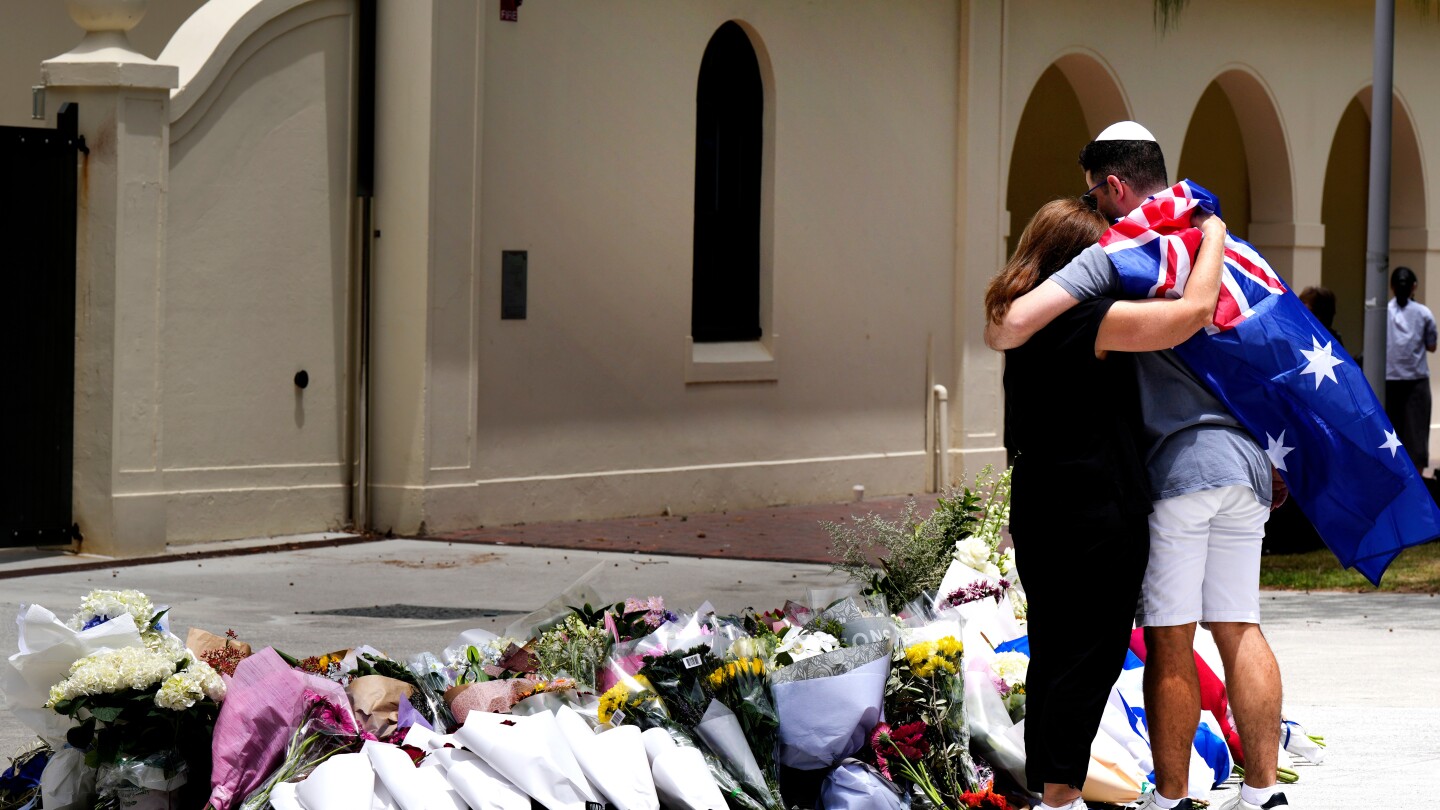
    Amid the grief, stories of heroism emerged, particularly concerning Ahmed al Ahmed, a fruit shop owner who confronted and disarmed one shooter despite being shot in the shoulder. As floral tributes accumulate at Bondi Beach, the nation grapples with balancing civil liberties with public safety in a country previously proud of its strict gun control legacy.

  • Syria arrests five suspects over shooting of US, Syrian troops in Palmyra

    Syria arrests five suspects over shooting of US, Syrian troops in Palmyra

    Syrian authorities have apprehended five individuals suspected of involvement in a deadly assault against a joint US-Syrian military convoy near the historic city of Palmyra. The coordinated security operation occurred just one day after a radicalized assailant killed two American soldiers and a civilian interpreter while wounding three additional US personnel and two Syrian service members.

    According to Syria’s Interior Ministry, the detained suspects are believed to have connections to the attacker, identified as an active member of Syrian security forces who allegedly maintained sympathies with Islamic State extremists. The ministry revealed that security assessments conducted prior to the attack had flagged the perpetrator’s potential extremist leanings, though no definitive action had been taken regarding his status.

    The operation was conducted through close coordination between Syrian General Intelligence and international coalition forces, demonstrating ongoing security cooperation despite political complexities. This incident represents a significant test for the recently strengthened US-Syria counterterrorism partnership, established barely a month earlier during President Ahmed al-Sharaa’s landmark White House visit.

    This attack underscores the persistent threat of ISIS resurgence in the region, despite the group’s territorial defeat between 2014-2019. Both nations have intensified counterterrorism operations in recent months, with Syria’s government reporting over 70 arrests during last month’s nationwide security campaign against suspected Islamic State affiliates.

    The United States maintains approximately 900 troops in northeastern Syria as part of the ongoing international mission to prevent terrorist regrouping. The current Syrian government, led by former rebels who overthrew Bashar al-Assad after a thirteen-year civil war, continues to navigate complex security challenges while establishing its counterterrorism credentials on the global stage.

  • Wall St Week Ahead: Investors eager for delayed data to shed light on US economy

    Wall St Week Ahead: Investors eager for delayed data to shed light on US economy

    Financial markets are poised for a pivotal week as long-delayed economic indicators finally emerge, offering crucial insights into the health of the U.S. economy. This data release comes after a 43-day federal government shutdown created an unprecedented information vacuum, forcing investors and policymakers to navigate without key metrics.

    The upcoming week features the highly anticipated November jobs report on Tuesday, followed by the critical consumer price index (CPI) reading on Thursday. These releases represent the first comprehensive economic snapshot in months and could significantly influence market direction through year-end. The data arrives amid a delicate balance for the Federal Reserve, which recently implemented its third consecutive quarter-point rate cut while signaling potential pause in further easing.

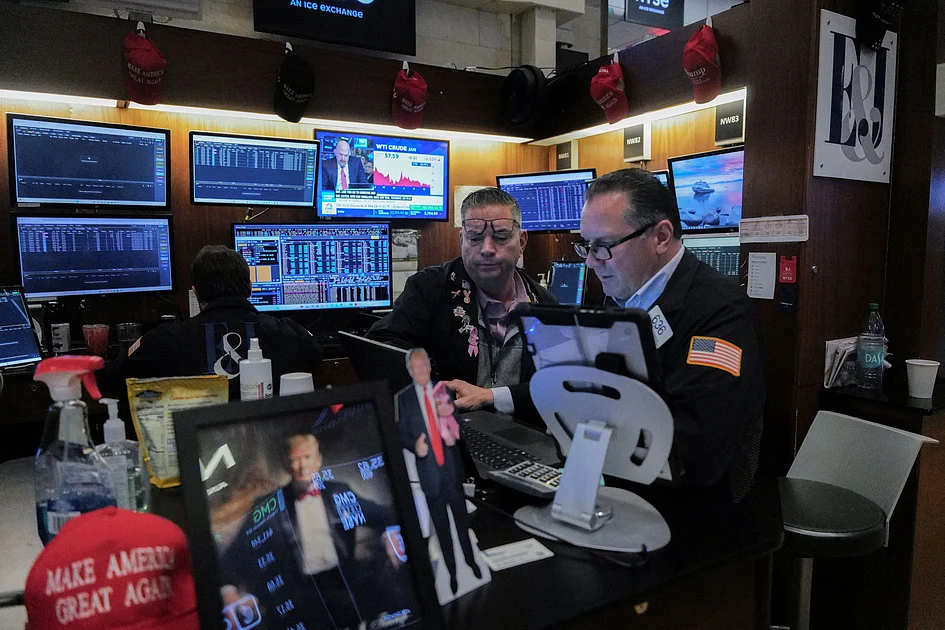
    Market participants face conflicting signals. While the S&P 500 has achieved record highs and maintains a 16% year-to-date gain, recent volatility in technology stocks—particularly AI-focused companies like Oracle and Broadcom—has introduced uncertainty. The technology sector’s weakness following disappointing quarterly reports has tempered the AI-driven rally that previously propelled markets.

    According to Jim Baird, Chief Investment Officer at Plante Moran Financial Advisors, ‘Strong corporate earnings certainly supported markets, and anticipated Fed rate cuts provided a boost. Now attention returns to the underlying economy’s trajectory.’

    The employment data carries particular significance. Fed Chair Jerome Powell has questioned the accuracy of recent payroll numbers, suggesting actual job growth might be substantially weaker than reported. David Seif, Nomura’s chief economist for developed markets, notes the unusual circumstance: ‘We have essentially three months of both labor and inflation data coming out between the December and January Fed meetings.’

    Inflation trends remain equally crucial. With CPI running persistently above the Fed’s target, further monetary easing might encounter complications. Three Fed policymakers recently dissented from the latest rate cut decision, reflecting internal divisions about appropriate policy direction.

    Morgan Stanley economists observed, ‘We continue to expect further cuts in January and April, but if the labor market stabilizes, future cuts may not come until inflation decelerates.’

    Additional factors could influence trading dynamics. Investors may seek to lock in year-to-date profits as the holiday season approaches, potentially creating selling pressure. Reduced trading volumes during the holiday period could also amplify price movements across asset classes.

    Marvin Loh, Senior Global Macro Strategist at State Street, cautions, ‘If you get some shaky numbers or don’t get a resounding reason to add risk, it could increase market volatility due to thinner trading conditions.’

  • They were almost American – then Trump cancelled their citizenship ceremonies

    They were almost American – then Trump cancelled their citizenship ceremonies

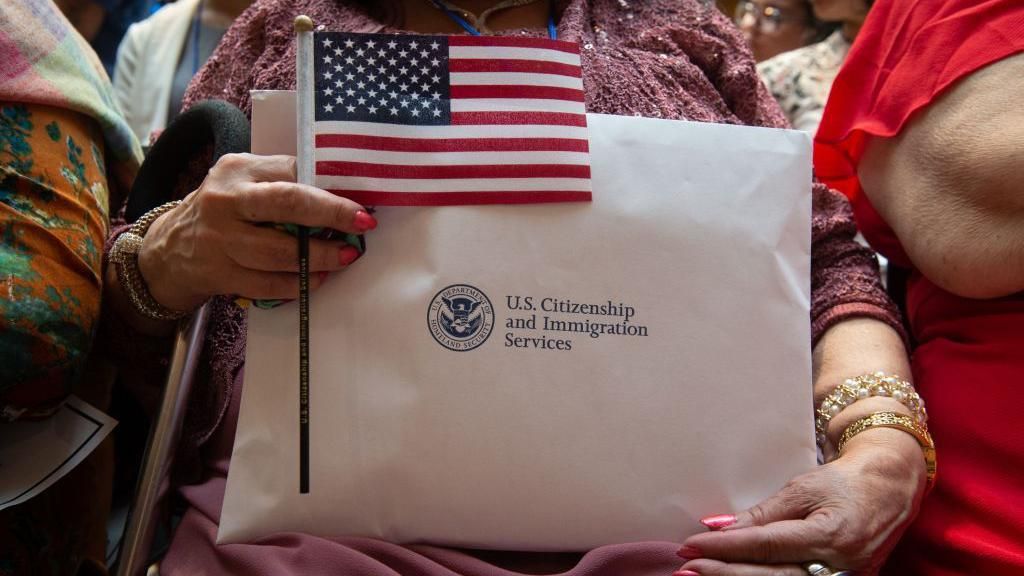
    In a sudden policy shift following recent security incidents, the Trump administration has abruptly canceled naturalization ceremonies for immigrants from 19 countries previously subject to travel restrictions. This move has created profound uncertainty for thousands of legal permanent residents who had completed all requirements for citizenship.

    Sanam, an Iranian immigrant residing in Oregon with her American husband, exemplifies this disruption. After a decade-long immigration process involving extensive paperwork, security vetting, and testing, her December 3rd oath ceremony was canceled without explanation just 48 hours beforehand. Later learning her birthplace in Iran triggered the cancellation, she described the experience as ‘heartbreaking’ and ‘draining,’ causing her to reconsider remaining in the United States.

    The policy change emerged following the November 26th shooting incident in Washington DC, where an Afghan national attacked National Guard members. Administration officials cite national security concerns as justification for the intensified immigration measures, which include halting processing for applicants from affected countries at all stages—not just those awaiting final ceremonies.

    Mario Bruzzone of the New York Immigration Coalition criticized the measures as effectively constituting an indefinite ban, arguing the administration is exploiting recent tragedies to escalate attacks on immigrant communities. He emphasized that affected individuals like Sanam had already undergone multi-layered security and health vetting processes spanning years.

    The human impact extends beyond single cases. Jorge, a Venezuelan professional who obtained permanent residency through extraordinary ability criteria, faced similar last-minute ceremony cancellation. While supporting stricter immigration reviews generally, he expressed concern about law-abiding residents being ‘generalized’ alongside potentially problematic cases.

    With approximately 132,000 Venezuelan-born residents in New York state alone according to coalition data, the policy affects substantial immigrant populations. The cancellations have created what Sanam’s husband characterized as ‘limbo state’ existence, where lives remain ‘at the mercy of government decisions’ based on rapidly implemented policy changes.

  • Saudi authorities arrest expat for ‘indecent acts’ at massage centre

    Saudi authorities arrest expat for ‘indecent acts’ at massage centre

    Saudi law enforcement officials have apprehended a foreign national following allegations of immoral conduct at a body care establishment in Riyadh. The arrest operation, conducted on December 14, 2025, was executed through coordinated efforts between Riyadh Police and the General Directorate of Community Security and Combating Human Trafficking.

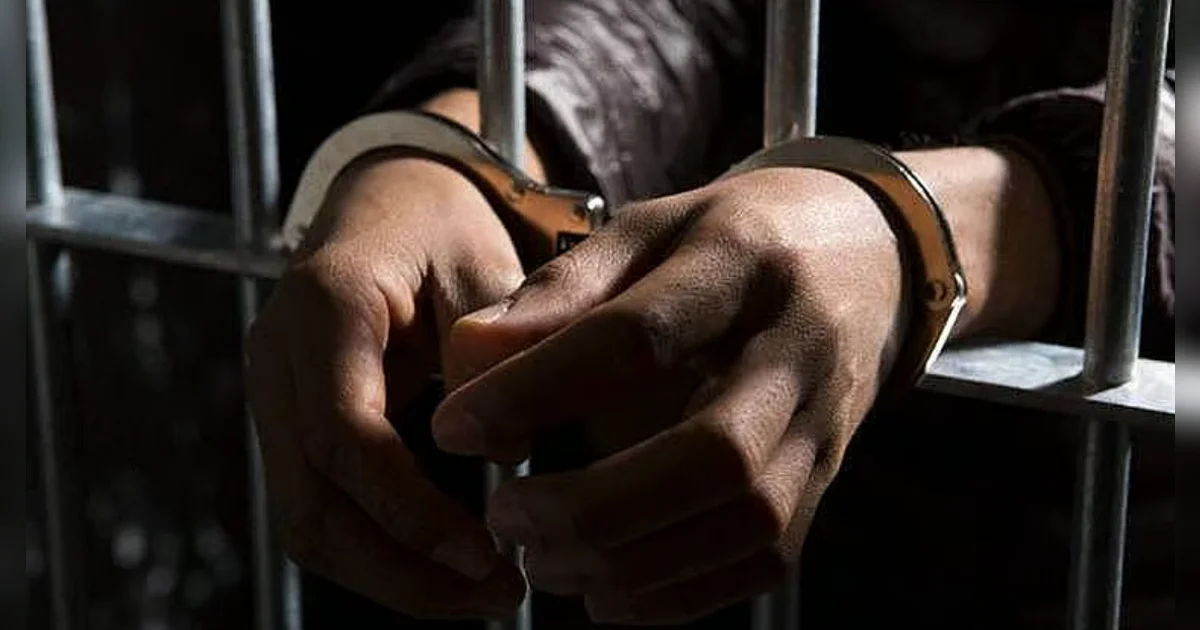
    Authorities confirmed the individual was taken into custody for engaging in activities deemed contrary to established public morality standards. Following initial detention procedures, the case has been formally transferred to the Public Prosecution office for judicial review and potential criminal proceedings.

    Concurrent with the arrest, municipal regulators imposed administrative penalties against the wellness facility where the incident occurred. The establishment now faces sanctions under local business regulations, though specific details regarding the nature of violations or imposed penalties remain undisclosed.

    This enforcement action demonstrates Saudi Arabia’s ongoing commitment to maintaining social order and upholding conservative moral values within commercial establishments. The case emerges amid the nation’s broader transformation under Vision 2030, which balances economic modernization with preservation of traditional cultural norms.

    Legal analysts note such cases typically involve violations of public decency laws, which can carry significant penalties including fines, imprisonment, and potential deportation for foreign nationals convicted of moral offenses.

  • Their diamond-rich land in South Africa was taken. Now they want it back

    Their diamond-rich land in South Africa was taken. Now they want it back

    Along South Africa’s northwestern coastline, a stark environmental and economic divide tells the story of the Nama people’s century-long struggle. The journey from Cape Town to the Namibian border reveals breathtaking natural vistas gradually giving way to a pockmarked lunar landscape—visible scars from decades of diamond extraction that generated hundreds of millions in wealth, yet left indigenous communities in persistent poverty.

    The Nama people, descendants of the region’s original Khoi and San inhabitants, have faced systematic displacement since European colonization. Their ancestral lands around the Orange River were annexed in the mid-19th century, with forced removals intensifying following the 1920s diamond rush. Despite a landmark 2003 Constitutional Court victory recognizing their inalienable land and mineral rights, the community remains trapped in what leader Martinus Fredericks describes as ‘hand-to-mouth existence’ with sky-high unemployment.

    The court ruling should have been transformative. Instead, a controversial 2007 agreement between state-owned miner Alexkor and the Richtersveld Communal Property Association (CPA) allocated 51% of mineral rights to the company and 49% to the community. Fredericks maintains this arrangement was made without proper community consent, and two decades later, residents report seeing no benefits from diamond wealth extracted from their land.

    Alexkor contends it has transferred approximately 240 million rand ($14 million) to community entities, but acknowledges through current chairperson Dineo Peta that ‘the community has not received the full economic benefit of the operations,’ blaming previous management’s ‘maladministration and malfeasance.’ A state capture investigation revealed corruption within the company, though no convictions have resulted.

    Parliamentary hearings recently revealed that over 300 million rand ($17.6 million) intended for community development remains unaccounted for, with lawmakers describing the CPA as ‘dysfunctional.’ The association failed to respond to BBC inquiries regarding the missing funds.

    Beyond financial concerns, environmental degradation poses another crisis. Abandoned mines dot the coastline with minimal rehabilitation, despite legal obligations. Mining giants Trans Hex and De Beers maintain they fulfilled their responsibilities before selling sites, though De Beers committed 50 million rand toward rehabilitation in recent sale agreements.

    Fredericks has now initiated legal proceedings against the CPA, seeking to reclaim authentic community representation. ‘A Nama people cannot be a Nama people without control of Nama land,’ he asserts, emphasizing the intrinsic connection between identity and territory that continues to drive their fight for restorative justice.

  • Over 700 migrants reach UK in small boats after pause in crossings

    Over 700 migrants reach UK in small boats after pause in crossings

    A significant resurgence of migrant crossings occurred on December 13th as 737 individuals successfully traversed the English Channel in small vessels, according to official figures released by the UK Interior Ministry. This movement ended a notable 28-day hiatus in arrivals—the longest interruption in seven years—primarily attributed to adverse weather conditions preventing maritime travel.

    The latest influx involved eleven separate boats making the perilous journey from northern France to England’s southern coastline. With this arrival, the cumulative total of migrants reaching UK shores via small boats throughout 2025 has now reached 40,029 persons. This figure positions the current year to potentially become the second-highest annual arrival period since systematic record-keeping began in 2018.

    These Channel crossings have evolved into a contentious political issue within the United Kingdom, significantly influencing domestic politics. The anti-immigration Reform Party, under the leadership of Nigel Farage, has capitalized on public concern regarding migrant arrivals. Opinion polling throughout much of the year has consistently shown Reform maintaining double-digit advantages over Prime Minister Keir Starmer’s Labour Party, indicating the substantial political impact of migration patterns.

    The cyclical nature of crossings—directly correlated with maritime weather conditions—demonstrates the persistent challenge facing border enforcement authorities. Despite heightened surveillance and enforcement measures, the fundamental dynamics of migration patterns continue to be heavily influenced by environmental factors beyond governmental control.

  • Bondi beach was a laid-back haven before a mass shooting horror unfolded

    Bondi beach was a laid-back haven before a mass shooting horror unfolded

    SYDNEY — The iconic Bondi Beach, a symbol of Australia’s carefree coastal lifestyle, became the scene of horrific violence on Sunday evening when gunmen opened fire on families attending a Hanukkah celebration. The attack, which authorities describe as a targeted antisemitic assault, left multiple casualties and has profoundly shaken the nation’s sense of security.

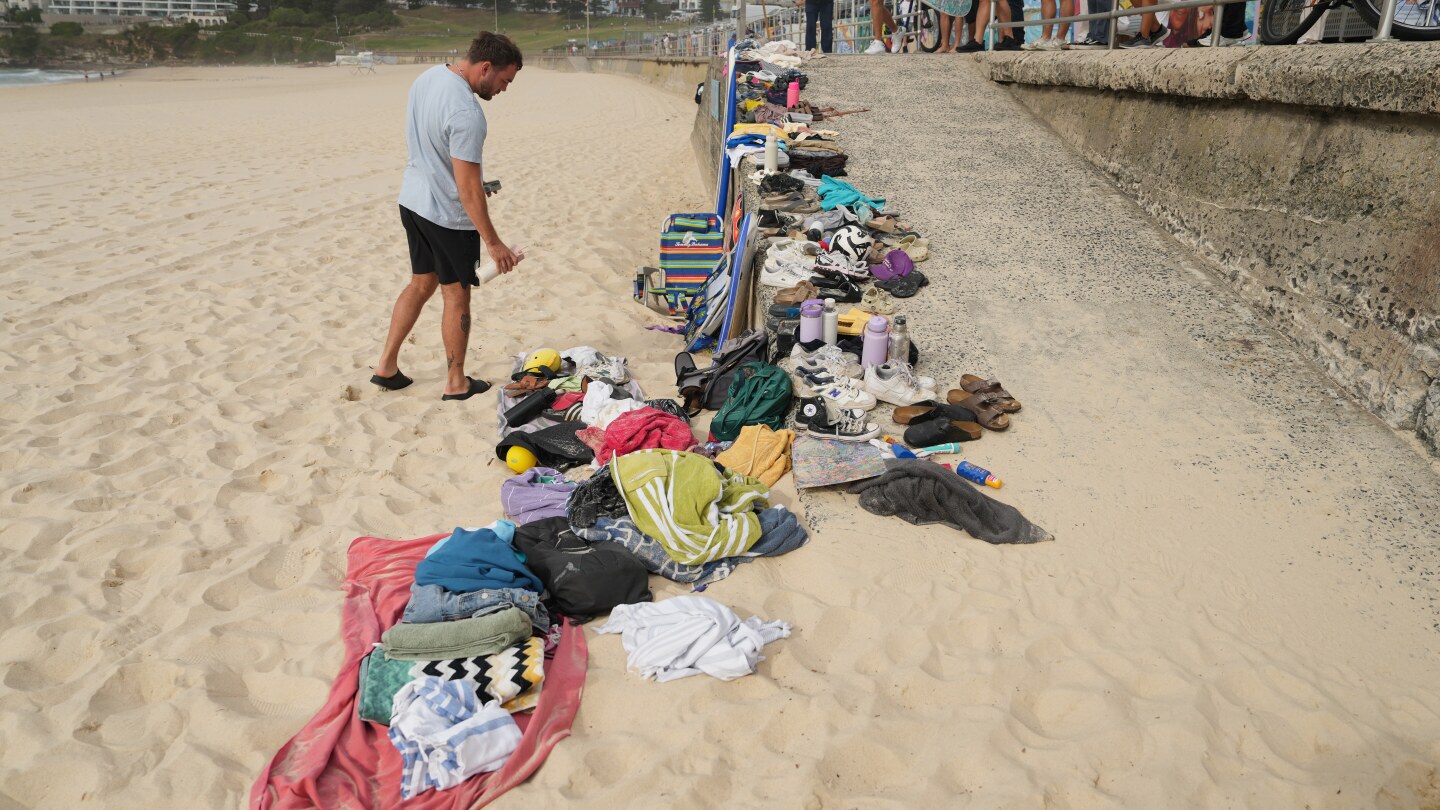
    The evening began as a typical summer gathering at Australia’s most famous beach, with thousands enjoying the warm weather and sunset views. The ‘Chanukah by the Sea’ event had drawn diverse families with children’s activities, ice cream, and entertainment. Without warning, the festive atmosphere shattered as sustained gunfire erupted, sending panicked crowds fleeing across the sand, abandoning belongings in their desperate search for shelter.

    Eyewitness accounts describe scenes of terror and heroism. Rebecca, a 33-year-old mother who withheld her surname for security reasons, recounted shielding her five-year-old son beneath a table while praying for their survival. She described watching a man shot fatally beside her and an elderly woman unable to take cover being targeted. The gunfire continued for approximately seven minutes according to audio evidence captured from nearby accommodations.

    The attack represents Australia’s deadliest mass shooting since the 1996 Port Arthur massacre that prompted sweeping gun reform. Authorities confirmed the recovery of six legally owned firearms from the primary shooter, a 50-year-old man fatally shot during the incident. His 24-year-old son remains hospitalized under police guard. Both perpetrators targeted Jewish attendees specifically during the holiday celebration, according to official statements.

    In the aftermath, stories of extraordinary bravery emerged alongside the grief. Local fruit vendor Ahmed al Ahmed was captured on video disarming one attacker, while Bondi’s famous surf lifeguards rushed toward the danger with medical kits rather than fleeing. The normally vibrant beach stood eerily quiet on Monday, with abandoned picnic items still scattered across the grass where families had gathered moments before the violence.

    The attack has ignited national conversations about rising antisemitism, gun control, and public safety. Prime Minister Anthony Albanese condemned the targeted violence against the Jewish community, while local residents expressed both shock and determination to resist responding to hatred with further division. The tragedy strikes particularly hard at Bondi’s identity as both a multicultural gathering place and the heart of Sydney’s Jewish community, coming just months after a separate deadly attack at nearby Bondi Junction.