作者: admin

  • Iconic 19th Century painting sets Indian art record with $17.9m sale

    Iconic 19th Century painting sets Indian art record with $17.9m sale

    In a landmark auction held by Saffronart in New Delhi on Wednesday, a 130-year-old masterpiece by one of India’s most celebrated modern artists, Raja Ravi Varma, has made history as the most expensive Indian artwork ever sold at auction. Painted in the 1890s, when Varma was at the peak of his creative powers, *Yashoda and Krishna* fetched a staggering 1.67 billion Indian rupees, equivalent to $17.9 million, shattering the previous $13.8 million record set last year by MF Husain’s *Untitled (Gram Yatra)*.

    The winning bid came from Cyrus Poonawalla, the billionaire founder and managing director of the Serum Institute of India – the world’s largest vaccine manufacturer. In a post-auction statement shared via Saffronart, Poonawalla called the iconic canvas a “national treasure”, noting that it should be accessible for regular public display. He added that he would work to make this public access a reality in the coming years.

    Created in the 1890s when Varma was at the height of his career, the oil-on-canvas work captures an intimate, tender moment from Hindu mythology: the child deity Krishna waits beside his foster mother Yashoda as she milks a cow. The work depicts Krishna with a signature mischievous glint in his eye, while Yashoda’s features radiate quiet warmth and maternal care. Though the pair wear only minimal ornamentation, every detail of their jewelry is rendered with Varma’s characteristic precision. As the Raja Ravi Varma Heritage Foundation noted ahead of the auction, the artist’s singular genius lies in his ability to frame a sacred narrative through familiar, relatable domestic details. “The textures of silk, the gleam of jewellery, the softness of skin and the gentle stillness of the cow together create a scene that is both devotional and intimate,” the foundation wrote.

    Art historians have long praised Varma for reimagining traditional depictions of Hindu mythological figures. Before his work, iconic portrayals of deities prioritized awe over intimate affection, but Varma broke down the distance between the divine subject and the viewer, according to prominent Indian artist A Ramachandran. Born in 1848 in what is now the southern Indian state of Kerala, Varma is widely recognized as the father of modern Indian art. He famously blended formal European academic painting techniques with distinctly Indian narrative and cultural traditions, and his lithographic prints of mythological figures remain a common sight in household shrines across India to this day. Under India’s 1972 Antiquities and Art Treasures Act, all of Varma’s works are classified as national art treasures, meaning they cannot be exported and may only be sold to Indian-based buyers – a rule that added to the exclusivity of Wednesday’s sale.

    Industry leaders say the record-breaking price of *Yashoda and Krishna* reflects a rapidly maturing Indian art market, marked by growing domestic and global demand for historically significant South Asian works. Minal Vazirani, president and co-founder of Saffronart, called the final valuation a “powerful reminder of the enduring cultural and emotional resonance of Indian art”. Ashish Anand, chief executive and managing director of leading Indian art institution DAG, noted that the landmark sale will reshape how the world views Indian art, framing it not just as an aesthetic object for personal collectors, but as a legitimate, high-value financial asset. “There is a clear shift in how Indian art is being perceived,” Anand explained. “As the market matures and benchmarks rise, collectors are recognising both its cultural and financial value… The best works – those with provenance, rarity and historical significance – are now commanding extraordinary prices, reflecting the maturing of the market.”

    Experts point to multiple factors driving the current boom in prices for top-tier Indian art. First, masterworks by pioneering artists such as Varma, Amrita Sher-Gil and VS Gaitonde are extremely rare, with most held in permanent private collections and rarely entering the auction block. This inherent exclusivity pushes prices higher when high-quality works do become available. Additionally, there is growing global recognition of mythological art as a serious, desirable collecting category, further boosting demand for culturally significant works like Varma’s *Yashoda and Krishna*. The piece was put up for auction by a private collector, according to Saffronart’s auction catalogue.

  • Over 1,800 killed since junta seized power in Burkina Faso, rights group says

    Over 1,800 killed since junta seized power in Burkina Faso, rights group says

    Three years after Ibrahim Traoré seized power in a military coup in Burkina Faso, a damning new investigation from Human Rights Watch (HRW) has uncovered staggering civilian casualties, including allegations of systematic war crimes and crimes against humanity perpetrated by both state forces and armed jihadist groups. Between January 2023 and August 2025 alone, the rights organization documented 57 separate violent incidents that left 1,837 civilians dead, among them dozens of children. More than two-thirds of these deaths — 1,255 in total — are attributed to the Burkinabé military and its allied civilian militias, while the remaining killings are linked to Islamist insurgent groups active in the region.

    The report’s most significant legal finding holds that Traoré and six senior military commanders may bear command responsibility for these grave human rights abuses, and recommends that all seven be formally investigated for their alleged roles. Five top jihadist leaders are also named as potentially culpable for violence against civilian populations. The BBC reached out to Burkinabé junta officials for comment on the new findings; authorities have repeatedly rejected past accusations of indiscriminate civilian killings by their forces.

    When Traoré’s junta seized power in September 2022, ousting the interim military leader Paul-Henri Sandaogo Damiba who had taken power just nine months prior, its core stated justification was a promise to more effectively defeat a decade-long Islamist insurgency linked to al-Qaeda that has seized control of large swathes of Burkina Faso’s territory and destabilized neighboring countries. But the HRW report, which draws on rigorous open-source intelligence analysis — including verified photos, video footage, satellite imagery, and firsthand interviews with hundreds of witnesses and survivors — paints a far grimmer picture: that all parties to the conflict have systematically violated international humanitarian law.

    “All sides are responsible for the war crimes of willful killing, attacks on civilians and civilian objects, pillage and looting, and forced displacement,” the report concludes. It specifically accuses the Traoré-led junta of committing “horrific abuses,” failing to hold any perpetrators accountable for civilian deaths, and actively blocking independent reporting to conceal the scale of suffering among trapped populations. Philippe Bolopion, HRW’s executive director, emphasized the gap between the scope of the crisis and global indifference: “The scale of atrocities taking place in Burkina Faso is mind-boggling, as is the lack of global attention to this crisis.”

    One of the deadliest single incidents documented by the investigation dates to December 2023, when military forces and allied militias allegedly killed more than 400 civilians in the northern border town of Djibo. A 35-year-old survivor who spoke to researchers described losing her two daughters immediately in the attack, while she and her nine-month-old infant suffered bullet wounds. She recounted a militia fighter telling his comrades, “Make sure no-one is breathing before heading out.” Many survivors described the mass killings as “butchery,” and researchers confirmed that nearly all who lost family or escaped violence carry permanent, severe psychological trauma from their experiences.

    The militias that work alongside the Burkinabé military, known as the Volunteers for the Defence of the Fatherland (VDP), are civilian recruits the junta enlisted to bolster counter-insurgency operations. The report also documents allegations that the junta has forced political critics to join the VDP as a form of punishment. Traoré has publicly defended this forced conscription policy, arguing that “individual freedoms [are] not superior to national freedom” and that “a nation is not built on indiscipline and disorder.”

    Since the military government took power, counter-insurgency operations have increasingly targeted civilian communities in response to attacks by JNIM, al-Qaeda’s regional affiliate and the largest active jihadist group in the country. For ordinary Burkinabé, this has created an untenable catch-22: civilians told HRW they feel “caught between a rock and a hard place,” threatened with execution by JNIM for suspected collaboration with the state, and targeted by government forces for alleged ties to insurgents. For its part, JNIM has carried out widespread campaigns of violence and intimidation to control local communities, deliberately targeting civilians who refuse to submit to the group’s authority. In one high-profile 2024 attack, JNIM fighters shot dead at least 133 people and injured more than 200 in less than two hours, according to the report.

    In line with its findings, HRW is calling on the International Criminal Court (ICC) to open an immediate preliminary investigation into all alleged crimes committed by all parties to the conflict since September 2022. The organization is also urging international partners and donor countries to impose targeted sanctions on senior Burkinabé officials and suspend all military cooperation with the Traoré government.

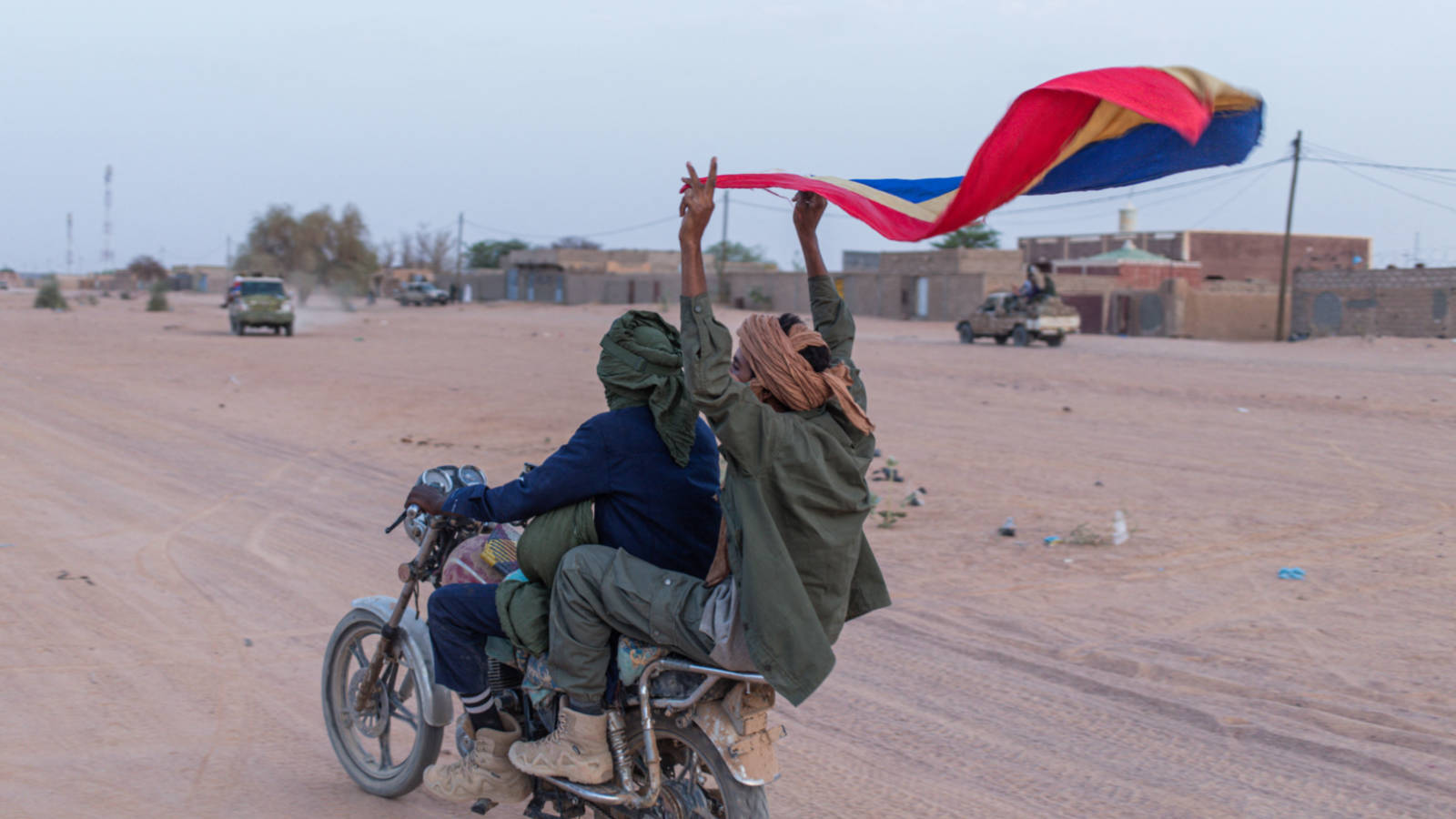
    Despite his authoritarian rule and the allegations of mass atrocities, 38-year-old Traoré has built a large popular following across the African continent, buoyed by his vocal pan-Africanist politics and sharp criticism of Western neocolonial influence. Like neighboring Mali and Niger, both of which are also controlled by military juntas, Burkina Faso has cut most security cooperation with Western nations — particularly former colonial power France — since Traoré took power, and has turned to Russia for military support. Even with this new partnership, the ongoing insurgency and civilian death toll have continued to rise with no sign of abating.

  • US lifts sanctions on Venezuelan interim leader Delcy Rodríguez

    US lifts sanctions on Venezuelan interim leader Delcy Rodríguez

    In a significant shift in U.S.-Venezuela relations that marks the latest step in a rapidly unfolding diplomatic thaw, the United States has removed interim Venezuelan President Delcy Rodríguez from its Specially Designated Nationals (SDN) sanctions list. This policy change comes less than three months after U.S. military forces carried out a high-profile raid in Caracas that captured former Venezuelan leader Nicolás Maduro and his wife, transferring them to New York to face federal drug trafficking charges.

    Rodríguez, a longstanding close ally of Maduro who previously served as his vice president, was first added to the U.S. sanctions roster in 2018 over Washington’s accusations that she had undermined democratic governance in Venezuela. Just days after the raid that removed Maduro from power, she was sworn in as interim president by Venezuela’s National Assembly, which holds a majority loyal to Maduro’s faction. U.S. President Donald Trump has publicly praised Rodríguez, describing her as “a terrific person” who has collaborated effectively with Washington.

    Inclusion on the SDN list carries severe financial restrictions: all assets held by listed individuals within U.S. jurisdiction are frozen, and U.S. citizens and entities are prohibited from conducting any commercial transactions with them. Rodríguez welcomed the delisting in a public post on X, framing the move as “a significant step in the right direction to normalise and strengthen relations between our countries.”

    White House spokesperson Anna Kelly echoed that positive framing, emphasizing that the decision reflects tangible progress “between our two countries to promote stability, support economic recovery and advance political reconciliation in Venezuela.” She reaffirmed Trump’s assessment, noting “Delcy Rodríguez is doing a great job and is working with the United States very well.”

    Despite the upbeat tone from both governments, the decision has drawn sharp criticism from Venezuelan opposition activists based in Caracas. These critics argue that Washington should have used the leverage of sanctions to push Rodríguez to fulfill longstanding demands to release all political detainees still held in Venezuelan prisons. The release of political prisoners was one of the core conditions Secretary of State Marco Rubio laid out for Rodríguez shortly after Maduro’s removal from office.

    While Venezuela’s ruling National Assembly has approved an amnesty law that has led to the release of hundreds of detainees, leading prisoners’ rights organization Foro Penal reports that nearly 500 political prisoners remain in custody.

    The delisting of Rodríguez is the most visible signal yet of a steady warming of ties between the Trump administration and the interim government. Earlier this same week, the United States formally reopened its embassy in Caracas, seven years after it shuttered the diplomatic mission in response to the Maduro government’s actions. In a reciprocal move, Venezuela has also sent a diplomatic delegation back to Washington to reopen its own embassy there.

    In the months since Maduro was ousted, multiple high-level U.S. delegations have traveled to Caracas to hold talks on expanding U.S. access to Venezuela’s extensive oil and mineral reserves. But critics of Rodríguez’s interim administration have raised alarms that there has been almost no public discussion of scheduling free and democratic national elections, a key long-term demand from the international community.

    Venezuelan opposition leader María Corina Machado, who has lived in exile since leaving the country to accept the Nobel Peace Prize she was awarded in December, held a meeting with Marco Rubio on Tuesday. Though Trump has sidelined Machado to prioritize cooperation with Rodríguez, she struck a constructive tone, calling the discussion “excellent” and praising Rubio’s “dedication to democracy, freedom and Venezuelans’ well-being.”

    Speaking to Fox News after the meeting, Rubio said Washington is making steady progress in its engagement with Venezuela. Outlining a three-part strategy for the country’s transition, Rubio confirmed Venezuela has now entered the second phase: economic and political recovery. “Ultimately, there will have to be a transition phase. There will have to be free and fair elections in Venezuela, and that point has to come,” he stated. “It’s not forever, but we have to be patient, but we also can’t be complacent,” he added, declining to provide any timeline for when democratic elections would be held.

  • Machete-wielding man attacks Ugandan nursery school, killing 4 children

    Machete-wielding man attacks Ugandan nursery school, killing 4 children

    On a quiet Thursday in Uganda’s capital Kampala, a brutal act of violence shattered a local early childhood education center, leaving four young children dead and the entire community reeling from shock and grief, police officials have confirmed.

    According to local newspaper the Daily Monitor, the attacker gained entry to the Gaba Early Childhood Development Program by hiding his true identity and posing as a parent of one of the school’s students. Upon first entering the facility, he made his way to the administrative offices and held a short, unremarkable conversation with the facility’s lead administrator. What happened next would turn a routine school day into a tragedy: after stepping back outside the building, he locked the school’s main gate and turned his weapon on the defenseless children inside.

    In an official statement, police confirmed that the assailant “brutally stabbed and killed four juveniles” in the frenzied attack. Local broadcaster NTV obtained and aired surveillance footage from the area, which captured heartbreaking scenes of grieving parents weeping openly near the school gates after learning the fates of their children.

    As word of the attack spread through the neighborhood, a large, angry crowd quickly gathered outside the facility, with many in the crowd intent on inflicting vigilante violence on the suspect. To prevent further bloodshed and secure the crime scene, police were forced to fire warning shots into the air to break up the crowd and take the suspect into custody safely.

    Police spokesperson Kituuma Rusoke confirmed to the Associated Press in an interview that the attacker is now in police custody, and added that investigators have not yet established a clear motive for the senseless violence. For residents of Kampala, a city of approximately 3 million people, this unthinkable attack on young children is a highly unusual event, leaving many struggling to process how such violence could occur at a place meant to nurture and protect young learners.

  • Trump says Iran war ending soon, but ‘extremely hard’ hits ahead

    Trump says Iran war ending soon, but ‘extremely hard’ hits ahead

    WASHINGTON — In a highly anticipated primetime national address Wednesday, former President Donald Trump announced that the U.S. military’s month-long military campaign in Iran is approaching a swift conclusion, framing the operation as an unprecedented success in degrading the Islamic Republic’s military capabilities.

    During the 18-minute televised speech, Trump defended the ongoing conflict, claiming U.S. forces had systematically dismantled Iran’s ability to project power across the Middle East and threaten American interests. “We are systematically dismantling the regime’s ability to threaten America or project power outside of their borders. That means eliminating Iran’s navy, which is now absolutely destroyed, hurting their air force and their missile program at levels never seen before, and annihilating their defense industrial base. We’ve done all of it,” Trump told the nation. He added that the scale of military damage inflicted on Iran is unmatched in modern military history, noting that core strategic goals of the campaign are nearly complete.

    The White House’s advance announcement of the address Tuesday had sparked widespread speculation that the president would share major new developments about the costly, deadly conflict, now entering its fourth week. However, analysts and observers quickly noted that most of Trump’s remarks recycled aggressive rhetoric and claims he and his Cabinet have repeated for weeks, including his threat to pummel Iran into what he called the “stone ages” over the next two to three weeks. This echoed prior comments he has shared on social media and with press outlets in recent weeks.

    The conflict has already sent shockwaves across the Middle East and the U.S. domestic economy, leaving a trail of death and destruction that has eroded public support for Trump’s decision to launch the war. The campaign has killed 13 U.S. service members and wounded 350 more, according to Pentagon data. On the Iranian side, a U.S.-based Iran human rights group HRANA reports that 1,598 Iranian civilians, including 244 children, have been killed in U.S. and Israeli strikes as of Tuesday. The humanitarian crisis extends far beyond Iran’s borders: concurrent Israeli operations in southern Lebanon have killed 1,240 people, wounded 3,680, and displaced more than 1.1 million Lebanese people as of Monday, according to Lebanese government data. Across the broader Middle East, Al Jazeera English has recorded more than 185 additional deaths in nations including Bahrain, Iraq, Jordan, Syria, and the Palestinian territories.

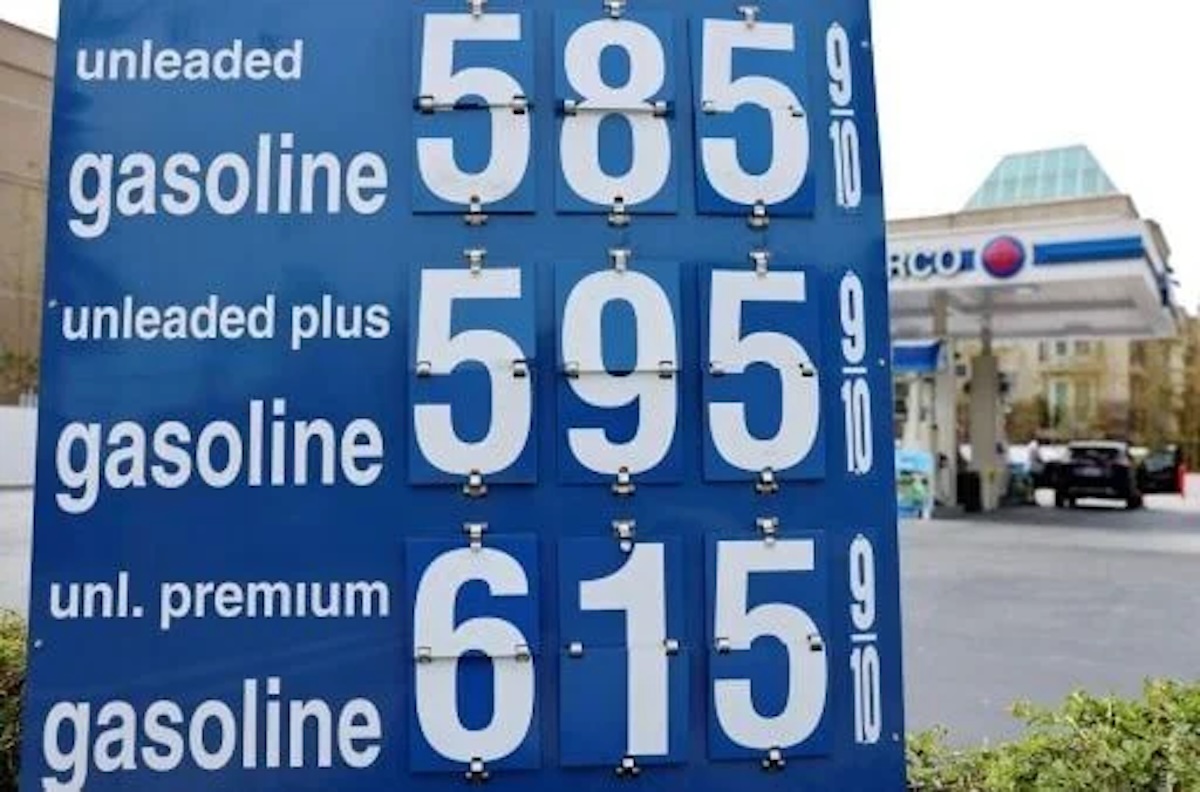
    The disruption of global energy markets has also hit American consumers directly. After Iran seized control of the Strait of Hormuz, the strategic chokepoint through which roughly one-fifth of the world’s global petroleum supplies flow, international crude prices spiked, pushing average U.S. gasoline prices above $4 per gallon. This economic pressure has translated to plummeting public support for the war: a recent Reuters/Ipsos poll conducted within the last week found that roughly two-thirds of Americans want the Biden administration – now the Trump second-term administration – to move quickly to end the conflict.

    Trump’s public statements on exit strategy and war aims have shifted repeatedly, sometimes even on a daily basis. On Tuesday, he told reporters that the Iranian regime had already been successfully changed, and that he planned to wrap up military operations within two to three weeks. But the new Iranian Supreme Leader, Majtaba Khamenei, who succeeded his father Ali Khamenei – killed by U.S. and Israeli forces at the start of the war – is reportedly no less hardline, and may hold even more radical views than his predecessor.

    In comments to Reuters Wednesday, Trump also downplayed concerns about Iran’s nuclear program, saying he “doesn’t care” about near-weapons-grade enriched uranium buried under rubble at a nuclear site bombed by the U.S. and Israel in June, per International Atomic Energy Agency data. This marks a notable shift from Trump’s original justification for launching the war: in his February 28 video announcement of the initial attack, the president explicitly stated that the core goal of the operation was to ensure Iran “can never have a nuclear weapon.”

    Earlier Wednesday, Trump made an unsubstantiated claim on his social media platform Truth Social that Iran’s new radicalized president had requested a ceasefire. He wrote, “We will consider when Hormuz Strait is open, free, and clear. Until then, we are blasting Iran into oblivion or, as they say, back to the Stone Ages!!! President DJT.” Iran’s Foreign Ministry spokesperson Esmaeil Baghaei quickly rejected the claim as “false and baseless,” according to Iranian state-run English broadcaster PressTV.

    Hours before Trump’s primetime address, Iranian President Masoud Pezeshkian – who took office in 2024 – released an open letter directly to the American public, pushing back against the Trump administration’s framing of the conflict. Pezeshkian argued that the White House has lied to Americans about Iranian aggression, framing Iran’s military actions as “a measured response grounded in legitimate self-defense, and by no means an initiation of war or aggression.” He questioned the moral and strategic value of the campaign, writing, “Does the massacre of innocent children, the destruction of cancer-treatment pharmaceutical facilities, or boasting about bombing a country ‘back to the stone ages’ serve any purpose other than further damaging the United States’ global standing?” The reference was to an early U.S. missile strike that killed 168 elementary school children on the first day of the invasion. Pezeshkian also blamed Trump for his 2018 decision to withdraw the U.S. from the multinational Iran nuclear deal, noting that the Iranian people hold no inherent enmity toward the American public. Footage of Iranian lawmakers burning American flag prints and chanting anti-U.S. slogans in parliament following the 2018 withdrawal has circulated widely online.

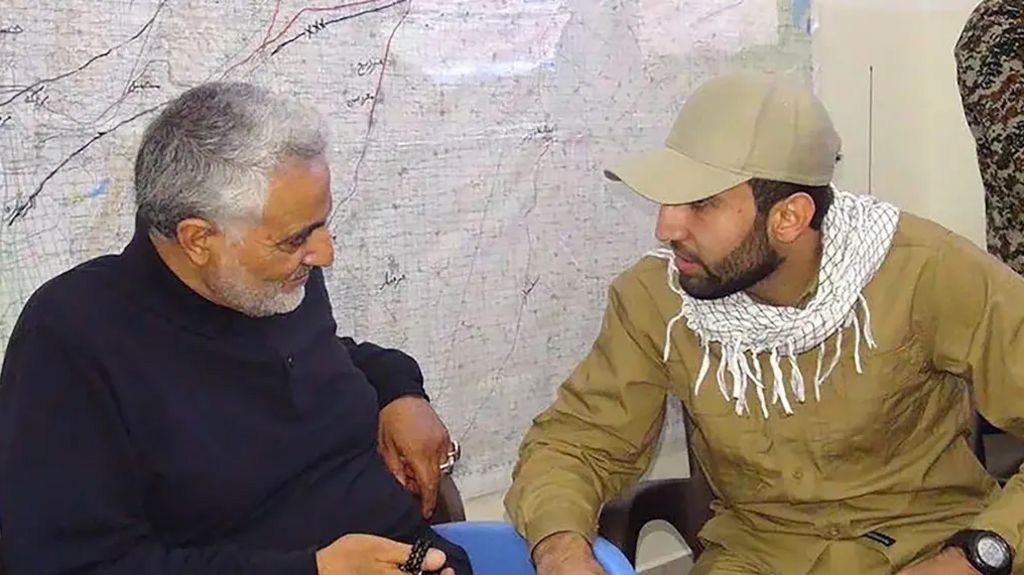
    Longstanding tensions between the U.S. and Iran predate the 2026 conflict: the U.S. Department of Defense and U.S. intelligence agencies have linked Iran to dozens of attacks on American military bases across the Middle East over decades. Most notably, a 2020 Iranian strike on Iraq’s Ain al-Asad airbase, launched in retaliation for a U.S. drone strike that killed top Iranian commander Qassem Soleimani, caused traumatic brain injuries for more than 100 U.S. service members. During his 2024 presidential campaign, Trump dismissed these injuries as nothing more than “headaches.” Earlier this year, a federal jury convicted an Iranian Revolutionary Guard Corps operative of plotting to assassinate Trump and other high-profile U.S. political figures during the 2024 election cycle, confirming Iran’s long-standing efforts to carry out attacks on U.S. soil.

  • A look at the UK’s Royal Navy, which has faced jibe after jibe from Trump and Hegseth

    A look at the UK’s Royal Navy, which has faced jibe after jibe from Trump and Hegseth

    LONDON – A fresh wave of diplomatic tension has emerged between the United States and the United Kingdom after U.S. President Donald Trump and Defense Secretary Pete Hegseth launched sharp public criticism of the Royal Navy’s operational capabilities, remarks that cut deep for a nation with centuries of iconic maritime heritage – but which also touch on long-running debates about Britain’s eroding military standing.

    The friction between the two allies traces back to the outbreak of the Iran war on February 28, when newly installed British Prime Minister Keir Starmer rejected a U.S. request to grant American military forces access to UK military bases. While Starmer’s government has since partially reversed that decision, allowing U.S. operations from bases including the key Indian Ocean outpost Diego Garcia for limited defensive purposes, Trump has remained vocal about feeling betrayed by the UK’s initial refusal.

    In an interview with Britain’s Daily Telegraph published Wednesday, Trump went as far as dismissing the Royal Navy’s two flagship new aircraft carriers as mere “toys.” “You don’t even have a navy,” he told the newspaper. “You’re too old and had aircraft carriers that didn’t work.” Not to be outdone, Hegseth took a sarcastic shot at the service, suggesting the “big, bad Royal Navy” should step up to secure commercial shipping lanes in the Strait of Hormuz, a critical global chokepoint for energy trade.

    The two 65,000-ton carriers at the center of Trump’s attack, HMS Queen Elizabeth and HMS Prince of Wales, are the largest and most lethal warships ever built for the Royal Navy. While they are smaller and less power-projected than the U.S. Navy’s supercarriers, defense analysts widely regard them as highly capable platforms, particularly for integrated coalition operations – even if they faced well-documented technical teething problems in their early years of service.

    It is true that the Royal Navy of 2025 bears little resemblance to the globally dominant force that controlled the world’s oceans during the height of the British Empire. But experts emphasize that the service is far weaker than its Cold War peak, but not as impotent as Trump and Hegseth’s remarks portray it, holding a similar operational standing to the French Navy, its closest European peer.

    “There is a grain of truth to the critique: the Royal Navy is smaller today than it has been in hundreds of years,” explained Professor Kevin Rowlands, editor of the Royal United Services Institute (RUSI) Journal and a former Royal Navy captain. “On the other hand, the service notes it is entering its first period of sustained growth since World War II, with more new ships scheduled for construction than at any point in decades.”

    A look back at recent British naval history puts the current size of the fleet in context. As recently as 1982, the UK was able to assemble a 127-ship task force – including two aircraft carriers – to retake the Falkland Islands after Argentina’s invasion, a campaign that then-U.S. President Ronald Reagan openly opposed. That operation is now widely viewed as the final demonstration of Britain’s traditional naval dominance; no deployment of anywhere near that scale could be mounted today.

    Analysis of UK Ministry of Defence and House of Commons Library data by the Associated Press shows the steady, dramatic contraction of the Royal Navy’s combat fleet over the past 50 years. In 1975, the service counted 166 active vessels, including aircraft carriers, destroyers, frigates, and attack submarines. By 2025, that number had fallen to just 66. The UK went seven years in the 2010s without any operational aircraft carriers at all, despite today having two in service. The destroyer fleet has shrunk by half to just six vessels, while the frigate force has been cut from 60 ships to only 11.

    The delayed deployment of the destroyer HMS Dragon to the Middle East in the immediate aftermath of the Iran war outbreak became a high-profile symbol of the Royal Navy’s stretched capabilities for critics. While naval personnel worked around the clock to reconfigure the vessel for its new mission after it had been preparing for a completely different deployment, the incident reinforced widespread perceptions that British military power has dwindled significantly since the fall of the Berlin Wall in 1989.

    That decline did not happen by accident. During much of the Cold War, the UK invested between 4% and 8% of its annual gross domestic product in defense. After the collapse of the Soviet Union, that share steadily dropped to a low of 1.9% of GDP in 2018, giving ammunition to Trump’s criticisms.

    Like many Western allies, successive UK governments embraced the post-Cold War “peace dividend,” redirecting funding once allocated to the military to domestic priorities including public health and education – a shift accelerated by the Labour governments of Tony Blair and Gordon Brown. When the global financial crisis hit in 2008, Conservative-led governments introduced harsh austerity measures that froze defense spending even as Russia’s aggression began to reshape European security, most notably after its 2014 annexation of Crimea.

    Only after Russia’s full-scale invasion of Ukraine in 2022 did cross-party consensus emerge that decades of defense cuts had gone too far. The previous Conservative government began reversing the trend of declining spending, and since Labour returned to power in the 2024 general election, Starmer has moved to ramp up defense investment – a shift that has required cuts to the UK’s long-standing foreign aid budget.

    Starmer has committed to raising UK defense spending to 2.5% of GDP by 2027, with an updated target of 3.5% of GDP by 2035 to meet a NATO goal championed by Trump. That commitment translates to tens of billions of pounds in additional defense spending, which would fund a major expansion of military equipment across all three services.

    But accelerating that expansion is easier said than done. The UK’s public finances have already been strained by the economic fallout from the Iran war, leaving no clear path to find extra funding for faster military growth.

    For his part, RUSI’s Rowlands expects the U.S. criticism to continue despite its overstated claims. “We are dealing with an administration that doesn’t do nuance,” he noted.

  • Trump falling into Iran’s asymmetric resolve trap

    Trump falling into Iran’s asymmetric resolve trap

    Nearly every strategic objective the United States laid out for its current conflict against Iran has failed to materialize, according to a leading scholar of protracted US military engagements. No popular uprising has unseated Iran’s ruling establishment, hardline leadership has merely reshuffled rather than fallen, Tehran’s missile and drone capabilities continue to strike targets across the Middle East, and the closure of the Strait of Hormuz has sent global energy prices soaring. Most notably, in direct contradiction of former US President Donald Trump’s demand for unconditional surrender, Iran has outright rejected a 15-point US-backed ceasefire proposal. What has caused such a sweeping deviation from Washington’s initial war plans?

    In an analysis republished from *The Conversation*, Charles Walldorf, professor of politics and international affairs at Wake Forest University, argues the core issue is what he terms the “trap of asymmetric resolve.” This dynamic unfolds when a militarily dominant power with limited stakes in a conflict enters war against a far smaller, weaker state whose entire governing system hangs in the balance. When the weaker side possesses near-unwavering commitment to victory, overcoming that determination becomes exponentially harder – and often nearly impossible – for the stronger power.

    “For Iran, the Islamic Republic’s very existence is on the line, a stakes Washington can never match in this conflict,” Walldorf explains. “That existential threat gives Tehran overwhelming incentives to maintain resistance and deploy highly effective countermeasures to wear down US advances.”

    This pattern of asymmetric conflict has repeated throughout military history, dating back to the sixth century B.C., when a massive invasion force led by Persian Emperor Darius I was halted by a much smaller, deeply determined Scythian army. The lopsided standoff ultimately ended in a humiliating retreat for the Persian Empire. In the modern era, the United States has repeatedly fallen victim to this same trap.

    The Vietnam War stands as one of the clearest modern examples. Over eight years of brutal conflict, an estimated 1.1 million North Vietnamese fighters and civilians lost their lives, compared to 58,000 US troops. Despite this massive casualty disparity, North Vietnam’s unyielding commitment to unification ultimately overwhelmed US willingness to sustain the war. After years of costly fighting, the US withdrew, and North Vietnam secured full victory over South Vietnam in 1975.

    A near identical dynamic played out decades later in Afghanistan. The US ousted the Taliban regime in 2001, installed a Western-aligned government, and built a 300,000-strong Afghan national military backed by unlimited US firepower. Over 20 years of conflict, roughly 84,000 Taliban fighters were killed, compared to just 2,400 US service members. Yet the Taliban’s relentless commitment to retaking power eventually outlasted US political will. The US signed a withdrawal deal in 2020, pulled all remaining troops out in 2021, and the Taliban retook full control of the country within weeks.

    This pattern is not unique to the US. The Soviet Union suffered an identical humiliating defeat in its 9-year Afghanistan occupation in the 1980s, despite suffering far fewer total casualties than the Afghan resistance. Post-World War II France likewise lost protracted asymmetric conflicts in Vietnam and Algeria, despite holding massive military advantages over independence fighters.

    Today, that same asymmetry of resolve is playing out in the US-Iran war. Unlike the 12-day 2025 limited conflict that targeted only Iranian military and nuclear infrastructure, the current campaign has explicitly targeted the survival of Iran’s ruling government, with targeted assassinations of top leaders and open calls for popular uprising.

    Tehran has followed through on pre-war warnings to retaliate across the region. Iran has launched strikes against Israeli targets, US military bases across the Middle East, and aligned Arab Gulf states, while drastically cutting commercial shipping access through the Strait of Hormuz – the world’s busiest energy chokepoint. Iran has taken far heavier losses than the US in the conflict: as of mid-March, more than 5,000 Iranian military personnel and 1,500 civilians have been killed, compared to 13 US service members. Even so, Tehran has refused to back down, declaring on March 10 that “We will determine when the war ends.”

    This unyielding resistance has caught the Trump administration off guard. Before the war began, Trump openly questioned why Iran would not cave to US demands, and he has since acknowledged that regime change – a core opening war goal – is now a “very big hurdle.” This disconnect stems from misleading pre-war messaging to the American public: Secretary of State Marco Rubio claimed in January that Iran was weaker than it had ever been, with no intercontinental ballistic missiles capable of hitting the US mainland, a crippled nuclear program, and fewer regional allies than at any point in modern history. A March 6 Marist poll reflected this narrative, with 55% of Americans saying they viewed Iran as a minor or nonexistent threat.

    As Iran’s resilience has become impossible to ignore, US public opinion has turned sharply against the war. This shifting sentiment poses a unique challenge for democratic leaders, who face electoral consequences for maintaining unpopular conflicts. Today, the Iran war is among the least popular US conflicts since World War II, with consistent polling showing roughly 60% of Americans oppose continued military engagement. This mirrors the collapse of public support that drove past US withdrawals from asymmetric quagmires in Vietnam and Afghanistan.

    While pre-war Iran faced widespread domestic protests that weakened public support for the government, a combination of a brutal government crackdown and a “rally around the flag” nationalist response to foreign invasion has muted domestic discontent, eliminating the domestic pressure for compromise that Washington faces.

    Looking ahead, the Trump administration has attempted to manage the impact of asymmetric resolve by framing the operation as limited in scope and duration. To calm jittery financial markets and reassure war-weary voters, Trump has repeatedly promised a short conflict and delayed large-scale offensive strikes to make space for negotiations – claims that Iran has not corroborated.

    Walldorf notes that history offers stronger powers two clear paths forward when facing a more determined weaker adversary. The first is to give in to the hubris of military power and escalate the conflict, a path that led to decades-long quagmires in Vietnam, Iraq, and Afghanistan. The second is to wind down hostilities, accept limited gains, and seek a negotiated end to the conflict.

    Past leaders have overwhelmingly chosen escalation, convinced that a small increase in military force will tip the balance. President Barack Obama fell into this trap when he ordered a surge of 30,000 additional US troops to Afghanistan, incorrectly predicting the deployment would break the Taliban’s resistance. Despite public signals that he wants to exit the conflict, Trump could still take the same path: additional US troops are already deploying to the Persian Gulf, and B-52 bombers have begun flying combat sorties over Iranian territory for the first time in the current war.

    History shows that escalating against a determined foe like Iran will come at massive cost to the United States. But the second path – de-escalation and negotiation – remains open to Trump. The president has already chosen this route twice before: he signed the 2020 deal with the Taliban to end the Afghanistan war rather than escalating, and he walked away from the 2025 Yemen air campaign when he realized defeating the Houthi movement would require a costly ground invasion.

    Trump could choose the same exit strategy for Iran: declare that core US goals have been met, withdraw offensive forces, and enter sustained, good-faith negotiations to end the conflict. Any deal would require US concessions, such as restoring shipping access guarantees through the Strait of Hormuz or rolling back some crippling economic sanctions on Iran. While Trump may be reluctant to accept these compromises, polling shows a majority of American voters support this outcome. After decades of costly quagmires, Walldorf argues, few Americans are eager to repeat the mistakes of Vietnam and Afghanistan in the Middle East.

  • China envoy condemns killing of peacekeepers in Lebanon

    China envoy condemns killing of peacekeepers in Lebanon

    A surge of lethal violence targeting United Nations peacekeeping forces in southern Lebanon has spurred an emergency UN Security Council meeting, with China formally denouncing the attacks and calling for urgent global action to head off a full-scale regional conflict. The emergency session, held Tuesday, was convened after two separate attacks within a 24-hour window left two UN Interim Force in Lebanon (UNIFIL) peacekeepers dead and two more injured, one critically. The first assault, a projectile strike on a UN position, killed an Indonesian service member deployed with the mission, while a second blast — widely assessed to be an improvised explosive device — detonated beside a UNIFIL vehicle near the southern Lebanese town of Bani Hayyan a day later, killing another peacekeeper.

    In remarks delivered to the Security Council, China’s deputy permanent representative to the United Nations Sun Lei emphasized that deliberate attacks against UN peacekeepers represent a blatant and severe breach of both international humanitarian law and Security Council Resolution 1701, the 2006 measure that established the framework for UNIFIL’s mandate along the Lebanon-Israel border. “These attacks are absolutely unacceptable and must immediately stop,” Sun stated.

    The Chinese envoy extended sincere condolences on behalf of Beijing to the family of the fallen Indonesian peacekeeper and expressed deep sympathy for those wounded in the violence. He went on to warn that rapidly escalating tensions across the Middle East are already generating alarming spillover effects that threaten broader regional stability, stressing that the international community must act swiftly to hit the brakes on further escalation.

    Sun reiterated China’s longstanding position that Israel must implement an immediate and full withdrawal of its military forces from Lebanese territory and respect Lebanon’s inviolable sovereignty, security and territorial integrity. “Lebanon cannot become another Gaza, and the international community must under no circumstances allow the tragedy of Gaza to be repeated,” he said. He added that China calls on all involved parties to immediately halt all hostilities and prioritize diplomatic efforts to de-escalate the crisis.

    In the wake of the attacks, conflicting claims of responsibility have emerged, with Israel’s UN ambassador Danny Danon publicly asserting that Hezbollah was behind the strikes. No independent verification of Danon’s claim has been released to date, and UN spokesperson Stephane Dujarric confirmed Tuesday that official investigations into the incidents are still ongoing. “As soon as we can share the findings, we will do so,” Dujarric told reporters during the UN’s daily briefing, confirming one attack was a projectile strike on an Indonesian contingent position and the second was a roadside IED attack.

    According to UN Special Coordinator for Lebanon Jeanine Hennis-Plasschaert, more than 1,200 people in Lebanon have been killed since the latest round of hostilities between Israel and Hezbollah began eight months ago. Recent announcements from Israel that it plans to expand ground operations and widen its self-declared buffer zone in southern Lebanon have stoked widespread fears that the country could be facing a long-term Israeli military occupation and a further intensification of conflict.

    First established by the UN Security Council in 1978, UNIFIL currently deploys more than 8,000 uniformed peacekeepers drawn from nearly 50 countries around the world to monitor ceasefire violations and support stability along the Lebanon-Israel border. In the aftermath of the latest attacks, China has once again urged the international community to take urgent coordinated action to prevent the conflict from spiraling into an uncontrollable full-scale regional war. The killing of the Indonesian peacekeeper has already prompted mourning in his home country, where his mother was photographed receiving comfort from community members at her home in Yogyakarta’s Kulon Progo district a day after his death was confirmed.

  • New Brazil law allows separated couples joint custody over pets

    New Brazil law allows separated couples joint custody over pets

    As family structures and social attitudes toward companion animals shift across the globe, Brazil has become the latest country to update its legal framework to reflect the central role pets play in modern family life. Under landmark new legislation passed by the Brazilian Congress, courts across the nation will now have the authority to formalize shared custody arrangements for pets when separating couples cannot reach a private agreement on caregiving responsibilities.

    Lawmakers behind the reform emphasized that the new rule directly responds to evolving social norms over recent decades, noting that a growing share of households—particularly those with fewer or no children—view their pets as full members of the family rather than disposable property. Legislative records accompanying the bill explain that when a couple splits without a prearranged agreement for their pet, a judge will outline a clear shared custody schedule and order both parties to split the animal’s ongoing care expenses equitably.

    The legislation includes key eligibility guardrails to protect animal welfare: shared custody will only be approved if the pet has spent most of its life with the couple, and will be automatically denied if one party has a criminal record or a documented history of domestic violence that puts the animal at risk. This regulatory change comes amid a rising tide of pet custody disputes in Brazilian courts, a trend lawmakers say made the legal update necessary.

    Brazil’s pet population underscores the widespread impact of this reform: data from Instituto Pet Brasil shows the nation of 213 million people is home to roughly 160 million companion animals, meaning the new law will touch millions of households across the country.

    Brazil’s reform joins a growing global movement to reclassify the legal status of pets. Currently, the United Kingdom still legally treats dogs as inanimate property, on par with cars, houses, and other personal belongings—so pet custody cases there only result in a ruling on single ownership. France led legal reform in the region back in 2014, when it updated its laws to reclassify pets as “living and feeling beings” rather than moveable goods, opening the door for shared custody rulings in divorce proceedings. Australia has yet to pass any formal national legislation guiding courts on pet living arrangements after a relationship split. Most recently, Spain saw a high-profile shared custody ruling in 2021, when a Madrid judge granted joint custody to a separated couple fighting over their dog, Panda, ruling both parties were equally responsible co-caretakers for the animal.

  • Skies turn red as Saharan dust passes over Crete

    Skies turn red as Saharan dust passes over Crete

    A dramatic and unusual weather event has unfolded across Greece this week, as two separate severe meteorological phenomena collided to disrupt daily life across multiple regions. While powerful storm systems battered parts of the Greek mainland with destructive gale-force winds and flash flooding, the southern island of Crete faced a far more surreal threat: a dense wall of dust carried thousands of miles from the Sahara Desert that turned the once blue Mediterranean skies a striking, ominous red.

    Meteorological experts explain that strong southerly winds picked up millions of tons of fine dry dust from the Sahara Desert in North Africa earlier this week, lifting the particulate matter high into the atmosphere before transporting it north across the Mediterranean Sea. When the dust plume reached Greek airspace, it settled over Crete first, reducing visibility and creating the eerie red-hued sky that has been widely shared across social media by stunned local residents and tourists.

    Meanwhile, other areas of Greece grappled with more conventional but equally damaging severe weather. The accompanying storm system brought sustained gale-force winds that have downed power lines, toppled trees, and disrupted maritime travel across the Aegean Sea. Heavy, sustained rainfall has also triggered flash flooding in low-lying coastal and inland communities, forcing local authorities to issue emergency warnings and evacuate some vulnerable neighborhoods.

    As of the latest updates, Greek emergency services have been deployed across affected regions to respond to flood damage, clear blocked roadways, and assist residents impacted by the dual weather events. While the Saharan dust plume is expected to disperse gradually over the next 48 hours as winds shift, forecasters are warning that residual storm activity may bring additional scattered rainfall to parts of the country through the end of the week.