作者: admin

  • Iran hosts regional talks on Afghanistan but Kabul stays away

    Iran hosts regional talks on Afghanistan but Kabul stays away

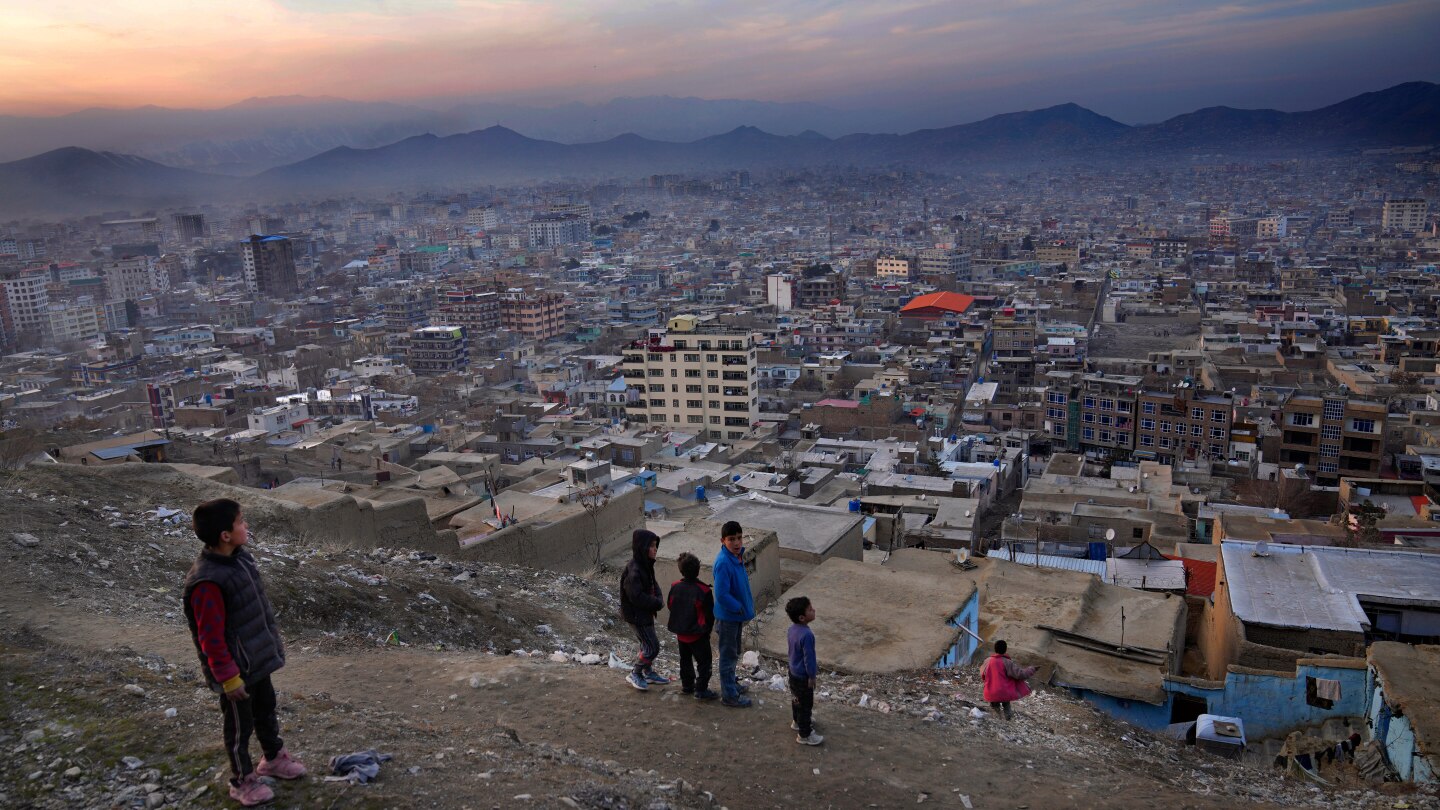
    TEHRAN, Iran — In a significant diplomatic gathering that notably excluded its central subject, Afghanistan’s neighboring nations convened in Tehran to strengthen regional cooperation addressing the multifaceted challenges facing the war-torn country. The meeting, orchestrated by Iran and attended by China, Pakistan, Tajikistan, Uzbekistan, Turkmenistan, and Russia, produced a consensus on enhancing coordination across political, economic, and security domains while advocating for the removal of international sanctions against Afghanistan.

    The Taliban-led government, though invited, opted against participation, offering limited explanation through its foreign ministry. Officials indicated that Kabul prefers to maintain its existing regional engagement channels through established organizations, claiming substantial progress through these formats.

    Despite Afghanistan’s conspicuous absence, participating nations emphasized the critical importance of sustaining economic and trade relationships with Kabul to alleviate deteriorating living conditions. The collective statement urged Afghanistan’s integration into regional political and economic frameworks while addressing shared security concerns including terrorism, narcotics trafficking, and human smuggling. Participants unanimously opposed any foreign military presence in Afghan territory.

    The conference particularly highlighted the international community’s responsibility to lift crippling sanctions and release frozen Afghan assets, with additional calls for humanitarian organizations to support the dignified repatriation of refugees from neighboring countries. Attention also turned to reducing tensions between Afghanistan and Pakistan, where recent border clashes have resulted in numerous casualties among civilians, soldiers, and suspected militants.

    While the Taliban government has developed diplomatic relationships since retaking power in August 2021 and now generates billions in annual tax revenues, Afghanistan’s economy remains in critical condition. Millions depend on international aid for survival, with natural disasters and refugee flows exacerbating humanitarian needs. The country’s economic struggles are compounded by the international community’s refusal to formally recognize the Taliban regime following the chaotic withdrawal of U.S.-led forces.

    Pakistani representatives expressed disappointment with Kabul’s absence, with former special representative Asif Durrani characterizing the decision as demonstrating ‘lack of political maturity’ and reinforcing concerns about the Taliban’s unwillingness to negotiate regional solutions. Participants agreed to convene foreign ministers in Ashgabat, Turkmenistan, and hold special envoys’ talks in Islamabad this March, continuing efforts to engage Afghanistan despite its current reluctance.

  • Fear of crime and migration fuels Chile’s swing to the right

    Fear of crime and migration fuels Chile’s swing to the right

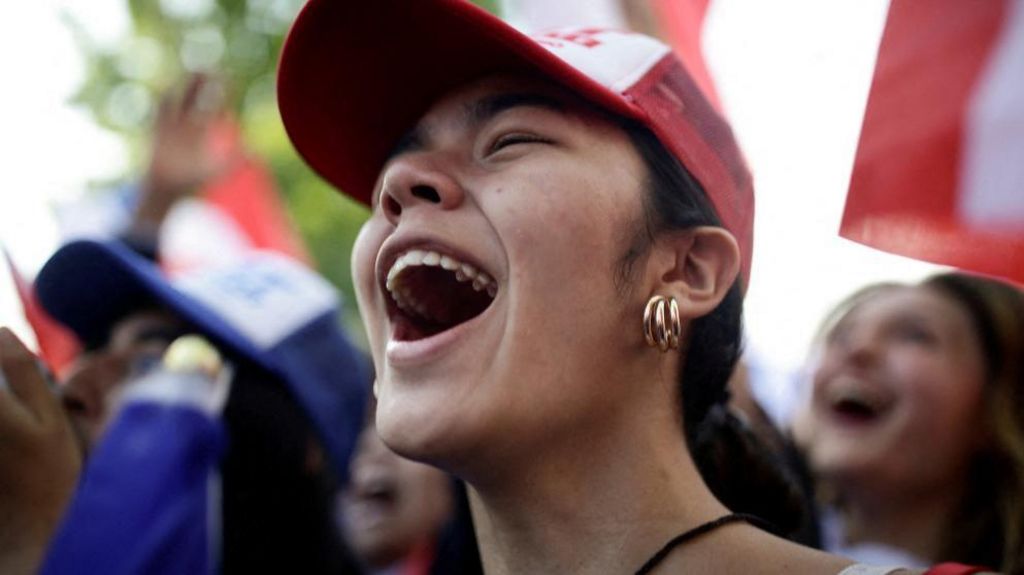
    Chile has elected hardline conservative José Antonio Kast as its next president, marking a dramatic political shift that aligns the nation with a growing bloc of right-wing governments across Latin America. The election outcome reflects profound voter anxieties over security, immigration, and crime that have unraveled Chile’s traditional image as a regional bastion of stability.

    Kast, a 59-year-old conservative who has drawn both criticism and support for his family’s connections to Chile’s authoritarian past, secured victory by promising an “emergency government” approach to the nation’s challenges. His campaign rhetoric emphasized strict immigration controls, including proposed border walls and mass deportations of undocumented migrants, while simultaneously pledging to avoid authoritarianism despite his admiration for former dictator Augusto Pinochet.

    The president-elect’s victory places Chile alongside Argentina, Bolivia, Costa Rica, Ecuador, El Salvador, and Panama in a continental trend that has seen nations swing decisively from left to right governance. This political realignment is largely driven by widespread concerns over economic instability, corruption within previous leftist administrations, and escalating security issues.

    Kast’s messaging particularly resonated with voters concerned about Chile’s rapidly changing demographic landscape. Government statistics reveal a 46% increase in the foreign-born population since 2018, with approximately 336,000 undocumented migrants now residing in the country—many fleeing Venezuela’s economic collapse. This rapid transformation has created social tensions and fears about crime, despite data showing murder rates have actually declined since 2022.

    While Kast promises to implement Trump-style “iron fist” policies, including military deployment to borders and aggressive social media promotion of his crackdowns, practical implementation faces significant hurdles. Venezuela currently refuses to accept deportees from Chile, and the nation’s economy relies heavily on migrant labor in sectors ranging from agriculture to hospitality.

    Business owners like Carlos Alberto Cossio, a Bolivian national operating in Chile for 35 years, warn that mass deportations would severely impact economic productivity and increase costs. Meanwhile, migrants like Venezuelan waiter Gabriel Funez describe living in legal limbo, fearing both deportation and rising xenophobia validated by Kast’s rhetoric.

    The new president will also face political challenges, as his party lacks a congressional majority, requiring compromise on proposals for tougher sentencing and maximum-security prisons. Ultimately, Kast’s victory represents how perceptions of control may matter as much as actual policy results for voters across a continent grappling with interconnected crises of security, migration, and economic uncertainty.

  • Heard of ‘chief dog officer’? Dubai sees rise in pet-friendly communities

    Heard of ‘chief dog officer’? Dubai sees rise in pet-friendly communities

    Dubai is witnessing a significant transformation in urban community planning, with pet-friendly initiatives becoming a central feature of residential life. The trend is exemplified by the innovative ‘Chief Dog Officer’ (CDO) program recently launched in Jumeirah Lake Towers (JLT), where a community competition selected a canine ambassador to represent the neighborhood for a one-year term.

    This initiative reflects a broader cultural shift in the United Arab Emirates, where accommodating pets is increasingly prioritized in urban development. The selected CDO’s responsibilities include welcoming new four-legged residents and their owners, promoting responsible pet etiquette in communal spaces, and highlighting local pet-centric businesses and amenities.

    Beyond JLT, Dubai’s landscape is evolving to accommodate pet owners with specialized infrastructure. Palm Jumeirah’s Golden Mile Galleria shopping center and the W Hotel now welcome pets, while The Greens community features multiple pet-accessible areas. The Zabeel House hotel has broken new ground by incorporating two dog-friendly restaurants, complete with a dedicated elevator for canine patrons.

    Recreational options have expanded considerably with Dubai Islands Beach introducing the emirate’s first dedicated dog beach park in 2023. The 460-square-meter facility features agility equipment, obstacle courses, and designated off-leash swimming areas, complemented by pet showers and drinking fountains. The venue recently hosted the Woofstock festival, further cementing Dubai’s commitment to pet-inclusive community events.

    Digital platforms like Doggie Adventures and Flopster have emerged to support this growing demographic, providing directories of pet-friendly establishments and organizing social gatherings. These developments respond to increasing demand from residents like Sadia Ahmed, who relocated to Emirates Hills specifically for its pet-welcoming environment after struggling to find accommodating housing in older neighborhoods.

    The comprehensive approach—encompassing housing, commerce, recreation, and digital infrastructure—signals Dubai’s maturation into a truly pet-inclusive metropolis, setting new standards for urban living in the region.

  • UAE real estate trend: Creator-ready homes redefine residential design for digital economy

    UAE real estate trend: Creator-ready homes redefine residential design for digital economy

    A transformative shift is underway in United Arab Emirates residential real estate as developers respond to the explosive growth of the creator economy by designing specialized ‘creator-ready’ homes. This emerging housing category represents a fundamental reimagining of residential spaces to accommodate the professional needs of digital content producers.

    With the global creator economy valued at approximately $250 billion and projected to reach $480 billion by 2027 according to Goldman Sachs, and over 165 million new creators entering the space since 2020 per Adobe’s research, the UAE presents an exceptionally ripe market. DataReportal confirms the nation achieved 99% internet penetration with 11.3 million users in 2026, while maintaining a remarkable 112% social media adoption rate indicating multiple profiles per user.

    These demographic realities have created unprecedented demand for residential properties that function as production studios. Unlike traditional home offices, creator-ready homes prioritize acoustic optimization through double-insulated walls, specialized HVAC systems, and acoustic paneling to ensure professional-grade audio recording capabilities. Visual production needs are addressed through strategically oriented windows for consistent natural lighting, neutral wall shades, modular backdrop systems, and in some pioneering developments, integrated LED walls for digital background versatility.

    The infrastructure requirements extend beyond aesthetics to practical considerations. These homes feature dedicated equipment storage with padded compartments, advanced cable management systems, built-in charging stations, and enhanced electrical systems capable of supporting multiple high-wattage production devices. Connectivity receives particular attention with mesh WiFi systems and enterprise-grade networking infrastructure to facilitate large file uploads and uninterrupted streaming.

    Real estate professionals in Dubai and Abu Dhabi report a significant portion of younger buyers and renters—estimated at one in three—now evaluate properties primarily through the lens of content creation suitability. This includes assessing layout flexibility, acoustic privacy, lighting conditions, and technical infrastructure before making purchasing decisions.

    The trend presents substantial opportunities for developers to differentiate offerings in a competitive market. Properties with creator-friendly features command premium interest, particularly among Gen Z and millennial demographics who increasingly view digital production capabilities as essential to their career identity and lifestyle. Co-living operators similarly report high utilization rates of shared podcast studios, photography zones, and creator suites during evenings and weekends.

    As the UAE continues to expand freelance permits for digital professionals and content creators, this housing evolution appears positioned for sustained growth. The convergence of ultra-high digital adoption rates, favorable regulatory frameworks, and generational career shifts suggests creator-ready homes will become increasingly mainstream rather than a niche offering, fundamentally reshaping residential design priorities for the foreseeable future.

  • Father and son behind Bondi Beach shooting that killed 15, Australian police say

    Father and son behind Bondi Beach shooting that killed 15, Australian police say

    Australian authorities have identified the perpetrators behind Sunday’s devastating mass shooting at Sydney’s Bondi Beach as a father-son duo, marking the nation’s deadliest firearm violence incident in nearly three decades. The attack, which targeted a Jewish Hanukkah celebration, has been officially classified as an antisemitic terrorist act.

    According to New South Wales police commissioner Mal Lanyon, the 50-year-old father died at the crime scene while his 24-year-old son remains hospitalized in critical condition. Though police have not formally released identities, local media outlets identified them as Sajid and Naveed Akram respectively. The father had maintained a firearms license since 2015 and legally owned six weapons.

    The horrific episode unfolded over approximately ten minutes on Sunday evening, sending hundreds of beachgoers scrambling for safety across the iconic shoreline. Among the victims, aged between 10 and 87 years old, forty individuals required hospitalization including two police officers in serious but stable condition.

    A remarkable act of bravery emerged from the chaos as Ahmed al Ahmed, a 43-year-old fruit shop owner, tackled and disarmed one of the gunmen despite sustaining two gunshot wounds. His heroic intervention, captured on video, prompted an outpouring of public support with over A$350,000 raised for his medical expenses by Monday afternoon.

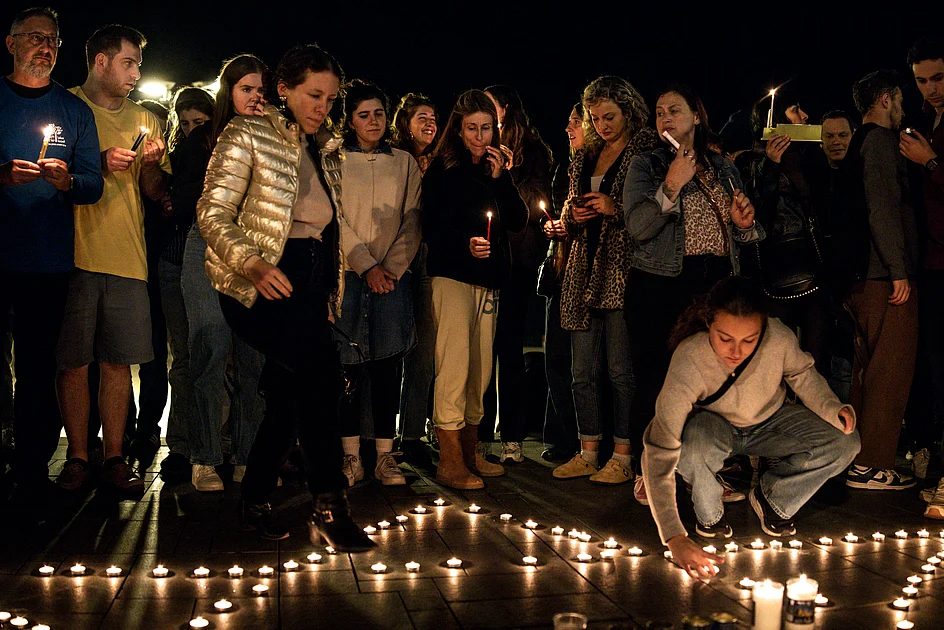
    Prime Minister Anthony Albanese visited the attack site Monday, condemning the “act of pure evil” and pledging national solidarity with Australia’s Jewish community. “We will do whatever is necessary to stamp out antisemitism,” Albanese declared, announcing plans for citizens to light candles in symbolic defiance of darkness.

    The investigation revealed the elder suspect arrived in Australia on a student visa in 1998, while his son was born as an Australian citizen. Security remains heightened at the family’s Bonnyrigg residence, 36 kilometers west of Sydney’s central business district.

    This tragedy represents Australia’s most severe mass shooting since the 1996 Port Arthur massacre that claimed 35 lives. The incident has triggered international condemnations from world leaders including U.S. President Donald Trump and France’s Emmanuel Macron, while prompting enhanced security measures at Jewish events globally.

  • Benin have point to prove at Afcon after World Cup pain

    Benin have point to prove at Afcon after World Cup pain

    The Benin national football team arrives in Morocco for the 2025 Africa Cup of Nations carrying both ambition and recent disappointment. Ranked 92nd globally, the Cheetahs face formidable Group D opponents including Senegal (19th) and DR Congo (56th), alongside Botswana.

    This tournament marks Benin’s fifth appearance at Africa’s premier football event, their first since missing both the 2021 and 2023 editions. The squad draws inspiration from their historic 2019 campaign where they reached the quarter-finals despite not winning any group stage matches—becoming the first team to advance to knockouts without victory.

    Assistant coach Tunde Adelakun acknowledges the challenge ahead: “I’d love to win the tournament. The journey will be tough [but] what I’ve got at the moment is seven Afcon finals to navigate.” The technical staff, led by head coach Gernot Rohr, has selected players who impressed during the 2026 World Cup qualifiers, where Benin came agonizingly close to historic qualification before a final-match defeat to Nigeria.

    The team features emerging talents of Nigerian descent including Junior Olaitan and Tosin Aiyegun, who have become influential figures. Adelakun, himself Nigerian and former member of Rohr’s Super Eagles staff, notes: “These are players who have got the DNA of Nigeria… playing in a team that has what it takes to actually go out there and make impressions.”

    Benin opens their campaign against DR Congo on December 23rd, facing a team that recently defeated African heavyweights Cameroon and Nigeria in World Cup qualifiers. Despite the challenging group, Adelakun remains optimistic: “We’ve put [World Cup disappointment] behind us, there’s no regrets [and] we’re proud of what we did. It’s time to get onto the African stage and prove to the world what we are made of.”

  • Rob Reiner: Six classic movies from the ‘big-hearted genius’ director

    Rob Reiner: Six classic movies from the ‘big-hearted genius’ director

    The entertainment world is reeling from the tragic loss of acclaimed filmmaker Rob Reiner and his wife Michele. Reiner, who passed away recently, leaves behind an extraordinary legacy that reshaped American cinema across multiple genres.

    Born in the Bronx, Reiner first captured national attention through his Emmy-winning portrayal of Michael “Meathead” Stivic on the groundbreaking 1970s sitcom “All in the Family.” His transition from actor to director began with the 1974 TV movie “Sonny Boy,” but his directorial breakthrough arrived with 1984’s “This Is Spinal Tap.” This pioneering mockumentary, created alongside comic talents Christopher Guest, Harry Shearer and Michael McKean, revolutionized comedy filmmaking with its improvised deadpan humor and gave the world the legendary phrase “turn it up to eleven.”

    Reiner’s directorial genius manifested through an incredible eight-year creative surge that produced several timeless classics. His 1986 adaptation of Stephen King’s “Stand By Me” explored childhood innocence and loss with profound sensitivity, launching the careers of River Phoenix and Kiefer Sutherland. The filmmaker revealed this project held special personal significance as his first work distinct from his father Carl Reiner’s comedic legacy.

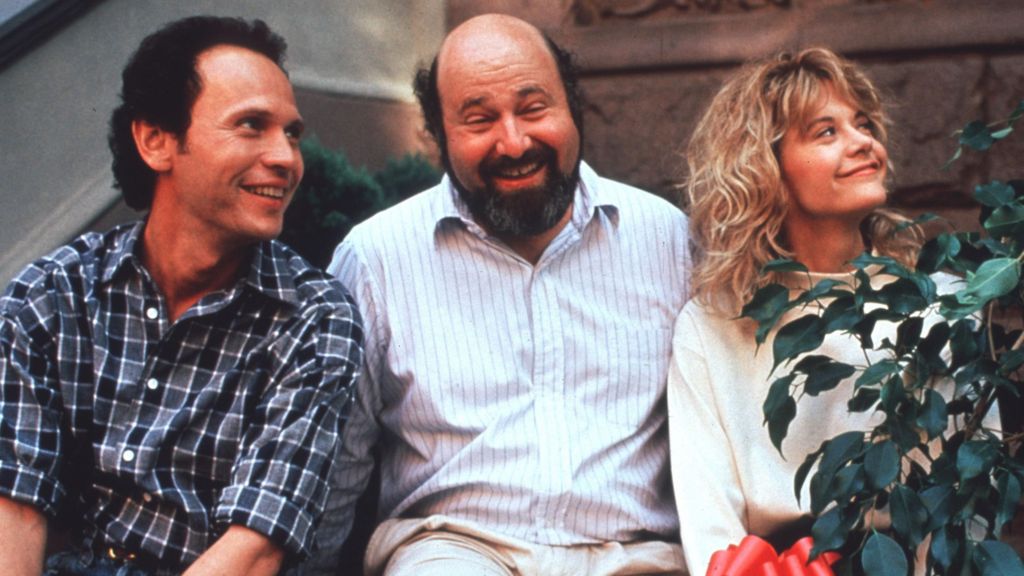
    The following year, Reiner delivered the beloved fantasy “The Princess Bride,” creating what would become a cultural touchstone that reportedly even saved a life when a skier trapped in an avalanche quoted the film to maintain consciousness. His 1989 romantic comedy “When Harry Met Sally” fundamentally redefined the genre, featuring Meg Ryan’s iconic fake orgasm scene that prompted the legendary line from Reiner’s own mother: “I’ll have what she’s having!”

    Personal life profoundly influenced Reiner’s art during this period. He met photographer Michele Singer while directing “When Harry Met Sally,” and their real-life romance inspired him to reshoot the ending to allow the protagonists to reunite. The couple married shortly after and raised three children together.

    Reiner demonstrated remarkable versatility with 1990’s psychological thriller “Misery,” guiding Kathy Bates to an Oscar-winning performance as the terrifying Annie Wilkes. His 1992 legal drama “A Few Good Men” assembled an all-star cast including Tom Cruise, Demi Moore, and Jack Nicholson, who delivered the immortal line “You can’t handle the truth!” The film earned an Academy Award nomination for Best Picture.

    Beyond cinema, Reiner was renowned for his passionate activism. He advocated tirelessly for LGBTQ+ rights, childhood education, healthcare access, and gun control reforms. Entertainment journalist K.J. Matthews described him as “a big hearted genius” and noted his significant humanitarian work in Los Angeles communities.

    Later works included 2007’s “The Bucket List” with Nicholson and Morgan Freeman, which popularized the term for end-of-life aspirations, and 2015’s semi-autobiographical “Being Charlie,” co-written with his son Nick about addiction struggles. Reiner continued acting recently as a studio executive in Netflix’s “Hollywood” miniseries and various television appearances.

    Throughout his career, Reiner maintained that creative works should represent “an extension of yourself”—a philosophy evident in films that balanced humor with melancholy, fantasy with truth, and entertainment with substantive social commentary. His extraordinary contributions to film and society leave an indelible mark on global culture.

  • Ukraine ceasefire talks continue as US says ‘progress was made’

    Ukraine ceasefire talks continue as US says ‘progress was made’

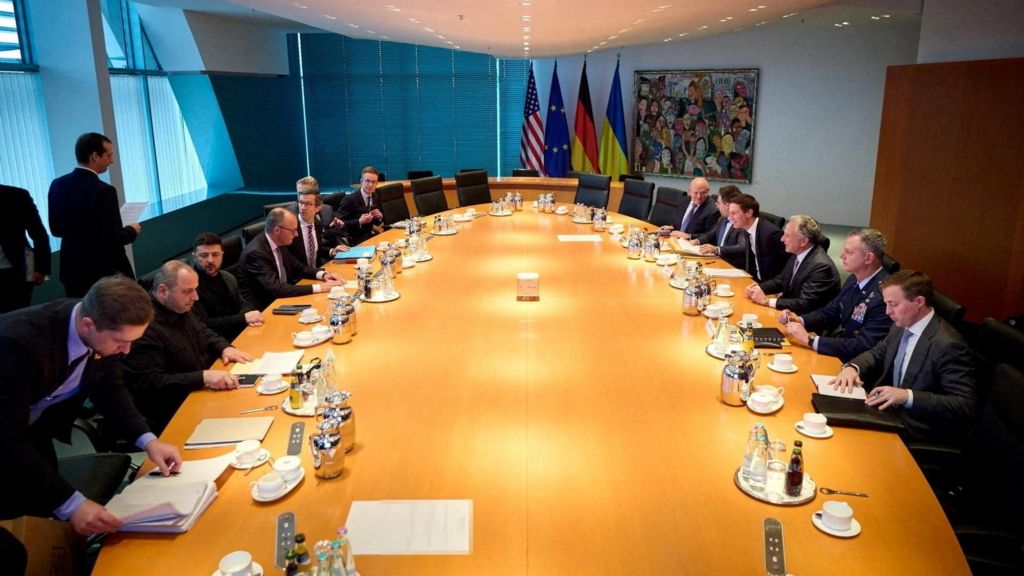
    BERLIN – Critical peace negotiations between Ukrainian and American delegations extended into a second day in Germany’s capital on Monday, following intensive five-hour discussions on Sunday that included German Chancellor Friedrich Merz and notable U.S. figures.

    The high-stakes diplomatic engagement marked the first face-to-face meeting between President Volodymyr Zelensky and U.S. envoy Steve Witkoff, who has previously engaged with Russian President Vladimir Putin in Moscow. The American delegation also included Jared Kushner, son-in-law of former President Donald Trump, while military representation came from NATO Supreme Allied Commander Europe General Alexus Grynkewich.

    In a significant strategic shift, Zelensky indicated readiness to abandon Ukraine’s NATO membership aspirations in exchange for robust security guarantees modeled after NATO’s Article 5 mutual protection clause. ‘This is already a compromise on our part,’ Zelensky stated, acknowledging opposition from ‘some partners from the US and Europe’ regarding NATO accession.

    The talks center on a 20-point peace proposal submitted by Ukraine to counter an initial American plan perceived as disproportionately favoring Russian interests. While details remain confidential, Zelensky characterized the points as a ‘foundation’ for reconstruction and security arrangements.

    The Donbas region’s status emerged as another critical negotiation point, with Zelensky expressing openness to freezing conflict along current frontlines but insisting any withdrawal arrangement must be symmetrical. ‘For it to be fair, Russia would have to withdraw the same distance,’ he emphasized, describing the matter as ‘extremely sensitive and heated.’

    The negotiations occur amid deteriorating humanitarian conditions in Ukraine, where over one million households suffered power outages following Russian attacks on energy infrastructure. Meanwhile, EU members prepare to vote on transferring €90 billion in frozen Russian assets to support Ukraine’s economy, though legal and diplomatic challenges persist with countries like Belgium and Italy expressing reservations.

    EU foreign policy chief Kaja Kallas acknowledged the ‘increasingly difficult’ discussions but affirmed continued efforts toward resolution. The Kremlin stated it expects to receive the negotiated concept from U.S. officials, maintaining that Ukraine’s NATO membership remains an absolute ‘red line.’

  • Serbia organized crime prosecutors charge minister, others in connection with Kushner-linked project

    Serbia organized crime prosecutors charge minister, others in connection with Kushner-linked project

    Serbia’s Organized Crime Prosecutor has formally indicted Culture Minister Nikola Selaković and three other officials for abuse of power and document falsification related to a controversial real estate development connected to Jared Kushner, former senior advisor to U.S. President Donald Trump.

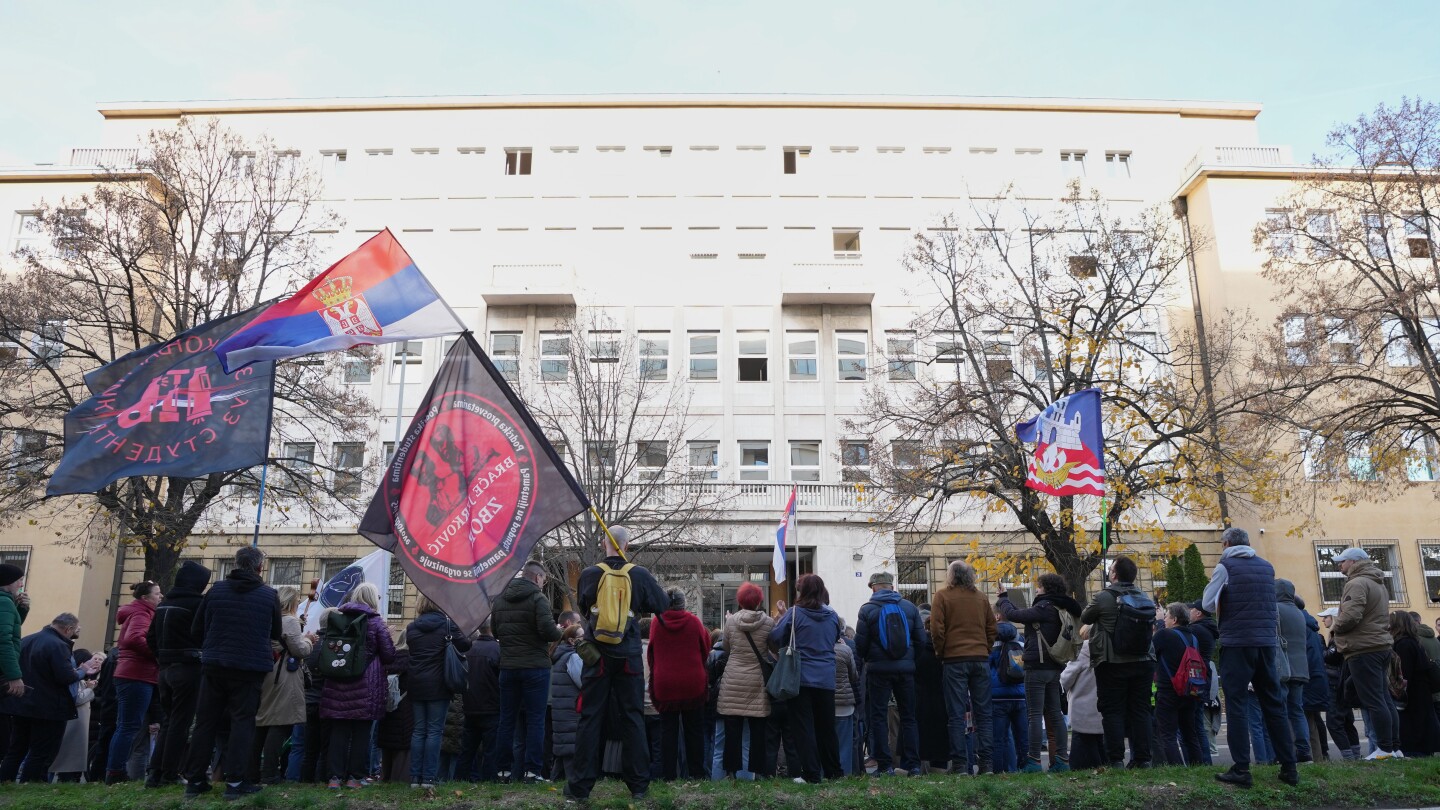
    The charges center on the alleged illegal removal of protected cultural status from a historic military complex in central Belgrade that was heavily damaged during NATO’s 1999 bombing campaign. The site, considered an architectural monument and symbol of Serbian resistance, had been designated as protected cultural heritage until the defendants allegedly forged documentation to enable its commercial redevelopment.

    Last year, the Serbian government signed a 99-year lease agreement with Affinity Global Development, a U.S. firm associated with Kushner, who confirmed his company’s involvement in the $500 million luxury complex project. The development plans include a high-rise hotel, luxury apartments, office spaces, and retail establishments.

    Despite ongoing investigations, Serbia’s parliament passed special legislation last month to authorize the construction. President Aleksandar Vučić, a close ally of Minister Selaković, has openly endorsed the project, stating it would benefit Serbia’s relations with the United States. In a remarkable statement, Vučić declared he would pardon any officials convicted in the case, claiming personal responsibility for wanting to “modernize Serbia” and attract major foreign investment.

    The project has generated significant domestic and international opposition from preservationists and cultural experts who view the military complex as an important example of mid-20th century Yugoslav architecture. The development is particularly sensitive given the site’s symbolic association with NATO’s 78-day bombing campaign, which remains a deeply contentious chapter in Serbian-American relations.

    The case unfolds amid ongoing trade tensions between the two countries, with the U.S. maintaining 35% tariffs on Serbian imports and imposing sanctions on Serbia’s Russian-controlled oil monopoly.

  • More South Korean actors seek Hollywood dream after global success of Korean entertainment

    More South Korean actors seek Hollywood dream after global success of Korean entertainment

    SEOUL — The global ascendancy of South Korean entertainment, from Oscar-winning films like ‘Parasite’ to the worldwide phenomenon of ‘Squid Game,’ has catalyzed a significant shift in Hollywood’s casting landscape. This cultural momentum is creating unprecedented opportunities for Korean performers seeking international careers, while simultaneously challenging entrenched industry stereotypes.

    Actor Amy Baik’s experience epitomizes the push factors driving this transition. After being cut from a domestic commercial solely for lacking double eyelids—a prized feature in Korean beauty standards—Baik redirected her ambitions toward Western markets. ‘It made me wonder how I can survive as an actor in South Korea,’ she reflected. Her subsequent role in Netflix’s ‘XO, Kitty’ demonstrated how features previously discouraged in Korea became assets abroad, with American casting directors suggesting her for action roles beyond stereotypically ‘cute’ images.

    This migration necessitates specialized support systems. Los Angeles-based Upstage Entertainment, co-founded by Alison Dumbell and Devon Overman, bridges the gap between Korean talent and Hollywood opportunities. Dumbell notes increased demand for ‘specifically Korean characters’ rather than generic East Asian roles, attributing this shift to the global popularity of Korean content. However, persistent stereotypes like the ‘nerdy tech programmer’ remain problematic, with Dumbell sometimes refusing submissions to protect actors from reductive casting.

    The transition involves navigating substantial differences in industry practices. Korean American casting director Julia Kim highlights fundamental questions from aspiring actors: ‘Should I change my Korean name to a Western name? Do I pay to get an agent?’ Technical standards diverge significantly—American audition tapes require clean white backgrounds, while Korean headshots favor fashion-model aesthetics versus U.S. preferences for character-matched profiles.

    Language acquisition presents another layer of complexity. Veteran actor Julian Shin (Shin Ju-hwan) undertook intensive English preparation, transcribing over 30,000 words and idioms. ‘Learning expressions like ‘break a leg’ makes you feel closer to being native,’ he noted. Accent coaching focuses on authenticity rather than eradication. ‘It’s perfectly fine, even preferable to have an accent because it’s part of who you are,’ emphasizes Overman, who works on intonation patterns rather than eliminating linguistic identity.

    Structural factors in Korea accelerate this talent migration. Shin describes an increasingly challenging domestic industry where opportunities contracted noticeably over three years. Age discrimination also pushes actors abroad—29-year-old Misun Youm notes that ’30 isn’t considered young’ in Korea, while American casting often disregards age specifications that limit opportunities domestically.

    The collective experience reveals an industry at an inflection point. Where previous generations felt pressure to Americanize completely, contemporary performers find increasing space for cultural authenticity. ‘Now it feels like you can be yourself—be Korean if you’re Korean,’ observes Shin. ‘Stereotypes are gradually crumbling.’ This evolution suggests Hollywood’s gates are opening wider than ever to diverse Korean talent, transforming barriers into bridges for cross-cultural artistic exchange.