作者: admin

  • ‘They look hideous’ – Battle over the Irish flag on Dublin streets

    ‘They look hideous’ – Battle over the Irish flag on Dublin streets

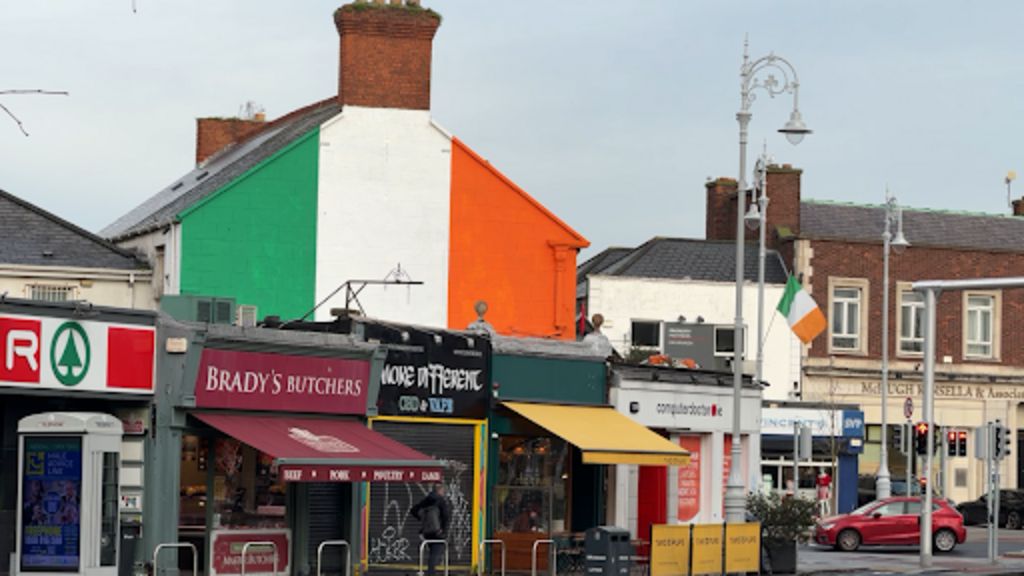
    Dublin has become the stage for a complex cultural confrontation as the Irish tricolour flag transforms into a symbol of division rather than unity. Across the capital’s northern districts, particularly in East Wall, numerous flags have appeared on street lamps without official authorization, sparking intense community debate about national identity and inclusion.

    The phenomenon has drawn sharp criticism from political figures and anti-racism advocates who characterize these displays as territorial marking and intimidation tactics. Conversely, far-right groups and certain community members maintaining the installations reject accusations of racism, insisting they simply express national pride.

    Dublin City Council has adopted a cautious stance, declining to remove the flags despite their unauthorized status. Officials deem removal ‘counterproductive,’ instead proposing educational initiatives about the flag’s historical significance and meaning.

    In response to the perceived co-opting of national symbolism, the #OurFlag movement has emerged seeking to reclaim the tricolour as an inclusive emblem. Organizer Dil Wickremasinghe, a prominent broadcaster and psychotherapist, described the campaign as resistance against those weaponizing the flag to create atmospheres of exclusion. She shared her personal experience of her six-year-old son expressing fears about safety following the 2023 Dublin riots, highlighting the very real human impact of such symbolic conflicts.

    Independent Councillor Malachy Steenson represents the opposing viewpoint, vigorously supporting the flag displays as legitimate expressions of national identity while rejecting any immigration-related motivations. He argues for the tricolour’s exclusive presence on public infrastructure, opposing other flags including European or Pride banners.

    Meanwhile, Social Democrat Councillor Cat O’Driscoll reports significant community concern about the anti-immigration messaging potentially associated with the flags. This concern has manifested physically through a new mural proclaiming ‘North Wall welcomes all’ along North Strand Road, creating a visual counter-narrative to the flag campaign.

    Academic analysis from Professor Dominic Bryan of Queen’s University Belfast contextualizes Dublin’s situation within broader UK and Irish patterns, noting how national flags can simultaneously express patriotism and function as instruments of coercive control. This duality creates particular challenges for authorities reluctant to remove national symbols.

    The council’s current strategy emphasizes community engagement and education over enforcement, aiming to foster deeper understanding of the flag’s intended meaning while addressing safety concerns only when installations create tangible hazards.


  • A homeless man’s death caught the pope’s attention. Now his likeness is on display at the Vatican

    A homeless man’s death caught the pope’s attention. Now his likeness is on display at the Vatican

    In an extraordinary convergence of art, faith, and human tragedy, the portrait of a homeless German man has found its spiritual home at the Vatican, completing a profound narrative that began with a chance encounter on Roman streets.

    German artist Michael Triegel first met Burkhard Scheffler in 2018 outside a Roman church, immediately recognizing the homeless man’s striking features as ideal for depicting Saint Peter. Unbeknownst to Triegel, this artistic decision would later intertwine with Scheffler’s tragic death from exposure in St. Peter’s Square in November 2022—an event that captured Pope Francis’s personal attention.

    The artistic journey continued in Germany where Triegel, a Catholic convert, had won a prestigious commission from Naumburg’s Protestant cathedral to create a new central altar panel complementing surviving Renaissance works by Lucas Cranach the Elder. His painting incorporated Scheffler as Saint Peter among other contemporary figures—a rabbi as Saint Paul, the artist’s daughter as Mary, and anti-Nazi theologian Dietrich Bonhoeffer.

    Following UNESCO-related disputes about the altar’s placement in Germany, the artwork was loaned to the Vatican’s Teutonic College chapel. There, in a remarkable moment of recognition, Vatican art experts identified the painted Saint Peter as the deceased Scheffler, whose grave lies mere steps away in the Teutonic cemetery—a burial place arranged by Pope Francis himself.

    The altar now resides temporarily near Scheffler’s resting place, creating what Monsignor Peter Klasvogt calls ‘a wonderful outcome’ that honors the man’s memory through art and prayer. For Triegel, the coincidental reunion validates his artistic mission: creating religious figures that feel authentically connected to contemporary humanity rather than idealized archetypes.

  • ‘An unspeakable loss’: Funeral takes place for rabbi killed in Bondi shooting

    ‘An unspeakable loss’: Funeral takes place for rabbi killed in Bondi shooting

    Sydney witnessed profound grief as thousands gathered to honor Rabbi Eli Schlanger, the first victim of the Bondi Beach shooting to be laid to rest. The 41-year-old British-born community leader, affectionately known as the ‘Bondi Rabbi,’ was among 15 fatalities when two assailants allegedly inspired by Islamic State ideology opened fire during a Hanukkah celebration.

    Rabbi Levi Wolff characterized Schlanger’s death as an ‘unspeakable loss’ for both the local community and the global Jewish nation during the emotionally charged service. Schlanger’s father-in-law, Rabbi Yehoram Ulman, remembered him as ‘my son, my friend, my confidant,’ expressing regret for not more frequently vocalizing his love and appreciation. Schlanger leaves behind a wife who recently gave birth to their fifth child just two months ago.

    In a powerful demonstration of resilience, Ulman announced that the Jewish community would maintain a 31-year tradition by lighting the final Hanukkah candle on Bondi Beach despite the tragedy. ‘We will gather under the banner of our Chabad house of Bondi, to which Eli dedicated his life,’ he declared, urging community members not to retreat from public life.

    The funeral proceedings continue with services scheduled for Rabbi Yaakov Levitan on Wednesday afternoon and 10-year-old Matilda, the youngest victim, on Thursday. Matilda’s father publicly thanked lifesavers, bystanders, and police officers who assisted during the attack, specifically acknowledging an unidentified woman who protected his younger daughter Summer throughout the ten-minute shooting.

    The memorial service attracted prominent figures including Opposition leader Sussan Ley, New South Wales Premier Chris Minns, former prime minister Scott Morrison, and Israeli Ambassador Amir Maimon. Prime Minister Anthony Albanese’s absence drew attention, with him explaining on ABC NewsRadio that he attends events by invitation only. This comes amid criticism from the Jewish community regarding his administration’s handling of antisemitism.

    In response, Albanese detailed measures including appointing Australia’s first antisemitism envoy, strengthening hate speech legislation, and increasing funding for social cohesion initiatives and Jewish institutions.

    Regarding the investigation, authorities indicated that one suspect, Naveed Akram, would face charges pending assessment of his medical condition after awakening from a coma. Akram and his father, 50-year-old Sajid Akram who was fatally shot by police, allegedly traveled to the Philippines in November, with investigations ongoing into potential connections with Islamic extremists.

    The human cost extended to two police officers critically injured during the incident. Twenty-two-year-old Constable Jack Hibbert, with merely four months of service, lost vision in one eye yet demonstrated ‘courage, instinct, and selflessness’ throughout the attack. His colleague Constable Scott Dyson remained in critical but stable condition following additional surgery.

  • Takeaways from the AP’s report on the impact of aid cuts on Rohingya children in Bangladesh

    Takeaways from the AP’s report on the impact of aid cuts on Rohingya children in Bangladesh

    A devastating humanitarian crisis is unfolding within Bangladesh’s Rohingya refugee camps, where systematic reductions in United States foreign assistance have precipitated alarming increases in child exploitation. According to an extensive Associated Press investigation, the January dissolution of the U.S. Agency for International Development under President Donald Trump has directly correlated with surging incidents of child marriage, labor exploitation, abduction, and recruitment by armed factions.

    With over half of the 1.2 million camp inhabitants being minors, the Rohingya face severe restrictions on employment in Bangladesh while remaining unable to safely return to Myanmar—where military forces previously perpetrated genocide against them. This leaves international aid as their sole lifeline. The U.S., historically the largest humanitarian donor, slashed its 2025 contributions by nearly 50%, causing the overall Rohingya emergency response to be only half-funded.

    The consequences have been catastrophic. UNICEF was forced to close 2,800 educational facilities after losing 27% of its funding, eliminating safe spaces for children. Subsequently, documented abductions quadrupled to 560 cases while child recruitment by militant groups surged eightfold to 817 cases. Verified child marriages increased by 21% and labor exploitation cases rose 17%, though officials acknowledge significant underreporting.

    In response to AP’s findings, the State Department cited $168 million in assistance since Trump’s inauguration and claimed success in “burden sharing” that prompted 11 nations to increase contributions. However, they provided no evidence supporting causation between U.S. diplomacy and these funding decisions.

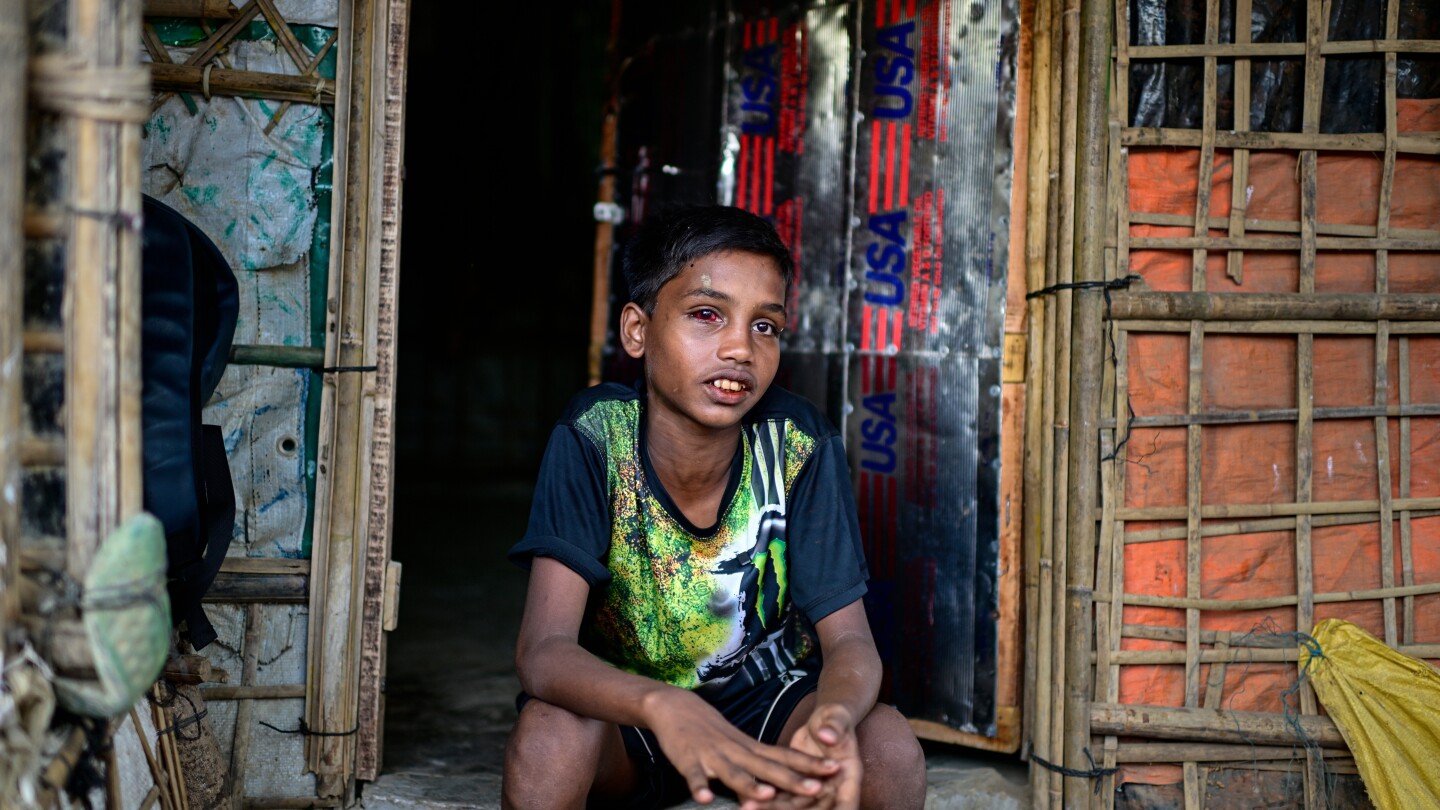
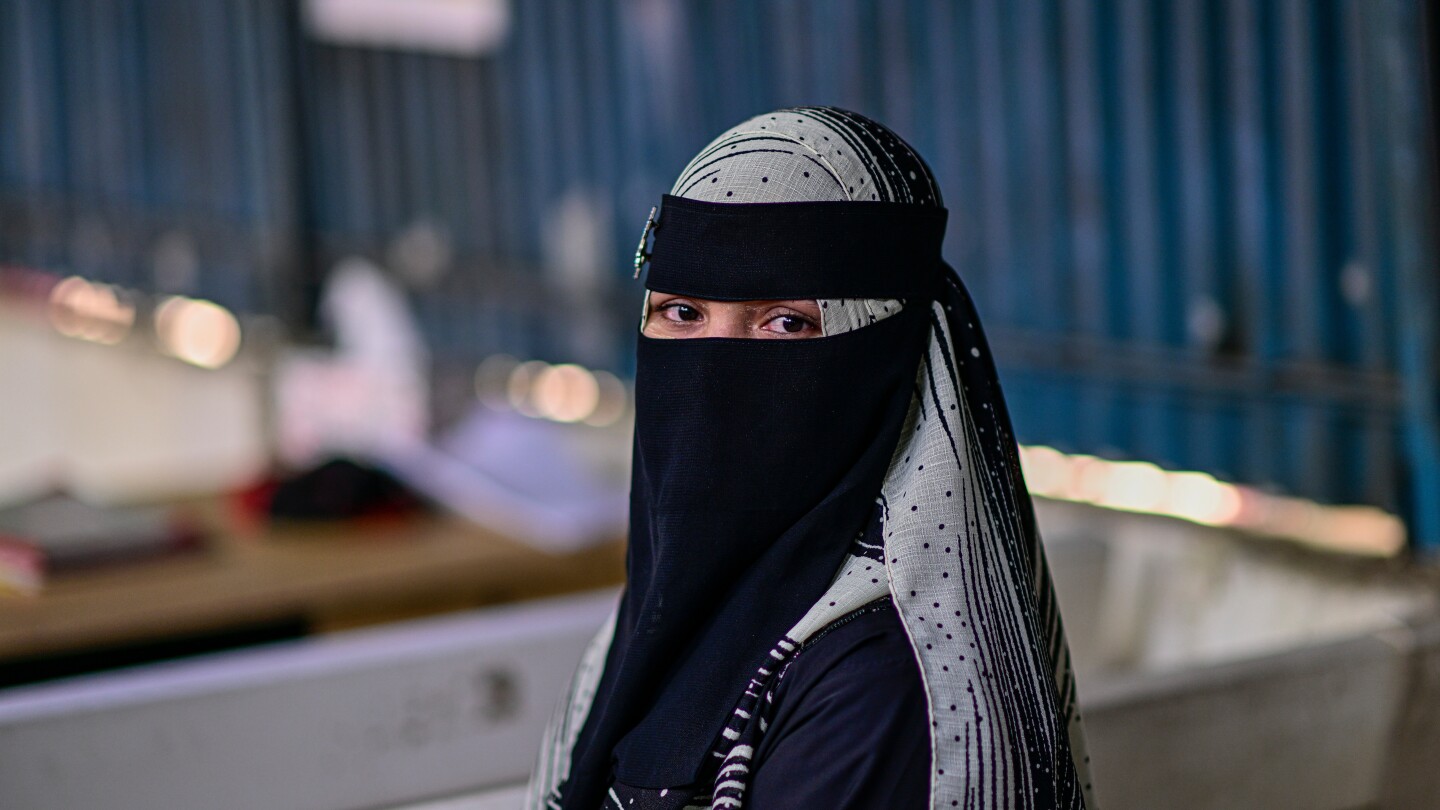
    The human impact is embodied by Hasina (pseudonym), a 16-year-old former student whose school closure led to forced marriage. Now enduring physical and sexual abuse, she mourns her lost education and aspirations: “I dreamed of being something, of working for the community. My life is destroyed.”

  • Kidnapped, married off, robbed of hope: US aid cuts contribute to exploitation of Rohingya children

    Kidnapped, married off, robbed of hope: US aid cuts contribute to exploitation of Rohingya children

    In the sprawling refugee camps of Cox’s Bazar, Bangladesh, the abrupt termination of international aid has unleashed a cascade of suffering among Rohingya children, transforming sanctuaries of learning into landscapes of despair. The systematic dismantling of educational and protection programs has forced vulnerable minors into early marriages, hazardous labor, and human trafficking networks.

    The crisis stems from drastic funding reductions initiated by the U.S. government in January 2025, which eliminated vital support systems for approximately 600,000 Rohingya children. These cuts compelled the closure of thousands of schools and youth centers that previously provided refuge from the camp’s pervasive dangers. Without these safe havens, children have become increasingly exposed to predatory groups operating within the camps’ chaotic confines.

    UNICEF data reveals alarming spikes in violations against children since the funding cessation. Reported abductions have quadrupled to 560 cases, while recruitment by armed groups has increased eightfold, affecting 817 children. Verified cases of child marriage and labor have risen by 21% and 17% respectively, though aid workers caution these figures represent significant undercounts.

    The personal tragedies are numerous and heartbreaking. Sixteen-year-old Hasina (name withheld for protection) was forced into marriage after her school closed, now enduring daily abuse from her husband. “I dreamed of being something, of working for the community,” she whispers. “My life is destroyed.”

    Ten-year-old Mohammed Arfan now spends ten hours daily selling snacks on dangerous street corners after his education ended. “I feel shame working,” he says. “This is the time I should be studying.” Meanwhile, 13-year-old Rahamot Ullah wades through sewage-filled drainage ditches collecting plastic waste, risking infection and drowning to earn mere cents.

    The humanitarian situation continues deteriorating as aid agencies face critical funding shortfalls. The World Food Program warns food rations may end by March 2026, while Save the Children reports securing only one-third of necessary funding for 2026. This desperation has driven many Rohingya to attempt dangerous sea journeys, with nearly one-third of those who fled Bangladesh by boat in 2025 dying or disappearing en route.

    The United States, previously the largest donor to Rohingya assistance programs, has reduced its funding by nearly half compared to 2024 levels. While the State Department claims to have encouraged other nations to increase contributions, overall funding for the Rohingya emergency response remains at only 50% of required levels for 2025, with worse expected in 2026.

    As educational opportunities vanish and protection systems collapse, an entire generation of Rohingya children faces irrevocable loss—their childhoods sacrificed to political decisions made continents away from their bamboo-and-tarpaulin shelters.

  • Asian shares are mixed and oil prices jump as Trump orders a blockade of oil tankers to Venezuela

    Asian shares are mixed and oil prices jump as Trump orders a blockade of oil tankers to Venezuela

    Financial markets across Asia exhibited divergent trends on Wednesday as geopolitical tensions and economic uncertainties created a complex trading environment. The region’s performance was shaped by two primary factors: a significant oil price surge following new U.S. sanctions against Venezuela and cautious trading ahead of key central bank decisions.

    President Donald Trump’s executive order implementing a comprehensive blockade against ‘sanctioned oil tankers’ entering Venezuela prompted an immediate 1% spike in crude prices. This aggressive move represents an escalation of pressure on Nicolás Maduro’s administration, coming just days after U.S. forces conducted the unusual seizure of an oil tanker off Venezuela’s coast amid increased military presence in the region.

    Japan’s Nikkei 225 declined 0.3% to 49,237.58 as investors awaited the Bank of Japan’s impending interest rate decision. The cautious sentiment was reinforced by government data showing machinery orders plummeted 6.8% in October, indicating continued weakness in manufacturing activity.

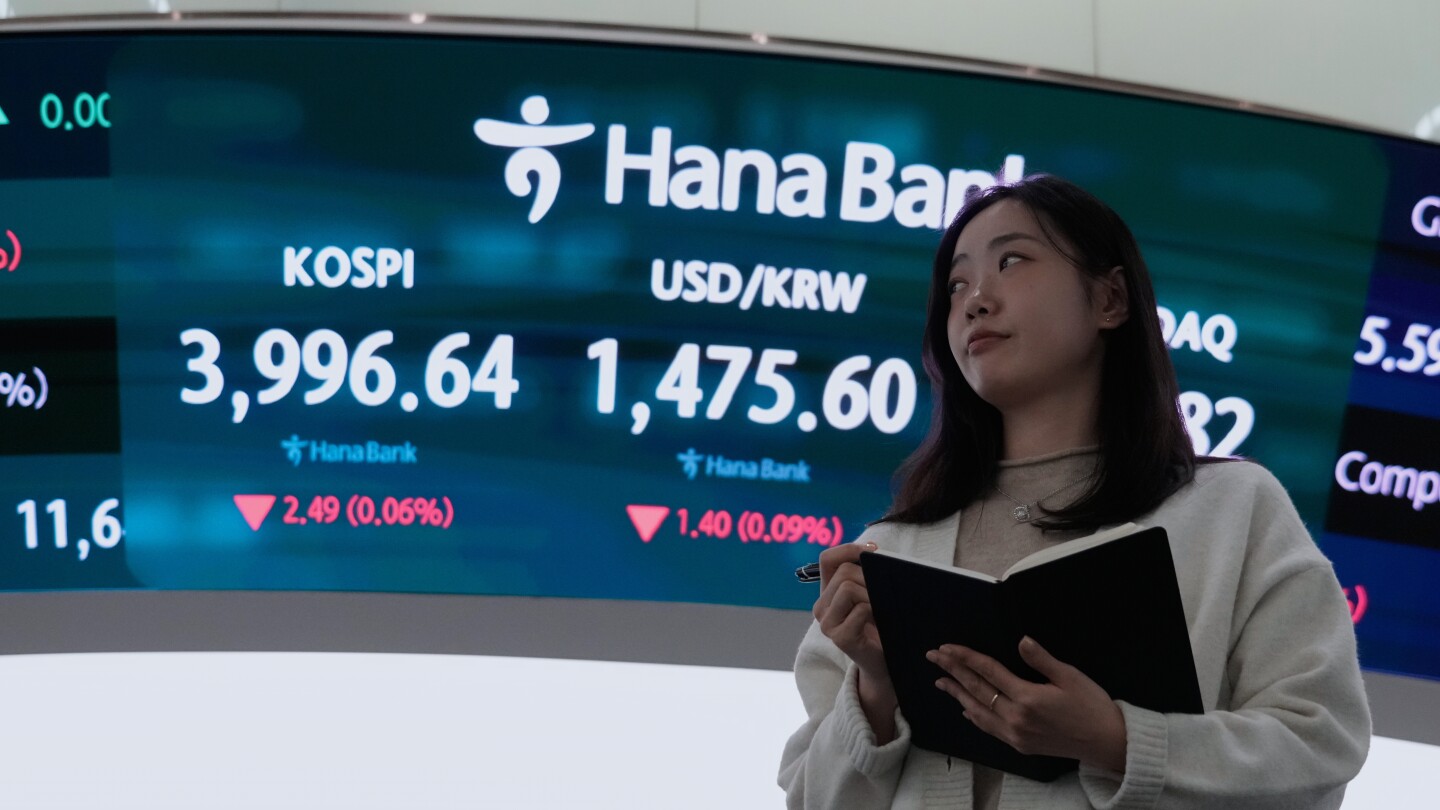
    Meanwhile, technology shares demonstrated resilience with South Korea’s Kospi advancing 0.7% to 4,028.93. Semiconductor giants SK Hynix and Samsung Electronics posted gains of 2.8% and 3.6% respectively, providing substantial support to the benchmark. Chinese markets showed modest positivity with Hong Kong’s Hang Seng rising 0.2% to 25,291.44 and the Shanghai Composite increasing nearly 0.2% to 3,831.43.

    The mixed Asian session followed uncertain trading on Wall Street where conflicting economic data created ambiguity about future interest rate trajectories. While November’s unemployment rate reached its highest level since 2021, employers simultaneously added more jobs than economists anticipated. Retail revenue indicators also surpassed expectations, adding to the complex economic picture.

    Oil sector companies suffered significant losses as crude prices continued their descent to multi-year lows amid oversupply concerns. APA Corporation plummeted 5.2%, Marathon Petroleum declined 4.7%, and Halliburton dropped 4.3%. Artificial intelligence stocks presented a mixed performance with Oracle gaining 2% and Broadcom adding 0.4%, while AI infrastructure provider CoreWeave fell 3.9% amid ongoing questions about the profitability of massive AI investments.

    Currency markets saw the U.S. dollar strengthen to 155.12 Japanese yen while the euro weakened to $1.1732, reflecting the broader financial market uncertainty.

  • South Africa coal exports to Israel soar amid Colombia ban

    South Africa coal exports to Israel soar amid Colombia ban

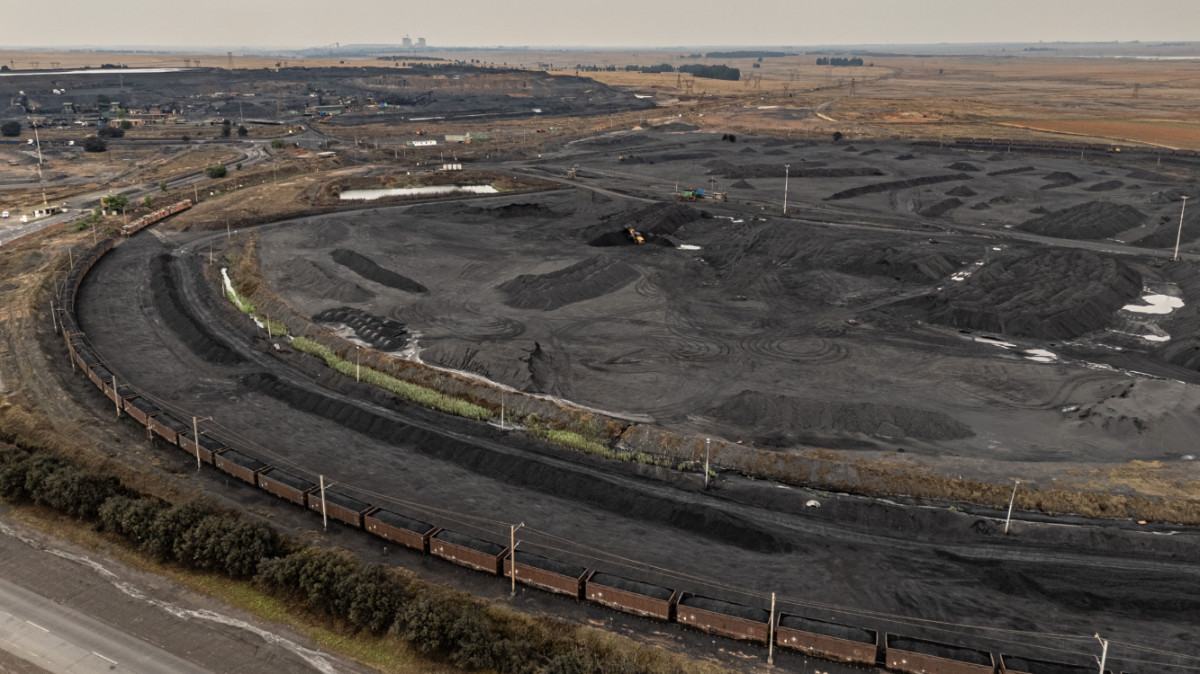
    In a significant shift in global energy trade dynamics, South Africa has substantially increased coal exports to Israel, effectively filling the void created by Colombia’s recent embargo. According to data from commodity analytics firms, South African coal shipments to Israel surged by 87% during the three-month period leading to November compared to the previous year. This development positions South Africa to achieve its highest monthly export volumes to Israel since February 2017, as confirmed by the South African Revenue Service.

    The export expansion comes directly in response to Colombian President Gustavo Petro’s June 2024 announcement suspending all coal shipments to Israel. President Petro implemented the ban contingent upon Israel’s compliance with International Court of Justice directives to cease military operations in Rafah, southern Gaza. Despite initially accounting for approximately 42% of Israel’s annual coal imports totaling two million tonnes, Colombia completely halted exports by late summer 2024, additionally blocking fulfillment of existing long-term supply agreements.

    This trade realignment occurs against the backdrop of ongoing conflict between Israel and Hamas that commenced following October 7, 2023 attacks. The hostilities have resulted in significant casualties, with international bodies including the United Nations characterizing Israel’s campaign as genocidal. Ironically, South Africa has been among the most vocal critics of Israel’s military actions, formally accusing the nation of genocide before the ICJ in December 2023.

    Market intelligence from Kpler indicates South Africa’s share of Israel’s seaborne coal market is projected to triple from 2024 levels, potentially reaching 55% market dominance. The phenomenon isn’t isolated—a November report from Oil Change International identified twenty-five nations continuing energy exports to Israel throughout the Gaza conflict. Notably, Azerbaijan remains a primary crude oil supplier, with Turkey facilitating transportation via the Baku-Tbilisi-Ceyhan pipeline despite its official condemnation of Israeli policies.

    The situation demonstrates the complex interplay between geopolitical principles, economic interests, and international humanitarian law, where nations maintain trade relationships despite overt political disagreements and humanitarian concerns.

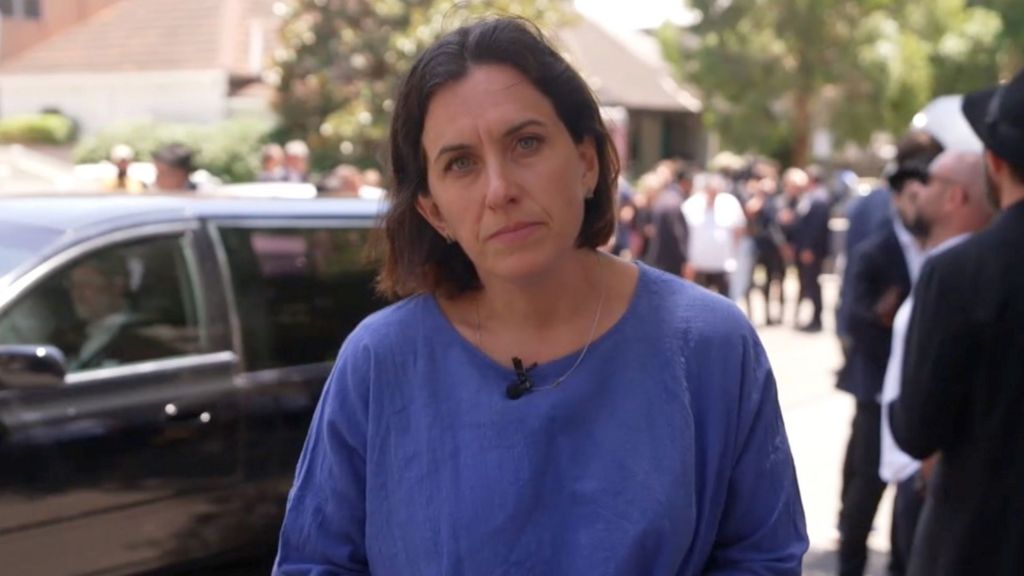
  • BBC outside Rabbi Schlanger’s funeral as mourners pay tribute

    BBC outside Rabbi Schlanger’s funeral as mourners pay tribute

    The global Jewish community gathered in solemn tribute today as hundreds of mourners filled Chabad of Bondi for the funeral service of Rabbi Schlanger, whose passing has created what attendees described as an irreplaceable void in religious leadership. The emotional service, attended by both local congregants and international representatives from Jewish communities worldwide, highlighted the rabbi’s decades of spiritual guidance and community building efforts. Eulogies delivered by prominent religious figures emphasized his extraordinary dedication to interfaith dialogue and educational initiatives that transcended traditional synagogue activities. The BBC’s external broadcast coverage captured poignant moments as mourners shared personal testimonies of how Rabbi Schlanger’s mentorship transformed their spiritual lives. Community leaders acknowledged the particular significance of his work in strengthening Australian Jewish identity while maintaining strong connections with Israeli religious institutions. The funeral procession demonstrated the rare unity across different Jewish movements, with Orthodox, Conservative, and Reform representatives all participating in the memorial ceremonies. Many speakers noted the rabbi’s instrumental role in establishing Bondi as a significant center for Jewish learning in the Southern Hemisphere.

  • Miss Finland’s viral ‘slanted-eyes’ photo stirs racism firestorm

    Miss Finland’s viral ‘slanted-eyes’ photo stirs racism firestorm

    A diplomatic and public relations crisis has engulfed Finland following a racially insensitive social media post by its recently dethroned Miss Universe delegate. Sarah Dzafce, 22, ignited international outrage after a photograph depicting her pulling the corners of her eyes to mimic slanted eyes went viral. The image was originally captioned ‘eating with a Chinese,’ a gesture widely condemned as a derogatory stereotype against East Asian communities.

    The controversy rapidly transcended borders, sparking significant backlash across Japan, South Korea, and China. The fallout extended beyond Dzafce to impact Finland’s national image, even triggering calls for a boycott of the country’s flag carrier, Finnair.

    In response to the escalating situation, the Miss Finland Organisation announced Dzafce’s dethronement, stating the move was ‘difficult but necessary.’ The organization emphasized that the titleholder’s role-model status demands respect for all people regardless of origin or appearance.

    Dzafce offered an apology on Instagram, claiming the gesture was an innocent reaction to a headache during dinner and that the offensive caption was added by a friend without her consent. She expressed regret for causing ‘ill will’ and affirmed her commitment to respecting diverse backgrounds. However, the apology, written primarily in Finnish, was criticized by many international observers as insufficient and insincere.

    The scandal took a further political turn when two right-wing Finnish MPs, Juho Eerola and Kaisa Garedew, posted photos mimicking Dzafce’s gesture in a show of support. Both posts were subsequently deleted following widespread condemnation. Prime Minister Petteri Orpo condemned the lawmakers’ actions as ‘childish’ and stated that elected officials should exemplify proper conduct. The Finns Party is now considering potential sanctions against the MPs.

    Finnair issued a formal statement on its Japanese social media account, distancing itself from the politicians’ actions and reaffirming its commitment to welcoming everyone with respect. The airline acknowledged that its diverse workforce and global customer base make inclusivity a core value.

    The incident has prompted serious discussions about racism in Finnish society. The Finnish embassy in Japan acknowledged receiving numerous inquiries and stated that ‘racism remains a challenge’ requiring continuous effort to resolve. Meanwhile, a Japanese resident in Finland launched a petition calling for an investigation into anti-Asian discrimination, which gathered over 7,000 signatures within days.

  • Kenyans unite around the country’s growing bullfighting tradition

    Kenyans unite around the country’s growing bullfighting tradition

    In western Kenya’s Kakamega County, an ancient tradition has transformed into a modern spectacle that captivates thousands. The bullfighting derby, deeply rooted in Luhya community heritage, now serves as both cultural preservation and contemporary social outlet for Kenya’s youth.

    The recent rematch between veteran bull Promise and rising contender Shakahola—named after the forest where over 400 cult-related deaths occurred in 2023—demonstrated how this centuries-old practice has adapted to modern times. What began as post-harvest entertainment has evolved into organized sport complete with social media betting, merchandise sales, and viral TikTok content creation.

    University of Nairobi sociologist Kathleen Anangwe identifies multiple factors driving this resurgence: “The youth are seeking identity and authenticity,” she explains, noting that bullfighting provides social solidarity amid Kenya’s challenging unemployment landscape. Official statistics place national unemployment at 9%, though youth rates are significantly higher according to workers’ rights groups.

    The economic impact extends beyond the arena. Young entrepreneurs capitalize on events by selling snacks, traditional bull-chasing sticks, and refreshments to spectators. The matches foster community bonding while creating informal economic opportunities.

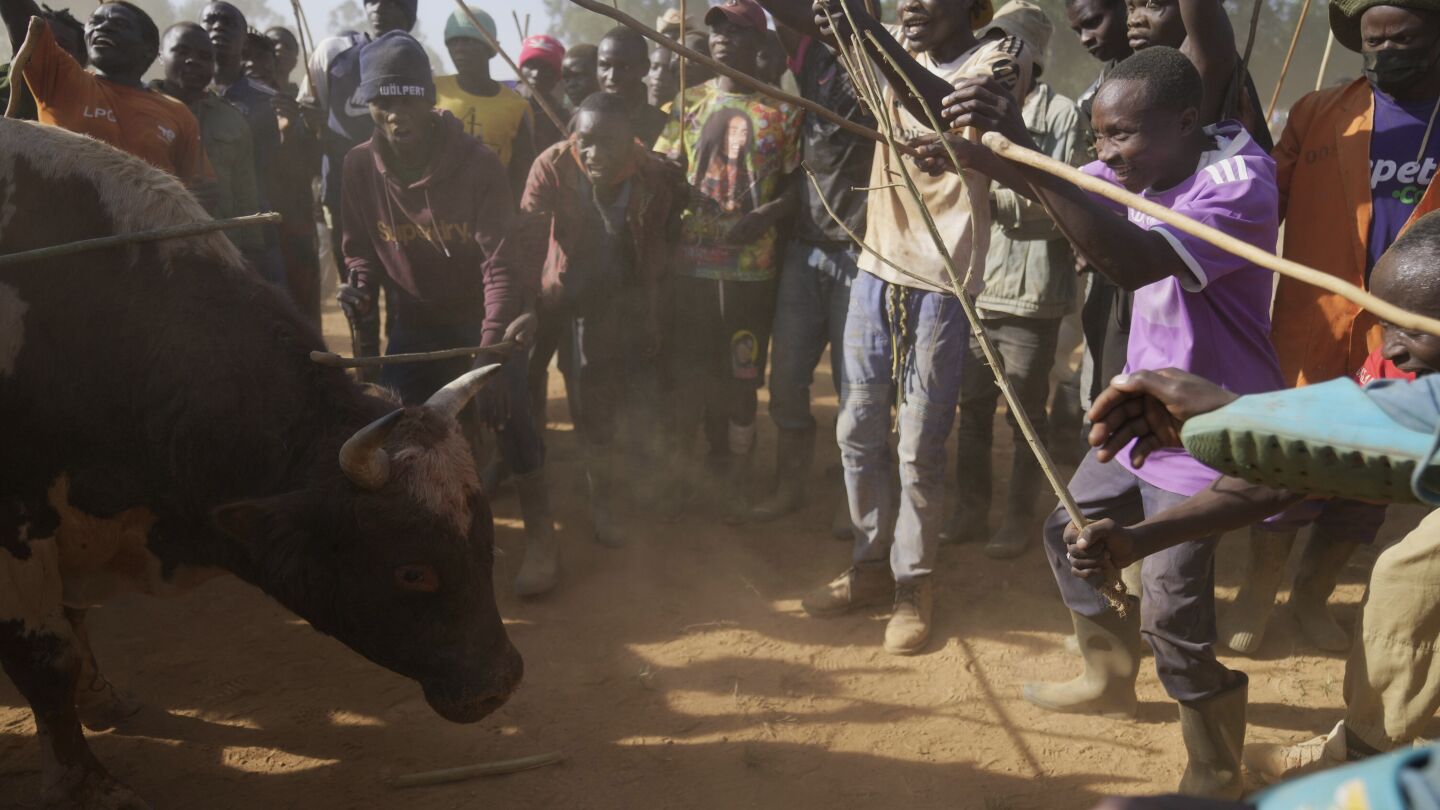
    Preparation for fights involves meticulous traditional rituals. Bulls receive special diets of napier grass and herbal concoctions believed to enhance strength. Owners perform pre-match encouragement rituals, and transportation to the arena becomes a procession with hundreds of motorcycle-riding fans waving sticks and ululating.

    The spectacle draws diverse audiences, from local devotees to first-time visitors like David Gitau from central Kenya, who expressed amazement at the tradition. The matches themselves are brief but intense—lasting under five minutes as bulls lock horns until one retreats. Organizers emphasize that the animals are not deliberately injured during these encounters.

    Twenty-year-old Brenda Milimo, niece of Shakahola’s owner, represents the new generation of enthusiasts. Despite being unemployed, she travels 4.5 hours by bus from Nairobi to attend major matches and participates in casual social media betting. “Bullfighting is in my blood,” she declares, having wagered up to 1,500 Kenyan shillings ($11) on previous matches.

    The recent victory by Shakahola—avenging a loss from two years prior—sparked celebratory eruptions of song, dance, and traditional drumming. Owner Josphat Milimo expressed triumphant satisfaction, claiming redemption after previously feeling “cheated of victory.” As the tradition gains popularity among digital-native youth, participants anticipate further formalization through dedicated betting platforms and expanded media coverage.