作者: admin

  • US, Iran agree to ceasefire for two weeks

    US, Iran agree to ceasefire for two weeks

    Tensions that had gripped the globe for days over an imminent US-Iran military conflict defused at the 11th hour on Tuesday, when President Donald Trump announced a bilateral two-week ceasefire, struck just moments before a self-imposed deadline that carried warnings of catastrophic destruction for Iran.

    The breakthrough agreement, mediated by Pakistani Prime Minister Shehbaz Sharif and Pakistan’s Chief of Army Staff Field Marshal Asim Munir, was shared publicly by Trump on his social media platform Truth Social. In his post, Trump confirmed he would suspend planned bombing and military strikes against Iran for 14 days, contingent on Iran’s commitment to fully, immediately, and safely reopen the Strait of Hormuz, the world’s most critical oil chokepoint at the center of the latest standoff.

    According to Reuters, Iranian officials submitted a 10-point negotiating proposal to Washington, which Trump described as a “workable basis” for finalizing a broader formal agreement. Trump added that nearly all longstanding points of dispute between the two nations had already been preliminarily agreed upon, and the two-week window will allow teams to hammer out remaining details to lock in a permanent deal. Israel has also signed off on the ceasefire arrangement.

    Iran’s state television framed the agreement as a diplomatic victory for the country, while the Supreme National Security Council of Iran confirmed in an official statement that top-level leadership had approved holding direct negotiations with US negotiators in Islamabad across the 14-day truce. Talks are scheduled to kick off this Friday.

    Global energy markets reacted immediately to the de-escalation: West Texas Intermediate crude futures for May plummeted nearly 19 percent, falling below $92 a barrel as fears of supply disruptions from conflict in the Persian Gulf evaporated.

    Hours before the ceasefire announcement, the United States had been swept by widespread anxiety, triggered by days of increasingly aggressive rhetoric from Trump that left the public and global leaders deeply alarmed. On Monday, Trump issued an ultimatum threatening to obliterate Iran’s entire civilian infrastructure – including every bridge and power plant – if Tehran failed to meet his demands by the Tuesday deadline. On Tuesday morning, he doubled down on the threat, warning that “a whole civilization will die tonight” if Iran did not comply.

    That incendiary language drew fierce backlash from across the political spectrum, the public, and international institutions. Many American civilians voiced profound distress over the president’s approach. Adam Turner, a 54-year-old New York resident, told China Daily that Trump’s harsh rhetoric over Iran, paired with his confrontational style on other issues, had left him severely stressed. “It’s not speech that I would accept from any horrible person on the street. It is without respect, without intelligence, without dignity,” Turner said. “It makes me sad because I don’t think the Iranian people deserve it. He got rid of [former President Barack] Obama’s Iran deal. We had a deal in place that was effective.”

    Lewis Fox, a 66-year-old Manhattan resident, echoed that criticism, calling for a return to diplomatic diplomacy rather than coercion. “He has converted the United States into being the bully of the world versus the savior of the world. And therefore, he definitely shouldn’t be talking like that,” Fox said.

    Criticism even extended to Trump’s own political circle. Marjorie Taylor Greene, a Republican Representative and once a staunch Trump ally, publicly condemned the threat on X, writing: “Not a single bomb had dropped on America. We cannot kill an entire civilization. This is evil and madness.”

    Democratic House Minority Leader Hakeem Jeffries of New York called on congressional Republicans to intervene to prevent full-scale conflict. “Congress must immediately end this reckless war of choice in Iran before Donald Trump plunges us into World War III,” Jeffries wrote on X. “It’s time for every single Republican to put patriotic duty over party and stop the madness. Enough.”

    International bodies also raised sharp objections ahead of the ceasefire. A spokesperson for UN Secretary-General António Guterres said the UN chief was “deeply troubled” by statements that threatened to hold civilian populations responsible for political outcomes. UN High Commissioner for Human Rights Volker Türk warned Tuesday that the Trump administration’s threats could constitute severe violations of international law, ahead of the last-minute truce that pulled the region back from the brink of large-scale war.

  • Greece to ban social media for under-15s from next year

    Greece to ban social media for under-15s from next year

    In a bold step to address growing concerns over adolescent mental health, Greece has announced sweeping new regulations that will bar all users under the age of 15 from accessing social media platforms, joining a expanding wave of national governments across the globe moving to restrict minors’ exposure to potentially harmful online environments.

    Prime Minister Kyriakos Mitsotakis framed the policy as a targeted response to three interconnected crises: soaring rates of anxiety, chronic sleep disruption among young Greeks, and the intentional “addictive design” embedded into many major social media platforms. The restriction is scheduled to go into effect starting in January 2025, with full details of the enforcement and regulatory framework set to be released later the same day the announcement was made.

    Mitsotakis shared the initiative in a public video message posted to TikTok, where he outlined the personal feedback that drove the policy change. “Many young people tell me they feel exhausted from comparisons, from comments, from the pressure to always be online,” he said, adding that he had heard consistent reports from parents about children struggling with poor sleep, constant anxiety, and compulsive phone use.

    The prime minister stressed that the ban is not an attempt to cut young people off from digital technology entirely, noting that digital tools can be powerful sources of inspiration, knowledge, and creative growth. “But the addictive design of certain applications, and a business model based on capturing your attention – on how long you stay in front of a screen – takes away your innocence and your freedom,” he argued. “That has to stop somewhere.”

    Beyond Greece’s national borders, Mitsotakis is pushing for coordinated action across the European Union. In a formal letter to European Commission President Ursula von der Leyen, he called for a unified EU regulatory framework to “complement and reinforce the necessary national initiatives for the protection of minors.” His proposed regional rules include mandatory age verification for all users across every platform, a continent-wide ban on social media access for under-15s, and a requirement that platforms re-verify all users’ ages every six months to prevent workarounds.

    Greece is far from alone in pursuing strict limits on minor social media use. Australia made global history last December when it became the first country to mandate that major platforms including TikTok, YouTube and Snapchat remove all accounts belonging to users under 16, with steep financial penalties for non-compliance. Several other EU nations, including France, Austria and Spain, have already advanced similar regulatory proposals. The United Kingdom has opened a public consultation on a proposed ban for under-16s, while Ireland and Denmark are currently evaluating comparable measures.

    Industry stakeholders have pushed back heavily against broad, age-based restrictions. Social media companies argue that blanket bans are impractical to enforce, ineffective at achieving their stated goals, and risk leaving vulnerable, socially isolated teenagers cut off from critical online support networks. Reddit has already launched a legal challenge to Australia’s new under-16 ban, contesting the law in court.

    The global conversation around minor social media use has sharpened dramatically in recent months, fueled by mounting research linking heavy early social media exposure to negative mental health outcomes, and a high-profile legal ruling in the United States. In a landmark March trial, a jury found Meta and YouTube liable for contributing to a young woman’s childhood social media addiction. Jurors determined that Meta, the parent company of Instagram, Facebook and WhatsApp, and Google, which owns YouTube, intentionally designed platforms to be addictive, causing measurable harm to the plaintiff’s mental health. Both companies have rejected the verdict and announced plans to appeal, with Meta arguing that teen mental health is a complex issue with no single cause that can be pinned on one platform.

    As more nations move to implement national restrictions, the push for a coordinated EU framework signals a growing shift toward tighter global regulation of big tech’s impact on children and adolescents.

  • ‘Pathetic’: Son slams Commonwealth Bank for gifting mum marked pin, flowers  after 45 years of employment

    ‘Pathetic’: Son slams Commonwealth Bank for gifting mum marked pin, flowers after 45 years of employment

    A viral social media post has ignited widespread debate about corporate gratitude toward long-serving employees, after an Australian creator called out one of the nation’s largest lenders for what he describes as a shockingly underwhelming retirement gift for his mother, who dedicated 45 years of service to the bank.

    Nick, who posts personal and lifestyle content to his TikTok account under the handle @dreamfueltribe, shared the story with his thousands of followers, framing it as a harsh lesson on how corporations view loyal staff. His mother spent nearly two-thirds of her entire life as an employee of Commonwealth Bank of Australia, one of the country’s dominant ‘Big Four’ national banking institutions, building her entire career within the organization from entry through to retirement.

    In his viral TikTok video, Nick questioned the bank’s paltry recognition, pointing out that the organisation did not extend a meaningful gift such as a quality watch, fine jewelry, or even a celebratory dinner for his mother’s decades of commitment. Instead, the bank only presented her with a small bouquet of cut flowers and a commemorative service pin to mark her 45 years of continuous service.

    Nick used the moment to share a broader takeaway for workers around the world: that for large corporate systems, individual employees are ultimately replaceable cogs rather than valued long-term team members. “The sooner you realise this, the better off you will be,” he told his audience.

    The post spread rapidly across social platforms, drawing hundreds of conflicting reactions from users across Australia and beyond. A small share of commenters argued that formal recognition itself, regardless of the gift’s material value, should be enough to honor an employee’s tenure. But the vast majority of respondents expressed anger and disbelief at the bank’s gesture, with many echoing Nick’s criticism that a major profitable bank could not afford a more meaningful token of appreciation for 45 years of loyal work.

    Dozens of other users stepped forward to share their own families’ similar stories of shockingly underwhelming recognition for decades of corporate service. One user recalled that her father received just two cinema tickets after 45 years of service at a multi-million dollar corporation. Another shared that her father, who worked 50 years for a single employer without ever taking a single sick day, was gifted an empty whiskey decanter — despite the fact he never drank alcohol.

    The viral conversation has renewed broader public discussion about the disconnect between large profitable corporations and their most tenured staff, particularly as many companies face growing pressure to improve worker retention and show tangible appreciation for long-term commitment.

  • Man fined after breaking into viral hippo Moo Deng’s enclosure

    Man fined after breaking into viral hippo Moo Deng’s enclosure

    In 2024, a baby pygmy hippo named Moo Deng took the internet by storm, capturing millions of hearts across social media with her playful antics. But the endangered animal’s sudden global fame brought an unexpected incident: a man broke into her enclosure at Thailand’s Khao Kheow Open Zoo, and a local court has now handed down a $300 fine for the trespassing offense.

    Khao Kheow Open Zoo, located roughly a two-hour drive northeast of Bangkok, confirmed the court’s ruling to AFP. Zoo director Narongwit Chodchoy stated that the unidentified intruder entered Moo Deng’s habitat last month, and was recently found guilty of violating zoo regulations. Local media circulated public footage of the incident, showing the man standing inside the restricted enclosure while recording the young hippo on a tablet device.

    After the intrusion, zoo assessments confirmed Moo Deng was not physically harmed, though the unexpected encounter left the baby hippo slightly startled. She currently resides at the zoo alongside her mother, Jonah.

    For zoo leadership, the court’s verdict carries a clear message about protecting animal welfare. “This decision shows that no one can violate animals’ rights, no matter whether they are in an enclosure or in the wild,” Chodchoy told reporters.

    The incident has prompted the zoo to revisit its security and staff training protocols. Previously, training focused heavily on responses to animal escapes; moving forward, staff will also receive specialized training on how to handle human intruders entering restricted animal areas. “We learned from this lesson and will not allow it to happen again – not to Moo Deng and not to other animals in the zoo,” Chodchoy added.

    Alongside updated training, the facility has ramped up regular security patrols across all animal enclosures to prevent future trespassing attempts. The intruder was sentenced to a 10,000 baht fine, equivalent to approximately $300 or £223.

    Moo Deng rose to global fame immediately after her birth in July 2024. Her name translates roughly to “bouncy pig” in English, a playful moniker that matched her energetic personality that won over online audiences. After Khao Kheow Open Zoo shared clips of her exploring and playing on social media, the videos quickly went viral, spawning thousands of memes and turning the baby hippo into a global viral sensation.

    Moo Deng’s fame translated directly to a massive boost in zoo attendance. Thousands of visitors flocked to the facility every weekend just to catch a glimpse of the young pygmy hippo, and unofficial and official Moo Deng-themed merchandise — including branded clothing and accessories — quickly hit the market to meet demand from dedicated fans. Pygmy hippos are classified as an endangered species, making Moo Deng’s popularity a unexpected win for raising global awareness about the conservation of the species.

  • Trump complains NATO ‘wasn’t there when we needed them’ after talks with alliance leader Rutte

    Trump complains NATO ‘wasn’t there when we needed them’ after talks with alliance leader Rutte

    WASHINGTON — Tensions between former and current U.S. President Donald Trump and the trans-Atlantic military alliance NATO boiled over into public view Wednesday, following a closed-door meeting between Trump and NATO Secretary-General Mark Rutte that had been widely expected to defuse Trump’s fury over the alliance’s response to the recent Iran conflict.

    In the lead-up to the private talks, Trump opened the door to a potential U.S. withdrawal from the 75-year-old alliance, after NATO member states rejected his call to join U.S. military actions when Iran blocked the Strait of Hormuz — a critical global shipping chokepoint that carries roughly one-fifth of the world’s daily oil supplies. The blockage triggered a sharp spike in global energy prices, amplifying Trump’s frustration with alliance partners.

    Shortly after the meeting concluded, Trump took to social media to voice his lingering anger in an unfiltered all-caps statement. “NATO WASN’T THERE WHEN WE NEEDED THEM, AND THEY WON’T BE THERE IF WE NEED THEM AGAIN,” the post read. The White House declined to offer additional context or clarification on Trump’s remarks immediately after the meeting.

    The talks came just one day after the U.S. and Iran reached a tentative two-week ceasefire agreement that includes the full reopening of the Strait of Hormuz. The ceasefire was finalized only after Trump issued a stark threat to target Iran’s critical infrastructure, warning that “a whole civilization will die tonight” if Tehran did not back down.

    Earlier Wednesday, White House Press Secretary Karoline Leavitt confirmed that Trump had raised the possibility of a U.S. exit from NATO ahead of the meeting, telling reporters “I think it’s something the president will be discussing in a couple of hours with Secretary-General Rutte.”

    Trump’s long-standing criticism of NATO dates back to his first presidential term, and U.S. law passed by Congress in 2023 explicitly blocks any sitting U.S. president from withdrawing from the alliance without congressional approval. Despite the legal restriction, Trump has repeatedly claimed he holds unilateral authority to pull the U.S. out of the 32-member bloc, which was founded in 1949 to deter Soviet expansionism during the Cold War. NATO’s core founding commitment is its mutual defense clause, which states that an armed attack against one member is considered an attack against all — a provision that has only been invoked once, in 2001, to support the U.S. following the September 11 terrorist attacks.

    Beyond the Iran conflict, Trump also renewed his grievances over NATO’s stance on Greenland, the semi-autonomous Danish territory that Trump attempted to secure U.S. control over earlier this year, before backing down following negotiations with Rutte. In a separate social media post Wednesday, Trump railed, “REMEMBER GREENLAND, THAT BIG, POORLY RUN, PIECE OF ICE!!!”

    It remains unclear whether the Trump administration will move to challenge the 2023 law blocking unilateral presidential withdrawal from NATO. Notably, that legislation was championed by current Secretary of State Marco Rubio, who was serving as a U.S. Senator from Florida when the bill passed. Rubio met separately with Rutte Wednesday morning at the U.S. State Department ahead of the White House meeting. In a post-meeting statement, the State Department said the pair discussed the Iran conflict, ongoing U.S. diplomatic efforts to end the Russia-Ukraine war, and “increasing coordination and burden shifting with NATO allies.”

    Top Republican leaders have already broken with Trump over his NATO stance. On Tuesday night, Senate Minority Leader Mitch McConnell of Kentucky, who serves on the Senate Armed Services Committee, issued a statement reaffirming his support for the alliance. “Following the September 11th attacks, NATO allies sent their young servicemembers to fight and die alongside America’s own in Afghanistan and Iraq,” McConnell wrote. The senior Republican urged Trump to remain “clear and consistent” on U.S. alliance commitments, arguing it is not in the United States’ national interest to “spend more time nursing grudges with allies who share our interests than deterring adversaries who threaten us.”

    NATO has already faced significant instability since Trump returned to the presidency, over his cuts to U.S. military support for Ukraine and repeated threats to seize Greenland from Denmark, a long-standing NATO ally. Trump’s criticism of the alliance intensified sharply after the outbreak of the U.S.-Iran war in late February, with the president arguing that securing the Strait of Hormuz should fall to the European and regional nations that depend on its oil shipments, not the United States. “Go to the strait and just take it,” Trump told supporters last week.

    Additional friction emerged when two NATO members, Spain and France, moved to ban or restrict U.S. access to their national airspace and joint military facilities for operations related to the Iran war. While those nations have joined a broader international coalition to help secure the strait once the conflict ends, their refusal to back immediate U.S. action further stoked Trump’s anger. British Prime Minister Keir Starmer, another frequent target of Trump’s criticism, was scheduled to travel to the Gulf region Wednesday to support the newly brokered ceasefire, as the U.K. leads efforts to draft a post-conflict security framework for the strait.

    This is not the first time Trump has threatened to walk away from NATO. The president has repeatedly vowed to abandon alliance partners that fail to meet the bloc’s target of spending 2% of their gross domestic product on defense. In his recently published memoir, former NATO Secretary-General Jens Stoltenberg revealed he personally feared Trump would withdraw the U.S. from the alliance as early as 2018, during Trump’s first term in office.

    Contributions to this reporting were provided by Associated Press journalists Aamer Madhani and Matthew Lee in Washington, and Lorne Cook in Brussels.

  • White crocuses bloom after snow retreats in Xinjiang

    White crocuses bloom after snow retreats in Xinjiang

    Every spring, as the cold grip of winter loosens its hold on northwestern China, a quiet, breathtaking natural spectacle unfolds in the high meadows of Xinjiang’s Narat Grassland. Located 2,000 meters above sea level in Xinyuan County, Ili Kazak Autonomous Prefecture, Xinjiang Uygur Autonomous Region, this vast alpine landscape has just welcomed one of its most anticipated seasonal events: the first bloom of wild white crocuses emerging after the last winter snow melts away.

    Once the retreating snow exposes the damp, nutrient-rich alpine soil, the delicate crocus shoots push steadily through the earth to greet the spring sun. Their pure white petals open slowly to cradle bright yellow stamens, creating a striking contrast against the vivid backdrop of clear blue spring skies and the permanently snow-capped peaks of the Tianshan Mountains that rise along the horizon.

    The short but spectacular bloom has quickly become a magnet for nature lovers and tourists, who travel to the high meadows to witness the fleeting display. Many stop along the grassland slopes to capture photographs of the one-of-a-kind alpine tableau, turning the quiet post-winter meadows into a popular seasonal destination for visitors eager to experience the early beauty of spring in Xinjiang.

  • Madagascar declares state of emergency over severe fuel shortages linked to Iran war

    Madagascar declares state of emergency over severe fuel shortages linked to Iran war

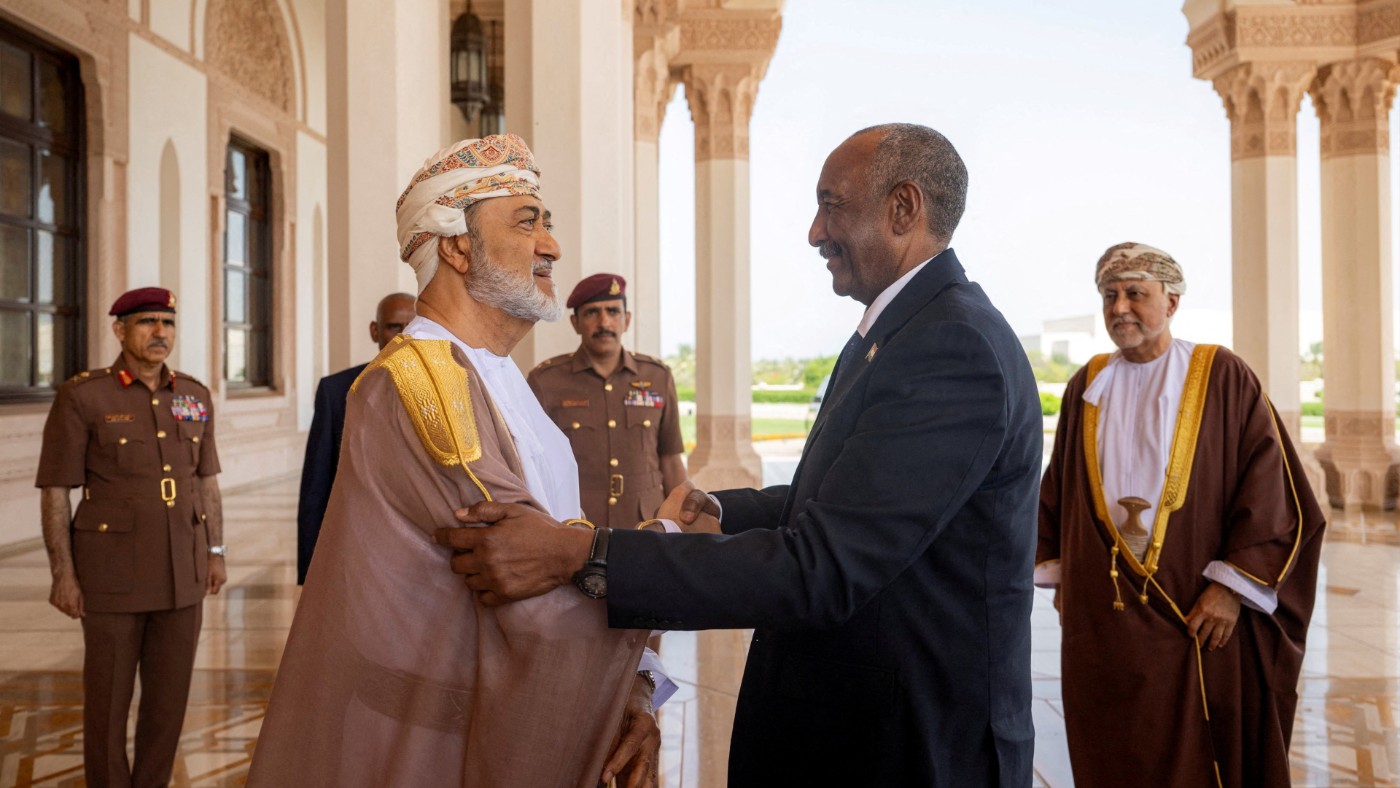
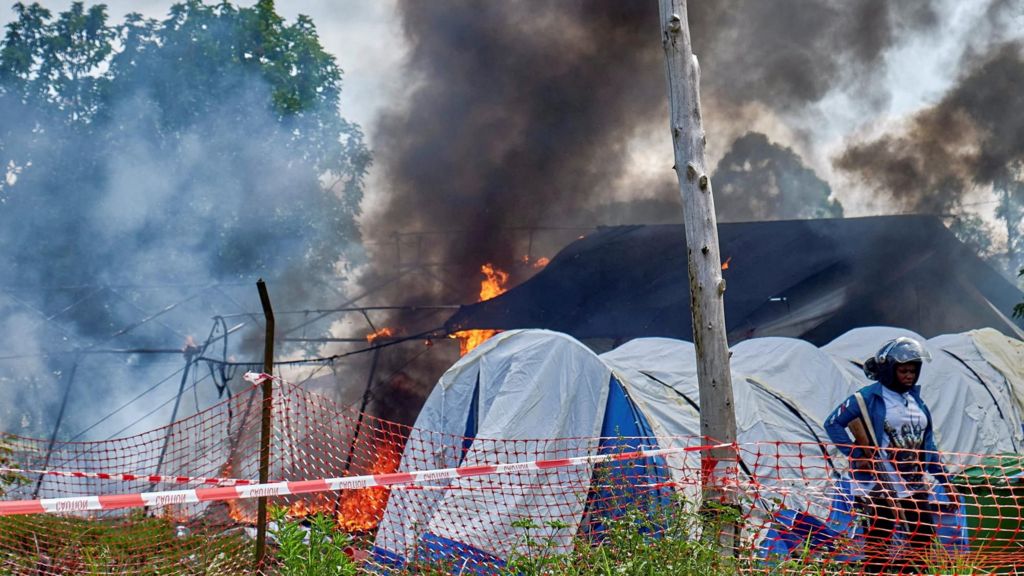
    As spillover effects from the ongoing conflict between Israel and Iran continue to roil global energy markets, the Indian Ocean island nation of Madagascar has implemented a 14-day nationwide state of energy emergency to address crippling fuel shortages that threaten public order and critical infrastructure. The presidential office confirmed the measure was approved during a cabinet meeting Tuesday, prompted by growing concerns that unaddressed supply gaps could spark widespread civil unrest. Unlike many larger economies, Madagascar generates the vast majority of its electrical power from petroleum-fueled plants, and relies almost entirely on fuel imports from the Middle East – a supply chain that has been severely disrupted by regional conflict, even after the announcement of an overnight two-week ceasefire between warring parties. The ongoing instability has already put Madagascar in a precarious position: just last year, prolonged outages of power and clean water access fueled youth-led demonstrations that escalated into broad political unrest, ultimately culminating in a military takeover of the country. As of this report, the Malagasy government has not released a full list of specific policy actions it will implement under the new emergency powers, but officials note the declaration grants expanded authority to stabilize the national power sector, reduce the impact of ongoing disruptions, regulate consumer fuel use, and guarantee that core public services remain operational. So far, official fuel prices have not been raised since the supply crisis began, but widespread shortages have become commonplace, with local media documenting drivers waiting in multi-hour queues to access petrol stations. News of the state of emergency triggered panic buying at multiple retail fuel locations across the country Wednesday, with some stations reportedly implementing temporary customer fuel rationing to stretch limited existing supplies. The majority of Madagascar’s crude oil and fuel imports originate from Oman, located adjacent to the Strait of Hormuz – the world’s most critical chokepoint for global energy shipping, which has faced persistent disruption since the outbreak of expanded regional conflict in late February. Even with the recent ceasefire announcement, global crude prices remain significantly higher than pre-conflict levels, and energy analysts warn that repairing damaged supply infrastructure and production capacity in the Middle East could take months, or even multiple years, to complete. Madagascar is far from alone in grappling with this crisis across the African continent: multiple other African nations have rolled out urgent policy measures in recent weeks to offset the economic impact of disrupted energy supplies. Policy responses across the region have ranged from adjusting fuel pricing through subsidies or rate hikes to mandatory national electricity rationing. Most recently, The Gambia announced an immediate halt to all non-essential official travel for government employees, a policy that was first implemented just days earlier by Senegal. To the south, Zambia has temporarily eliminated all import taxes on petrol and diesel shipments, while Botswana moved to scrap national fuel levies for six months to ease cost burdens for consumers. As regional governments scramble to mitigate the fallout, the ongoing energy crisis continues to test the stability of import-dependent economies across the African continent, with Madagascar’s emergency declaration marking the most high-profile response to date.

  • Co-founder of Jalisco New Generation drug cartel pleads guilty

    Co-founder of Jalisco New Generation drug cartel pleads guilty

    In a significant development in the bilateral fight against transnational drug trafficking, the U.S. Department of Justice has confirmed that Érick Valencia Salazar, one of the founding leaders of Mexico’s infamous Jalisco New Generation Cartel (CJNG), has entered a guilty plea to federal drug trafficking charges. Known widely by his cartel alias “El 85”, Valencia Salazar’s legal process marks one of the highest-profile convictions in recent years against the leadership of the hemisphere’s most powerful drug trafficking organization.

    Valencia Salazar’s path to a U.S. courtroom has been years in the making. He was first taken into Mexican custody in 2012, only to be released five years later—an outcome that drew widespread criticism of systemic corruption within Mexican law enforcement at the time. He remained at large until 2022, when Mexican military forces tracked and arrested him in the cartel’s home stronghold of Jalisco. In February 2025, he was part of a major extradition of 29 accused Mexican drug kingpins transferred to U.S. authorities to face trial.

    According to statements from the U.S. Drug Enforcement Administration (DEA), Valencia Salazar played an instrumental role in transforming CJNG from a splinter criminal group into one of the world’s most violent narcotics enterprises. Officials say the cartel under his early leadership adopted violence as a core business strategy: eliminating rival groups to seize territorial control across Mexico while smuggling massive volumes of illicit narcotics into American communities across the border. “He helped build CJNG into a ruthless organisation that uses violence as a business model – murdering for control in Mexico while flooding the United States with poison”, the DEA said in its official statement.

    Valencia Salazar changed his initial plea of not guilty to plead guilty to a single count of conspiracy to distribute five kilograms or more of cocaine into the United States. U.S. federal law mandates a minimum 10-year prison sentence for this offense, and his formal sentencing hearing is scheduled for July 31 this year.

    The conviction comes amid a period of heightened tension and coordinated action against CJNG, which is currently the most powerful criminal organization operating in Mexico. The cartel made global headlines just months earlier when a wave of coordinated violence erupted across 20 Mexican states following reports that CJNG’s supreme leader, Nemesio Oseguera Cervantes, commonly known as “El Mencho”, had died from injuries sustained during his capture by Mexican security forces.

    Last year, the Trump administration formally designated CJNG as a Foreign Terrorist Organization (FTO), a rare classification for a transnational criminal group that signaled the U.S. government’s intent to ramp up pressure on cartel networks. In justifying the designation, the administration argued that CJNG’s activities pose a grave threat not just to the safety of American citizens and the security of U.S. borders, but also to the political and social stability of the entire Western Hemisphere. The Trump administration has repeatedly put diplomatic pressure on Mexican President Claudia Sheinbaum to increase resources and operations against cartel groups based on Mexican territory. For her part, Sheinbaum has framed the capture and subsequent death of “El Mencho” as clear evidence of the Mexican armed forces’ unwavering commitment to rooting out the country’s most notorious drug trafficking figures.

    This latest guilty plea represents a major milestone in the long-running, binational effort to dismantle CJNG’s leadership structure, though security analysts warn that the cartel remains largely operational across Mexico and continues to control significant portions of the cross-border drug trade into the U.S.

  • Full text of Iran’s National Security Council statement on ceasefire

    Full text of Iran’s National Security Council statement on ceasefire

    After 40 days of open conflict that ignited when US and Israeli forces launched strikes on Iranian targets, triggering cross-regional retaliatory missile and drone attacks that pushed the Middle East to the brink of full-scale war, a two-week ceasefire has entered into force, opening a fragile diplomatic window to de-escalate tensions. The outbreak of fighting severely disrupted commercial shipping through the Strait of Hormuz, the world’s most critical chokepoint for global energy supplies, stoking widespread international alarm over the risk of a broader regional conflict that could send shockwaves through the global economy.

    The ceasefire agreement, announced by former US President Donald Trump, was brokered through extensive mediation led by the government of Pakistan, and it is conditional on the full reopening of the Strait of Hormuz to commercial traffic, with formal negotiations set to kick off in Islamabad in the coming days. Both Washington and Tehran have claimed victory from the period of open conflict: US officials assert that American forces achieved all core military objectives set out at the start of hostilities, while Iranian authorities frame the ceasefire as a triumph that forced the United States to agree to negotiate based on Tehran’s pre-set 10-point framework of demands.

    Key agenda items for the upcoming talks include rules governing maritime transit through the Strait of Hormuz, full relief for Iran from international and US sanctions, and a negotiated settlement over the future presence of US combat forces across the Middle East. Iranian officials have stressed that the opening of negotiations does not mark a permanent end to hostilities, while their US counterparts have described the diplomatic process as a rare opportunity to forge a broader, long-term stability agreement. Most independent observers characterize the ceasefire as a temporary pause to de-escalate, rather than a durable resolution, with the final outcome of talks remaining deeply uncertain.

    In a full official statement released by Iran’s Supreme National Security Council, Tehran framed the ceasefire as an undeniable, historic defeat for US and Israeli aggression. The statement credits what it calls the strategic prudence of Iran’s supreme leadership, the bravery of Iranian and Axis of Resistance fighters across the region, and the unified mass support of the Iranian people for forcing the US to accept Tehran’s 10-point terms as a basis for negotiations. The core demands laid out in the Iranian framework include a binding US commitment to refrain from future aggression against Iran, permanent recognition of Iran’s full sovereignty over the Strait of Hormuz, international recognition of Iran’s right to nuclear enrichment, full lifting of all primary and secondary sanctions on Iran, termination of all hostile UN Security Council and International Atomic Energy Agency Board of Governors resolutions against the country, full compensation for damages Iran has sustained from decades of US hostilities, complete withdrawal of all US combat forces from the Middle East region, and an end to all US support for military campaigns against the Axis of Resistance, including Hezbollah in Lebanon.

    The statement notes that from the opening hours of the conflict, US and Israeli leadership held wildly optimistic assumptions that a rapid military campaign would force Iran into full surrender, partition the country, and seize its natural energy resources. These plans failed entirely, the statement argues, due to coordinated defensive and offensive operations by Iran and its resistance allies that inflicted irreversible damage to US military infrastructure across the region, weakened the Israeli military’s position in occupied territories, and exposed the inability of the US-led coalition to achieve core war aims within the first 10 days of fighting.

    According to the Iranian official statement, the United States began reaching out through quiet diplomatic channels to request a ceasefire shortly after that, but Tehran rejected all initial appeals until all of its core preconditions were formally accepted. Tehran also notes that it has repeatedly rejected arbitrary deadlines set by the US, emphasizing that it places no value on timelines imposed by hostile powers. The ceasefire and negotiation process were approved by Iran’s Supreme National Security Council and supreme leadership after the US formally accepted all 10 of Iran’s core principles via Pakistani mediation, with talks set to open in Islamabad on April 10 and allocated a two-week window that can be extended by mutual consent.

    The statement stresses that the opening of negotiations does not mean an end to the conflict, and that hostilities will resume if the US fails to follow through on its commitments to finalize the agreement in line with Iran’s 10-point framework. It calls for full national unity across all Iranian political groups and civil society during the negotiation period, noting that the process is an extension of the battlefield fought under the supervision of Iran’s highest leadership. The statement concludes by warning that Iran remains fully militarily prepared to resume hostilities immediately if the US makes any concession or violates the agreed terms, while celebrating what it calls a historic turning point that has established Iranian regional dominance as the basis for any future security order in the Middle East.

  • The gift card Israel uses to buy US weapons

    The gift card Israel uses to buy US weapons

    For decades, the framing of U.S. military transfers to Israel as “arms sales” has obscured a critical, underreported reality: the vast majority of these transactions are not paid for by the Israeli government, but by American taxpayers. This hidden subsidy is now at the center of a growing congressional pushback, led by progressive lawmakers who are demanding an end to U.S. public funding for what they describe as destructive Israeli military operations.

    Earlier this year, four U.S. senators — Independent Bernie Sanders of Vermont, Democrats Chris Van Hollen of Maryland, Jeff Merkley of Oregon, and Peter Welch of Vermont — introduced joint resolutions of disapproval to block a $659 million shipment of 22,000 bombs to Israel, a transfer originally approved by the Trump administration. What makes this deal particularly contentious, the lawmakers argue, is that many of the weapons are being drawn directly from active U.S. military stockpiles, and the entire cost will be covered by U.S. taxpayers.

    In a public statement announcing the resolutions, Sanders emphasized that in the wake of widespread destruction caused by Israel’s far-right government under Benjamin Netanyahu across Gaza, Lebanon, and regional flashpoints like Iran, providing tens of thousands of new munitions is the last priority American taxpayers should be forced to fund. Van Hollen echoed this position, noting that Congress must use every legislative tool at its disposal to halt what the caucus frames as Trump’s escalation of regional conflict, starting with cutting off taxpayer-funded weapons transfers to the Netanyahu administration.

    Policy analyst Stephen Semler, a non-resident senior fellow at the Center for International Policy, recently published an in-depth data investigation that confirms the broad scope of taxpayer funding for U.S. arms transfers to Israel. As Semler explains, the label of “arms sale” is misleading by design. While Israel is officially listed as the purchaser in formal government notifications, the funding source is almost exclusively the U.S. Foreign Military Financing (FMF) program — an annual U.S. military aid package that provides Israel with at least $3.3 billion in public U.S. funds each year, which functions essentially as a taxpayer-funded “gift card” for Israeli weapons purchases.

    Semler illustrated this dynamic by examining the four most recent publicly notified arms sales to Israel, published in the Federal Register: a $740 million deal for armored personnel carriers, a $1.98 billion contract for tactical vehicles and accessories, a $3.8 billion transfer for attack helicopters and related weaponry, and a $150 million deal for utility helicopters and replacement parts. In every single listing, the “funding source” field is marked as Foreign Military Financing, meaning U.S. taxpayer money covers the cost. Only one deal included a minor contribution from Israeli national funds, making the overwhelming majority of the $6.7 billion in tested transactions fully U.S.-funded. The 22,000-bomb shipment targeted by the Senate resolutions? Both components of that deal are 100% FMF-funded.

    Expanding this analysis to cover the full four-year term of the Biden administration from 2021 to 2024, Semler compiled and cross-checked data from two official U.S. defense sources: the Defense Security Cooperation Agency’s (DSCA) Historical Sales Books for government-brokered Foreign Military Sales, and the Directorate of Defense Trade Controls’ (DDTC) Section 655 Reports for private commercial Direct Commercial Sales. The findings are stark: the Biden administration authorized a total of $22 billion in arms sales to Israel over that period, split between more than $13.2 billion in government-brokered deals and over $8.7 billion in commercial transactions.

    DSCA data shows 90% of government-brokered sales are covered by U.S. military aid, and while DDTC does not publicly disclose funding sources for commercial sales, Semler’s estimate based on Israel’s historic average of FMF spending on commercial arms puts that share at 68%. All combined, Semler calculates that U.S. taxpayers covered $17.8 billion of the $22 billion in total Biden-era arms sales to Israel — 81% of the total value, or nearly $18 billion in taxpayer subsidies that have been misrepresented as commercial sales.

    This reality undermines the most common policy justifications for continuing large-scale arms transfers to Israel. Proponents of the deals often argue they boost U.S. economic activity and create domestic jobs, but the fact that American taxpayers foot the bill eliminates any claim that the transfers bring meaningful foreign investment into the U.S. economy. Even the job creation argument falls apart under scrutiny: military spending is widely recognized as one of the least efficient ways for the U.S. government to generate new employment.

    Historical data backs this up: in 1985, the U.S. military budget stood at $295 billion, equal to $746 billion in 2024 inflation-adjusted dollars, and the U.S. arms industry employed 3 million American workers. By 2021, the inflation-adjusted military budget had grown by $132 billion to $879 billion — an 18% real increase — but arms industry employment plummeted to just 1.1 million workers, a 63% drop in jobs despite massively increased public spending. The reliance on a job creation argument also tacitly reveals the weakness of national security justifications, Semmer argues: a policy that truly served core U.S. national security interests would not need to be defended on the grounds of job growth alone.

    As the Senate prepares to consider the resolutions to block the Trump-approved bomb shipment, the analysis makes clear that the debate is not just about Israel’s military actions in the Middle East — it is about the growing burden of U.S. taxpayer funding for foreign military operations. Semler concludes that American taxpayers are owed a refund for decades of hidden subsidies, rather than being asked to cover billions more in weapons costs under new and existing administrations.