作者: admin

  • From ‘Ragebait’ to ‘Aura Farming’: The Gen-Z slang that defined 2025

    From ‘Ragebait’ to ‘Aura Farming’: The Gen-Z slang that defined 2025

    The digital landscape of 2025 witnessed an unprecedented linguistic revolution as Generation Z’s distinctive slang permeated mainstream online discourse. This lexical transformation saw specialized terminology evolve from niche internet communities to dominate global social media platforms, brand marketing strategies, and everyday digital communication.

    Oxford’s Word of the Year selection, ‘ragebait’, emerged as the definitive term representing calculated content creation strategies. This phenomenon involved deliberately posting controversial statements to trigger algorithmic amplification through user engagement. Dubai’s social media scene provided fertile ground for such content, with influencers leveraging iconic backdrops to maximize reaction-driven visibility.

    The conceptual framework of ‘aura’ underwent digital commodification, transforming into a measurable social currency. This intangible quality became subject to cultivation through carefully curated content strategies known as ‘aura farming’. The viral emergence of the ‘boat kid’ phenomenon demonstrated how spontaneous authentic moments could generate substantial aura accumulation without deliberate cultivation.

    Psychological adaptation mechanisms found expression through ‘delulu’ culture, which evolved from self-deprecating humor into a legitimate coping strategy. This approach blended manifestation techniques with self-aware absurdity, creating a digital environment where optimistic fiction frequently triumphed over pragmatic realism.

    The counter-movement ‘lock in’ philosophy represented a paradigm shift toward disciplined productivity. This terminology rebranded traditional self-improvement concepts for digital native audiences, emphasizing visible dedication through meticulously documented routines and achievement-oriented content.

    Critical evaluation terminology reached new sophistication with the dual concepts of ‘giving’ and ‘clock it’. These phrases enabled precise aesthetic assessment and immediate identification of inauthentic brand attempts to co-opt youth culture. The terminology provided linguistic tools for discerning genuine cultural production from manufactured commercial efforts.

    Lifestyle aesthetics crystallized around the ‘matcha girlie’ archetype, particularly within Dubai’s café culture ecosystem. This phenomenon combined wellness practices, fashion sensibilities, and consumable content opportunities into a cohesive digital identity package.

    Humorous deconstruction mechanisms developed through specific metaphorical language including ‘chopped’, ‘cooked’, and ‘glazed’. These terms allowed for nuanced criticism while maintaining comedic framing, with ‘unc’ behavior describing generational cultural disconnects.

    Celebrity culture became subject to the same lexical framework, with performances and appearances evaluated through the lens of ‘ate’ and ‘left no crumbs’. The arbitrary significance attached to numbers like ’67’ demonstrated the community’s capacity for generating inside jokes through meaningless signifiers.

    The looksmaxxing movement represented the logical conclusion of self-optimization culture, applying data-driven approaches to physical appearance enhancement through systematic grooming and presentation strategies.

    This comprehensive linguistic ecosystem reflects fundamental shifts in digital interaction, identity formation, and cultural production mechanisms that will undoubtedly influence the evolving internet lexicon of 2026.


  • Duty-free sales in Sanya boom after customs operations begin

    Duty-free sales in Sanya boom after customs operations begin

    Sanya’s duty-free sector has experienced an extraordinary surge in consumer activity, recording four consecutive days of sales exceeding 100 million yuan ($14.2 million) following the implementation of Hainan’s island-wide special customs operations. According to the Sanya Municipal Bureau of Commerce, Sunday’s sales alone reached 102 million yuan, representing a remarkable 37.3 percent year-on-year increase that began on December 18.

    The newly implemented trade policies have transformed Hainan into an increasingly attractive winter destination and shopping paradise, particularly as the New Year and Spring Festival holidays approach. Industry analysts confirm that these regulatory changes have fundamentally enhanced the region’s appeal to both domestic and international visitors.

    Travel data from online platform Qunar reveals substantial growth in tourism demand, with flight bookings to Sanya for the upcoming January 1-3 New Year holiday period increasing by 51 percent year-on-year. Haikou, another major Hainan destination, experienced a 19 percent rise in flight reservations during the same period.

    International interest has shown particularly dramatic growth, with flight bookings to Haikou for the New Year period surging over 40 percent. Spring Festival bookings more than doubled, demonstrating overwhelming international demand. Travelers from Russia, Singapore, Australia, Malaysia, South Korea, and Thailand are leading this remarkable influx, signaling Hainan’s growing status as a global shopping and tourism destination.

  • Xizang draws nearly 70 million tourists in 11 months

    Xizang draws nearly 70 million tourists in 11 months

    The Tibet Autonomous Region has experienced an extraordinary tourism surge in 2023, attracting approximately 70 million domestic and international visitors between January and November, according to official statistics released by regional authorities.

    This remarkable influx of travelers generated substantial economic benefits, with tourism revenue reaching 79.84 billion yuan (approximately $11.35 billion) during the same period. The figures, originally reported by Xizang Daily, demonstrate the region’s growing appeal as a premier destination for both Chinese and foreign tourists seeking unique cultural and natural experiences.

    Regional tourism authorities have significantly expanded Tibet’s visitor offerings through comprehensive resource surveys conducted from January to October. These efforts identified more than 58,000 tourism resources throughout the region, including over 31,700 newly discovered or recently recognized sites. The expansion included the development of 19 high-quality scenic areas, the establishment of four regional-level tourism resorts, and the addition of 14 national 4A-rated tourist attractions.

    The tourism boom reflects successful efforts to showcase Tibet’s rich cultural heritage and stunning natural landscapes, from the ancient Barkhor Street in Lhasa to the region’s numerous spiritual and historical sites. The increased accessibility and improved tourism infrastructure have made the previously remote region more welcoming to visitors while preserving its unique cultural identity.

    This tourism growth represents a significant economic driver for the region, creating employment opportunities and supporting local businesses while promoting cross-cultural understanding through increased visitor engagement with Tibet’s distinctive traditions and way of life.

  • Singapore mandates 6 to 24 strokes of cane for scammers under new criminal law

    Singapore mandates 6 to 24 strokes of cane for scammers under new criminal law

    Singapore has enacted stringent new anti-fraud legislation that mandates corporal punishment for scam-related offenses, with convicted individuals facing between six to twenty-four strokes of the cane. The revised criminal laws, which take effect December 30, 2025, represent one of the world’s most severe punitive approaches to combating financial fraud.

    Under the comprehensive legal amendments, multiple categories of scam participants will now be subject to judicial caning. Primary offenders including scam recruiters and syndicate members face the maximum penalty of 24 strokes. Those convicted of laundering scam proceeds or supplying national identification documents and mobile SIM cards to criminal organizations could receive up to 12 strokes. The legislation further establishes liability for individuals who fail to take reasonable precautions to prevent their credentials from being misused for fraudulent purposes.

    The Singaporean Ministry of Home Affairs characterized these enhanced penalties as necessary to ensure the nation’s criminal laws remain effective and responsive to evolving challenges. Official statements emphasize that combating scams constitutes a top national priority, citing persistently concerning statistics regarding both scam frequency and financial losses.

    According to police data referenced in the legislation’s background materials, scam-related financial losses reached $350.9 million during the first half of 2025. While this figure represents a 12.6% decrease compared to the same period in 2024, it demonstrates the substantial economic impact driving the policy response. The most prevalent scam categories include phishing schemes, fraudulent job offers, e-commerce deception, investment fraud, and impersonation scams.

    Judicial caning in Singapore involves administration of rattan cane strikes to the bare buttocks and is reserved for male offenders under age 50. This form of corporal punishment, introduced during British colonial rule, remains in legal use for serious crimes including robbery and sexual offenses in several Southeast Asian nations. The policy initiative was initially proposed during March 2025 parliamentary debates concerning the Home Affairs ministry’s budget.

    The legislative changes follow September 2025 enforcement actions against technology giant Meta, where Singaporean authorities threatened substantial financial penalties unless the company implemented enhanced security measures including facial recognition technology to combat impersonation scams on its Facebook platform.

  • Israeli settlers beat sheep to death and wound Palestinian farmers in Hebron attack

    Israeli settlers beat sheep to death and wound Palestinian farmers in Hebron attack

    A surge of violent attacks by Israeli settlers targeted Palestinian communities across the occupied West Bank this week, resulting in multiple casualties and significant property damage. The agricultural town of Samu, south of Hebron, witnessed particularly brutal assaults late Monday when masked settlers from the nearby Susya settlement stormed residential areas.

    The Daghameen family home was forcibly entered by settlers who physically assaulted several family members. Three injured Palestinians required medical transfer to a nearby healthcare facility for treatment. Surveillance footage documented the aftermath, revealing shattered windows, broken doors, and household items scattered in disarray.

    In a particularly disturbing development, attackers breached the family’s livestock pen where they systematically beat and shot multiple sheep to death. This incident marks the second time the Daghameen property has been targeted by settler violence. Video evidence captures settlers using long, sharp objects to batter the animals.

    This attack forms part of a broader pattern of violence across the territory. Similar incidents were reported in Aqraba and Khirbet Yanoun south of Nablus, where settlers attempted to seize Palestinian-owned land under Israeli military protection. Additional raids occurred in Beit Dajan and Beit Furik east of Nablus, where settlers used tractors to destroy extensive agricultural areas.

    The escalation occurs amid alarming statistics documenting violence against Palestinians. Over the past two years, more than 1,000 West Bank Palestinians have been killed by Israeli forces and settlers. According to the Colonisation and Wall Resistance Commission, November alone witnessed approximately 2,144 attacks against Palestinian civilians and property—1,523 perpetrated by soldiers and 621 by settlers.

    Since the beginning of Israel’s Gaza offensive, the commission estimates roughly 40,000 Israeli violations have been committed against West Bank Palestinians. Rights organizations note that recent attacks during the olive harvest season appear strategically designed to disrupt ordinary Palestinian life and force communities from their homes and farms.

  • AVS Lewis & Pecker’s masterclass on E-invoicing, transfer pricing attracts gold traders

    AVS Lewis & Pecker’s masterclass on E-invoicing, transfer pricing attracts gold traders

    In a strategic move to prepare the UAE’s precious metals sector for upcoming regulatory shifts, leading financial consultancy AVS Lewis & Pecker convened a specialized masterclass focusing on e-invoicing and transfer pricing protocols. The December 2025 event attracted over 170 senior representatives from gold trading enterprises anticipating the Federal Tax Authority’s mandate implementation.

    The comprehensive session addressed critical compliance deadlines, particularly the July 31, 2026 requirement for businesses exceeding Dh50 million annual revenue to appoint Accredited Service Providers (ASPs). Digital compliance specialist Venkata Sai Vaddepally guided participants through e-invoicing implementation frameworks, while tax expert Payakkal Satheesan clarified complexities surrounding transfer pricing documentation under UAE Corporate Law.

    Concurrently, the firm announced two significant developments: the imminent release of a comprehensive UAE Corporate Tax Guide and the launch of AVS Gold—an artificial intelligence-driven ERP platform specifically engineered for gold traders, jewelers, and bullion dealers. This specialized software aims to streamline operations while ensuring regulatory adherence.

    Company principals Mohammed Sharaf and Akilesh N Sankaran emphasized the masterclass’s role in empowering market participants to navigate evolving tax landscapes while maintaining competitive operational efficiency. The overwhelming response has prompted plans for additional educational sessions exploring various aspects of the UAE’s Corporate Tax Law framework.

    Industry attendees demonstrated particular concern regarding penalty structures outlined in UAE Cabinet Resolutions, including potential tax benefit revocation and financial adjustments for non-compliance with transfer pricing regulations requiring arm’s length principles in related-party transactions.

  • Ancient Egyptian pharaoh’s boat reassembled in real time at Grand Egyptian Museum

    Ancient Egyptian pharaoh’s boat reassembled in real time at Grand Egyptian Museum

    In an unprecedented archaeological exhibition, the Grand Egyptian Museum has commenced the live reassembly of a 4,500-year-old cedarwood boat belonging to Pharaoh Khufu, allowing visitors to witness restoration history in the making. The 42-meter (137-foot) vessel, containing 1,650 individual wooden components, began its meticulous reconstruction process on Tuesday as dozens of observers watched the ceremony.

    This extraordinary project represents one of two solar boats discovered in 1954 near the southern flank of the Great Pyramid of Giza. Restoration director Issa Zeidan confirmed the complex assembly would require approximately four years to complete, with the boat eventually joining its already-reconstructed twin already on display.

    Egyptian Tourism and Antiquities Minister Sherif Fathy hailed the initiative as “one of the most important restoration projects in the 21st century” during the unveiling ceremony. While the exact purpose of these ancient vessels remains debated among Egyptologists, prevailing theories suggest they served either as funeral transport for Khufu’s remains or as symbolic vessels for his spiritual journey with sun god Ra in the afterlife.

    The $1 billion Grand Egyptian Museum (GEM), inaugurated last month as the world’s largest archaeological museum, now houses nearly 50,000 artifacts including the complete Tutankhamun collection. Strategically located near the Giza pyramids, the institution represents Egypt’s ambitious effort to revitalize its tourism sector and strengthen its economic recovery through cultural preservation.

  • Comera Financial Holdings, SC Ventures announce strategic collaboration to explore innovation in SME and beyond

    Comera Financial Holdings, SC Ventures announce strategic collaboration to explore innovation in SME and beyond

    In a significant development for the UAE’s financial sector, Comera Financial Holdings—a subsidiary of Abu Dhabi’s Royal Group—and SC Ventures have formalized a strategic partnership through a memorandum of understanding (MoU) signed on December 23, 2025. This collaboration represents a concerted effort to address the financing challenges faced by small and medium enterprises (SMEs) while driving technological innovation across the Emirates’ evolving economic landscape.

    The partnership will leverage Comera’s expanding fintech platforms alongside SC Ventures’ expertise in venture-building and credit intelligence to co-create data-driven financial solutions. Primary focus areas include developing innovative supply chain finance mechanisms, optimizing working capital management, and establishing sector-specific financing frameworks tailored for corporations with extensive SME networks.

    Akhtar Saeed Hashmi, Managing Director and Group CEO of Comera Financial Holdings, emphasized the strategic importance of this initiative: ‘This collaboration marks an important milestone in our mission to build forward-looking financial infrastructure for the UAE. By combining forces with SC Ventures, we intend to introduce digitally-powered financing models that support growth ambitions across both SMEs and large corporations.’

    Alex Manson, CEO of Standard Chartered Ventures, echoed this sentiment: ‘At SC Ventures, we focus on building businesses that solve genuine market problems. Our partnership with Comera enables us to co-create digital infrastructure that provides SMEs with essential tools, insights, and access needed to thrive in an innovation-driven economy.’

    The organizations will explore additional strategic opportunities including potential investments, development of novel financial models, and enhanced coordination across selective business initiatives. This comprehensive approach aims to drive sustainable innovation, foster aligned growth trajectories, and deliver scalable financial solutions that strengthen business resilience and competitive positioning within the market.

    Both entities have committed to ongoing evaluation of identified opportunities with the objective of establishing a long-term collaborative framework. Further developments will be announced as the partnership progresses, with additional information available through SC Ventures’ official digital channels.

  • Look: Zendaya joins fiancé Tom Holland and his family for weekend get-together

    Look: Zendaya joins fiancé Tom Holland and his family for weekend get-together

    In a rare public appearance since their engagement announcement, Hollywood stars Zendaya and Tom Holland were photographed enjoying a family weekend outing at ‘The Traitors: Live Experience’ in the United Kingdom. The couple joined Holland’s entire family constellation—parents Nikki and Dominic Holland and brothers Sam, Harry, and Paddy—for the interactive mystery event.

    Sam Holland documented the occasion through social media, posting playful photographs that captured Zendaya sporting a chic short bob hairstyle and grey sweater with bold red lips, while Tom complemented her style in a burgundy sweater. The actor humorously captioned the images: “My traitor twin. Had a great time at @thetraitorslive yesterday. You can’t trust anyone when you enter the round table… not even family.”

    The family gathering represents a significant moment for the notoriously private couple who became engaged during the 2024 holiday season. According to sources close to the pair, Holland had meticulously planned the proposal after obtaining permission from Zendaya’s father. The engagement was subtly confirmed when Zendaya debuted a spectacular five-carat ring at the 2025 Golden Globes ceremony.

    Despite their busy professional schedules—with Holland recently completing filming for ‘Spider-Man: Brand New Day’ and Zendaya developing multiple projects including ‘The Odyssey’ and ‘The Drama’—the couple continues to prioritize family integration. Dominic Holland previously revealed on his Patreon platform that his son had orchestrated every detail of the proposal, from the location to his specific wording, demonstrating the depth of commitment between the two stars.

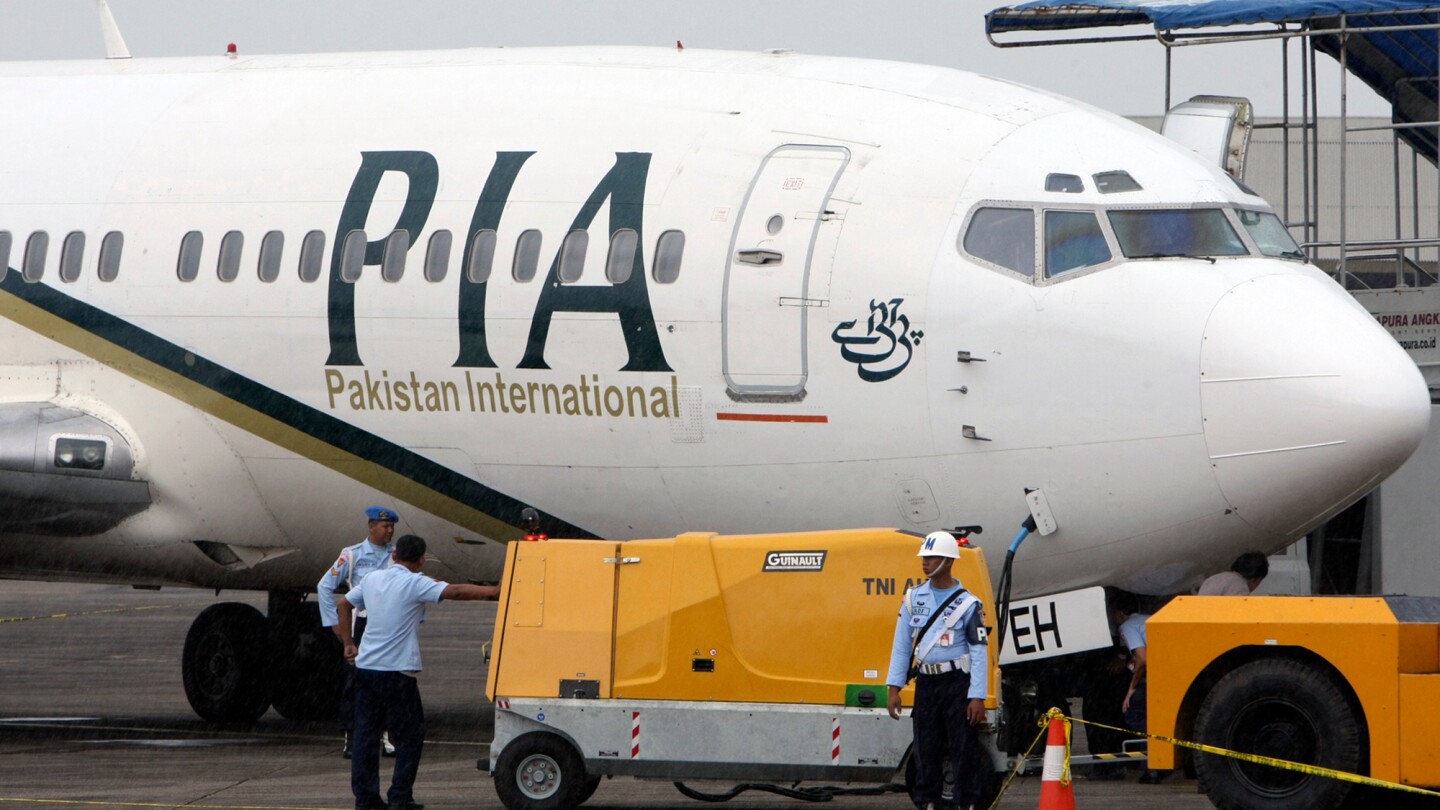
  • Pakistani consortium acquires 75% stake in PIA in major privatization move

    Pakistani consortium acquires 75% stake in PIA in major privatization move

    In a landmark transaction marking Pakistan’s most significant privatization initiative in decades, a consortium headed by Arif Habib Group has successfully acquired a 75% controlling interest in Pakistan International Airlines (PIA). The winning bid of 135 billion rupees ($482 million) was announced during a nationally televised auction ceremony on Tuesday, representing a crucial milestone in the government’s protracted effort to divest the chronically unprofitable national carrier.

    The acquisition fulfills a key condition set by the International Monetary Fund (IMF), which has consistently advocated for PIA’s privatization as a central component of Pakistan’s economic reform agenda connected to international bailout packages. Finance Minister Muhammad Aurangzeb characterized the bidding process as thoroughly transparent and competitive, expressing confidence that the new ownership would spearhead the airline’s operational revitalization.

    This development occurs against a backdrop of tentative recovery for PIA, which recently resumed direct European flights just two months ago following the European Union Aviation Safety Agency’s decision to revoke a four-year suspension imposed over safety violations. The prohibition originated after the tragic 2020 Karachi crash that claimed 97 lives.

    Once celebrated as a regional aviation leader, PIA’s operational efficiency has dramatically deteriorated through decades of political interference and severe overstaffing. The carrier currently maintains approximately 300 employees per aircraft across its 32-plane fleet—substantially exceeding the industry standard of fewer than 200 workers per aircraft—reflecting profound structural challenges that the new ownership must address.