作者: admin

  • Japan’s offensive space policy is extremely dangerous: spokesman

    Japan’s offensive space policy is extremely dangerous: spokesman

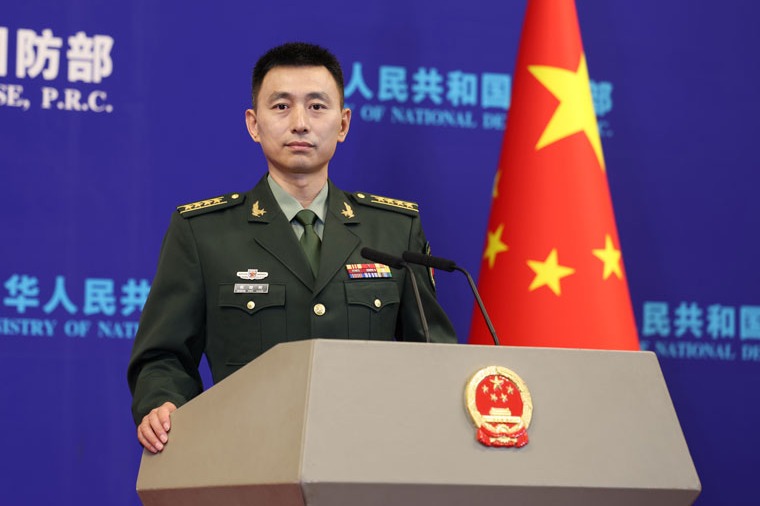
    China’s Ministry of National Defense has issued a stern warning regarding Japan’s accelerated development of satellite-jamming capabilities, characterizing these advancements as a dangerous escalation in space weaponization. Defense Spokesperson Zhang Xiaogang addressed these concerns during a Thursday press briefing in Beijing, responding directly to Japan’s claimed technological breakthroughs in systems capable of disrupting other nations’ orbital assets.

    The spokesperson emphasized that Japan’s aggressive space policy is triggering alarm bells within the international community, particularly given the nation’s historical precedent for surprise military attacks. Zhang specifically referenced growing apprehensions about a potential ‘Pearl Harbor scenario’ unfolding in the space domain, drawing parallels between current developments and Japan’s past military actions.

    Zhang underscored the critical importance of maintaining space as a peaceful domain, noting that lasting security in orbit is fundamental to global stability and prosperity for all nations. The Chinese military official expressed particular concern that Japan’s unrestrained pursuit of counter-space capabilities is not only accelerating the militarization of space but also potentially fueling a dangerous arms race beyond Earth’s atmosphere.

    The statement comes amid increasing international scrutiny of space warfare capabilities and follows Japan’s recent announcements regarding substantive progress in satellite disruption technologies. Chinese defense officials characterize these developments as extremely dangerous and contrary to global consensus on maintaining space as a weapons-free environment.

  • How UN sanctions reshaped life for Iranians – press review

    How UN sanctions reshaped life for Iranians – press review

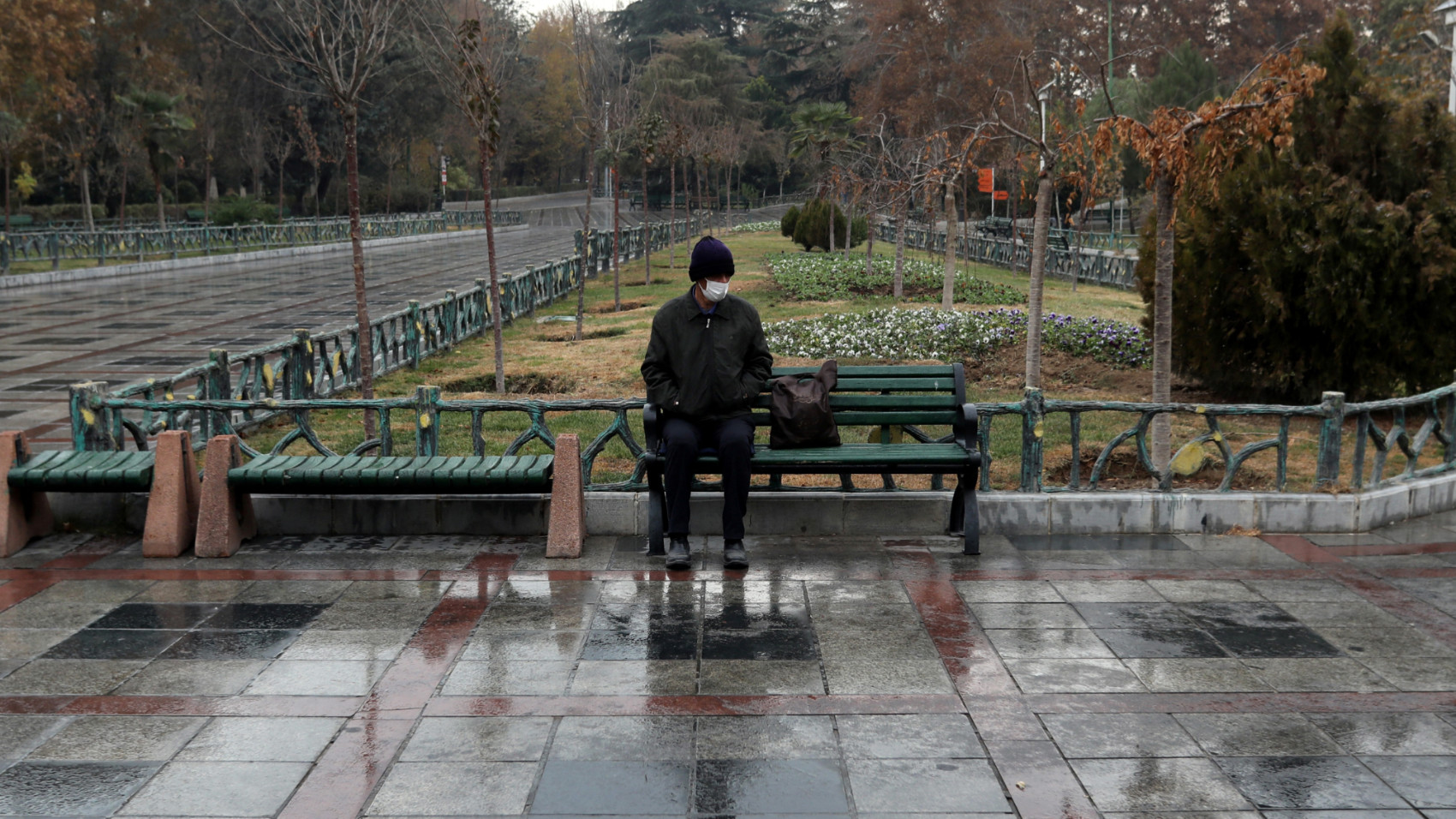
    Two decades of international sanctions have fundamentally reshaped Iran’s socioeconomic landscape while driving strategic military realignments and technological investments, according to recent analyses from Iranian media outlets.

    The economic toll of sustained sanctions has been devastating, with Ham Mihan daily documenting a dramatic rise in poverty from 9 million to 25.5 million people between 2006-2021. Concurrently, marginalized settlements expanded to accommodate over 14 million residents. Report author Farzaneh Tehrani notes that purchasing power has severely deteriorated, with meat and dairy disappearing from low-income diets and school dropout rates increasing significantly.

    Tehrani emphasizes the profound societal transformation: “The Iran of 2025 is not the Iran of 2006. People have endured approximately 50% inflation, with millions descending below poverty thresholds. Housing costs have escalated while living spaces have diminished, forcing migration to cheaper cities and peripheries. Families now allocate larger income portions to food yet consume less nutritionally.”

    This economic pressure coincides with strategic military developments. Following Iranian Foreign Minister Abbas Araghchi’s visit to Belarus, state media confirmed expanded military cooperation between the two Russian-aligned nations. While specifics remain undisclosed, unofficial reports suggest Belarus seeks Iranian technology for producing low-cost Shahed military drones.

    Concurrently, Iran has restructured its air defense command following criticism of its performance during June’s 12-day conflict with Israel and the US. The appointment of Brigadier General Alireza Elhami to lead both the Khatam al-Anbiya Joint Air Defence Headquarters and Army Air Defence Force signals efforts to unify command structures. Journalist Jafar Yousefi, close to conservative circles, describes this as prioritizing “unity of command during crises” amid potential upgrades involving Chinese and Russian technical cooperation.

    Parallel to military adjustments, Iran inaugurated its first national artificial intelligence center at Shahid Beheshti University. Named after assassinated nuclear scientist Amir Hossein Feqhhi, the Shahid Feqhhi Centre for Artificial Intelligence and Data Science potentially signals Tehran’s intent to integrate AI into its nuclear program. Officials announced plans for five additional specialized AI centers within universities nationwide, creating an integrated research network addressing the country’s practical needs.

  • Prime minister hopeful Tarique Rahman arrives in Bangladesh

    Prime minister hopeful Tarique Rahman arrives in Bangladesh

    In a watershed moment for Bangladeshi politics, Tarique Rahman, the exiled opposition leader and heir apparent to the Bangladesh Nationalist Party (BNP), made a dramatic return to Dhaka on Thursday after 17 years of self-imposed exile. The politically charged homecoming attracted massive crowds of enthusiastic supporters who had been gathering since early morning, transforming the capital’s streets into a sea of banners and festoons bearing Rahman’s image.

    The emotional significance of the occasion was palpable as Rahman, accompanied by his wife and daughter, performed a symbolic gesture upon arrival—removing his shoes to touch and collect soil from his homeland in a display of reverence. The BNP’s acting chairman, who had resided in London since 2008 citing political persecution, was greeted by senior party leaders at Hazrat Shahjalal International Airport before departing under tight security.

    Rahman’s return occurs against a backdrop of profound political upheaval following the ouster of former Prime Minister Sheikh Hasina, whose 15-year autocratic rule ended with a student-led uprising last year. The upcoming February 12 general election represents the first electoral contest since Hasina’s departure, with Rahman positioned as the BNP’s prime ministerial candidate should the party secure a majority.

    The political landscape has been further complicated by recent unrest triggered by the assassination of student leader Sharif Osman Hadi, a prominent critic of India, whose death sparked violent protests including attacks on media outlets perceived as pro-Indian and the Indian High Commission in Chattogram. These events have strained diplomatic relations with India, historically Bangladesh’s ally, which is currently considering extradition requests for the exiled Hasina, convicted in absentia for her administration’s crackdown on protesters.

    Adding to the tensions, religious divisions surfaced recently when a Hindu garment worker was lynched by a mob over blasphemy allegations on December 18, reigniting anti-India sentiments in the predominantly Muslim nation.

    Rahman’s legal standing has shifted significantly since Hasina’s fall from power, with courts acquitting him of the most serious charge—a life sentence connected to a 2004 grenade attack on a political rally, which he consistently denied. His return symbolizes hope for many supporters like former BNP lawmaker Jahan Panna, who described him as ‘the symbol of hope for this country’ capable of ending the current ‘cycle of anarchy.’

    The BNP’s main rival, Hasina’s Awami League party, has been barred from contesting the upcoming elections, potentially clearing the path for a BNP victory. Meanwhile, Rahman’s ailing mother, former Prime Minister Khaleda Zia, remains hospitalized in Dhaka after being admitted to intensive care shortly after vowing to campaign in November.

    During his exile, Rahman maintained political engagement through social media and significant meetings, including a June discussion in London with Nobel Peace Prize laureate Muhammad Yunus, who leads the interim government until the February elections.

  • New beetle discovered in Potala Palace structures

    New beetle discovered in Potala Palace structures

    Scientists have made a significant entomological discovery within the ancient wooden structures of Tibet’s Potala Palace, identifying a previously unknown genus and species of beetle. The finding, detailed in an international zoological taxonomy journal, represents a major advancement in Coleoptera research with important implications for cultural heritage preservation.

    The insect, named Lhasella potala, measures between 4.8 to 6.9 millimeters and exhibits a distinctive reddish-brown coloration. Research team member Zhou Xuan, a PhD student, confirmed the species’ unique taxonomic status through comprehensive morphological analysis, anatomical examination, and DNA barcoding techniques.

    This discovery has revealed potential conservation challenges, as the beetle’s wood-boring larvae may pose structural risks to the UNESCO World Heritage site. Subsequent investigations have detected the species in multiple historical locations throughout Lhasa, indicating a broader distribution than initially presumed.

    Kunga Tashi, deputy director of the Potala Palace Management Office, emphasized the critical importance of integrating ecological research with cultural conservation methodologies. This interdisciplinary approach aims to simultaneously protect both biodiversity and invaluable heritage structures.

    The research collaboration brought together experts from Peking University, the Xizang Plateau Institute of Biology, and the Potala Palace Management Office. Scientists now plan to conduct further studies on the beetle’s biology and behavior to develop more effective management strategies for historical preservation sites across the region.

  • Dubai motorist jailed for drunk driving, injuring 2 in car crash

    Dubai motorist jailed for drunk driving, injuring 2 in car crash

    Dubai’s judicial authorities have sentenced an Asian motorist to imprisonment following a serious traffic incident involving alcohol impairment and signal violation that resulted in two casualties. The Public Prosecution disclosed on December 25, 2025, that the convicted individual operated a vehicle while intoxicated, proceeding through a red traffic signal before colliding with another car, causing physical injuries to two persons and property damage.

    The prosecution brought multiple charges against the driver, including alcohol consumption, driving under the influence of intoxicants, inflicting bodily harm, and property destruction due to traffic signal disobedience. Pending comprehensive investigation, authorities have ordered the defendant’s detention with intentions to apply maximum penalties under the United Arab Emirates’ stringent traffic regulations.

    Recent legislative amendments in the UAE have substantially elevated penalties for impaired driving offenses. Current statutes mandate fines reaching AED 200,000 for operating vehicles under the influence of narcotics or psychotropic substances. The judicial system employs escalating consequences for recidivists, beginning with imprisonment and minimum AED 30,000 fines for initial offenses alongside six-month license suspensions. Second violations trigger one-year license cancellations, while third offenses result in permanent license revocation accompanied by substantial financial penalties.

    This case aligns with Dubai’s pattern of strict enforcement, exemplified by last year’s sentencing of a motorist to two years imprisonment with AED 100,000 in fines for combined drug impairment and traffic violations. In another precedent, an Arab woman received conviction earlier this year for causing a fatal alcohol-impaired accident in Dubai’s Al Qudra area, resulting in AED 10,000 fines and AED 200,000 blood money payments to victims’ families following a multi-vehicle collision.

  • Investigators dismantle 200 professional criminal gangs, uncovering $4b illegal funds

    Investigators dismantle 200 professional criminal gangs, uncovering $4b illegal funds

    Chinese authorities have delivered a massive blow to organized financial crime networks, announcing the dismantling of over 200 professional criminal gangs and the uncovering of nearly 30 billion yuan ($4.27 billion) in illicit funds. The sweeping nationwide operation, revealed at a Ministry of Public Security press conference on Thursday, represents one of the most significant financial crime crackdowns in recent years.

    The six-month coordinated campaign, jointly initiated by the Ministry of Public Security and the National Financial Regulatory Administration, targeted 17 key provinces and municipalities across China. Investigators filed more than 1,500 cases as part of a comprehensive effort to purify the country’s financial market ecosystem from illegal and quasi-illegal financial activities.

    Hua Liebing, Director of the ministry’s Economic Crime Investigation Bureau, detailed the sophisticated nature of these criminal operations. ‘Prominent financial consumption disputes in recent years have fueled the proliferation of illegal intermediary chaos,’ Hua stated. ‘These operations have evolved into well-established industrial chains that severely infringe on the legitimate rights and interests of financial consumers.’

    The criminal networks demonstrated alarming levels of organization, featuring complete chains covering false advertising, regulatory evasion tutorials, standardized script customization, forgery of counterfeit certificates, and professional negotiation representation services. The schemes have attracted increasingly professional participants, including lawyers and collection agency professionals who have joined criminal groups driven by profit motives.

    Criminal methodologies have grown notably more covert, with offenders leveraging advanced technologies and AI-generated tools to evade detection. Hua emphasized that as regulatory pressure intensifies, these financial crimes are expected to become even more hidden with increasingly sophisticated and variable modus operandi.

    The Ministry has pledged to strengthen collaboration with financial regulators, maintain regular crackdowns and deterrence measures, participate in rectifying illegal financial intermediaries, and contribute to the high-quality development of China’s financial industry.

  • Algeria passes law declaring French colonisation a crime

    Algeria passes law declaring French colonisation a crime

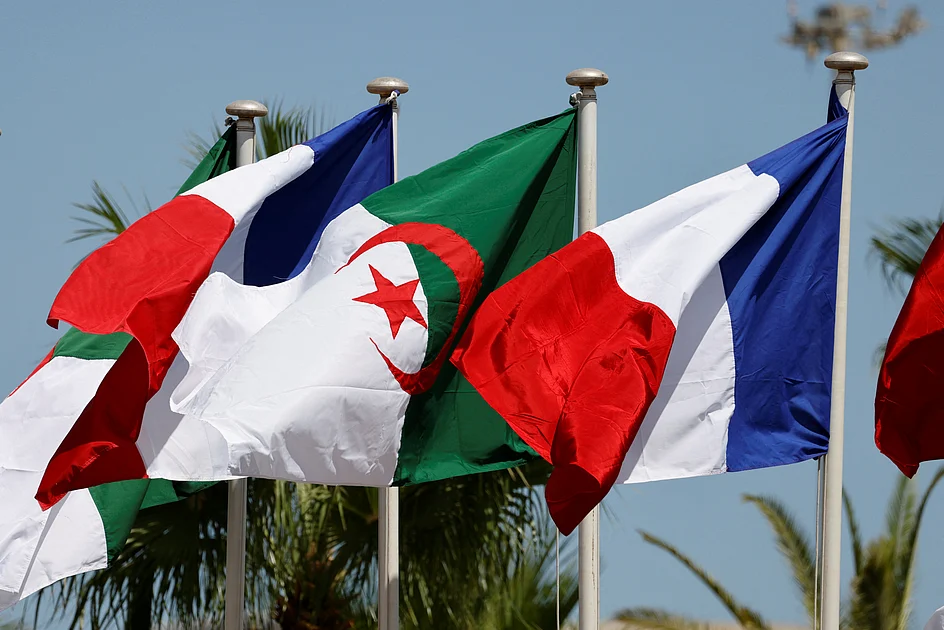
    In a historic parliamentary session, Algerian lawmakers have unanimously enacted legislation formally classifying France’s colonial occupation as criminal acts. The move represents a significant escalation in ongoing diplomatic tensions between the two Mediterranean nations.

    During the emotionally charged vote, legislators adorned in national colors chanted patriotic slogans while approving measures that declare France bears ‘legal responsibility for its colonial past in Algeria and the tragedies it caused.’ The comprehensive legislation specifically enumerates colonial-era violations including nuclear testing programs, extrajudicial executions, systematic torture practices, and large-scale resource exploitation.

    Parliament Speaker Brahim Boughali characterized the legislation as reinforcing that ‘Algeria’s national memory is neither erasable nor negotiable’ in statements to the state-run APS news agency. The law formally establishes that ‘full and fair compensation for all material and moral damages’ constitutes an inherent right of the Algerian nation.

    The French Foreign Ministry immediately condemned the legislative action as counterproductive to bilateral relations. An official spokesperson indicated that while France refrains from commenting on Algerian domestic politics, the move contradicts ongoing efforts to facilitate historical reconciliation through academic channels, referencing President Emmanuel Macron’s establishment of a historian commission to examine the colonial period.

    Historical context underscores the sensitivity of these developments. France maintained colonial control over Algeria from 1830 until the conclusion of the bloody independence war in 1962. The conflict’s casualty estimates remain disputed, with Algerian officials citing 1.5 million fatalities while French historians generally acknowledge approximately 500,000 deaths.

    Academic observers note that while the legislation lacks international enforceability, it carries substantial symbolic importance. University of Exeter colonial history researcher Hosni Kitouni observed that the move ‘marks a rupture in the relationship with France in terms of memory,’ reflecting deteriorating diplomatic relations that began with France’s endorsement of Moroccan sovereignty over Western Sahara, where Algeria supports independence movements.

    The legislative action occurs alongside other bilateral tensions, including the recent imprisonment and subsequent pardon of French-Algerian writer Boualem Sansal following German diplomatic intervention.

  • In pictures: How Dubai is celebrating Christmas this year

    In pictures: How Dubai is celebrating Christmas this year

    Dubai has transformed into a winter wonderland, showcasing its multicultural character through vibrant Christmas festivities observed on December 25th, 2025. The emirate, known for its cultural diversity and religious tolerance, has embraced the holiday season with remarkable displays of festive spirit.

    Major shopping malls including Dubai Mall and Mall of the Emirates have installed spectacular Christmas decorations, featuring towering Christmas trees adorned with thousands of lights and ornaments. Luxury hotels along Sheikh Zayed Road have created elaborate gingerbread houses and Christmas-themed afternoon teas, attracting both residents and tourists seeking seasonal experiences.

    Community events have flourished across the city, with Christmas markets offering handmade crafts and traditional holiday treats. Various churches in Dubai have held special midnight masses and Christmas Day services, accommodating the city’s significant Christian population and visitors. Restaurants throughout Dubai have introduced special Christmas menus, blending traditional Western holiday dishes with local culinary influences.

    The festive atmosphere extends to Dubai’s famous landmarks, with Burj Khalifa featuring special Christmas-themed light shows and the Dubai Fountain performing choreographed routines to classic holiday music. Public parks and communities have organized Christmas-themed activities for children, including visits from Santa Claus and holiday workshops.

    This celebration demonstrates Dubai’s commitment to cultural inclusivity while maintaining respect for local traditions and customs. The city’s approach to Christmas celebrations reflects its position as a global hub where diverse cultures coexist and celebrate their traditions harmoniously.

  • A Venezuelan family’s Christmas: From the American dream to poverty

    A Venezuelan family’s Christmas: From the American dream to poverty

    MARACAY, Venezuela — For Mariela Gómez and thousands of other Venezuelan migrants, this Christmas marked an unexpected and painful homecoming rather than the realization of their American dream. The return of Donald Trump to the White House in January triggered immediate immigration policy changes that ultimately reversed their journeys, forcing them back to the economic devastation they had originally fled.

    Gómez spent her first holiday season in eight years in northern Venezuela, where she maintained festive appearances by dressing up, preparing meals, and presenting her son with a scooter. Yet behind these gestures lay the harsh realities confronting returning migrants: pervasive unemployment and crushing poverty. Her family substituted their traditional hallacas—stuffed corn dough that has become prohibitively expensive—with a modest lasagna-like dish for their Christmas dinner.

    The Gómez family’s odyssey ended on October 27 when they returned to Maracay after being apprehended by U.S. Border Patrol in Texas under the Trump administration’s intensified immigration enforcement. Their deportation to Mexico initiated a dangerous return journey through Central America. Unable to afford conventional transit from Panama to Colombia, they risked their lives traveling atop gasoline tanks on a cargo boat through Pacific waters before transferring to a speedboat reaching jungle territories.

    Gómez represents one of over 7.7 million Venezuelans who fled their homeland during the past decade amid economic collapse fueled by oil price declines, corruption, and governmental mismanagement. After years residing in Colombia and Peru, she had pinned her hopes on building a new life in the United States—hopes that were extinguished by Trump’s second-term policies.

    Official figures from Colombia, Panama, and Costa Rica reveal that more than 14,000 migrants, predominantly Venezuelans, have returned to South America since September due to U.S. migration restrictions. This repatriation accelerated after Venezuelan President Nicolás Maduro, under White House pressure, reversed his long-standing policy of refusing deportees from the United States. Over 13,000 immigrants returned this year aboard chartered flights operated by U.S. government contractors and Venezuela’s state airline.

    The silver lining for Gómez was reuniting with the 20-year-old daughter she had left behind during Venezuela’s crisis. Their holiday gathering carried bittersweet undertones as her daughter prepares to migrate to Brazil next month. As the new year approaches, Gómez clings to twin aspirations: preparing traditional hallacas for New Year’s Eve and securing employment. Her fundamental prayer, however, remains centered on health and survival amid continuing uncertainty.

  • Future Health GCC sets regional standard with AABB accreditation

    Future Health GCC sets regional standard with AABB accreditation

    Future Health GCC Stem Cell Bank has attained the distinguished AABB accreditation, marking a significant advancement in regional healthcare standards. This recognition represents one of the most internationally respected benchmarks for quality assurance, safety protocols, and operational excellence within stem cell processing, preservation, and distribution services.

    The accreditation followed an exhaustive independent evaluation process that scrutinized the organization’s laboratory operations, quality management frameworks, technical competencies, and regulatory adherence. This achievement substantially enhances Future Health GCC’s credibility among families, medical professionals, and research institutions throughout the Gulf region, demonstrating its dedication to maintaining globally established standards.

    Future Health laboratories now possess multiple international certifications including recognition from the Human Tissue Authority, Medicines and Healthcare products Regulatory Agency (MHRA), Swiss Medic, OFSP, and ISO 9001. The addition of AABB accreditation solidifies the facility’s position as one of the region’s most comprehensively accredited stem cell banks, offering unprecedented assurance regarding the long-term security, integrity, and traceability of preserved stem cell specimens.

    Chief Executive Officer Ahmad Alahmad emphasized the accomplishment’s significance: “Securing AABB accreditation constitutes a pivotal milestone for Future Health GCC. Combined with our ISO certifications and GMP-grade laboratory infrastructure, this achievement establishes our facility among the region’s most rigorously accredited stem cell centers, underscoring our steadfast dedication to quality, safety, and scientific excellence for families and healthcare collaborators in regenerative medicine.”

    This latest accreditation complements Future Health GCC’s sophisticated infrastructure, GMP-grade laboratory facilities, and ongoing investments in technological innovation and specialized expertise. These collective strengths support the organization’s enduring mission to advance regenerative medicine and cellular science while consistently surpassing international standards and stakeholder expectations.

    Established in 2005, Future Health GCC manages the UAE’s largest cryogenic stem cell storage facility and maintains cutting-edge, GMP-grade laboratories engineered to support both contemporary and emerging applications in regenerative medicine and cellular therapies. The organization remains committed to expanding its capabilities in alignment with global scientific progress, guided by robust governance protocols, transparency measures, and an enduring commitment to excellence.