作者: admin

  • Iran has weakened US in the great power game

    Iran has weakened US in the great power game

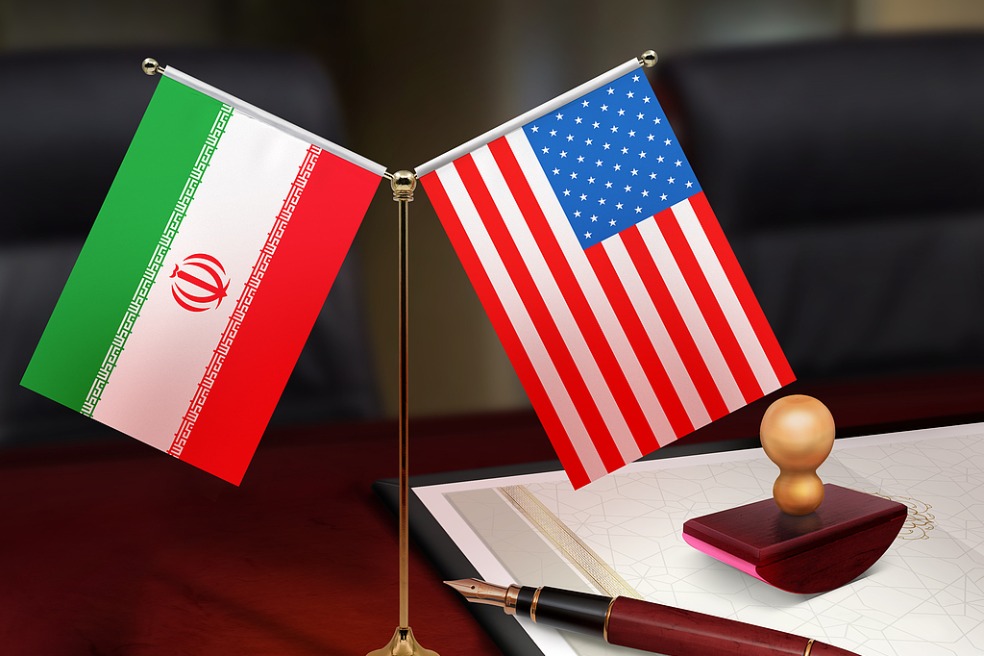
    It has been more than two centuries since Napoleon Bonaparte offered one of history’s most cutting observations of geopolitical strategy: “Never interrupt your enemy when he is making a mistake.” For policymakers in Moscow and Beijing, this maxim has guided their response to the recent weeks-long U.S. war in Iran, and even with a 14-day ceasefire now holding between Tehran and Washington – both sides have publicly declared victory – the two great power rivals continue to reap strategic benefits from what many analysts have labeled Washington’s latest strategic blunder in the Middle East.

    Over the course of the conflict, China and Russia have navigated a carefully calibrated diplomatic balancing act. Neither country has thrown its full public support behind Iran – a partner that both nations count as an ally to varying degrees – nor have they committed substantial resources to the war effort. Instead, they have limited their backing to small-scale intelligence sharing and targeted diplomatic support.

    As a scholar of international security and great power politics, I argue this restrained approach is rooted in clear strategic logic. Leaders in Beijing and Moscow have long recognized that Iran cannot achieve a decisive military victory against the combined military strength of the United States and Israel. For their own geopolitical interests, however, Iran does not need to win – it only needs to survive the conflict to weaken Washington’s global standing. The 2025 Iran war has eroded U.S. influence in four key ways that play directly into the hands of China and Russia.

    ### 1. A Reverse of Washington’s Push to Counter Great Power Influence in the Middle East

    As outlined in my book *Defending Frenemies*, the United States has struggled for decades to reconcile competing strategic objectives in the Middle East. During the Cold War, Washington’s core priority was blocking Soviet expansion in the region, even as it navigated the nuclear ambitions of two problematic allies: Israel and Pakistan. By the 2020s, U.S. regional strategy has shifted to limiting the expanding influence of its great power rivals – China first, and Russia second.

    Under President Xi Jinping and Vladimir Putin, both China and Russia have worked steadily to expand their regional footprints through a mix of formal partnerships and informal outreach. For Russia, this has meant deepening alignment with Iran, including joint efforts to prop up former Syrian President Bashar al-Assad’s regime throughout the Syrian civil war. For China, influence growth has come largely through diplomatic diplomacy, most notably its successful 2023 mediation of a deal restoring diplomatic ties between historic rivals Saudi Arabia and Iran.

    The irony of the 2025 Iran war is that it broke out just after a string of setbacks for Russian and Chinese influence expansion. The December 2024 fall of Assad’s regime stripped Russia of its most reliable regional ally, while U.S. President Donald Trump’s May 2025 tour of Gulf states secured major new technology and economic agreements with Saudi Arabia, the United Arab Emirates, Qatar and Bahrain, explicitly designed to roll back China’s growing economic and diplomatic clout in the region.

    Now, however, the war has shifted perceptions dramatically. As the United States grows increasingly seen as an unreliable security partner, Gulf nations are far more likely to pursue deeper security and economic cooperation with Beijing and Moscow to hedge their bets.

    ### 2. The War Pulls U.S. Focus Away From Its Core Stated Strategic Priorities

    Over the past two decades, China and Russia have expanded their economic, diplomatic and military ties across the Middle East by exploiting a deliberate U.S. shift: after the costly decades-long wars in Iraq and Afghanistan, Washington had signaled it planned to reorient its assets and strategic attention away from the region toward higher-priority theaters.

    Trump’s decision to launch a full war against Iran directly contradicts the U.S. national security strategy his own administration released just months earlier, in November 2025. That document explicitly identified the Western Hemisphere and the Indo-Pacific as Washington’s top priorities, declaring that the Middle East’s strategic importance “will recede” in U.S. planning.

    By launching the war in Iran alongside Israel without prior consultation with U.S. allies, Trump has openly dismissed the strategic and economic concerns of partner nations. Already fractured by Trump’s repeated threats to withdraw from NATO and his unilateral designs on Greenland, the alliance has seen new, deep rifts open over the Iran conflict – divisions that China and Russia have long worked to exploit for their own gain.

    Again, irony abounds: the Iran war comes at a moment when Trump’s agenda of consolidating U.S. hegemony in the Western Hemisphere was actually making progress. Putting aside questions of international law and legitimacy, Washington had recently removed the Maduro regime in Venezuela, a longstanding thorn in its side, and installed a far more compliant government.

    ### 3. The Conflict Creates Disproportionate Economic Benefits for U.S. Rivals

    When Iran closed the Strait of Hormuz – the chokepoint through which roughly 20% of the world’s global oil supplies pass – the move was as predictable as it was damaging to U.S. interests. For Russia, however, the closure has driven up global oil prices, providing a major boost to its war-focused economy. It has also led to a temporary but ongoing easing of U.S. sanctions on Moscow, a critical economic lifeline after years of punishing pressure tied to Russia’s invasion of Ukraine.

    While a prolonged closure of the strait and widespread damage to oil and gas infrastructure across Iran and the Gulf would harm China’s energy security and economic growth, Chinese leaders have signaled they are willing to accept these short-term risks. Years of investment in strategic petroleum reserves, and a push to diversify energy supplies to include solar power, battery storage and domestic coal production, have left China far better positioned to weather a global energy crisis than the United States. Beijing has also spent years reorienting its economy to rely more on domestic consumption for growth, rather than overreliance on global trade, buffering it from the global economic shock triggered by the war.

    As the United States struggles to reassert control over traffic through the Strait of Hormuz, particularly as Iran enforces targeted restrictions on vessels from unfriendly nations, its regional influence erodes further.

    ### 4. The Conflict Accelerates the Transfer of Global Soft Power Leadership From the U.S. to China

    Trump’s choice to abandon diplomatic talks in favor of immediate war, paired with the contradictory rhetoric his administration has deployed throughout the conflict, has severely damaged the global perception of the United States as a neutral, credible global leader. That shift has delivered a massive soft power windfall for Beijing.

    It was China that pressured Iran to accept the 14-day ceasefire proposal brokered by Pakistan, marking the latest step in Beijing’s slow erosion of the United States’ longstanding status as the global mediator of first resort. China has already successfully mediated high-stakes diplomacy between Iran and Saudi Arabia, and has launched similar mediation efforts for the Russia-Ukraine war and the Israeli-Palestinian conflict.

    More broadly, the Iran war reinforces Beijing’s core narrative that the U.S.-led liberal international order has collapsed. Even though China benefited from the continuation of the conflict, its role in brokering the ceasefire demonstrates it is increasingly stepping into the global leadership vacuum that the United States once filled.

    For Russia, the war offers a different, equally valuable benefit: by splitting NATO and drawing U.S. strategic attention back to the Middle East, it shifts global focus and U.S. involvement away from the ongoing war in Ukraine, easing pressure on Moscow.

    This analysis is by Jeffrey Taliaferro, professor of political science at Tufts University, republished under a Creative Commons license from The Conversation.

  • PM to visit Brunei, Malaysia in fuel and fertiliser blitz

    PM to visit Brunei, Malaysia in fuel and fertiliser blitz

    Against a backdrop of mounting global energy market volatility and disrupted supply chains stemming from Middle East tensions, Australian Prime Minister Anthony Albanese has launched a targeted diplomatic push across Southeast Asia, moving straight from a recent stop in Singapore to visits with two key regional energy exporters: Brunei and Malaysia. This mission centers on a single urgent priority: locking in formal supply guarantees to shore up Australia’s heavily import-reliant fuel and fertiliser sectors, which face growing risks of disruption.

    Australia’s national supply chains are uniquely exposed to global oil market shocks: the country relies on foreign imports for roughly 90% of its total fuel demand, leaving domestic energy prices and availability entirely dependent on the performance and export commitments of overseas refineries navigating the ongoing global oil crisis. For Australia’s agricultural sector, the vulnerability runs even deeper for critical inputs: around 60% of the country’s urea supplies, the nitrogen-based fertiliser that forms the backbone of most large-scale farming operations, are sourced from Middle Eastern producers. These imports have already faced significant cuts after heightened tensions effectively slowed traffic through the Strait of Hormuz, the world’s busiest chokepoint for global oil and fertiliser trade.

    Brunei, a small sultanate rich in hydrocarbon reserves that already holds a key role in Australian supply chains, accounts for 9% of Australia’s total diesel imports and 11% of its urea imports. During his meeting with Brunei’s long-time ruler Sultan Haji Hassanal Bolkiah scheduled for mid-next week, Albanese will push for formal, public guarantees that Brunei will maintain steady export flows of both commodities to Australia regardless of wider global disruption.

    Malaysia, another major energy and fertiliser producer, is Australia’s third-largest supplier of refined fuel and contributes 10% of the country’s total urea imports. Albanese will seek the same binding supply assurances from Malaysian leaders during his visit, according to pre-trip comments the Prime Minister delivered on Sunday.

    “Engaging with critical regional partners such as Brunei Darussalam and Malaysia will help ensure Australia’s energy supply remains secure during times of uncertainty,” Albanese said. “We are taking every step to reinforce relationships and engage with key partners to keep our fuel supply flowing. My government is continuing to take every practical action to shield Australians from the impact of the war in the Middle East.”

    Albanese’s mission comes amid growing uncertainty about Malaysia’s export commitments. Last month, Malaysia’s embassy in Australia issued a warning that the country would prioritize meeting its own domestic energy demand before fulfilling export contracts, a statement that immediately sparked widespread fears that Malaysia could curb outbound shipments of fuel and urea to Australia. Those concerns were amplified just days later when reports emerged that multiple pre-scheduled fuel shipments from Malaysia to Australia had been abruptly canceled.

    Unlike many other diplomatic outreach efforts, Canberra enters this trip with notable trade leverage to incentivize cooperation from both hosts. Australia is the primary supplier of food and agricultural goods to Brunei, while for Malaysia, Australia holds an even more critical role: it supplies 95% of Malaysia’s total imported natural gas, giving Australia significant reciprocal trading power to negotiate favorable supply commitments.

    This current leg of Albanese’s Southeast Asian diplomatic blitz follows a successful stop in Singapore last week, where the Prime Minister secured a public pledge from Singaporean Prime Minister Lawrence Wong to maintain steady fuel exports to Australia. However, Wong attached a key caveat to the commitment: Singapore’s ability to keep shipments flowing would be dependent on the continuation of stable upstream supply through global oil markets, a reminder that even secured commitments remain vulnerable to wider regional tensions.

  • KMT leader: Mutual respect, more cooperation for shared benefits

    KMT leader: Mutual respect, more cooperation for shared benefits

    In a significant statement amid ongoing cross-Strait exchanges, Cheng Li-wun, the chairwoman of the Chinese Kuomintang (KMT) party, has articulated a vision of constructive engagement between the two sides of the Taiwan Strait, emphasizing that mutual appreciation, respect, and reciprocal learning can lay a solid foundation for expanded collaboration and shared progress in the coming years.

    The remarks come at a time of renewed diplomatic and people-to-people exchange efforts across the Taiwan Strait, following a recent meeting between Cheng and Chinese leadership in Beijing that highlighted shared cultural and historical ties between the two sides. Cheng’s call aligns with broader efforts to strengthen cross-Strait economic, cultural, and social cooperation, with a focus on delivering tangible benefits to communities on both sides of the strait. By centering the principle of mutual respect as the starting point for all cross-Strait interaction, the KMT leadership has signaled its commitment to opening new channels of dialogue and addressing shared challenges through collaborative action, rather than confrontation. Observers note that this framing of cross-Strait relations reinforces the long-standing consensus that both sides of the Taiwan Strait belong to one China, and that expanding practical cooperation can create win-win outcomes that support the well-being of people across the region.

  • Police remove fuel protesters from Dublin center as disruption over soaring costs continues

    Police remove fuel protesters from Dublin center as disruption over soaring costs continues

    DUBLIN, Ireland – A week of widespread national disruption sparked by fuel price protests has reached a critical turning point, with Irish law enforcement clearing a major demonstration blockade in central Dublin Sunday, just hours before the Irish government planned to vote on new cost-reduction measures aimed at ending six days of unrest driven by skyrocketing pump prices.

    By Sunday morning, the tractors and heavy trucks that had occupied O’Connell Street, Dublin’s busiest central thoroughfare, were already being withdrawn from the capital. However, demonstrations persisted across other regions of the country. On the opposite coast in Galway, clashes broke out between police and protesters at the city’s docks, where authorities deployed a military vehicle to tear down a makeshift barrier erected by demonstrators.

    Over the past six days, the protests have upended daily life across Ireland. Blockades at the country’s only commercial oil refinery and multiple key fuel depots have halted tanker deliveries to service stations, leaving more than one-third of all gas pumps dry across the nation. Slow-moving convoys of protest vehicles have also caused crippling traffic congestion on major intercity highways, disrupting travel and commerce.

    Law enforcement launched a coordinated crackdown on the blockades starting Saturday. At the Whitegate refinery in County Cork, officers used pepper spray to disperse protesters blocking access, and officials pledged to clear all demonstrations that threaten critical infrastructure and public safety. Authorities warn that widespread fuel shortages could disable emergency response vehicles, putting ordinary residents at direct risk.

    Irish Police Commissioner Justin Kelly emphasized Saturday that the blockades are not a protected, legitimate form of protest. “We gave the blockaders fair warning that we were moving to enforcement, and they chose to ignore it and continue to hold the country to ransom,” Kelly said.

    But Christopher Duffy, a farmer who serves as a spokesperson for the Dublin protest bloc, accused police of ambushing what he called a peaceful demonstration overnight. Duffy said officers gave protesters an ultimatum: move their heavy vehicles or have them towed. He added that protesters had no choice but to comply, because towing the expensive specialized vehicles with their engines off could cause severe mechanical damage that would leave farmers facing crippling repair bills.

    “These vehicles are very expensive with automatic transmissions and everything, and if they drag them with the engine not on they could wreck them,” Duffy said. “So we have no choice, financially we have to move the vehicles.”

    The protest movement first emerged last Tuesday, spreading rapidly across social media to draw participation from truckers, small-scale farmers, taxi drivers, and bus operators. Demonstrators are calling for urgent government intervention — including fuel price caps and cuts to fuel taxes — to bring down costs that many small business owners and independent operators say will force them to shut down.

    Irish government officials note they already introduced a package of relief measures for rising energy costs two weeks ago, and have expressed confusion over the continued protests, pointing out that the current global fuel price surge stems from the Middle East conflict that has disrupted global oil exports, a factor outside the Irish government’s control.

    Irish Prime Minister Micheál Martin has called the ongoing blockades “illogical,” warning that the disruption has left the country on the cusp of being unable to accept incoming oil tankers at ports, which could lead to a total collapse of domestic fuel supplies.

    While the government was widely expected to approve a new set of targeted relief measures for gas and diesel costs Sunday, it remained unclear whether the proposed concessions would be large enough to end the protest movement entirely.

  • China successfully launches test satellite for satellite internet technology support

    China successfully launches test satellite for satellite internet technology support

    In a major milestone for China’s domestic satellite internet development, a Smart Dragon-3 (SD-3) carrier rocket successfully delivered a new technology test satellite to its pre-planned orbit on Saturday, April 11, 2026. The launch operation, conducted from offshore waters near Yangjiang, a coastal city in South China’s Guangdong Province, lifted off at 7:32 p.m. Beijing Time, marking another successful orbital mission carried out by the Taiyuan Satellite Launch Center.

    This test satellite is explicitly designed to advance research and validation of cutting-edge satellite internet technologies, laying critical groundwork for the future deployment of large-scale, low-latency global satellite internet constellations developed by China. Offshore launch capabilities, the method used for this mission, offer unique advantages including greater flexibility in adjusting orbital inclination, reduced restrictions on launch drop zones for rocket debris, and lower infrastructure costs compared to traditional inland launch sites, making it an increasingly popular option for commercial and research orbital missions.

    The Smart Dragon-3 rocket, developed for commercial launch services, has established a consistent track record of successful missions, demonstrating the maturity of China’s commercial rocket technology and its ability to support a growing range of space research and application projects. This successful launch brings China one step closer to building a fully operational, self-developed satellite internet network, which will expand global connectivity options, support downstream applications in communications, navigation, remote sensing, and other technology sectors.

  • Iran’s talks with US ends fruitless over US ‘excessive demands’: media

    Iran’s talks with US ends fruitless over US ‘excessive demands’: media

    Diplomatic negotiations between Iranian and American representatives held in Islamabad, Pakistan, have wrapped up without reaching any tangible agreement, according to reports from Iranian semi-official media outlet Tasnim News Agency on Sunday. The discussions, which were framed as a pivotal opportunity to ease long-standing tensions between the two nations, collapsed after Washington’s so-called excessive demands prevented both sides from aligning on a shared foundational framework for a potential deal.

    The high-stakes meeting, hosted by Pakistan, marked another chapter in the decades-long adversarial relationship between Iran and the United States. While hopes had been muted ahead of the talks, the lack of progress underscores the deep ideological and geopolitical divides that continue to block diplomatic breakthrough on core issues of contention between the two countries. Iranian sources cited by Tasnim made clear that the American side’s unrealistic demands left no room for compromise, forcing the negotiations to conclude without any forward movement.

  • High-stakes US-Iran talks end without a deal in Pakistan

    High-stakes US-Iran talks end without a deal in Pakistan

    The highest-level face-to-face negotiations between the United States and Iran since the 1979 Islamic Revolution have concluded without a breakthrough in Islamabad, Pakistan, after 21 hours of marathon discussions that stretched into early Sunday morning local time. Mediated by Pakistani Prime Minister Shehbaz Sharif, the April 2026 talks brought top-tier officials from both nations together at a critical moment, when heightened military tensions have already reshaped global energy markets and raised fears of a wider regional conflict.

    Speaking to reporters shortly after the talks collapsed, US Vice President JD Vance confirmed that the negotiations fell apart after Iranian delegates rejected Washington’s core demand for a formal, binding commitment that Iran would abandon its nuclear weapons ambitions and forgo the materials and infrastructure needed to develop a nuclear device rapidly. Vance emphasized that he maintained constant, real-time communication with US President Donald Trump and other senior administration leaders throughout the 21-hour dialogue, checking in with Trump between half a dozen and a dozen times alone. He also remained in close coordination with Secretary of State Marco Rubio, Treasury Secretary Scott Bessent, and Admiral Brad Cooper, head of US Central Command (CENTCOM).

    “The simple fact is that we need to see an affirmative commitment that they will not seek a nuclear weapon, and they will not seek the tools that would enable them to quickly achieve a nuclear weapon. That is the core goal of the president of the United States, and that’s what we’ve tried to achieve through these negotiations,” Vance told reporters, flanked by US special envoy Steve Witkoff and Jared Kushner at a televised press conference in the Pakistani capital. Saturday’s meeting marked a historic moment: the first meeting between top US and Iranian leaders at the highest level in more than 50 years, following the 1979 Islamic Revolution that severed formal diplomatic ties between the two nations. Just one day before the talks opened, Vance had struck an optimistic tone, telling reporters he expected a positive outcome.

    For the Trump administration, two non-negotiable priorities anchored the US negotiating position: securing freedom of navigation through the Strait of Hormuz and rolling back Iran’s nuclear enrichment program. Of these two, the nuclear issue emerged as the ultimate sticking point that derailed a potential deal. In the lead-up to the talks, the US had demanded deep cuts to Iran’s enrichment activities, a demand Tehran has rejected as a violation of its sovereign rights.

    In an official statement posted to social media Sunday, Iranian foreign ministry spokesman Esmaeil Baqhaei confirmed that the negotiations covered all core sticking points between the two sides, including navigation rights in the Strait of Hormuz, the nuclear program, war reparations, the lifting of US economic sanctions, and a permanent end to hostilities against Iran and across the broader Middle East. Baqhaei made clear that any path to a successful agreement would require the US to acknowledge and respect Iran’s legitimate national rights and interests, a condition Washington was unwilling to meet in this round of talks.

    The negotiations unfolded against a backdrop of open military conflict between the two nations that began in late February 2026, when US-Israel joint strikes eliminated a number of Iran’s top leaders, including Supreme Leader Ayatollah Ali Khamenei and national security chief Ali Larijani. After Iran responded by closing the Strait of Hormuz — a critical global energy chokepoint through which roughly 20 percent of the world’s daily oil supply passes — global crude prices spiked dramatically, triggering widespread economic concerns across major energy importing and exporting nations. Pakistan brokered a two-week temporary ceasefire between the two sides that went into effect on April 7, and that ceasefire remains in place as of Sunday.

    Even before the talks began, Trump struck a defiant tone in comments to reporters outside the White House Saturday, claiming the US had already achieved a military victory over Iran regardless of the negotiation outcome. “Regardless of what happens, we win. Let’s see what happens – maybe they make a deal, maybe they don’t. It doesn’t matter. From the standpoint of America, we win,” Trump said, repeating his earlier claim that US forces had already begun clearing mines from the Strait of Hormuz and had sunk Iranian minelaying vessels — a claim Iranian officials have flatly denied.

    CENTCOM later confirmed the US naval operation on social media platform X, stating that two US Navy guided-missile destroyers, the USS Frank E. Peterson and USS Michael Murphy, had transited the strait and begun operations in the Arabian Gulf as part of a broader mission to clear sea mines laid by Iran’s Islamic Revolutionary Guards Corps. In response to the US operation, Iran’s state military command issued a statement asserting that Iran retains full control over all vessel traffic through the strait, and that any movement of foreign ships requires Iranian authorization.

    As the temporary ceasefire holds and both sides retreat from the negotiating table without a deal, regional observers remain on high alert for a resumption of hostilities, while global energy markets continue to grapple with volatility triggered by the weeks-long disruption to one of the world’s most critical energy shipping routes.

  • Asha Bhosle, one of India’s most versatile Bollywood singers, dies at 92

    Asha Bhosle, one of India’s most versatile Bollywood singers, dies at 92

    MUMBAI, India — Asha Bhosle, the genre-bending Bollywood legend whose voice anchored decades of Indian cinematic history and shaped the nation’s collective cultural identity, has passed away at the age of 92.

    Pratit Samdani, a physician at Mumbai’s Breach Candy Hospital, confirmed Bhosle died Sunday from complications of multiple organ failure. The singer had been admitted to the facility just one day prior, in late Saturday, after developing a chest infection and extreme fatigue, her granddaughter Zanai Bhosle shared in a public social media statement. Her son, Anand Bhosle, confirmed to reporters that funeral services will be held for the artist on Monday.

    Over a nearly 80-year career, Bhosle built an unparalleled legacy, lending her instantly recognizable voice to roughly 12,000 recorded tracks that reached every corner of film-obsessed India. Long overshadowed early in her career by the reputation of her older sister, Lata Mangeshkar — known to generations as India’s “Melody Queen” — Bhosle carved out a one-of-a-kind artistic niche by fearlessly experimenting with cabaret rhythms and Western-infused melodic styles, creating a sound that was entirely her own.

    News of Bhosle’s passing has sparked an outpouring of tributes from across India’s political and cultural spheres. Indian Prime Minister Narendra Modi shared his condolences in a public social media post following the announcement, saying he was deeply grieved by the singer’s death.

    “Her unique musical journey spanning decades has enriched our cultural heritage and touched the hearts of countless people around the world,” Modi wrote. “From soulful melodies to spirited compositions, her voice carried a timeless brilliance.”

    Born into a family of musicians on September 8, 1933, Bhosle was introduced to music from early childhood by her father Dinanath Mangeshkar, a professionally trained classical singer. All four of her siblings went on to become respected singers and musicians in their own right. In her personal life, Bhosle’s first marriage in 1949 ended in separation after 11 years, and she later married iconic Bollywood music composer R.D. Burman in 1980. She is survived by her son and multiple grandchildren.

  • Justin Bieber headlines Coachella with nostalgia-fuelled set

    Justin Bieber headlines Coachella with nostalgia-fuelled set

    After a four-year hiatus from major live performances forced by unexpected health struggles, global pop icon Justin Bieber stepped back into the spotlight on Saturday night, closing out the first night of Coachella Valley Music and Arts Festival as one of the event’s most hotly anticipated headliners. The 32-year-old singer, who first rose to fame after his early performance clips went viral on YouTube, crafted a nostalgia-driven set that paid homage to the platform that launched his unprecedented career.

    In a stark departure from Coachella’s typical high-production headline sets, Bieber performed on a largely empty, stripped-back stage, dressed casually in a hoodie and athletic shorts. For much of the first half of his performance, he sat center stage in front of a laptop, pulling up original YouTube uploads of his breakout early hits including *Baby* and *Never Say Never* to sing along with, while 12-year-old home videos that first caught the music industry’s attention played on the massive overhead screen. He even incorporated real-time live comments from the official YouTube stream of his Coachella set, interacting with fans watching from across the globe. Mid-set, he repeatedly asked the packed crowd of over 100,000 attendees a question that anchored his nostalgic theme: “How far back do you go?”
    Bieber also surprised fans by including the recent viral clip that sparked widespread speculation about his mental health, in which he confronted a paparazzi photographer with the line, “It’s not clocking to you, I’m standing on business.” Though he performed the majority of the set solo, he brought out a slate of high-profile guest collaborators throughout the night, including chart-topping artists The Kid Laroi, Wizkid, Tems, and Dijon. In the crowd, his wife, model and media personality Hailey Bieber, watched from the side alongside other A-list attendees including power couple Timothée Chalamet and Kylie Jenner.

    This headline set marks Bieber’s largest full live performance since he was forced to cancel his 2022 Justice World Tour after a diagnosis of Ramsay Hunt syndrome, a rare shingles complication that left him facing partial facial paralysis. The singer has slowly returned to public performance in recent months: he surprise-released his seventh studio album *Swag* in July 2025, and made a high-profile return to the stage with a performance at the 2025 Grammy Awards in February. Saturday’s Coachella set leaned heavily into new material from *Swag* early on, before Bieber pivoted to the nostalgic retrospective of his 18-year career, telling the crowd he wanted to take them “on a journey” through his evolution as an artist.

    The stripped-back, intimate concept of Bieber’s set stood in sharp contrast to the previous night’s headline performance from pop star Sabrina Carpenter, who delivered a glitzy, Hollywood-themed production complete with multiple costume changes, choreographed dance numbers, and an elaborate multi-level stage design. The annual Coachella festival, held across two consecutive weekends at the Empire Polo Club in the Southern California desert, has been a staple of the global live music calendar since 2002, drawing more than 100,000 attendees each day of the event according to local Indio law enforcement. Colombian reggaeton and pop star Karol G is set to close out the first weekend of the festival as Sunday’s headline act.

  • Mainland unveils package of policies, measures to boost ties with Taiwan

    Mainland unveils package of policies, measures to boost ties with Taiwan

    BEIJING, April 12, 2026 — In a significant step to deepen cross-Strait engagement, China’s top Taiwan affairs authority has introduced a comprehensive 10-policy package aimed at expanding exchanges and cooperation between the Chinese mainland and Taiwan. The initiative was formally announced on Sunday by the Taiwan Work Office of the Communist Party of China (CPC) Central Committee, coinciding with the final day of a high-profile visit to the mainland by a Kuomintang (KMT) delegation led by KMT Chairwoman Cheng Li-wun. Cheng and her delegation had been in the mainland for official engagements from April 8 to April 12, holding a series of constructive meetings with mainland officials and party representatives. According to the official announcement, the overarching goals of the new policy package are twofold: to advance the steady peaceful development of relations across the Taiwan Strait, and to strengthen the shared kinship between compatriots on both sides while improving public well-being for all people living across the two sides of the strait. The policy rollout comes at a time of growing people-to-people exchanges between the mainland and Taiwan, with cross-Strait cooperation expanding across economic, cultural, educational and social sectors in recent years. The introduction of the targeted 10-measure framework signals the mainland’s continued commitment to promoting mutually beneficial collaboration and deepening connections that benefit residents on both sides, reinforcing the foundation for long-term peaceful cross-Strait relations.