A small but determined cohort of Australian climate activists and affected residents has made global legal history by bringing a human rights complaint against the Australian government to the United Nations, arguing that its ongoing support for coal and gas exports violates their fundamental rights to life, safety and cultural survival. This case marks the first formal legal challenge brought before an international body since the International Court of Justice (ICJ) issued a landmark 2025 ruling that opened the door for nations to hold each other legally accountable for climate change harm.
Australia ranks among the world’s top five coal and gas exporters, and the 10 claimants argue that the federal government’s continued approval and subsidization of new fossil fuel projects directly exacerbates the extreme weather events that have already upended their lives. From catastrophic bushfires to unprecedented river floods, deadly heatwaves, coastal sea level rise and toxic water contamination, claimants say the government’s failure to rein in fossil fuel pollution has put their health, safety and cultural heritage in immediate danger.
One of the most prominent voices among the claimants is Dr. Barry Traill, a respected wildlife ecologist and veteran volunteer firefighter who has witnessed the escalating intensity of Australian wildfires firsthand. Traill’s perspective on climate risk changed forever in 2009, when a group of his well-prepared, experienced friends lost their lives in the devastating Black Saturday bushfires that tore through Victoria, killing 173 people overall. “That deeply changed me,” Traill explained. “It became clear that the old rules around fires and survival no longer applied.” A decade later, Traill served on the frontlines of the 2019 Black Summer megafires that burned more than 18 million hectares of land across eastern Australia, an experience that convinced him climate change is not a distant future threat. “It is already killing people and hurting lives, landscapes and communities across Australia,” he said. “Continuing to allow coal and gas companies to increase pollution, while people face worsening disasters, is a profound failure of responsibility.”
Brendon Donohue, another claimant who lives with blindness and mobility impairments, described how he was trapped alone in his Brisbane apartment for 10 days during the catastrophic 2022 Queensland floods that damaged the region’s power grid. When the floodwaters knocked out electricity to his building, elevators, intercom systems and ground-floor exits all became unusable, leaving Donohue unable to escape or call for emergency help. “Because I live with blindness and mobility challenges, climate impacts affect me differently and can make everyday life much harder to navigate safely,” he said, highlighting how vulnerable disabled people are to worsening climate disasters.
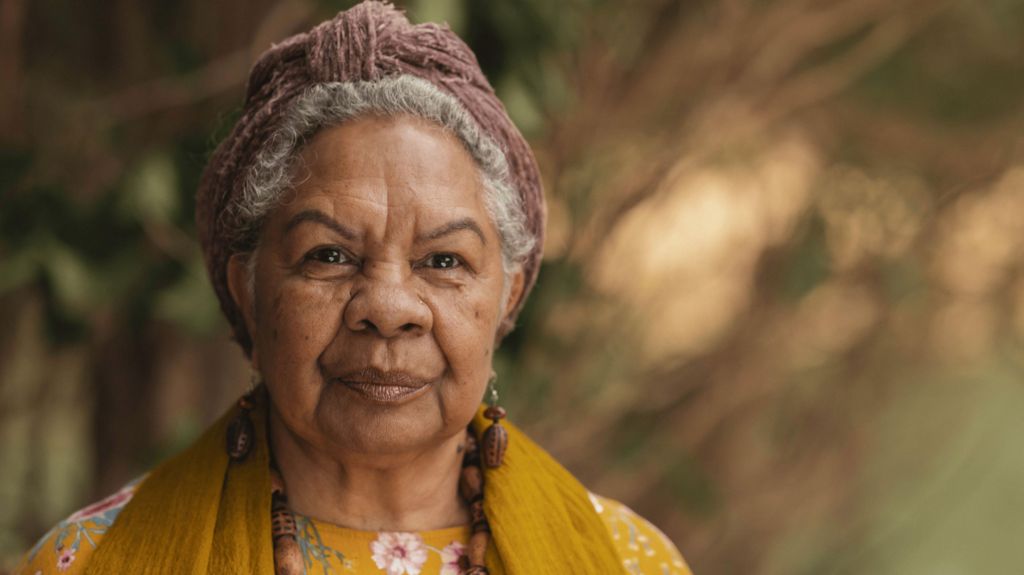
For lead claimant Professor Anne Poelina, an Indigenous elder and academic from Western Australia’s remote Kimberley region, the case is as much about protecting cultural survival as it is about personal safety. Poelina and her community were displaced from their traditional lands along the Fitzroy River – one of Western Australia’s most ecologically and culturally significant waterways – after catastrophic flooding hit the region in 2023. “When the river is healthy, our people are healthy, when the river suffers, our people suffer,” Poelina said. She warned that ongoing climate-driven disruption to their connection to country threatens to erase irreplaceable Indigenous knowledge that has been passed down through generations through direct, on-land experience. “What concerns me most is the intergenerational loss of cultural knowledge,” she said. “So much of our knowledge is not written down, but passed on by being physically present on the land.”
Hannah White, a senior lawyer with Environmental Justice Australia representing the claimants, told reporters that the complaint argues Australia’s responsibility for climate harm extends far beyond its borders. The group is asking the UN Human Rights Committee to formally rule that the Australian government’s policy of continuing to approve and subsidize fossil fuel exports, without a comprehensive plan to cut emissions and protect communities from climate harm, violates international human rights law. While any ruling from the UN Human Rights Committee is not legally binding, it carries significant global moral and political weight, and Australia would be expected to issue an official response to the finding.
The case comes just under a year after the ICJ – the United Nations’ highest court for cross-border disputes – issued a landmark ruling affirming that nations can be held legally liable for transboundary climate harm caused by their greenhouse gas emissions, including historic emissions that have accumulated in the atmosphere over decades. The BBC has reached out to Australia’s Environment Minister Murray Watt for comment on the new complaint, but has not yet received a response.