In a bombshell interim finding delivered this week, a high-level federal royal commission has confirmed that a Jewish community security organization warned Australian law enforcement a terror attack targeting Jewish gatherings was likely just days before two attackers killed 15 people in Australia’s deadliest mass shooting in three decades at Sydney’s iconic Bondi Beach.
The December attack unfolded as hundreds of Jewish families gathered at the coastal location to celebrate the Hanukkah festival. Authorities have charged 24-year-old Naveed Akram, an Australian-born citizen, with 15 counts of murder and terrorism offenses; he remains in custody awaiting trial. His 50-year-old father, Sajid Akram, the second accused attacker, was shot dead by responding police during the incident.
The inquiry, chaired by former High Court justice Virginia Bell – one of the nation’s most respected retired judicial figures – confirmed in its Thursday report that the Australian Jewish community was the explicit, intended target of the assault. The commission released a pre-attack email sent by the Community Security Group, a volunteer Jewish security organization, which warned bluntly that “A terrorist attack against the NSW Jewish Community is likely and there is a high level of antisemitic vilification” ahead of the public Hanukkah event.
Per the commission’s findings, the security group notified state police that the community faced elevated threats, but was informed that no dedicated uniformed officers could be assigned to the December 14 gathering. Instead, police offered only intermittent mobile patrols to check in on and monitor the celebration.
Jewish community leader Alex Ryvchin told public broadcaster ABC that event organizers had already sensed a pervasive atmosphere of unease in the lead-up to the festival, and that the tragedy stemmed from inadequate resourcing of security protections. “The police are the ones that make decisions around resourcing, and it seems like this was not adequately done,” Ryvchin said. “We need to understand why those resourcing decisions were made.”
New South Wales State Premier Chris Minns moved quickly to accept formal responsibility for the systemic failure to prevent the deaths. “If we had known what was going to happen, we would have put an army down there,” Minns told reporters. In contrast, State Police Commissioner Mal Lanyon defended his department’s actions, noting that officers had reviewed the threat intelligence provided by the Jewish group, and that roving patrols were deployed across the area on the night of the attack.
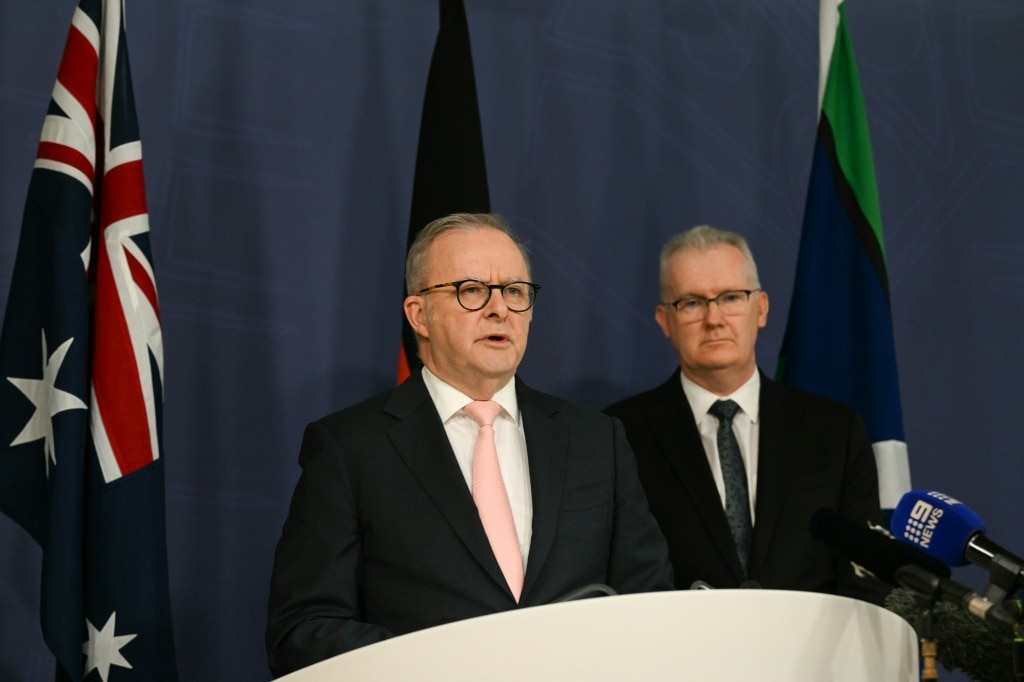
The interim report issued one immediate, key recommendation: law enforcement should significantly boost security arrangements for all future public Jewish celebrations that draw large crowds. Federal Prime Minister Anthony Albanese, who framed the operational failure as a matter for the New South Wales state government, pledged that the national government would adopt every recommendation the commission ultimately puts forward. “I can assure the Australian public that the government will do everything necessary to protect the community in the wake of the Bondi attack,” Albanese said.
The full federal royal commission, the most powerful form of public inquiry in the Australian government system, has been mandated to investigate all contributing factors to the attack, ranging from gaps in domestic intelligence sharing to the steady rise of violent antisemitism across Australian society. The commission also noted that the nation’s existing counter-terrorism capabilities have room for meaningful improvement, and redacted several national security-related recommendations to safeguard sensitive intelligence and ongoing criminal investigations.
In the wake of the attack, the nation entered a period of national reckoning over antisemitism, with widespread public anger directed at government and law enforcement for failing to protect Jewish Australian communities. Shortly after the shooting, the federal government proposed a package of gun law reforms, headlined by a nationwide voluntary gun buyback scheme designed to remove high-risk weapons from civilian circulation. That plan has since stalled, however, as the federal government struggles to secure buy-in from all state and territorial governments. The commission has now formally recommended that Australian leaders prioritize getting the buyback program launched and operational.
The inquiry itself was only established after victims’ families penned a public open letter to Prime Minister Anthony Albanese in December demanding a full, independent investigation. “We demand answers and solutions,” the letter read. Full public hearings for the royal commission are expected to proceed in the coming months, and such inquiries often run for multiple years as they gather evidence and probe complex systemic issues.