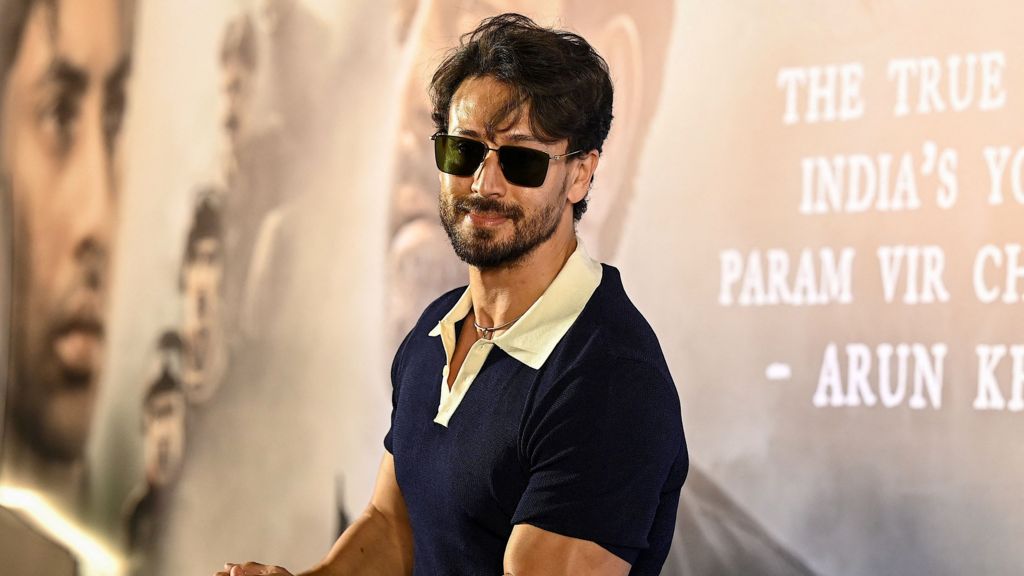
On a recent Sunday evening in Juhu, Mumbai’s iconic leafy upscale neighborhood where countless A-list Bollywood stars reside and celebrity sightings are a daily routine, action icon Tiger Shroff faced a brush with death that has upended Indian public discourse. The 36-year-old actor, famous for his high-octane on-screen fight scenes and choreographed escape sequences, had just finished a casual football match and was exiting the playing field in his BMW when gunfire erupted. Two people – Shroff’s personal driver and a vlogger who had traveled to the spot to film the star – were struck by bullets, leaving the unharmed actor at the center of a unfolding national criminal investigation. Four days after the incident, the case remains the lead story across Indian media, with every new leak of information spawning a flood of competing conspiracy theories, conflicting claims, and wild speculation about hidden motives.
Indian law enforcement has so far apprehended or detained 10 suspects connected to the attack. Investigators are currently tracing suspected weapons shipments across multiple Indian states and tracing suspicious financial transfers to the men accused of carrying out the shooting. The attempted attack has also thrust the name of Lawrence Bishnoi, one of India’s most infamous active gangsters, back into national headlines. Within hours of the shooting, a screenshot of a social media post supposedly shared by an associate of the Bishnoi gang circulated widely online, claiming responsibility for the attack. A separate audio recording also emerged, featuring a man identifying himself as Anil Pandit who repeated the claim, explaining that Shroff was targeted due to his reported close ties to fellow Bollywood superstar Salman Khan – a figure Bishnoi has threatened repeatedly for years. Mumbai police have yet to verify these claims or confirm that the Bishnoi gang actually orchestrated the attempted shooting, and investigators are still working to identify who ordered the attack and what their ultimate motive was.
This targeting of Shroff is only the latest in a string of violent attacks and threats against high-profile Bollywood figures that have shaken the Indian film industry. In 2024 alone, gunshots were fired outside Salman Khan’s Mumbai residence, and shots were also reported outside the home of acclaimed filmmaker Rohit Shetty earlier this year. Taken together, these incidents have revived long-dormant public fears that organized crime is once again extending its reach into Bollywood, stirring up uncomfortable memories of a dark, violent chapter in Mumbai’s modern history.
Back in the 1990s and early 2000s, Mumbai’s underworld held formidable, open influence over the Indian film industry. Criminal groups financed big-budget productions, demanded massive protection payments from producers and stars, and regularly used violence to enforce their demands. It took decades of targeted police crackdowns and the gradual rise of legitimate, institutional film financing to loosen the underworld’s stranglehold on the industry. Today, as new allegations and conspiracy theories emerge nearly every day, a question long thought to be confined to Mumbai’s past has reemerged: Is the underworld attempting to retake control of Bollywood?
Veteran law enforcement officials who confronted organized crime at its peak in Mumbai say the answer is far more nuanced than a simple yes or no. D Sivanandhan, who led Mumbai’s Crime Branch starting in 1998, recalls an era when a single phone call from Dubai – where many of India’s most notorious gang leaders operated from exile – could decide the entire fate of a major film: who would star in it, who would finance it, and who would profit from its distribution. At the time, the industry relied almost entirely on unregulated private capital, and the line between a legitimate investor and an extortionist was often dangerously blurry. The threats were not just abstract: in 1997, legendary Indian music industry executive Gulshan Kumar was shot and killed outside a Mumbai temple, and just three years later, acclaimed filmmaker Rakesh Roshan survived a targeted assassination attempt.
Sivanandhan himself led the investigation into the financing of *Chori Chori Chupke Chupke*, a hit Salman Khan film. The movie’s producer and his assistant were each sentenced to six years in prison under Maharashtra’s organized crime laws for their ties to underworld figures, while the film’s financier received a one-year sentence for hiding information about those connections. Police seized the film’s original negatives, and it was only released eventually under direct court supervision. Sivanandhan also recalled that criminal influence was not always imposed on a reluctant industry: many filmmakers actively sought out underworld funding, entering into mutually beneficial arrangements that proved extremely difficult for police to dismantle.
Even so, Sivanandhan argues that the current wave of violence should not be interpreted as a return of the old Mumbai mafia he spent decades fighting. The criminal networks he pursued, led by figures such as Dawood Ibrahim, Chhota Shakeel, and Arun Gawli, were deeply rooted in Mumbai’s local networks, even when their leaders operated from foreign soil. “This is not the Mumbai mafia which we know in the last 60 years,” he explained. “This is something else.”
That “something else” is inextricably linked to Lawrence Bishnoi. A gangster with origins in northern India who has been incarcerated since 2015, Bishnoi has cultivated a mythic, menacing public persona: he is widely reputed to command a network of gunmen across multiple continents, and his name is regularly attached to threats and claims of responsibility that spread across social media within minutes.
Bishnoi has publicly targeted Salman Khan for years over a 1998 poaching case involving blackbucks – a species of antelope that holds religious reverence for the Bishnoi community. In April 2024, unidentified gunmen fired five rounds outside Khan’s Mumbai home. Six months after that attack, Baba Siddique, a senior Indian politician with close ties to Khan and multiple other Bollywood stars, was gunned down in a public assassination. Mumbai police have connected both attacks to the Bishnoi gang, though investigators have not confirmed any direct personal involvement by Bishnoi in Siddique’s murder.
While some allegations against Bishnoi’s network have been confirmed by official police investigations, many others remain unproven. But the line between what the gang has actually done and what is claimed in its name often blurs in public discourse, only amplifying Bishnoi’s notoriety. Rakesh Maria, a former Mumbai police commissioner, has described Bishnoi as a representative of a new generation of Indian gangsters who are far more technologically savvy and globally connected than their predecessors. “The old underworld was visible and territorial, but the new one is dispersed, fluid, making it harder to pin down,” Maria told Indian outlet *The Print* last year. “They no longer need to reside in the city to command it.”
The relationship between criminal groups and Bollywood has shifted in another key way: who gets to shape the gangster’s public image. In the 1990s, Bollywood itself turned Mumbai’s feared underworld figures into objects of widespread public fascination. Films such as *Satya* (1998) and *Company* (2002) brought a gritty, raw realism to the portrayal of gang life, and Manoj Bajpayee’s iconic performance as gangster Bhiku Mhatre in *Satya* became what film scholar Ashvin Immanuel Devasundaram calls “mythologised and talismanic.” The fear and fascination of that era are “seared into the collective consciousness” of the Indian public, Devasundaram told the BBC. Each new attack pulls those old memories back to the surface.
But today’s gangsters no longer need mainstream cinema to build their own mythology. Social media platforms allow them to craft and spread their own public image directly, circulating threats, claims of responsibility, and carefully staged content to audiences that reach far beyond Mumbai’s borders.
In the wake of the Shroff shooting, Indian police have reportedly increased security detail outside the homes of Salman Khan and Rohit Shetty. The All Indian Cine Workers Association has called for enhanced protection for Bollywood figures, asking publicly: “Today it is Tiger Shroff. Who is next?”
So far, there is little concrete evidence that criminal networks have regained the level of overt influence over Bollywood financing and creative decisions that the old underworld held in the 1990s and early 2000s. But the recent string of attacks has exposed a new, different vulnerability for the industry. Modern gangsters no longer need to control the entire $2.7 billion Indian film industry to destabilize it and spread widespread fear. A single attempted shooting, amplified across millions of social media feeds and phone screens, can create panic that extends far beyond the original target.
Sivanandhan, who spent decades confronting Mumbai’s most powerful criminal groups, understands that even the most robust security has gaps. “There is always a crack in the armour,” he observed.