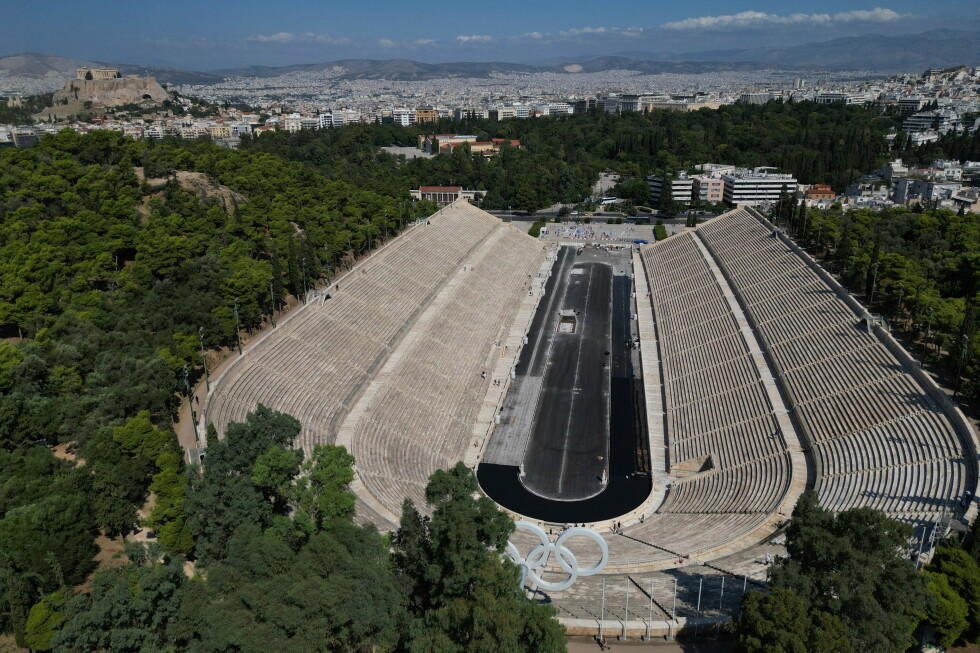
Nestled in the heart of Athens, one of the world’s most iconic sports landmarks is undergoing a once-in-a-generation transformation. The marble-clad Panathenaic Stadium, a site that has hosted every milestone from the first modern Olympic Games in 1896 to global rock concerts and the annual Olympic torch handover, is receiving its first systematic deep cleaning in more than 100 years.
Carved entirely from gleaming white marble — the same prized stone used to construct the Acropolis — the U-shaped stadium is a cornerstone of global Olympic history, and it remains the official starting point for every Olympic torch relay, including the one that will eventually travel to the 2028 Los Angeles Games. The restoration project is far more than a cosmetic touch-up: it is a delicate conservation effort designed to preserve the monument while revealing its original, radiant character that earned it the beloved Greek nickname Kallimarmaro, meaning “beautiful marble.”
Unlike standard construction or cleaning projects, the work demands extreme precision to avoid damaging the porous, centuries-old stone. Teams of conservation workers in blue and white overalls traverse the stadium’s 47 steep seating tiers, relying on low-pressure, carefully calibrated water spray lances to lift accumulated grime without eroding the marble surface. Special vacuum systems immediately collect runoff water to prevent any moisture damage, while targeted steam treatments are used to dissolve decades-old blackened chewing gum stains and lift discoloration left by soft drinks and scuffs from high-heeled shoes. According to senior site conservator Dimitris Selemis, the goal of the project is not to artificially whiten every inch of the stone, but to remove layers of accumulated organic dirt and environmental buildup that have obscured the monument’s original condition.
“This process lets us better understand the changes the stadium has undergone from weather, time, and millions of visitors over decades,” Selemis explained, noting that shaded areas with less direct sunlight have accumulated more dirt and weed growth than exposed sections. “By removing the surface contaminants, we can get a clearer picture of the monument’s current state to plan for long-term preservation.”
The site’s history stretches back thousands of years: originally hollowed out from a natural ravine, it hosted ancient Greek athletic festivals, then Roman spectacles before falling into ruin and disuse for centuries. It was rebuilt entirely from marble for the inaugural modern Olympic Games in 1896, and in the decades since, it has hosted everything from fashion shows and world-famous rock concerts to national celebrations, even lavish patriotic ceremonies ordered by Greece’s mid-20th century military dictatorship. Today, it is one of Athens’ most popular tourist attractions, drawing visitors from across the globe who come to walk in the footsteps of Olympic legends.
Along with the deep clean, the stadium is receiving a range of upgrades, including a new athletic track, improved lighting systems, and modernized support facilities. The entire multi-year project is privately funded by a Greek shipping company, overseen by the Hellenic Olympic Committee, and carried out under the expert guidance of Greece’s Culture Ministry conservation specialists.
Work is scheduled to continue through 2026, but crews are prioritizing the stadium’s curved end section to have it ready in time for the upcoming Olympic torch handover ceremony on September 10. That ceremony will mark the handover for the 2026 Dakar Youth Olympic Games, set to run from October 31 to November 13 in Senegal — a historic milestone as the first Olympic competition ever hosted on the African continent. Hellenic Olympic Committee president Isidoros Kouvelos confirmed that International Olympic Committee President Kirsty Coventry, a gold-medal winning Zimbabwean swimmer, will attend the September ceremony.
Kouvelos emphasized that the restoration project is a labor of national pride for Greece. “We call it Kallimarmaro because it is made of the finest marble ever produced, and we are very proud of it,” he told the Associated Press. “It needed to be cleaned of everything that has accumulated over all these years. This way the Panathenaic Stadium will show all its brilliance and will once again be the foremost monument of humanity for the Olympic Movement.”