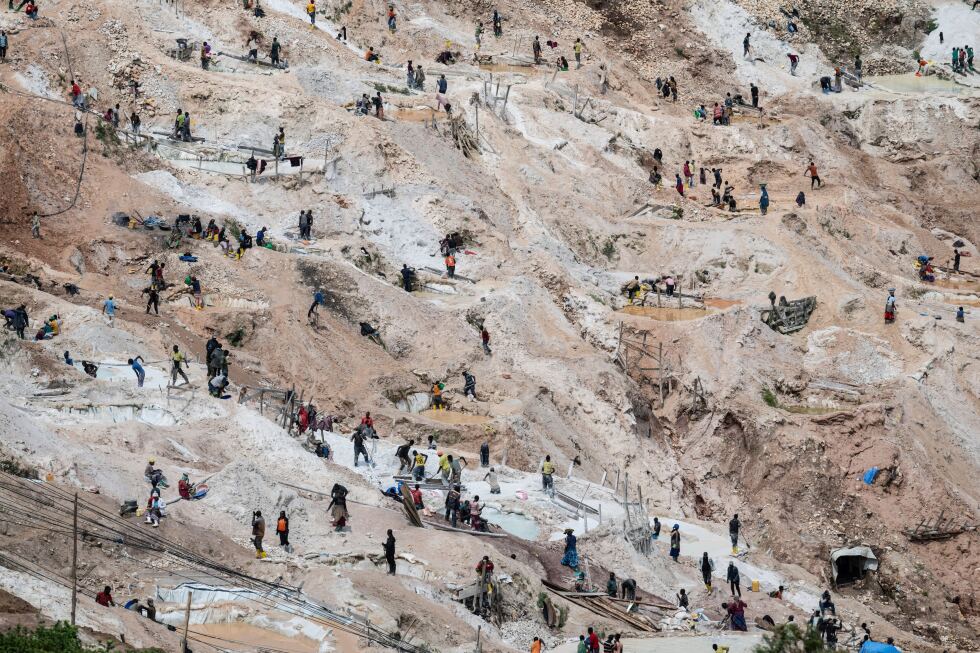
A catastrophic mine collapse at a coltan mining operation in eastern Congo’s Rubaya region has resulted in massive casualties, with conflicting reports emerging about the actual death toll. Congolese authorities reported at least 200 fatalities from Tuesday’s incident, while the M23 rebel group controlling the mine claims only five deaths occurred.
The Congolese Ministry of Mines confirmed the collapse occurred at the Rubaya mines, which have been under M23 control since the group seized the town in May 2024. This represents the latest in a series of mining disasters plaguing the mineral-rich but conflict-ridden eastern territories of the Central African nation.
Fanny Kaj, a senior M23 official, vehemently disputed the government’s account, asserting that the incident resulted from ‘bombings’ rather than a structural collapse. ‘I can confirm that what people are publishing is not true. There was no landslide; there were bombings, and the death toll isn’t what people are saying. It’s simply about five people who died,’ Kaj stated.
However, firsthand accounts from miners at the site contradict the rebel narrative. Ibrahim Taluseke, a miner who participated in recovery efforts, reported helping retrieve over 200 bodies from the rubble. ‘We are afraid, but these are lives that are in danger,’ Taluseke revealed. ‘The owners of the pits do not accept that the exact number of deaths be revealed.’
The Rubaya mining region sits at the heart of eastern Congo’s protracted humanitarian crisis, where violence between government forces and various armed groups has displaced over 7 million people, including more than 300,000 since December alone. The M23 rebels, allegedly backed by Rwanda, have intensified the conflict through their recent resurgence.
Coltan mining represents a critical economic activity for the region, with Congo supplying approximately 40% of global production in 2023 according to U.S. Geological Survey data. The black metallic ore contains tantalum, an essential component in manufacturing smartphones, computers, and aircraft engines. Since capturing Rubaya, M23 rebels have imposed taxes on coltan trade and transport, generating an estimated $800,000 monthly according to UN reports.
The tragedy occurs amidst ongoing peace negotiations between Congolese and Rwandan governments, brokered by the United States. While the diplomatic process continues, fighting persists across multiple fronts in eastern Congo, resulting in continued civilian and military casualties. The recent agreement also facilitates increased access to critical minerals for U.S. government and American companies.
This incident follows a similar collapse last month that claimed over 200 lives, highlighting the dangerous working conditions and regulatory challenges in rebel-controlled mining territories.