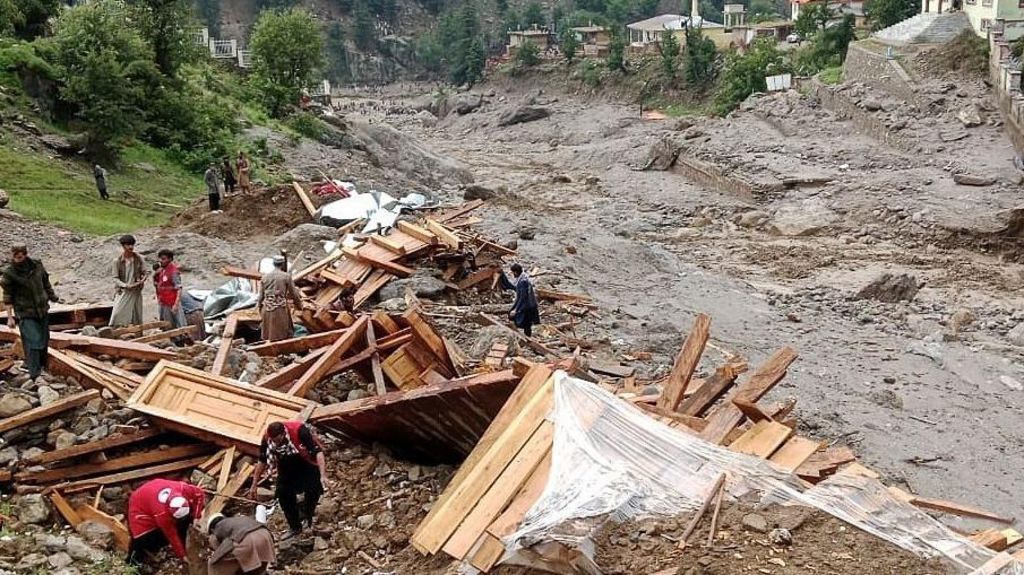
On a Monday marked by torrential downpour, catastrophic flash floods swept through eastern Afghanistan, leaving a grim trail of death, destruction, and displacement that has underscored the country’s position as one of the world’s most climate-vulnerable nations. According to official statements from the Taliban-led government, the disaster has claimed at least 20 lives, injured more than 80 people, and left over 100 residents unaccounted for.
The worst damage was concentrated in Parun, the capital city of Nuristan province, where even the city’s mayor is counted among the missing. Social media footage shared from the hard-hit region reveals widespread destruction: residential homes, local shops, and key municipal infrastructure have been reduced to rubble or severely damaged. Taliban officials have already warned that final casualty and economic damage counts will be severe, anticipating far higher losses as rescue teams reach isolated areas.
Ashiqullah Safi, head of local non-governmental organization Shpoul, told reporters that the floodwaters completely destroyed Parun’s municipal headquarters. With large boulders swept into populated areas by raging floodwaters, local residents have been forced to sift through debris for survivors and remains without access to heavy excavation equipment or specialized rescue tools.
Afghanistan’s long-standing vulnerability to climate-driven disasters is not a random coincidence. Decades of continuous armed conflict, which ended with the withdrawal of a U.S.-led international coalition and the Taliban’s return to power in 2021, have left the country one of the poorest on Earth, with severely limited infrastructure and resources to prepare for or respond to natural disasters. Frequent extreme weather events, from intense flash storms to prolonged crippling droughts, have compounded decades of instability.
In Nuristan, a region renowned for its green mountain peaks, old-growth forests, and pristine river systems that led to its designation as a national park in 2020, human activity has amplified the flood risk. Multiple media reports have documented widespread unregulated deforestation and illegal logging across Nuristan and neighboring provinces, which has eroded the landscape’s natural ability to absorb heavy rainfall, turning moderate downpours into catastrophic flash floods.
The danger is not over yet. Afghanistan’s meteorological department has extended warnings for continued heavy rain and flash flooding across 10 of the country’s 34 provinces through Wednesday. Officials have urged residents in at-risk areas to stay away from riverbanks and low-lying flood-prone zones to avoid additional casualties.
This latest disaster comes just months after another deadly flood event in April 2024, when heavy rains and flooding across northern Afghanistan killed hundreds of people. Initial official counts put the death toll at 150, while the United Nations World Food Programme recorded a far higher fatality number of more than 300, highlighting gaps in disaster reporting and response capacity in the conflict-battered country.