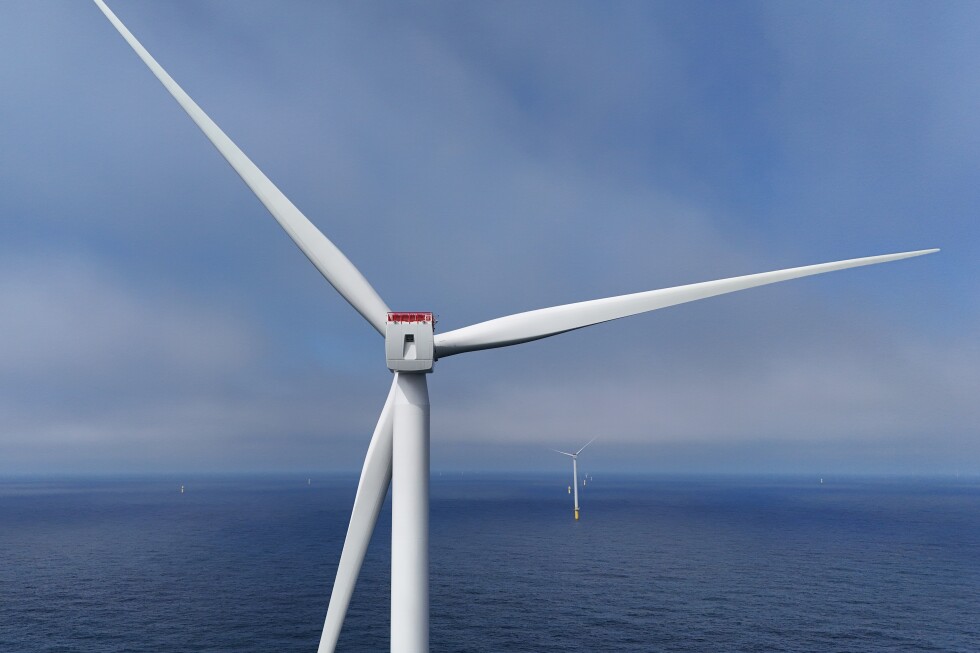
As the global offshore wind industry hits new milestones of rapid growth, a sudden policy shift from the Donald Trump administration has put the emerging U.S. offshore wind sector on uncertain footing. Just as the American industry was positioned for explosive expansion after years of incremental progress, Trump has moved aggressively to curtail development, prioritizing expanded fossil fuel production over clean energy transition goals that most major economies have embraced.
Offshore wind holds enormous untapped potential for the United States, with abundant consistent wind resources along the country’s long coastlines capable of delivering massive volumes of carbon-free electricity to population centers. Currently, six projects are at varying stages of operation: three are already fully online, while three more have begun delivering partial power as they wrap up construction and final pre-operational testing. More than 40 federal offshore wind leases have already been awarded to developers, but the Trump administration has moved to buy back a number of these leases, offering financial payouts to energy companies that agree to abandon their offshore wind projects. Beyond lease buybacks, the administration has put in place a series of additional regulatory and administrative roadblocks to slow the industry’s growth, as it doubles down on supporting fossil fuel production.
This policy direction stands in stark contrast to global trends, where dozens of nations are rapidly scaling up offshore wind to meet rising electricity demand while cutting greenhouse gas emissions that drive climate change. Notably, China — the host of the international summit Trump is attending this week — is the undisputed global leader in offshore wind development, accounting for more than half of all new capacity forecast to come online globally over the next five years.
Unlike coal, oil, and natural gas, which release heat-trapping greenhouse gases when burned, wind turbines generate electricity without contributing to global warming. Data from the Global Wind Energy Council (GWEC) outlines the stark gap between the U.S. policy shift and global progress: as of 2025, 19 national markets across the world have operational offshore wind capacity, led by China, followed by the United Kingdom and Germany in cumulative installed capacity and project count. Beyond the top three, the Netherlands, Taiwan, Denmark, Belgium, France, Vietnam, South Korea, Japan, Sweden, the U.S., Norway, Finland, Italy, Portugal, Ireland, and Spain are all either operating or actively developing projects.
Last year alone, China added 6.6 gigawatts of new offshore wind capacity, pushing its total installed capacity to 48.4 gigawatts by the end of 2025. Globally, 2025 saw 9.3 gigawatts of new offshore wind connected to grids — a 16% increase from 2024, enough to power 10.2 million homes. Cumulative global offshore wind capacity now stands at a level capable of powering the equivalent of 102 million homes worldwide. Looking ahead to 2026–2030, GWEC forecasts that China will account for 56% of all new global offshore wind capacity additions, while the European Union will contribute 29% and the United States is projected to add just 5% — a share that could shrink further following Trump’s recent restrictions.
For the U.S., the current operational fleet includes three completed projects: the nation’s first offshore wind farm, Block Island Wind Farm off the coast of Rhode Island; Dominion Energy’s Coastal Virginia Offshore Wind pilot project, the first located in federal waters; and South Fork Wind, the first large-scale U.S. offshore wind farm delivering power to New York. Three additional projects are in late-stage development: Massachusetts’ Vineyard Wind, Rhode Island’s Revolution Wind, and the full-scale Coastal Virginia Offshore Wind project adjacent to the existing pilot off Virginia Beach. Of these three, Vineyard Wind is the furthest along and is expected to reach full commercial operations in the coming months, and has already become the first project completed during the Trump administration.
In December, the Trump administration issued a stop-work order for all five under-construction East Coast offshore wind projects, pausing work on the three late-stage projects plus New York’s Empire Wind and Sunrise Wind, citing unproven national security concerns. Developers and affected states immediately filed legal challenges, and federal courts ultimately ruled in favor of the projects, allowing all five to resume construction after finding the administration had failed to demonstrate an imminent national security risk that justified halting work.
Beyond clean climate benefits, the U.S. offshore wind industry already delivers tangible economic and consumer benefits that are at risk under the new restrictions. According to the American Clean Power Association, the sector currently supports 18,000 domestic jobs across the country. The full-scale Coastal Virginia Offshore Wind project, the largest operational wind farm in the U.S. to date, already started delivering power to the grid in March and will eventually provide enough electricity for 660,000 homes across the state, which hosts critical U.S. military infrastructure and a major global data center hub. For Massachusetts, the Vineyard Wind project is projected to save electricity customers a total of $1.4 billion over 20 years, and already undercut competing energy sources on wholesale markets to lower rates for consumers during last winter. The 800-megawatt project can power 400,000 Massachusetts homes with clean energy.
Industry data shows that offshore wind development has already spurred $25.5 billion in domestic investment across U.S. ports, steel production, transmission infrastructure upgrades, shipbuilding, workforce training, and research and development, according to the Oceantic Network, a non-profit advancing offshore energy development. The domestic supply chain for the sector already includes more than 1,000 American companies across at least 40 states. Oceantic’s analysis finds that canceling just one 1-gigawatt offshore wind project in the Northeast would result in nearly $10 billion in lost economic activity from foregone jobs and investments, while also eliminating long-term energy savings for local ratepayers.
Internationally, the sector continues to break records: the world’s largest currently operational offshore wind farm, the UK’s Hornsea 2 located in the North Sea 55 miles off Yorkshire’s coast, features 165 turbines and can power more than 1.4 million U.K. homes across its 178-square-mile footprint. An even larger UK project is currently under construction that will surpass Hornsea 2’s capacity.
The Associated Press’ climate and environmental reporting receives financial support from multiple private foundations, with the AP retaining full editorial control over all content. More information on the AP’s philanthropic partnership standards, supporter list, and funded coverage areas is available at AP.org.