A resurgence of violence in South Sudan’s Jonglei state has displaced approximately 280,000 people over the past two months, creating a severe humanitarian crisis that threatens to unravel the nation’s fragile peace agreement. The conflict between government forces (South Sudan People’s Defense Forces) and opposition groups (Sudan People’s Liberation Movement In Opposition) has escalated dramatically since December when opposition fighters seized government outposts.
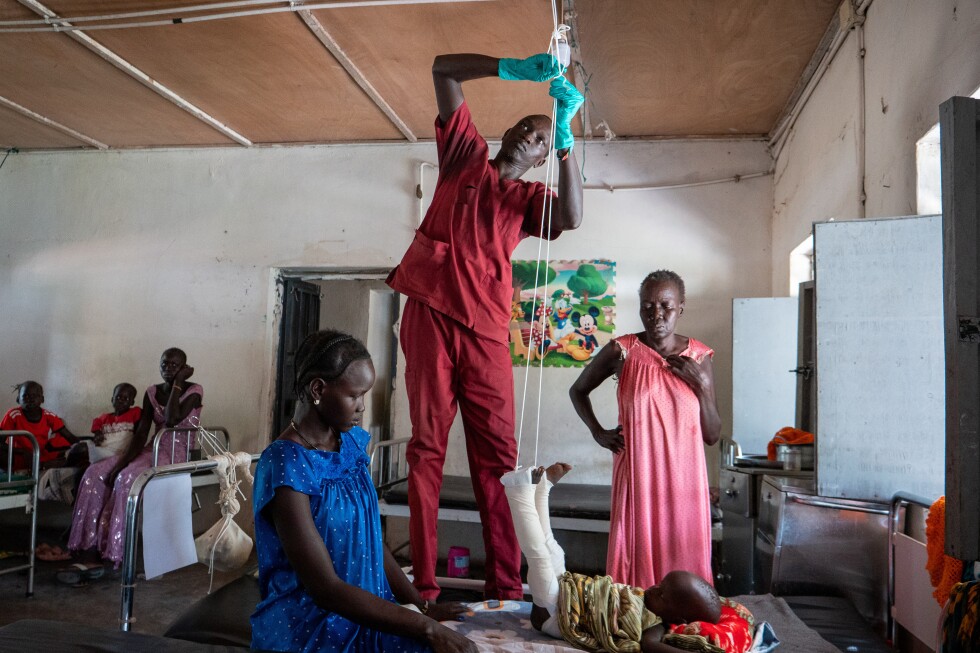
The human toll is devastating. Eighteen-month-old Kool Gatyen Pajock represents one of countless civilian casualties, hospitalized with bullet wounds inflicted by government forces according to his grandmother Nyayual Chuol, who witnessed the killing of the infant’s parents. Chuol carried her grandson 130 kilometers to Akobo hospital, now separated from her four other children who fled in different directions during the attack.
Despite a 2018 peace agreement that ended five years of civil war and a 2020 power-sharing arrangement that made opposition leader Riek Machar first vice president alongside President Salva Kiir, tensions erupted again in March. Machar was placed under house arrest and charged with treason in September alongside seven opposition members linked to attacks on government forces.
The government’s counteroffensive since January has included aerial bombardments and ground assaults, despite official commitments to peace. Nyankhiay Gatluak Jock, 28, described fleeing her village of Walgak after government helicopters bombed the area followed by ground troops shooting from vehicles. She now shelters with 42,000 other displaced persons in Akobo under UN protection.
Humanitarian operations have been severely compromised. Thirteen health facilities in Jonglei have been looted or partially destroyed, including a Doctors Without Borders hospital bombed on February 3. Nyaphan Nyang Lual escaped that attack with her family but her husband was shot and daughter abducted during their journey to Akobo. She arrived with her one-month-old granddaughter suffering from diarrhea but found no available medicine or food assistance.
Funding cuts and government-imposed restrictions on aid organizations have crippled relief efforts. Susan Tab, a reproductive health officer with South Sudanese organization Nile Hope, reported having “nothing … no feeding, no medication” to offer beyond psychosocial support.
UN humanitarian chief Tom Fletcher, during a February 21 visit to Akobo, declared South Sudan “one of the most neglected crises in the world right now” and pledged to make the situation more visible to prompt international response. He was greeted by thousands of displaced women and children holding posters with handwritten messages, including one that starkly stated: “They killed everyone.”