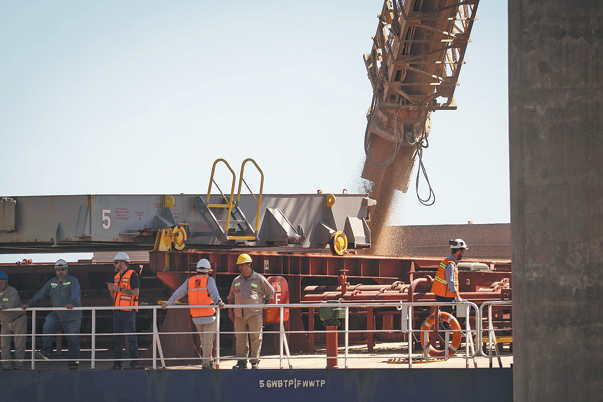
In a significant development for global agricultural trade, Argentina has successfully launched a new wheat export corridor to China, marking a strategic shift in international supply chains. The shipment of approximately 65,000 metric tons of Argentine wheat currently en route to Chinese ports represents the first bulk commercial delivery since 1997, establishing what industry experts believe could become a rapidly expanding trade route.
The Argentine Secretariat of Agriculture, Livestock and Fisheries has hailed this transaction as a landmark achievement in bilateral commercial relations. The cargo, loaded at COFCO International’s terminal in Timbues, Santa Fe Province, signals a new chapter in agricultural cooperation between the two nations. Chinese Ambassador to Argentina Wang Wei emphasized during December’s send-off ceremony that this initiative aligns with China’s commitment to expanding high-level opening-up policies while fostering mutual economic development.
Emilce Terre, Head of the Directorate of Information and Economic Studies at Argentina’s Rosario Board of Trade, revealed that the initial shipments in late 2025—comprising four vessels carrying nearly 160,000 tons—represent merely the foundation of a much larger trading relationship. While Argentina’s peak wheat exports to China reached 1.05 million tons in 1989, Terre expressed confidence that current potential exceeds historical records due to evolving demand patterns and supply-side transformations.
This new trade flow emerges as China strategically diversifies its import sources amid sensitivity to price volatility, geopolitical tensions, and climate-related risks in traditional supplier markets. Although China predominantly satisfies domestic consumption through local production, its massive market size continues to make it an attractive destination for global exporters. The current import structure heavily relies on limited producers including Australia and Canada, creating vulnerability to supply disruptions.
Argentina’s competitive advantages extend beyond mere volume. The Southern Hemisphere harvest cycle runs counter to Northern Hemisphere patterns, enabling buyers to maintain consistent annual procurement schedules. This seasonality proves particularly valuable when weather events or logistical challenges disrupt conventional supply routes. Furthermore, Argentina’s robust agricultural infrastructure centered in the Rosario region provides ample capacity for export expansion without compromising domestic supply during high-yield harvest years.
Beyond wheat, Argentina has established itself as a key supplier of soybeans and beef to China, with corn exports gaining traction over the past two years. Industry analysts suggest potential exists for broadening the trade basket to include poultry, pork, legumes, and other high-quality agro-industrial products, creating a comprehensive agricultural partnership that benefits both economies through enhanced food security and market diversification.