Four years after a brutal two-year civil war that killed an estimated 600,000 people and pushed the region to the brink of famine, large-scale violence has once again erupted in Ethiopia’s northern Tigray region, bringing deep-seated unresolved tensions to a breaking point and threatening to destabilize the entire Horn of Africa.
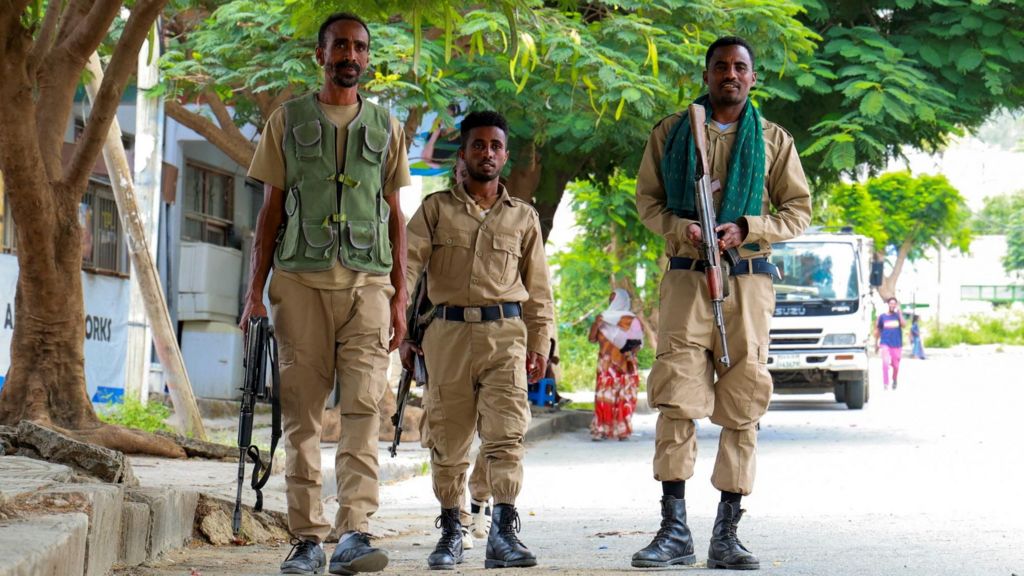
This week, Tigrayan forces have been openly patrolling the streets of Mekelle, Tigray’s capital, after clashes broke out between regional fighters aligned with the Tigray People’s Liberation Front (TPLF) and Ethiopia’s federal national army. The violence has already spilled across Tigray’s borders into the neighboring Afar and Amhara regions, triggering panic among local populations who are still struggling to rebuild their lives after the 2020-2022 war.
Widespread reports of panic buying have emerged across Tigray, with residents rushing to stock up on basic food supplies amid fears of a return to full-blown conflict. Compounding the crisis, internet and cellular communications across the region have been cut off. In a region that has operated largely as a cashless society since ATMs stopped functioning months ago, the service disruption has cut residents off from their savings via mobile banking apps, leaving Mekelle effectively out of accessible cash.
The latest escalation comes after more than six months of steadily deteriorating relations between Ethiopia’s federal government in Addis Ababa and the TPLF, the long-governing political party of Tigray. The African Union-brokered Pretoria Peace Agreement signed in November 2022 ended the original civil war, but four core contentious issues were never resolved, creating a tinderbox that has now ignited.
Two of the most divisive disputes center on western Tigray, a fertile border territory that the TPLF lost control of to Amhara regional forces fighting alongside the Ethiopian federal army in the opening weeks of the 2020 war. Amhara has long claimed that the territory was wrongfully assigned to Tigray when national regional borders were redrawn following the 1991 overthrow of Ethiopia’s Marxist military regime. When Amhara forces seized western Tigray in 2020, hundreds of thousands of ethnic Tigrayans were displaced, and they now remain stuck in makeshift displacement camps across Tigray and Addis Ababa. The TPLF demands the return of western Tigray and the safe repatriation of all displaced residents, while the federal government has called for a referendum to decide the territory’s final status.
For the federal government, the primary point of contention has been disarmament. Addis Ababa accuses the TPLF of only surrendering outdated, obsolete weaponry to AU monitors while hiding a large stockpile of functional arms. The two sides have also clashed over the governance of Tigray: under the terms of the Pretoria Agreement, Prime Minister Abiy Ahmed appointed an interim regional administration, but tensions over federal interference eventually split the TPLF. Shortly before May’s national general election – which was never held in Tigray due to insecurity – the TPLF restored its pre-war leadership and dissolved the Abiy-appointed interim government. The resulting political standoff has left regional civil servants unpaid and core public services crippled, worsening already fragile economic conditions in the region.
A major new development that has upended the conflict landscape is the TPLF’s formation of a new anti-government coalition. In early September 2026, the TPLF joined six other armed opposition groups to launch the Alliance for Survival, which includes prominent anti-government groups such as Amhara’s Fano militia and the Oromo Liberation Army. Though the alliance members hold disparate grievances against Abiy’s government, they share a single core goal: the removal of Abiy’s administration from power. Even former wartime rivals like the TPLF and Fano – who remain at odds over the future of western Tigray – have set aside their differences to align against the federal government, a strategic move TPLF officials say is intended to avoid the isolation they faced at the start of the 2020 war. Analysts caution, however, that the alliance’s competing underlying interests may make it unstable long-term.
Both sides have traded blame for who initiated the latest escalation. The TPLF claims it is responding to a pre-planned federal offensive that included drone strikes on Tigrayan positions, while the federal government says the TPLF struck first after seizing control of major airports across Tigray. Federal forces have continued to deploy drones and ground operations against Tigrayan positions, with the government justifying the actions as self-defense against unprovoked attacks. Independent verification of on-the-ground details remains difficult, but local residents of one targeted town reported that drone strikes hit two former school buildings that were used as Ethiopian military bases during the original war – a site the federal government apparently suspects is now being used by Tigrayan forces. There are also unconfirmed reports that the TPLF has been forcibly conscripting young Tigrayan men to bolster its fighting ranks.
Beyond internal tensions, the crisis has the potential to draw in neighboring powers and widen into a broader regional conflict. Addis Ababa has accused neighboring Eritrea of supporting the new anti-government alliance, a claim Eritrea’s government in Asmara denies. Eritrea fought alongside Ethiopian federal forces during the 2020-2022 war, but relations between the two neighbors have collapsed once again in recent months over access to Red Sea ports. Ethiopia, the world’s most populous landlocked country, has lacked sovereign access to Red Sea ports since Eritrea’s 1993 secession, and Abiy has recently publicly pushed for control of Eritrea’s southern port of Assab, located just 37 miles from the shared border, even hinting at a potential military seizure to secure the facility. Further afield, the two opposing warring factions in Sudan’s ongoing civil war back opposite sides in the Tigray conflict, creating another layer of potential spillover.
Diplomatic efforts to de-escalate the crisis are already underway. The African Union, which brokered the 2022 peace deal, has called for an immediate ceasefire and a return to direct bilateral negotiations, and has dispatched its special Horn of Africa envoy, former Nigerian President Olusegun Obasanjo, to engage both parties urgently. The United Nations and the Intergovernmental Authority on Development (Igad), the East African regional bloc, have both issued matching calls for an end to hostilities and a resumption of dialogue.
Despite these diplomatic overtures, the outlook remains deeply concerning. Trust between the TPLF and the federal government has already been broken beyond repair after years of open conflict, and the formation of the new cross-regional armed alliance has added significant new complexity to an already volatile situation. The federal government is already grappling with separate active insurgencies in Amhara and Oromia regions, and the new alliance creates a political and military link between these separate conflicts that could see them merge into a nationwide challenge to Abiy’s rule. Analysts widely agree that the risk of a full-scale, countrywide conflict in Ethiopia is now very real, with devastating potential consequences for millions of civilians across the Horn of Africa.