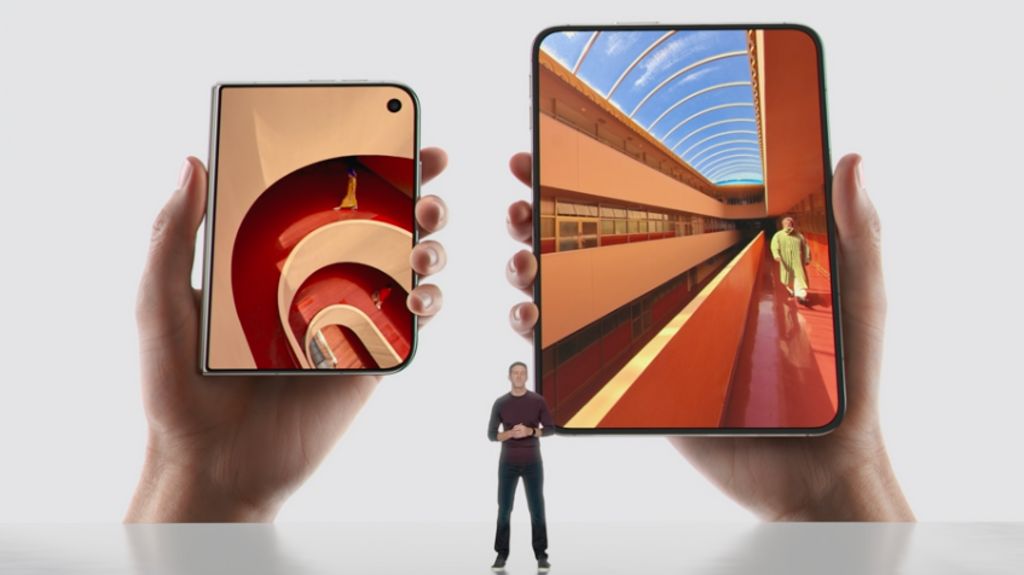
Tech giant Apple has officially pulled back the curtain on its long-awaited first foldable smartphone, the iPhone Duo, marking one of the most high-profile product launches in the company’s recent history. The device carries a starting price of $2,000 (£1,475), with its maximum storage configuration jumping to $3,200 (£2,360), placing it among the most expensive mass-produced smartphones currently available on the global market.
The iPhone Duo adopts a book-style folding design, a concept Apple says draws direct inspiration from the iPad line. When fully unfolded, the device delivers a screen experience comparable to a compact iPad, while when folded in half, it takes on the form of a wider traditional iPhone. Speaking at the launch event, Apple CEO John Ternus — who just stepped into the role two weeks prior following Tim Cook’s departure — emphasized that the company intentionally deviated from the design language used by existing foldable devices from competitors. Ternus argued that many rival foldables “feel like two phones stuck together… making a larger screen feel much smaller,” and framed the iPhone Duo as the outcome of cumulative technological breakthroughs that will redefine the foldable user experience.
Ternus is no outsider to the project: before being tapped as Cook’s successor earlier this year, he spent years leading Apple’s hardware division, and played a direct hands-on role in the development of the foldable iPhone, a project that has been in the works inside the company for more than half a decade. Industry analysts note that the timing of Ternus’s promotion was no coincidence. Ben Wood, chief analyst at technology research firm FDM, pointed out that the leadership handover was deliberately aligned with what is widely viewed as one of Apple’s most impactful iPhone launches in over a decade. “Nothing happens by accident at Apple,” Wood noted.
For Apple, the launch of the first foldable iPhone comes as the company works to push back against long-running criticism that it has not delivered a truly transformative, standout product innovation since the debut of the original iPhone in 2007. The iPhone line remains Apple’s core revenue driver, accounting for more than half of the company’s annual total sales, and the firm has recently reported strong demand for its latest conventional iPhone models, which marked Apple’s most successful product launch to date.
Even with the hype surrounding the launch, industry observers hold mixed expectations for the iPhone Duo’s market performance. Dipanjan Chatterjee, an analyst at research firm Forrester, warned that the high-priced foldable risks becoming nothing more than a “premium-priced ornament” — a product that delivers brand cachet but fails to drive meaningful new revenue growth for Apple. Chatterjee noted that the device could follow the trajectory of Apple’s Vision Pro headset, a $3,699 spatial computing device that has failed to gain mainstream traction with consumers, or it could mirror the success of the Apple Watch, which has carved out a steady, profitable niche selling millions of units annually despite never matching the iPhone’s volume.
Market data also underscores the limited current size of the foldable smartphone segment. FDM data shows that foldable devices from existing players including Samsung and Huawei currently make up just 2% of total global smartphone sales. Even with Apple’s entry expected to boost overall consumer interest in the category, FDM projects that foldables will only account for roughly 4% of total global smartphone sales by the end of the next decade.