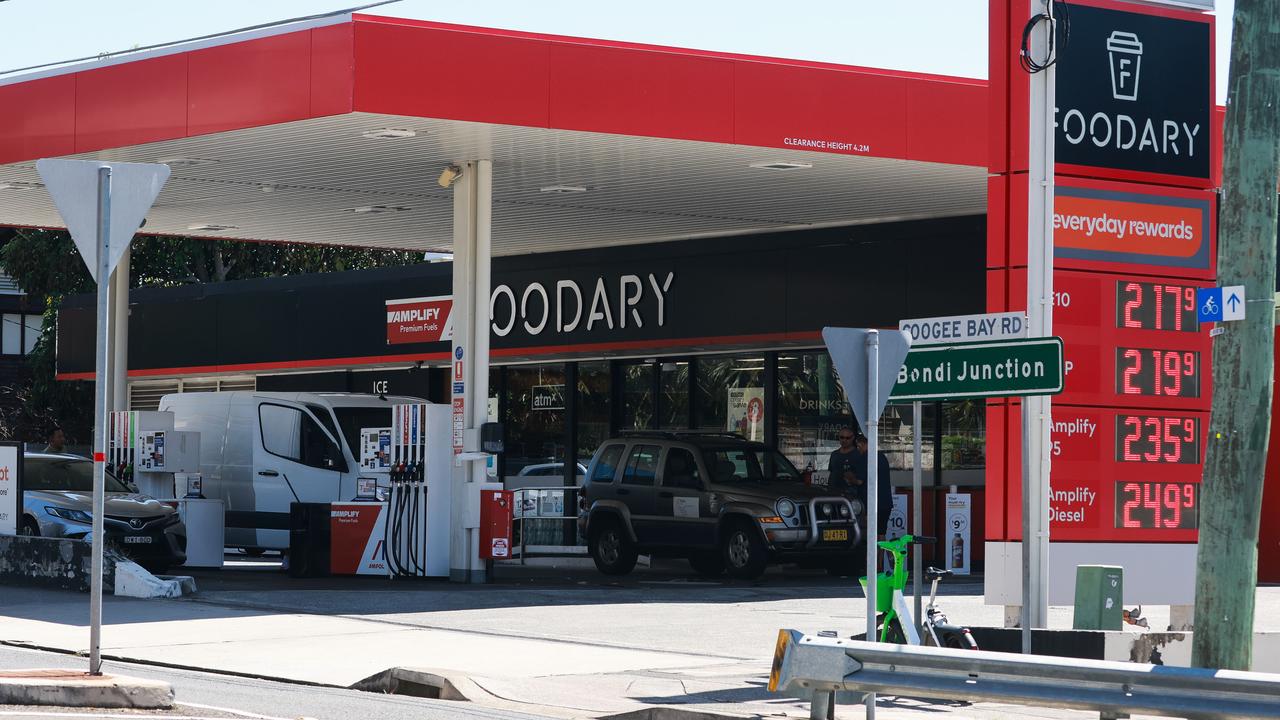
As Australian drivers continued to grapple with skyrocketing retail fuel prices, the country’s largest petroleum retailer Ampol has announced staggering half-year profit growth, driven largely by global oil market volatility sparked by escalating conflict in the Middle East linked to former U.S. President Donald Trump’s tensions with Iran. The windfall is set to flow directly to the company’s shareholders via a sharply increased interim dividend.
In its latest mandatory market update released this week, Ampol reported that its replacement cost operating net profit – a metric favored by investors because it strips out inventory fluctuations caused by shifting crude prices – jumped to $857.2 million for the six-month period ending June 30. That figure marks a more than 475% increase from the $180.2 million profit the company recorded in the same period one year prior.
To pass the gains directly to shareholders, the company will issue an interim dividend of $1.85 per share, an amount nearly four times higher than the payout offered in the first half of 2023. Ampol CEO and managing director Matt Halliday framed the strong results as a combination of geopolitical disruption and the company’s own operational strengths. Halliday noted that Australia and New Zealand could not insulate themselves from global energy market shifts triggered by the Middle East conflict, even as the market dislocation that drove up prices worked in Ampol’s financial favor.
“While the market dislocation provided a benefit to our financial results, our supply responsiveness, trading capabilities, refinery reliability, customer and supplier relationships as well as the progress of our retail segmentation strategy all enabled Ampol to meet its customers’ needs,” Halliday said. “In short, the underlying business performance improved across multiple segments as Ampol’s supply chain remained resilient, when less robust supply chains faltered.”
Global crude oil markets have seen extreme swings in pricing since the start of 2024, directly tied to escalating geopolitical tensions in the Middle East. Before the conflict escalated in January, benchmark crude traded as low as $US56 ($A78) per barrel. By April, tensions pushed prices to a peak above $US130 ($A181) per barrel – the highest global crude price recorded since the 2022 global energy crisis.
Australian motorists have already absorbed much of this price increase at the pump, though federal government intervention softened the blow for much of the past six months. To offset soaring fuel costs, the government cut the national fuel excise tax earlier this year, an adjustment that initially reduced retail prices by 32 cents per litre. The cut was halved to 16 cents per litre in July, and the full excise was reinstated on August 1. According to Australian investment firm AMP, every $US10 per barrel rise in global crude prices adds approximately 10 cents per litre to Australian retail fuel prices – a cost that falls directly on motorists already facing widespread cost-of-living pressures.