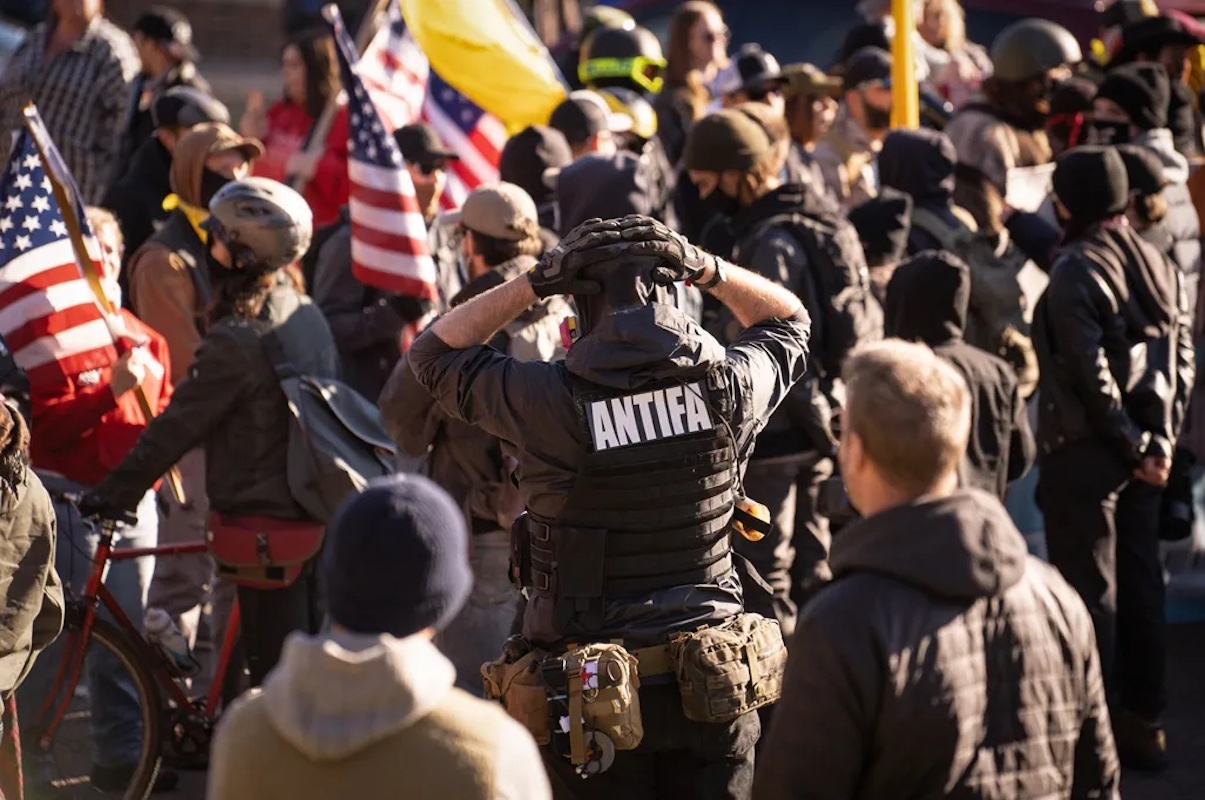
A profound transformation is underway in American political dynamics, where a vocal minority of digital extremists increasingly dominates the national discourse while the moderate majority retreats from political engagement. This paradigm shift represents a fundamental restructuring of political influence in the United States.
The core mechanism driving this change lies in the intersection of technological evolution and political infrastructure. Social media platforms have effectively bypassed traditional institutional hierarchies, creating echo chambers where like-minded extremists congregate and amplify their messages. These digital environments favor emotionally charged content over reasoned discourse, creating a self-reinforcing cycle of radicalization.
Recent research from the American National Election Studies (2020-2024) reveals a concerning trend: overall social media engagement is declining, particularly among younger and older demographics. However, the most politically polarized users remain highly active, creating a digital public sphere that grows “smaller, sharper, and more ideologically extreme” as moderate voices disengage.
The practical consequences extend far beyond online debates. America’s actual governance is increasingly influenced by a class of unelected, digitally-native staffers who operate within the extremist social media ecosystem. Congressional staffers, typically in their late 20s (compared to legislators in their late 50s), consume and produce content within these radicalized digital spaces, effectively shaping policy and political messaging.
This dynamic was starkly illustrated when a Trump administration staffer posted racially inflammatory content depicting Barack and Michelle Obama as apes on Truth Social. Though quickly removed amid public outcry, the incident demonstrated how unelected personnel can force elected officials to adopt more extreme positions.
The public response to this polarization is equally telling. Pew Research data shows majorities consider both major parties too extreme, while Gallup tracking reveals record numbers of Americans registering as independents. However, this disengagement paradoxically exacerbates the problem, as closed primary systems ensure that only the most engaged (and extreme) voters determine candidate selection.
Both major political movements face structural challenges. The MAGA movement’s tendency to alienate potential coalition partners—through antisemitic rhetoric, immigration crackdowns, and racial provocations—undermines its long-term viability in an increasingly diverse nation. Meanwhile, progressive governance in cities like Portland demonstrates the practical failures of extremist policies, with crime rates soaring and public infrastructure deteriorating despite nationwide improvements.
The fundamental challenge for American democracy lies in reconciling the gap between the moderate populace and the extremist public that dominates political discourse. Without institutional reforms addressing both political primaries and social media governance, this disconnect threatens to perpetuate a cycle of governmental dysfunction and public disillusionment.