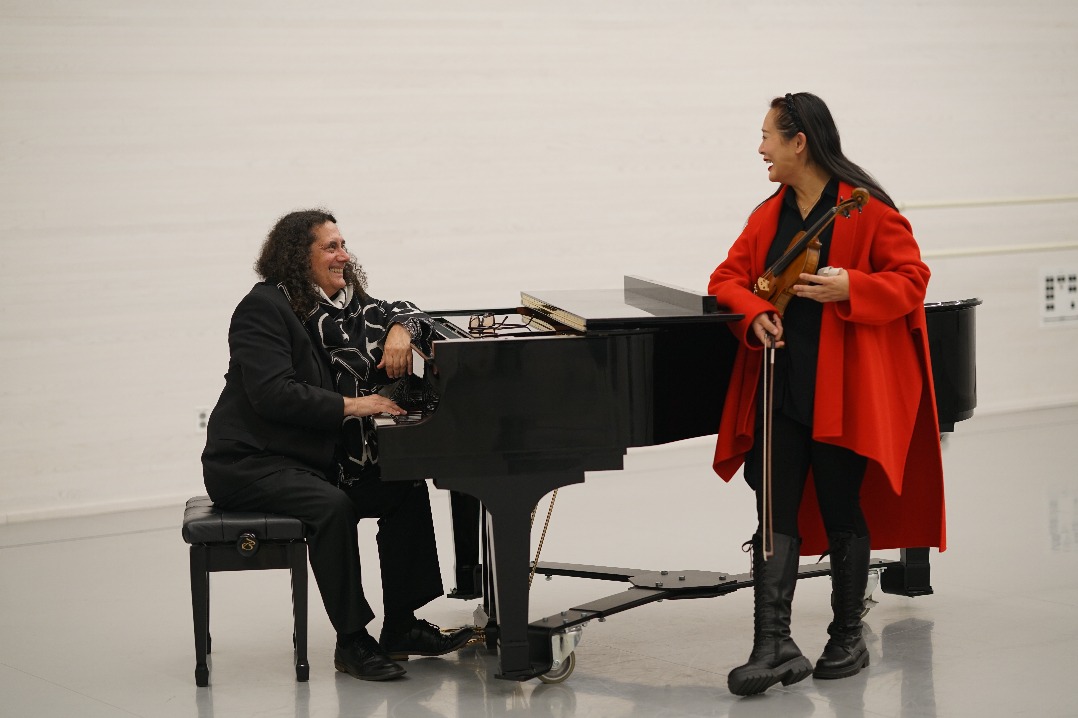
Princeton University recently hosted a vibrant celebration of the Double Ninth Festival, a traditional Chinese holiday honoring health, longevity, and respect for the elderly. The event, organized by Asian student groups and Chinese-descendant students, featured Chinese music, graceful dance, and traditional desserts, creating a tapestry of cultural pride and community spirit. Among the attendees, one figure stood out: Vince Di Mura, a resident music composer and director at Princeton’s Lewis Center for the Arts, who has found a new musical voice in Chinese music and a deep connection with the Chinese community.
Di Mura, born into an Italian-American family, discovered his passion for music at a young age. From blues and jazz to classical music, his career has been marked by exploration and reinvention. However, it was his introduction to Chinese music that truly transformed his artistic journey. About three years ago, Di Mura began collaborating with the Princeton University Chinese Music Ensemble, learning to compose for traditional Chinese instruments like the erhu, pipa, and suona. This experience, initially ‘very alien,’ gradually became a source of profound inspiration.
His collaboration with the local Chinese community deepened when he met Wendy Fan, who challenged him to reinterpret Chinese music in his unique jazz style. This led to the formation of the Summer Breeze Chinese Jazz Fusion Ensemble, a band that blends Chinese melodies with jazz improvisation. The ensemble has performed over a hundred shows, from prestigious venues like the Lincoln Center to intimate community gatherings, and has released three albums.
Di Mura’s latest project, ‘Oh God … Beautiful Machine,’ is a 90-minute, three-part production that includes a 20-minute segment dedicated to the Chinese community. The piece, which premiered in October 2025, features librettos by Pulitzer Prize-winning poet Yusef Komunyakaa and has been met with overwhelming support from the Chinese community. Di Mura describes his work as an expression of love and gratitude for the community that has embraced him.
Wu Hongyan, a longtime supporter of Di Mura, praised the musician’s ability to seamlessly blend Eastern and Western musical traditions. ‘The Cassowary,’ a segment of the production, exemplifies this fusion, carrying a distinctly Chinese spirit while speaking in the language of jazz. Wu noted that Di Mura’s work demonstrates how cultural voices can coexist harmoniously, creating new artistic possibilities.
Di Mura’s journey is a testament to the power of cultural exchange and the transformative impact of community. His story resonates not only as a musical achievement but also as a bridge between cultures, fostering mutual respect and understanding. As he continues to explore and celebrate Chinese music, Di Mura remains a beloved figure in the Chinese community, embodying the spirit of genuine friendship and artistic collaboration.