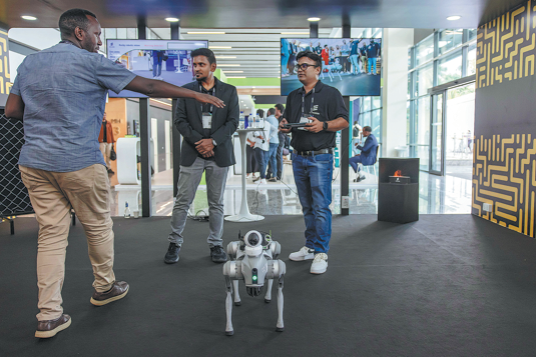
As Africa’s mobile revolution evolves, the continent stands on the brink of a new digital era driven by artificial intelligence (AI) and financial technology (fintech). This was the central theme at the Mobile World Congress (MWC) Africa, held in Kigali, Rwanda, where policymakers and industry leaders emphasized the need to bridge digital and energy gaps to unlock inclusive growth. Rwandan President Paul Kagame, speaking at the opening ceremony, highlighted Africa’s rapid digital transformation, noting how mobile technology has become integral to daily life, revolutionizing commerce, education, and finance. He praised mobile money as a global model for financial inclusion, empowering small businesses and women entrepreneurs. However, Kagame cautioned that Africa must urgently address its digital divide, as only a small fraction of its population is connected compared to the global average. He stressed the importance of integrating AI into public services and harmonizing policies to foster innovation. Rwanda’s Minister of ICT and Innovation, Paula Ingabire, echoed this sentiment, calling for collaboration across governments, industries, and innovators to position Africa as a leader in digital transformation. Doreen Bogdan-Martin, Secretary-General of the International Telecommunication Union, projected that AI could generate $2.9 trillion for the African economy, emphasizing the need for cross-sector cooperation. Vivek Badrinath, Director General of the Global System for Mobile Communications Association, highlighted Africa’s mobile industry as one of the largest infrastructures globally, covering 91% of the population. He called for partnerships to develop inclusive AI models for African languages and stressed the importance of regulatory reforms to attract investment. Closing the usage gap, he noted, could add $625 billion to Africa’s GDP by 2030, underscoring that connectivity is about empowering people and driving sustainable growth.