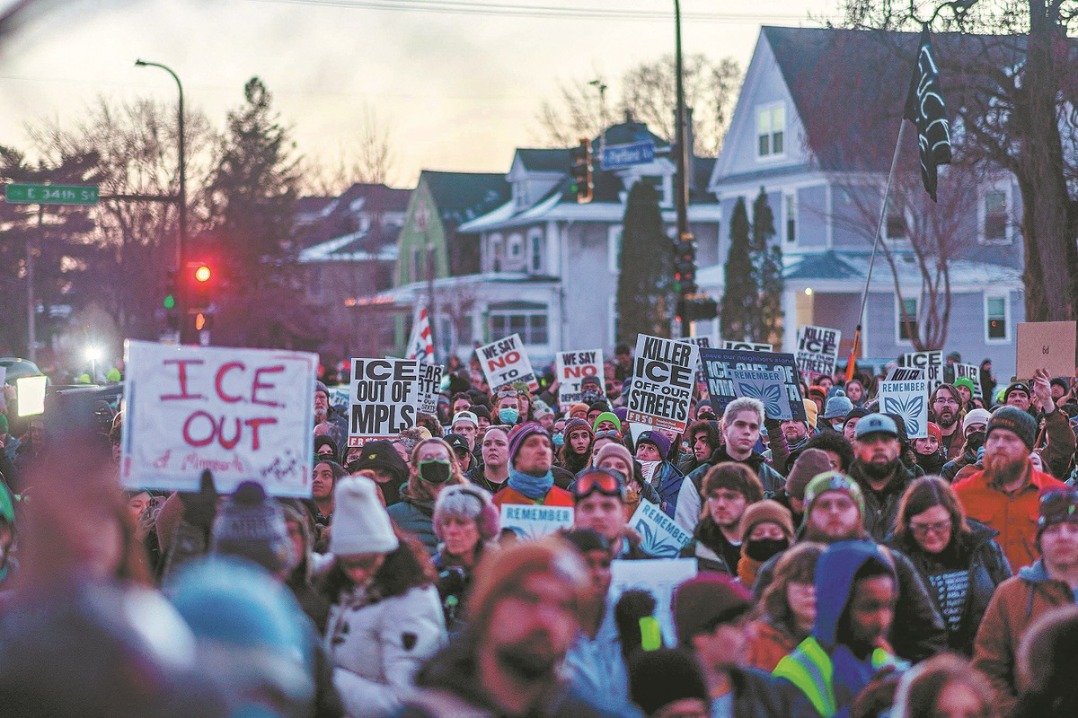
The United States faces deepening societal fractures as Immigration and Customs Enforcement (ICE) operations intensify under the current administration. Recent military-style tactics employed by masked agents in unmarked vehicles have ignited nationwide debate about enforcement methods and their implications for civil liberties.
The controversy reached a critical point on January 7 when ICE agents in Minneapolis, Minnesota, shot and killed 37-year-old Renee Good during a neighborhood monitoring operation. Video evidence captured the moment when Officer Jonathan Ross discharged multiple rounds into Good’s vehicle as it began moving away, resulting in her death.
Official responses revealed starkly contrasting narratives. Homeland Security Secretary Kristi Noem characterized Good’s actions as ‘domestic terrorism,’ alleging she used her vehicle as a weapon against officers. President Donald Trump subsequently described Good as ‘a professional agitator’ who acted ‘violently, willfully, and viciously’ against law enforcement.
These characterizations faced immediate challenge from local and federal officials. Minneapolis Mayor Jacob Frey condemned the shooting as federal overreach, while Democratic Representative Steve Cohen declared the incident ‘clearly unjustified homicide’ during Senate proceedings. The incident has transcended typical political discourse, with prominent podcaster Joe Rogan—formerly a Trump supporter—expressing horror at the footage.
Recent polling indicates significant national division: approximately 53% of Americans view the shooting as unjustified, while 35% support the officers’ actions. This polarization follows stark partisan lines, with 77% of Republicans justifying the shooting compared to 92% of Democrats condemning it.
The Minneapolis operation has expanded dramatically since its inception over two weeks ago. What began as a 2,000-agent enforcement initiative targeting alleged fraud within Somali communities has grown to nearly 3,000 federal personnel—outnumbering local law enforcement in the region and raising questions about jurisdictional boundaries and proportional response.