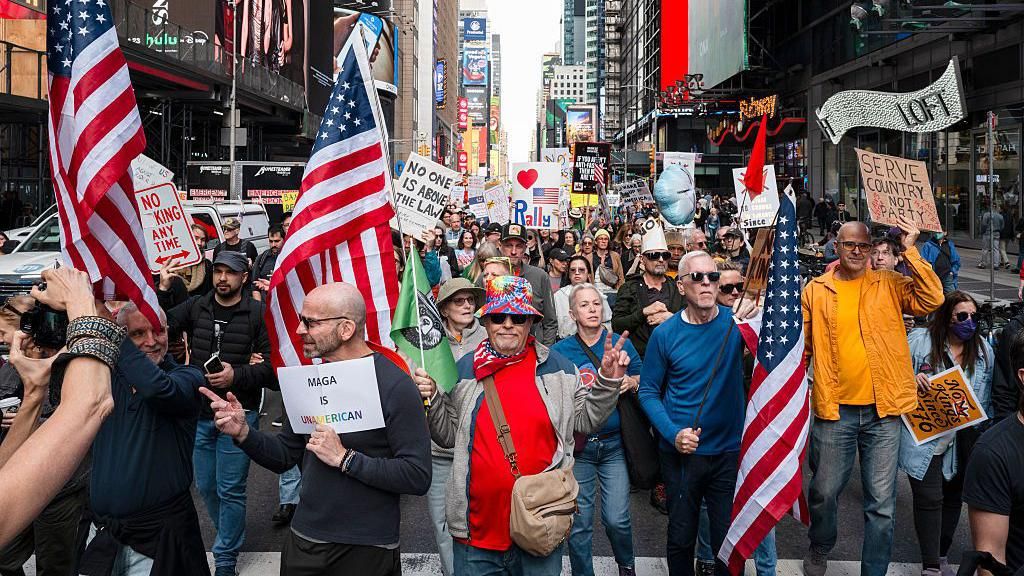
In an unprecedented display of dissent, millions of Americans took to the streets this weekend in the ‘No Kings’ protests, voicing their opposition to President Donald Trump’s policies and his expansive use of presidential authority. The demonstrations, which spanned major cities like New York, Chicago, Washington D.C., and Los Angeles, as well as hundreds of smaller towns, marked a significant moment of unity among Democrats, liberals, and even some anti-Trump Republicans. Despite warnings from Congressional Republicans that the protests would be ‘anti-American,’ the rallies remained peaceful, with no arrests reported in New York City and families participating in Washington D.C. Senator Chris Murphy of Connecticut addressed the crowd in the nation’s capital, declaring, ‘Americans are saying loudly and proudly that we are a free people, we are not a people that can be ruled.’ The White House, however, dismissed the protests with derision, with Deputy Press Secretary Abigail Jackson responding, ‘Who cares.’ Trump further mocked the demonstrators by sharing AI-generated videos on his Truth Social platform, including one where he appeared to dump waste on protesters from a jet. While Republicans downplayed the significance of the marches, the scale of the turnout, coupled with Trump’s negative approval ratings, suggests a potential opportunity for Democrats to rebound from recent electoral setbacks. However, the party remains divided and faces challenges in mounting an effective opposition, particularly as they no longer control either chamber of Congress. The protests highlighted widespread frustration with Trump’s immigration enforcement, tariff policies, government cuts, foreign policy, and deployment of the National Guard in U.S. cities. Some attendees also expressed discontent with Democratic leaders, urging them to take a more combative stance. The ongoing government shutdown, now entering its fourth week, has further complicated the political landscape, with Democrats refusing to approve a short-term spending extension without addressing health-insurance subsidies for low-income Americans. As the shutdown continues, federal workers face financial hardship, and low-income food support funding is expected to run out. The November elections, including key gubernatorial races in Virginia and New Jersey, will serve as a barometer for whether the anti-Trump sentiment seen at the protests can translate into electoral success for Democrats. However, internal party divisions and contentious primary battles could hinder their efforts to regain power. While the immediate focus of the protests was to unite against Trump, the long-term challenge for Democrats will be to present a cohesive and effective alternative to his administration.