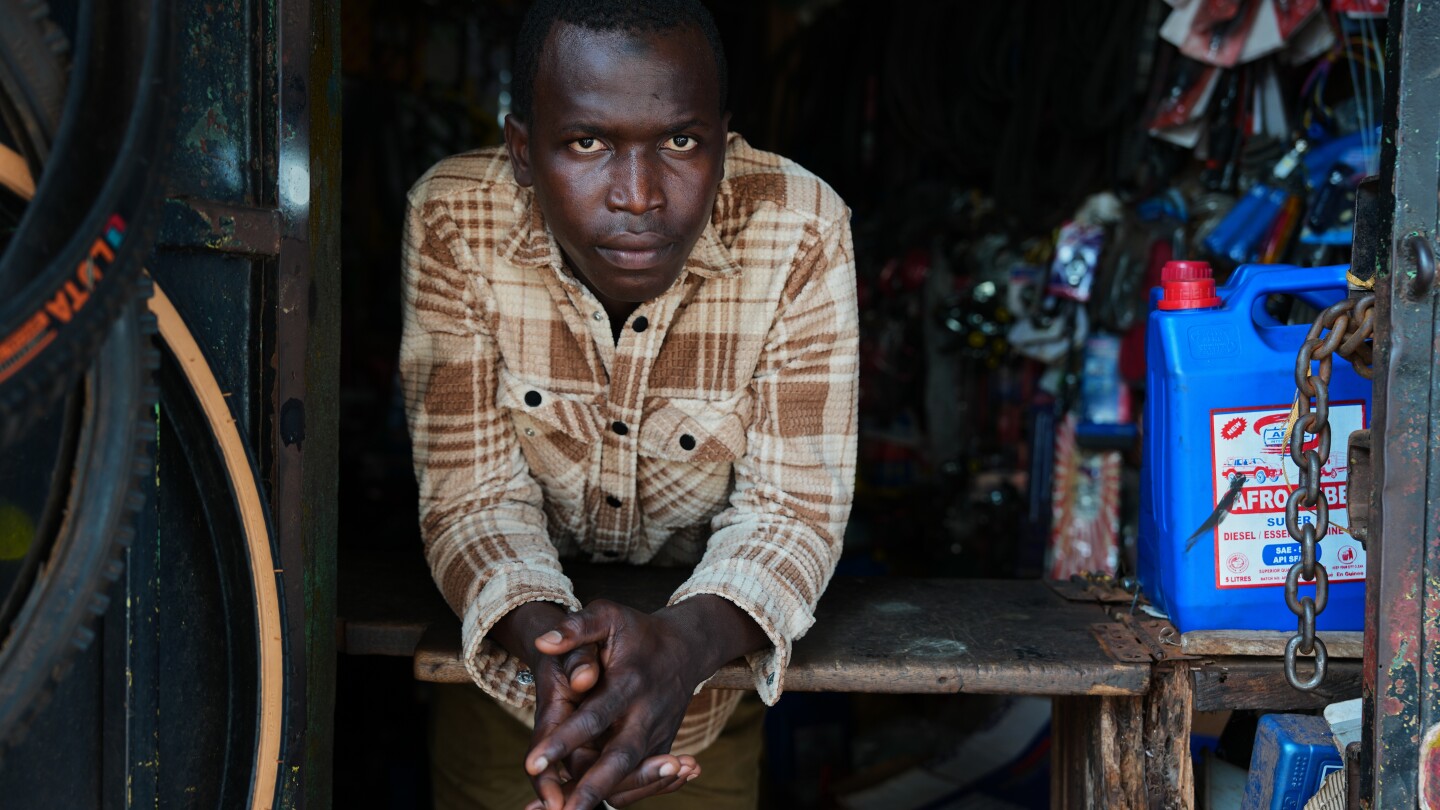
CONAKRY, Guinea (AP) — Oumar Bella Diallo, a 24-year-old Guinean, returned home in July after a harrowing year-long attempt to reach Europe. His journey was marked by police brutality, scams, and the haunting sight of fellow migrants perishing in the desert. Diallo is among tens of thousands of African migrants repatriated through the International Organization for Migration (IOM), a program funded by the European Union (EU) to curb migration. However, many returnees report unfulfilled promises of post-return assistance, leaving them to grapple with trauma, debt, and societal shame. The AP interviewed several returnees in Guinea and Gambia, who expressed frustration over the lack of follow-up support from the IOM. Diallo, for instance, sought help to start a small business but received only a phone number for a counselor and a brief orientation course. He also requested medical assistance for an injury sustained during his migration but was told it was unavailable. The IOM program, launched in 2016, has repatriated over 100,000 sub-Saharan migrants from North Africa and Niger. Despite a $380 million budget, with 58% allocated for post-return assistance, many returnees claim they have not received the promised support. Francois Xavier Ada of the IOM’s West Africa office acknowledged concerns over delays, attributing them to high caseloads or incomplete documentation. Experts, however, criticize the lack of transparency and accountability in the program’s implementation. The European Court of Auditors found that the program failed to demonstrate sustainable reintegration results during its first phase (2016-2021). Josephine Liebl of the European Council on Refugees and Exiles noted that the EU’s focus on returns overshadows the need for effective reintegration support. Returnees like Kabinet Kante, a 20-year-old Guinean, face additional challenges. Kante, who aspired to be a footballer in Germany, returned home after being intercepted at sea and abandoned in the desert. Despite his efforts to seek vocational training, the IOM has ignored his requests. Kante has since created a WhatsApp group for frustrated returnees and uses TikTok to warn others about the dangers of migration. The IOM program coincides with Europe’s broader efforts to deter migration, including paying African governments to intercept migrants—a practice criticized by human rights groups. While these efforts have reduced irregular crossings, experts argue that the lack of reintegration support in migrants’ home countries undermines the program’s effectiveness. Camille Le Coz of the Migration Policy Institute emphasized the need for access to social protection and labor markets. Despite the challenges, returnees like Diallo and Kante are not planning to migrate again soon, primarily due to financial constraints. However, the allure of Europe remains strong, and the visa process remains prohibitively expensive and uncertain for many. Elhadj Mohamed Diallo, a former migrant now working with the IOM, acknowledged the difficulties in preventing returnees from migrating again. ‘Migration is a natural thing,’ he said. ‘Blocking a person is like blocking the tide.’
African migrants assert a Europe-funded program abandons them after returning them home