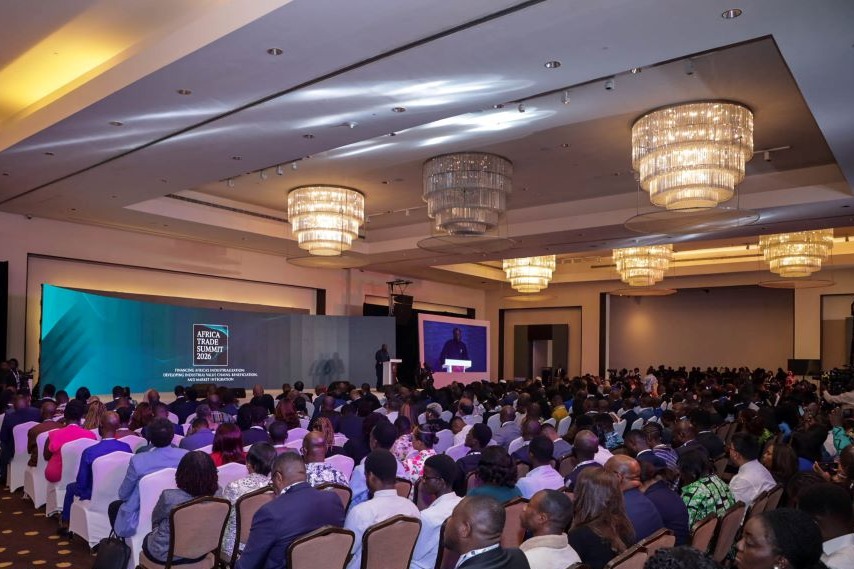
ACCRA, Ghana – At the pivotal Africa Trade Summit 2026, a powerful consensus emerged among continental leaders that Africa must urgently accelerate its industrial transformation to secure economic sovereignty and break from colonial-era trade patterns.
Ghanaian President John Dramani Mahama delivered a keynote address challenging governments, financial institutions, and private enterprises to prioritize value addition and manufacturing. ‘We can no longer accept an economic model that consigns Africa to exporting raw materials and importing finished goods,’ President Mahama declared before delegates. ‘Manufacturing and agro-processing create jobs, raise incomes, deepen skills, and anchor inclusive growth.’
The two-day summit, convened by the African Trade Chamber from January 28-29, served as a critical private sector platform to advance the African Continental Free Trade Area (AfCFTA) implementation. President Mahama emphasized that achieving industrialization requires more than government action alone, highlighting the essential pillars of policy stability, reliable infrastructure, skills development, and long-term financing solutions.
Echoing this urgency, Sam Jonah, Chairman of the Advisory Board of the Africa Trade Chamber, advocated for a deliberately ‘selfish’ economic strategy focused on building domestic industrial capacity. ‘Industrialization is both Africa’s shield and sword,’ Jonah stated, warning that failure to industrialize would marginalize the continent in a rapidly changing global order shaped by protectionism and geopolitical rivalry.
The summit highlighted Africa’s paradoxical position: despite producing the bulk of the world’s cocoa and possessing vast mineral wealth, the continent captures only a fraction of global value. This imbalance, leaders argued, perpetuates poverty and leaves African economies vulnerable to external shocks.
United Nations Industrial Development Organization Deputy Director-General Fatou Haidara reinforced that trade liberalization through AfCFTA must advance alongside industrial production. She emphasized the necessity of transitioning from commodity exports to value-added goods through integrated regional value chains supported by energy infrastructure and investment-ready projects.
The conclave concluded with a resolute call for reforms in global financial architecture to improve Africa’s access to affordable capital, alongside practical measures to reduce non-tariff barriers, simplify customs procedures, and invest in digital trade infrastructure.