BUENOS AIRES, Argentina — For decades, a remote, sheep-dense South Atlantic archipelago had remained a little-known territorial flashpoint between two nations, known to Argentines as the Malvinas and to Britain as the Falkland Islands. It took a 2022 FIFA World Cup semifinal match against England to catapult this decades-old sovereignty dispute from a quiet national grievance into a global conversation, igniting a wave of grassroots activism and cultural resurgence across Argentina.
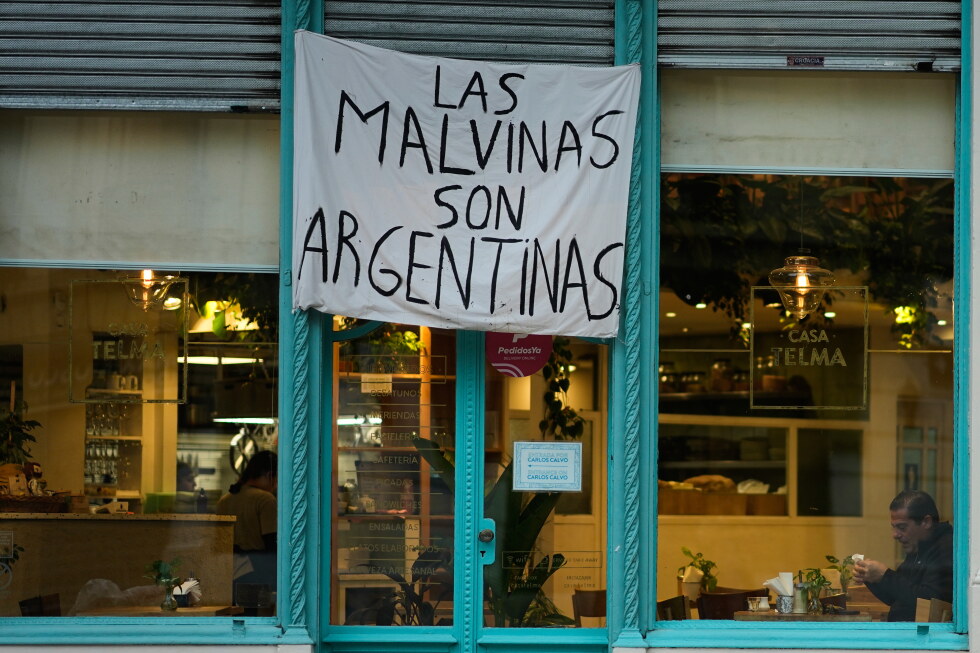
After Argentina defeated England in that high-stakes semifinal match, Argentine players unfurled a crudely hand-painted banner emblazoned with the words “The Malvinas are Argentine” in front of a global television audience. In the soccer-mad nation, the banner quickly outshone even Lionel Messi as the most enduring image of the tournament, embedding the long-running territorial claim into everything from street art to consumer goods, social media feeds, and the national consciousness of a new generation.
The history of the dispute stretches back decades, coming to a bloody head in 1982, when Argentina’s ruling military dictatorship invaded the islands, triggering a 10-week war that left 649 Argentine and 255 British soldiers dead before British forces retook control. None of the Argentine players who unfurled the 2022 banner had even been born at the time of the conflict, but they grew up in a country shaped by the trauma of the war and the humiliation of the defeat, which ultimately led to the collapse of the unpopular junta just one year later. For decades after, war veterans and families of fallen conscripts reported feeling sidelined and silenced, as Argentina’s new democratic government distanced itself from the dictatorship’s catastrophic military gamble. The sovereignty claim was enshrined in Argentina’s constitution, marked by annual memorial ceremonies and road signs, but it failed to resonate deeply with younger generations until the World Cup moment.
This was not the first time the Malvinas dispute intersected with World Cup history: during the 1986 quarterfinal match between Argentina and England in Mexico City, Diego Maradona’s infamous “Hand of God” goal was famously framed as a tribute to fallen Argentine soldiers and revenge for the 1982 defeat. But the 2022 banner display marked a far more open and visible public assertion of the claim, one that caught even Argentine officials off guard. Ahead of the match, Argentine security officials had already warned fans that FIFA’s ban on political messaging would bar Malvinas-themed signs from the stadium. The banner was tossed onto the pitch by fans after the final whistle, and players seized the moment to spread it wide for global cameras.
The immediate reaction was swift and split along national lines. British politicians and fans took to social media to condemn the display, and FIFA quickly opened official charges against the Argentine Football Association. But across Argentina, the gesture sparked a national “Malvinas mania” that cut through post-tournament disappointment after Argentina’s final loss to Spain. The banner has spawned a marketing and cultural bonanza: the slogan appears on everything from stickers, tote bags, and sneakers to murals, bar facades, and even permanent tattoos. A graphic designer released “Malvinas Sans”, a free typeface modeled after the banner’s rough hand-painted lettering, that was downloaded by thousands of Argentines. In Buenos Aires, one local print shop owner reported that 3,500 people flocked to his shop in a single day when he offered free screen-printing of the banner image on fan jerseys, a crowd that included both teen supporters and aging war veterans.
For veterans like Edgardo Esteban, an author and former soldier who fought in the 1982 war, the moment has marked a long-awaited passing of the torch to a new generation. “Kids in schools are asking me, ‘What’s this Malvinas thing?’” Esteban said. “After decades of feeling silenced and forgotten, this has brought the issue back to the center of national conversation.”
Political activists have moved quickly to harness this new momentum, linking the sovereignty cause to opposition against libertarian President Javier Milei’s free-market agenda, particularly proposed rules that would loosen restrictions on foreign land ownership in the country. But experts say the most significant impact may be global, not domestic. Google Trends data shows that global search volume for the Malvinas jumped 2,400% in the days after the semifinal match, the highest spike in search interest since the platform began tracking the term. For decades, Britain has pursued a strategy of keeping the dispute out of global public view; now, the issue is unavoidable on the world stage.
It remains unclear whether this wave of grassroots interest will prove to be a fleeting moment of World Cup fever or a lasting revival of the sovereignty cause. What is certain is that a simple hand-painted banner carried onto a World Cup pitch has turned a 40-year-old dispute over a remote cluster of islands into a topic of global conversation, introducing the conflict to tens of millions of young people who had previously known little to nothing about it.