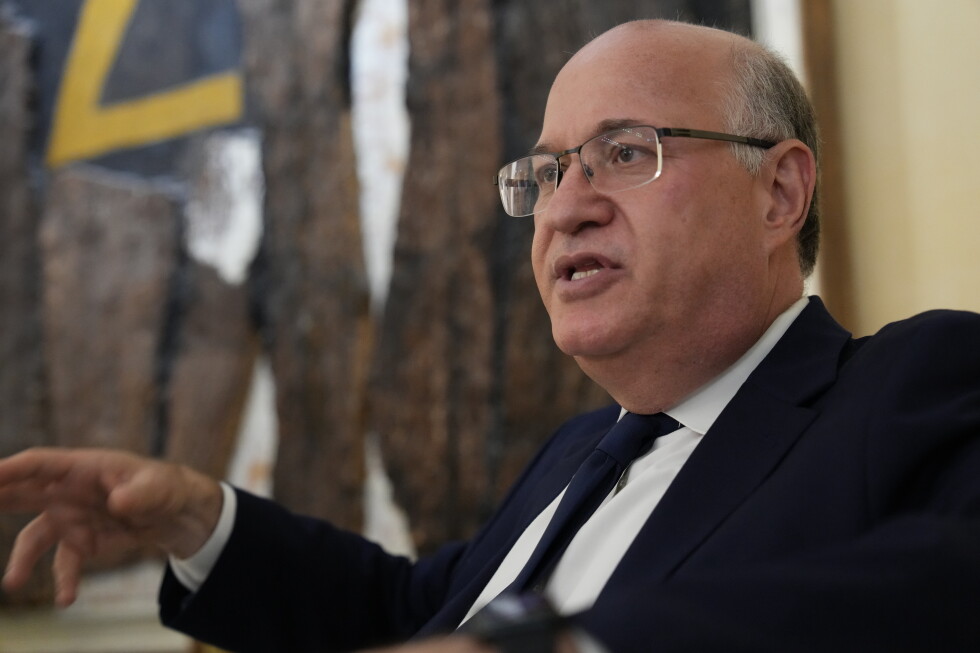
ROME – In a high-stakes private meeting at the Vatican this week, the president of Latin America’s leading development financial institution made an urgent case to Pope Leo XIV: that the centuries-long pattern of exploitative resource extraction in the region does not have to define the future of rare earth mineral mining, a sector critical to the global clean energy and technology boom.
Ilan Goldfajn, leader of the Inter-American Development Bank (IDB), met with the pope on Friday to outline how responsible rare earth development could deliver transformative economic benefits to Latin America, provided strict environmental, labor and governance safeguards are enforced and local communities capture added value from the extracted resources. The outreach comes just months after the Vatican launched a formal campaign urging faith institutions to divest from mining companies, a policy rooted in decades of Vatican advocacy for Indigenous communities disproportionately harmed by unregulated extraction across Latin America.
The pitch represents a significant test of whether the development bank can convince a pope with decades of on-the-ground experience in Latin America’s mining regions to embrace a new model of resource extraction. Goldfajn’s meeting, which followed a January audience between the pope and senior mining industry executives, reflects the broad recognition of Pope Leo’s unique influence across a region where the vast majority of the population identifies as Catholic. Church groups at the diocese and parish level often form the backbone of local opposition to new mining projects, meaning the pope’s public stance can shape whether industry and community relations are confrontational or collaborative.
As the global transition to renewable energy and the expansion of advanced technology accelerates, demand for critical minerals has surged. Seventeen rare earth elements, alongside other key minerals including lithium, cobalt, copper and nickel, are irreplaceable components in everything from smartphones and semiconductors to electric vehicles and jet engines. By the latest estimates from the U.S. Geological Survey, Brazil holds the world’s second-largest reserves of rare earth oxides, trailing only China, putting Latin America at the center of global supply chain diversification efforts. The IDB currently has roughly $4 billion in critical mineral project pipelines across the region, concentrated in Chile, Argentina and Brazil, with three-quarters of that funding earmarked for partnerships with private sector firms. Ahead of his meeting with the pope, Goldfajn presented the region’s rare earth potential to European investors at a Rome finance conference.
“It’s a unique opportunity for the region, but you need to do it in the right way with the standards, the labor conditions, with the environmental conditions, the governance,” Goldfajn told the Associated Press in an interview the day before his Vatican meeting. “We have exactly the tools to do that.”
Pope Leo is uniquely positioned to evaluate the costs and benefits of mining: he spent 20 years working as a missionary in Peru, a country with extensive mineral reserves and a long history of extraction conflict. He served in three regions deeply tied to the mining industry: Chulucanas in the Archdiocese of Piura, home to large-scale copper mining projects; Trujillo, a center for gold mining; and Chiclayo, a major logistics hub for northern Peru’s extraction sector. “He must have seen both sides: the promise, the future, but also the challenges,” Goldfajn said of the pope’s decades in Peru, noting that the pope’s January meeting with mining executives was described to him as “very constructive.”
Still, all signs point to a heavy lift for Goldfajn’s pitch. Just two months after that January executive audience, the Vatican rolled out its divestment campaign, partnering with the ecumenical Church and Mining Network, a group particularly active in Latin America. The campaign urges local faith communities to review their investment holdings and divest from mining where appropriate, while supporting information sharing with Indigenous groups about extraction projects planned for their traditional lands. During his April 2026 trip to sub-Saharan Africa, Pope Leo explicitly denounced what he called the “colonization” of the continent’s mineral resources by foreign mining companies, echoing longstanding Vatican criticism of opaque, corrupt deals between extractive firms and developing world governments that leave local communities reaping few benefits. He is scheduled to visit Peru this coming November, including stops in the former mining regions where he once ministered.
Latin America’s mining sector carries a centuries-long legacy of harm, from colonial-era forced labor and mass displacement of Indigenous populations to modern-day deforestation, waterway contamination, and deadly infrastructure failures such as dam collapses. For centuries, foreign firms and colonial powers extracted vast amounts of precious minerals from the region, with very little of the generated wealth reinvested in local communities — even as silver and gold from Latin America was used to adorn Catholic churches across Europe. That critical stance on unregulated mining is not new to the papacy: Pope Francis, Pope Leo’s Argentine predecessor, dedicated significant attention to the harms of extractive industry in his landmark 2015 environmental encyclical *Laudato Si’ (Praised Be)*, highlighting the widespread pollution of groundwater, mercury contamination from gold mining, and sulfur dioxide emissions from copper extraction. Francis also emphasized that Indigenous communities must be lead dialogue partners when any large project affecting their traditional lands is under consideration.
In a public audience the same day he met Goldfajn, Pope Leo spoke to participants at a conference hosted by the Vatican’s environmental education center, named for Pope Francis’ encyclical. He again condemned the profit-over-all ideology that drives unsustainable extraction, saying it plunders the planet “at the expense of the most vulnerable and enhances the risk of dehumanization.” The Vatican has not released any official readout of the private meeting with Goldfajn, leaving unclear whether the IDB chief’s pitch shifted the pope’s perspective on responsible rare earth development.
Bryan Harris, managing partner at Latin America-focused strategic advisory firm Sabio, noted that even if the pope does not directly change global investment flows, his stance carries enormous weight for local activism across the region. “The decades he spent in Peru give him personal credibility and his messaging on mining sets the tone for how dioceses and parishes across the continent will engage with mining companies and projects,” said Harris, who advises international mining firms operating in Latin America. He added that rare earth processing carries unique environmental risks, requiring strict regulatory oversight and enforcement to prevent toxic chemical contamination of regional water supplies if projects move forward. Whether Pope Leo will be convinced that a new, just model of rare earth extraction is possible remains an open question as the region positions itself as a key player in the global critical mineral supply chain.