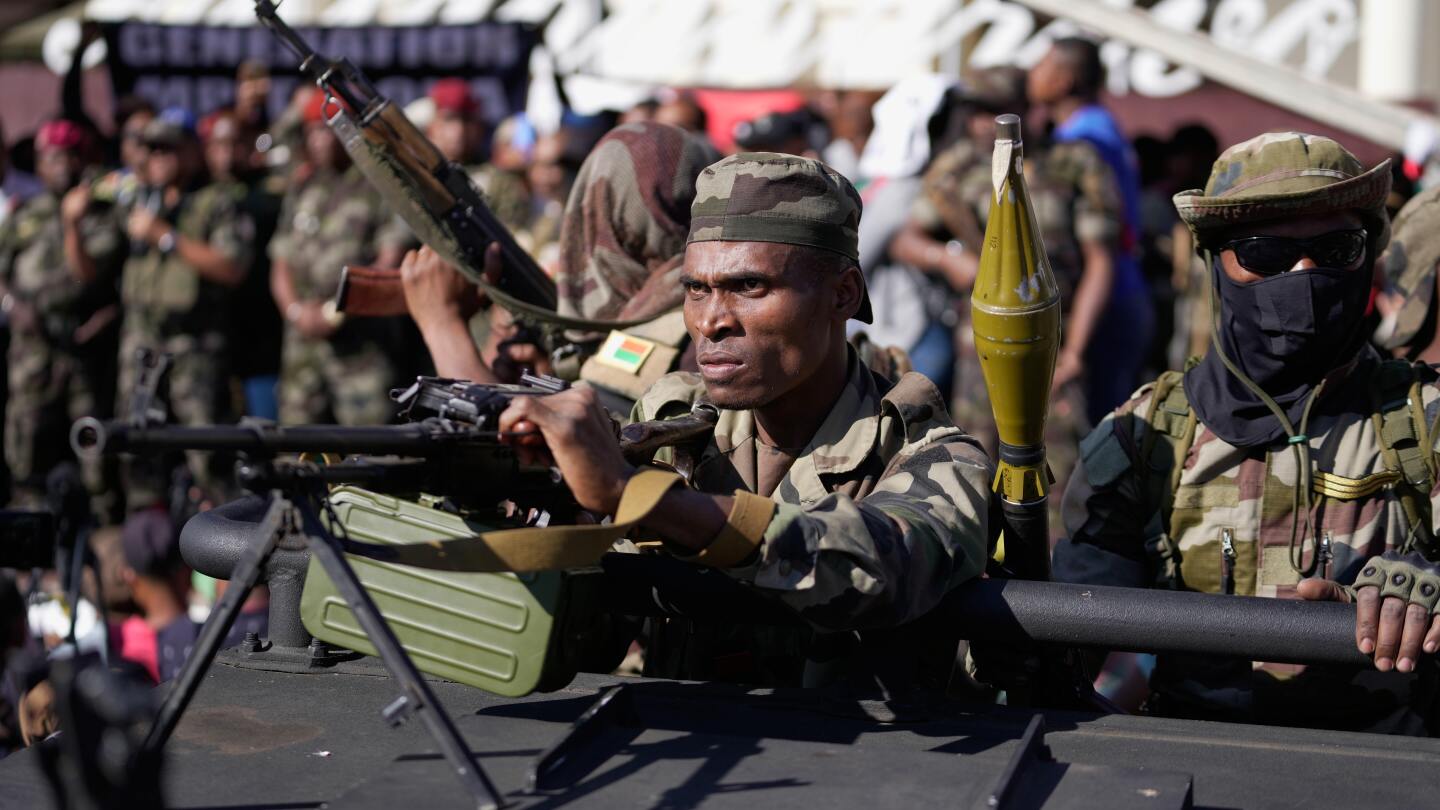
ANTANANARIVO, Madagascar — The Indian Ocean island nation of Madagascar has witnessed a dramatic shift in power as the military staged a coup, ousting President Andry Rajoelina, who has since fled the country. This political upheaval marks a significant chapter in the history of the former French colony off Africa’s east coast. Below is a detailed timeline of the events leading to the military takeover:
**September 25: Youth Protests Erupt**
Thousands of young Madagascans, frustrated by chronic water and power shortages, took to the streets to protest against the government. Security forces responded with tear gas and rubber bullets, escalating tensions. The movement, dubbed ‘Gen Z Madagascar,’ gained momentum online, with their Facebook page amassing over 100,000 followers. Nighttime curfews were imposed in the capital, Antananarivo, and other major cities.
**September 29: President Dissolves Government**
In an attempt to quell the unrest, President Rajoelina dismissed his prime minister and the entire Cabinet, claiming to address the grievances of the youth. However, the protests expanded, fueled by broader concerns such as the rising cost of living, unemployment, and allegations of corruption and nepotism. The United Nations reported at least 22 fatalities during the initial protests, attributing the violence to the security forces’ harsh crackdown on what began as peaceful demonstrations.
**October 8: President’s Offer Rejected**
Rajoelina called for dialogue, inviting youth protesters and civic groups to talks. However, the protesters rejected the offer, vowing to continue their demonstrations and refusing to engage with a government they accused of killing its own citizens.
**October 11: Military Rebellion**
The crisis reached a turning point when an elite military unit rebelled against Rajoelina, joining the protesters. Led by Colonel Michael Randrianirina, the soldiers marched with demonstrators to a key square in Antananarivo, historically significant for past uprisings. Randrianirina declared his unit’s refusal to suppress the protests and called for Rajoelina’s resignation, earning cheers from the crowd. Rajoelina’s whereabouts remained unknown.
**October 12: Coup Leader Asserts Authority**
Randrianirina began consolidating power, claiming control over Madagascar’s armed forces and appointing a new military general. The defense minister’s acceptance of this move signaled Randrianirina’s growing authority. Rajoelina broke his silence, denouncing the military’s actions as an ‘illegal attempt to seize power,’ but his location remained undisclosed.
**October 13: President Speaks from Hiding**
Rajoelina addressed the nation via social media, revealing he had fled Madagascar after learning of an assassination plot. He asserted his legitimacy as the country’s leader and called for constitutional adherence but provided no details about his location.
**October 14: Military Announces Takeover**
Rajoelina attempted to dissolve parliament to prevent his impeachment, but lawmakers ignored his decree and voted overwhelmingly to remove him from office. Shortly after, Randrianirina, flanked by soldiers, announced the military’s assumption of power. He declared that a military council would govern the country for at least 18 months before new elections.
**October 15: Randrianirina to Assume Presidency**
Randrianirina confirmed he would assume the presidency and planned to take the oath of office at the country’s highest court. This move solidifies the military’s control over Madagascar, marking a new era in the nation’s political landscape.