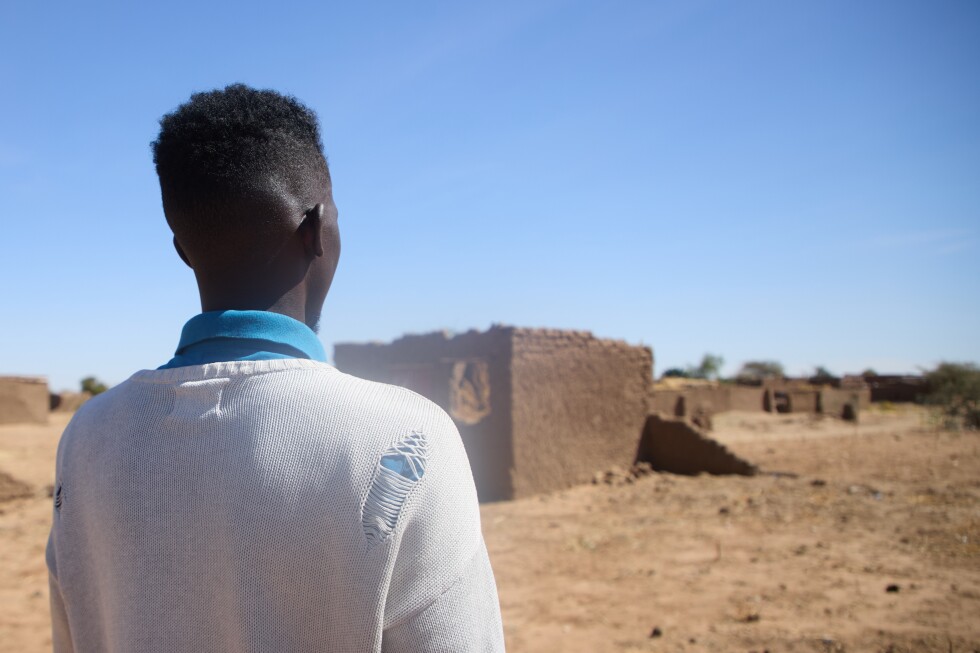
A chilling firsthand account from a Sudanese physician reveals the horrific human toll of paramilitary forces seizing control of el-Fasher, the Sudanese army’s final bastion in the Darfur region. Dr. Mohamed Ibrahim, 28, provided The Associated Press with a detailed testimony of his three-day escape through the burning capital of North Darfur province amid continuous bombardment and widespread civilian targeting.
The assault, launched by the militant Rapid Support Forces (RSF) on October 26, transformed the strategically significant city into what United Nations officials now describe as a ‘massive crime scene.’ According to UN assessments, approximately 60% of el-Fasher’s 260,000 residents remain unaccounted for, with thousands confirmed dead and many more wounded during the offensive.
Three months after the attack, humanitarian organizations report the city stands largely deserted, with Doctors Without Borders characterizing it as a ‘ghost town’ during their recent assessment. International Criminal Court Deputy Prosecutor Nazhat Shameem Khan has declared that war crimes and crimes against humanity were committed during the RSF’s siege, describing the emerging picture as ‘appalling.’
The prelude to the attack traces back to the 2021 military coup that toppled Sudan’s civilian government, after which the RSF—descended from the notorious Janjaweed militias—transitioned from government allies to rivals. By October, the RSF had completely surrounded el-Fasher, creating severe food shortages that forced civilians to consume animal fodder.
Dr. Ibrahim, who remained at the Saudi Maternity Hospital—the city’s last functioning medical facility—described working endless shifts with rapidly depleting supplies. When the final assault began, he and a colleague embarked on a perilous journey through the city, witnessing numerous casualties and constantly evading RSF fighters.
After reaching an army base where thousands sought refuge, Ibrahim joined a group attempting to escape to the town of Tawila. Their exodus involved navigating multiple 3-meter-deep trenches constructed by militants, during which several members of their group were killed by gunfire.
The doctors’ ordeal continued when RSF fighters captured them, executed two men in their group, and demanded ransom payments. After severe beatings and negotiations under threat of execution, the physicians secured their release upon payment of $8,000 each—an exorbitant sum in Sudan’s economic context.
Now in Tawila, Dr. Ibrahim remains haunted by his experiences but continues to provide medical assistance to survivors through the Sudanese-American Physicians Association. His account provides rare insight into the systematic violence that has characterized the RSF’s campaign in Darfur, which the Biden administration has labeled genocide.