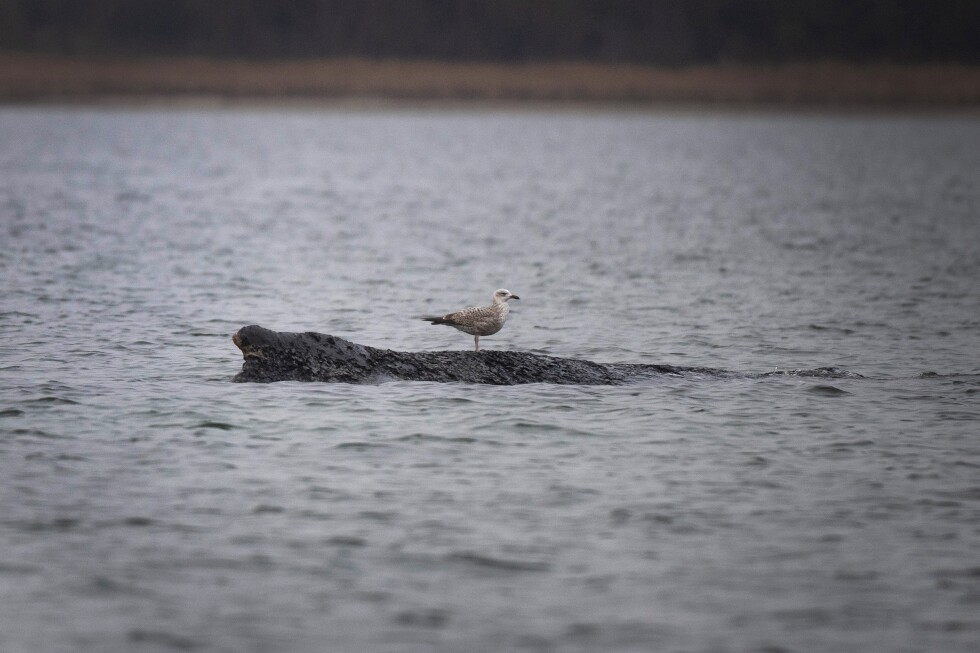
BERLIN — A humpback whale stranded in Germany’s Baltic Sea continues to fight for survival as rescue efforts face mounting challenges. Marine experts report the cetacean’s condition has significantly worsened, with diminishing prospects for a successful return to the Atlantic Ocean despite multiple intervention attempts this week.
Authorities have established a 500-meter restricted perimeter around the weakened marine mammal near the coastal town of Wismar, allowing the creature space to rest and potentially free itself. Environment Minister Till Backhaus of Mecklenburg-Pomerania stated, “The animal would theoretically possess the capability to navigate back to open waters if it regains strength. However, we must acknowledge its visibly weakened state and apparent illness, potentially including injuries from fishing net entanglement.”
The 12-15 meter whale initially captured national attention when rescue teams employed excavators and boats to generate directional waves, attempting to dislodge it from sandbanks at Timmendorfer Strand beach and Wismar Bay. The operation generated widespread media coverage and public engagement, with Germans following live streams and exchanging updates about the rescue mission.
Scientific observations now indicate concerning behavioral changes. Stefanie Groß of the University of Veterinary Medicine Hannover’s Institute for Terrestrial and Aquatic Wildlife Research noted, “The animal demonstrates markedly reduced activity with significantly decreased respiratory rates. It remained unresponsive even during close observation approaches.”
Marine biologists speculate the whale likely entered the Baltic Sea while pursuing herring shoals or during migration, as its characteristics suggest a male specimen. The Baltic’s lower salinity concentration has already caused dermatological issues, and the environment cannot provide adequate nutrition despite whales’ ability to survive weeks without feeding.
Survival depends on navigating approximately 500 kilometers through narrow straits to reach the North Sea and ultimately the Atlantic. Burkard Baschek, director of the German Maritime Museum in Stralsund, characterized the journey as “a real bottleneck with relatively slim success probabilities.”
First spotted in the Baltic on March 3, the whale’s stranding was reported last week, initiating the ongoing rescue operation that now faces increasingly unfavorable odds.