African heads of state convened in Addis Ababa for their annual summit this weekend, facing a transformed global landscape where the continent’s strategic positioning requires urgent reassessment. The gathering occurs amidst a fundamental shift in international relations characterized by the decline of multilateralism and the ascendancy of great-power politics.
This geopolitical transformation has been accelerated during President Donald Trump’s second term, marked by a distinct ‘America First’ approach that explicitly prioritizes Western hemisphere interests alongside Middle Eastern concerns, inevitably reducing Africa’s prominence in US foreign policy. The updated White House security strategy openly acknowledges that not every global region can receive equal attention, compelling African nations to reconsider their traditional reliance on international institutions like the UN, World Bank, and WTO.
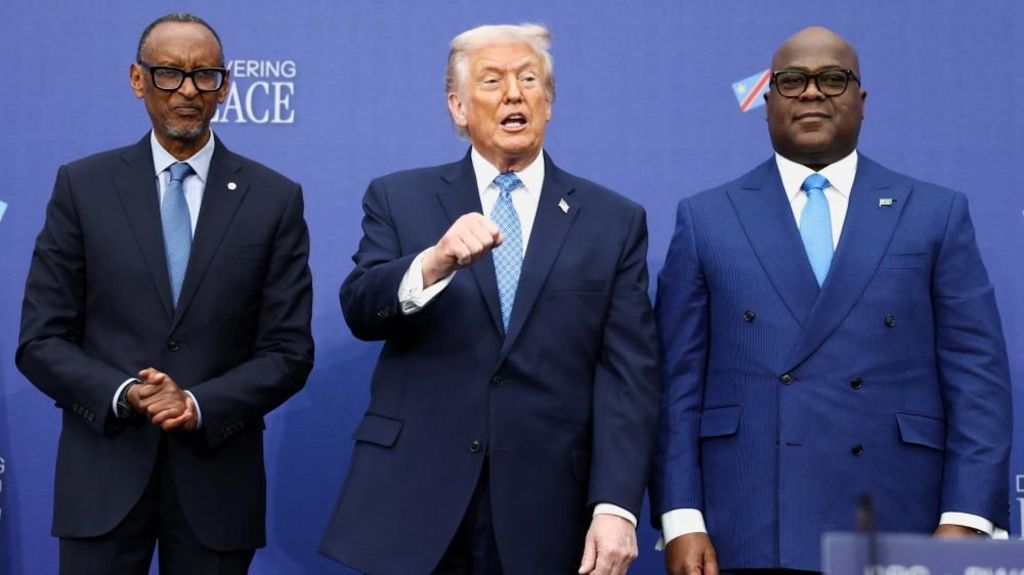
The policy contrast with the previous administration is stark. While President Joe Biden declared in 2024 that the United States was ‘all-in on Africa’s future,’ his actual engagement proved limited with just one brief presidential visit to sub-Saharan Africa during his final month in office. The current administration has adopted a more transactional, bilateral approach focused primarily on securing mineral resources critical for electronic manufacturing, as demonstrated by December’s agreement with the Democratic Republic of Congo.
Peter Pham, former US special envoy to Africa, defends this realistic approach: ‘There’s no way any country, even a superpower, can be all things to everyone. We must steward our resources to achieve optimal outcomes for American citizens and our partners.’ However, critics like Georgetown University’s Ken Opalo warn that bilateral deals weaken Africa’s bargaining position, potentially leading to unfavorable terms that prioritize American corporate interests over comprehensive economic cooperation.
The strategic vacuum extends beyond economic matters. Africa’s inability to resolve conflicts like Sudan’s civil war—now labeled the world’s worst humanitarian crisis—demonstrates limited continental agency. Various global powers including Russia, Turkey, UAE, and Iran have been accused of supplying weapons to warring factions, further complicating resolution efforts.
Ghana’s President John Mahama has emerged as a vocal advocate for continental self-reliance, declaring at Davos that Africa has ‘lost its sovereignty and was caught in a dependency trap.’ His Accra Reset project promotes coordinated industrialization, skills development, and unified negotiation with external partners. Yet analysts note that implementation challenges persist, including the tension between national and regional interests and the domestic pressures facing potential continental leaders like Nigeria, Egypt, Ethiopia, Kenya, and South Africa.
Despite existing frameworks like the African Continental Free Trade Area and Agenda 2063, progress toward unified action remains slow. As global power dynamics continue evolving, African nations face the pressing challenge of developing coherent strategies to ensure they secure a place at the international table rather than becoming part of the menu.