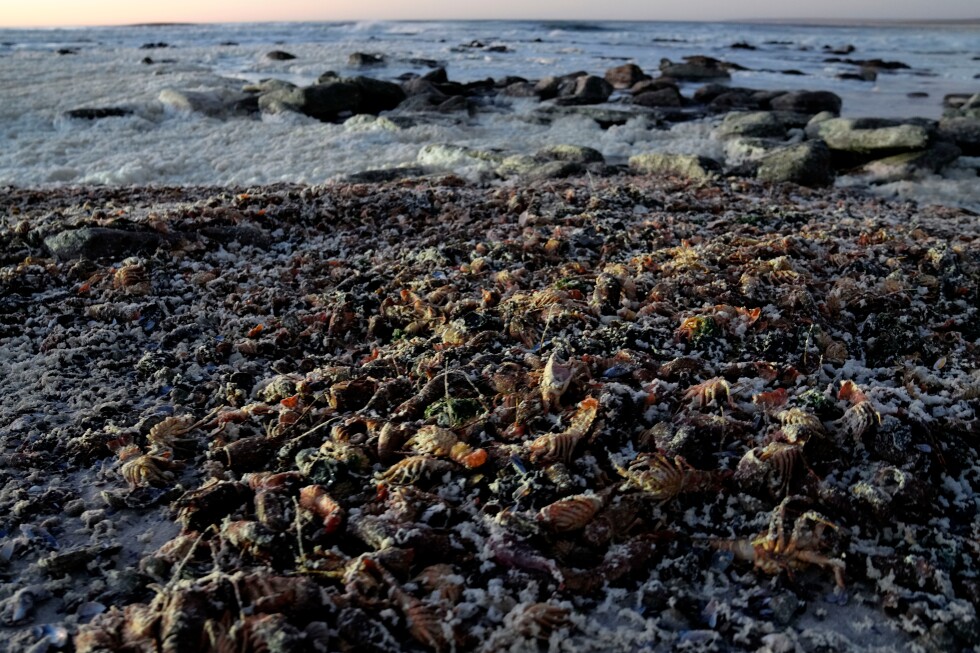
CAPE TOWN, South Africa — An unprecedented ecological crisis is unfolding along South Africa’s western coastline as a massive toxic algae bloom, commonly referred to as a red tide, has triggered catastrophic marine mortality. The event has resulted in extensive die-offs of crayfish (rock lobsters) and various fish species, creating alarming scenes on beaches near Elands Bay, approximately 220 kilometers north of Cape Town.
The Ministry of Forestry, Fisheries and the Environment has issued urgent public health advisories, explicitly warning against harvesting or consuming stranded crayfish due to potentially lethal neurotoxins. Despite these warnings, authorities reported intercepting over 20 individuals attempting to gather the toxic crustaceans from contaminated beaches, prompting deployment of police personnel to enforce safety measures.
Scientifically characterized as a Harmful Algal Bloom (HAB), this phenomenon occurs when microscopic algae undergo uncontrolled proliferation, releasing potent biotoxins that deplete oxygen levels and poison marine organisms. The current outbreak represents one of the most severe red tide events recorded in recent South African history, causing what officials describe as a ‘mass walkout’ event where crayfish instinctively abandon toxin-saturated waters only to perish on shorelines.
Environmental response teams are conducting emergency operations to rescue surviving marine organisms and safely dispose of decomposing carcasses. The incident highlights growing concerns about increasing frequency and intensity of algal blooms potentially linked to climate change and coastal water pollution, with significant implications for local biodiversity and fishing communities reliant on marine resources.