What started as an ironic reclamation of a dismissive judicial remark has rapidly grown into one of the most formidable grassroots challenges to India’s ruling Hindu nationalist government in recent memory. Led by disillusioned young people and centered on long-simmering anger over systemic failures, the self-named “Cockroach Movement” has evolved from a viral online joke into a mass campaign demanding sweeping political accountability and institutional reform.
The spark that ignited the movement traces back to widespread public outrage over repeated alleged leaks of India’s most competitive entrance examinations — tests that serve as the only gateway to stable medical careers and coveted government jobs for millions of working-class and middle-class Indians. When paper leaks are exposed, authorities are forced to cancel or re-administer exams, leaving dedicated students who have spent months or even years preparing facing shattered plans and crippling uncertainty. The crisis boiled over in May this year, during an unrelated court hearing, when Supreme Court Chief Justice Surya Kant compared unemployed young job seekers to “cockroaches.”
The offensive remark immediately sparked a fierce online backlash. Abhijeet Dipke, a Boston University Indian student, seized on the moment to launch what he called the “Cockroach Janta Party” — or Cockroach People’s Party. Instead of rejecting the insult, young people across India embraced it, rebranding the cockroach as a symbol of their resilience, adaptability, and ability to survive and spread despite systemic efforts to suppress them. The movement went viral almost overnight, racking up more than 21 million followers on Instagram within just a few days. Supporters flooded social media with biting memes, satirical mock campaign slogans, and sharp commentary calling out Prime Minister Narendra Modi’s government over soaring youth unemployment, limited economic opportunity, and mounting cost-of-living pressures.
In June, the movement shifted from online organizing to in-person action after Dipke returned to India from the United States. He began organizing public rallies across major cities and university campuses, drawing hundreds of early participants. A planned sit-in at New Delhi’s iconic Jantar Mantar, the city’s most well-known historic protest site, quickly captured national attention. From the start, the movement laid out three clear core demands: the resignation of Education Minister Dharmendra Pradhan, sweeping reforms to India’s broken examination system, and financial compensation for the families of students who died by suicide in the aftermath of recent paper leak crises.
What began as a small daily gathering of a few hundred people at the New Delhi sit-in quickly swelled into thousands of participants. The movement gained even more momentum when prominent Indian activist Sonam Wangchuk joined the protest and launched a hunger strike that has stretched on for more than three weeks. Over the weekend, police forcibly removed Wangchuk from the protest site and transferred him to a hospital, a move that amplified public anger toward the government.
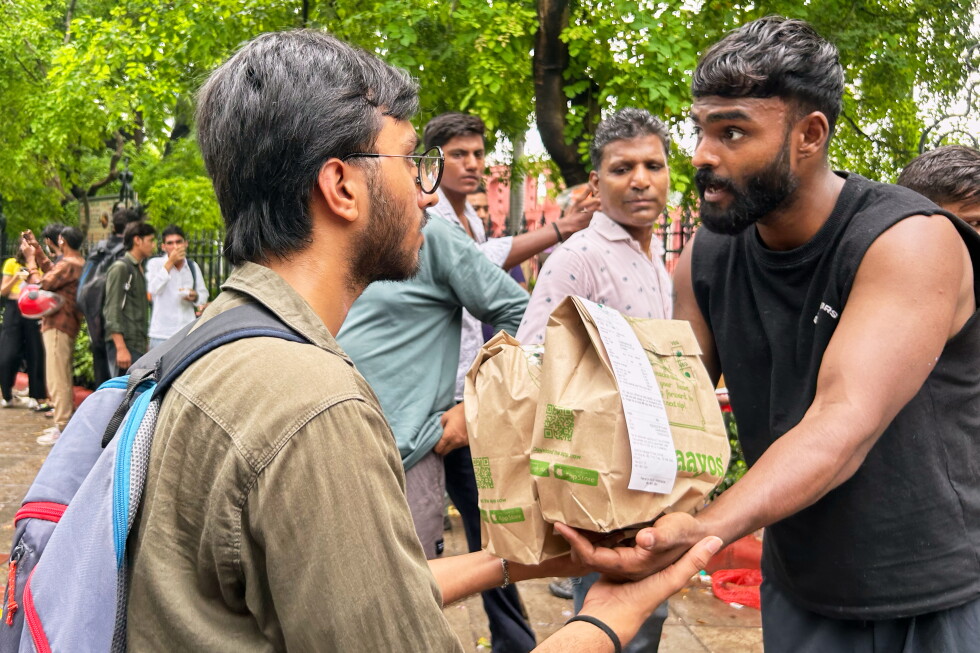
As turnout has grown, the protest has expanded far beyond its original focus on student and examination issues to embody widespread, cross-sectional frustration over government accountability and collapsed prospects for India’s younger generation. Many participants report they have lost all trust in core national institutions, including the education system, political leadership, the judiciary, and mainstream media. Unlike traditional protest movements, the Cockroach Movement has drawn support from a broad coalition that extends far beyond its core student base, including working professionals, working-class families, and retirees. Across the country, supporters have leveraged food delivery apps to send free meals to protesters at demonstration sites, and the movement’s decentralized, non-partisan structure has broadened its appeal: no major traditional political party controls the campaign, and volunteers self-fund their own travel and activities, relying almost entirely on social media to mobilize participants.
As the movement has grown in size and influence, the Modi government’s response has shifted from outright rejection to cautious outreach, marked by escalating confrontation. Initially, the administration refused to open any talks with protesters. Pradhan, the education minister at the center of the movement’s demands, accused participants of working against national interests and argued the paper leak crisis had already been resolved by the government’s order for fresh examinations. That stance only shifted after the movement escalated its actions. On Monday, as Indian lawmakers returned for the annual monsoon parliamentary session, thousands of protesters attempted to march to Parliament House and push through police security barricades. Security forces responded with tear gas and baton charges to disperse the crowd.
The violent police crackdown sparked widespread public condemnation, forcing the government to make its first visible overture to the movement: a senior government minister met with movement representatives, but the talks failed to produce any concessions or de-escalate tensions. Pressure on the government grew further the next day, when leading opposition leader Rahul Gandhi staged a public sit-in outside Prime Minister Modi’s official residence, catapulting the Cockroach Movement to the center of national political debate. Under growing pressure, Pradhan released a statement saying the government was committed to “addressing every genuine concern of our youth” during the current parliamentary session, but declined to comment on whether he would step down — the movement’s longest-standing core demand.
Political analysts say the movement’s rapid, unplanned spread across demographic groups signals deepening discontent among India’s young population, fitting into a wider regional trend across South Asia, where youth-led movements have emerged as a leading force for anti-government change in recent years. Though India’s fragmented opposition parties have been unable to mount a coordinated challenge to Modi, and space for public political criticism has narrowed significantly under his administration, the ruling Bharatiya Janata Party now faces an unprecedented challenge: a decentralized, leaderless movement of young disaffected voters, rather than a traditional organized political opposition.
Opposition parties and human rights activists have already rallied behind the movement, framing it as a broader fight for democratic accountability and the preservation of the right to peaceful protest. For India’s fragmented opposition, the movement has created a powerful new platform to expand appeal among young voters and challenge the Modi government across key ideological lines. With an estimated 350 million Indian voters under the age of 35 — including more than 15 million first-time voters set to cast ballots in upcoming national and state elections — India’s youth represent one of the most crucial voting blocs in the country. The growing frustration channeled through the Cockroach Movement could have far-reaching political consequences for India’s ruling establishment in coming electoral cycles.