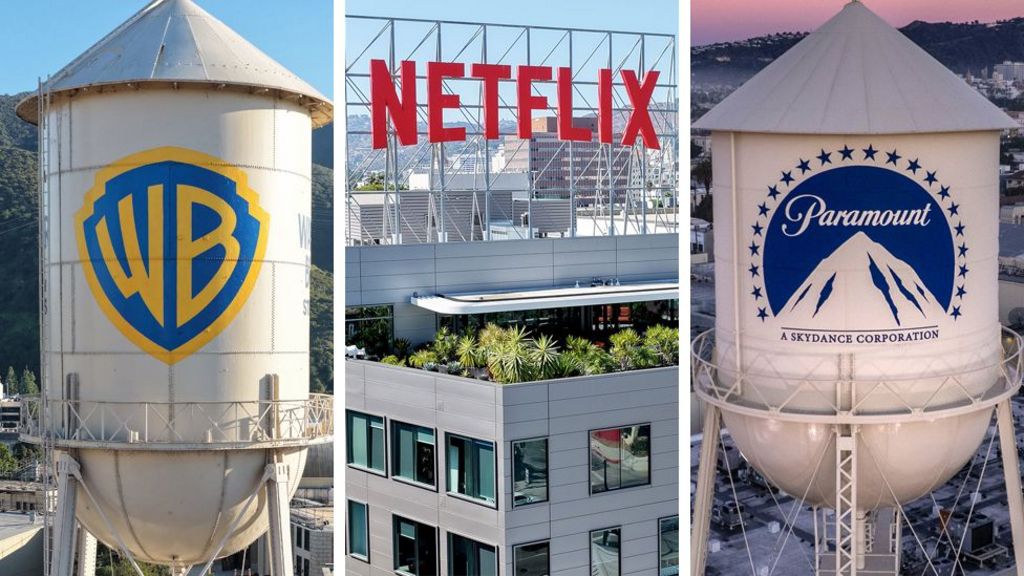
Hollywood’s creative community characterizes the impending sale of Warner Bros as nothing short of catastrophic, with industry professionals bracing for substantial job losses and fundamental structural changes. The historic studio, responsible for cinematic landmarks from Casablanca to the Harry Potter franchise, now finds itself at the center of a fierce bidding war between streaming giant Netflix and Paramount Skydance.
The potential acquisition represents the latest seismic shift in an industry still reeling from pandemic-era disruptions and the 2023 labor strikes. Warner’s decline has triggered widespread concern throughout Hollywood, where many view the situation as choosing between two problematic outcomes: domination by a tech company accused of undermining theatrical exhibition (Netflix) or control by billionaires with perceived political affiliations (Paramount).
Financial dimensions of the competing offers reveal the stakes involved. Netflix seeks to acquire Warner’s most valuable assets—the 102-year-old studio, HBO, and its extensive content library—while leaving legacy television networks like CNN and TNT Sports for separate acquisition. Conversely, Paramount Skydance’s $108 billion hostile takeover bid includes backing from Saudi Arabia, Abu Dhabi, Qatar, and a fund established by Jared Kushner, raising concerns about potential censorship and government influence.
Industry criticism has increasingly focused on Warner Bros Discovery CEO David Zaslav, who received $51.9 million in compensation last year while the company lost over $11 billion and its stock value declined nearly 7%. Multiple industry professionals compared his leadership style to the fictional Gordon Gekko character from Wall Street, accusing him of prioritizing shareholder returns over institutional legacy.
The company defended Zaslav’s tenure, noting through communications head Robert Gibbs that under his leadership, Warner has “regained its leadership position with a unique slate of films,” relaunched the DC Universe with a coherent ten-year plan, and achieved global profitability for its streaming service.
Beyond the corporate maneuvering, the human impact continues to mount. Interviews with dozens of industry professionals reveal an workforce grappling with existential uncertainty. One actor, now homeless with his family, described waking up daily “feeling like I’ve failed in every direction,” while still expressing preference for Netflix ownership over foreign investment.
The industry’s fundamental contradictions remain unresolved. Netflix has attempted to calm concerns by pledging to maintain theatrical releases, yet many exhibitors remain skeptical given the company’s streaming-first history. As one producer noted, “At least with Paramount, we know movies will make it to the big screen. They didn’t kill movie theatres.”
Amid the uncertainty, some find hope in Netflix’s restoration of Hollywood’s historic Egyptian Theatre, viewing it as a gesture of commitment to cinematic tradition. Meanwhile, on Warner’s backlot, tourism continues unabated, and those still employed maintain business-as-usual attitudes, with one veteran producer noting they’ve “gone through seven mergers” and believe quality content will ultimately find its market regardless of corporate ownership.