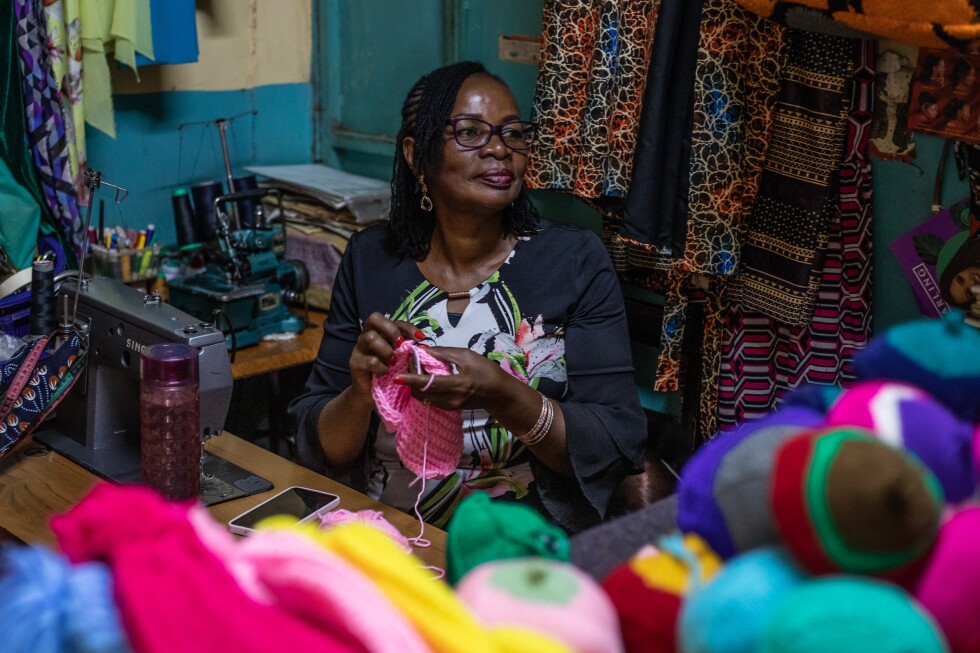
In the Kenyan town of Thika, a remarkable story of resilience and compassion unfolds as breast cancer survivor Mary Mwangi transforms lives through an unexpected medium: knitted prostheses. What began as personal therapy during her recovery has evolved into a movement restoring dignity to thousands of women who have undergone mastectomies without reconstructive surgery.
Following her cancer diagnosis, Mwangi initially anticipated the worst. However, during recovery, she discovered that knitting provided not just distraction but profound therapeutic value. In 2017, she began creating hats and scarves before encountering another woman crafting breast prostheses. This inspired her to establish the New Dawn Cancer Warriors collective, where survivors now produce affordable alternatives to expensive silicone implants.
These hand-knitted prostheses, priced at just $10 per breast—approximately one-sixth the cost of silicone options—represent a critical innovation in a country where breast cancer constitutes the most frequently diagnosed cancer among women. With approximately 6,000 new cases identified annually in Kenya, and 40% of the population living below the poverty line, accessible solutions are desperately needed.
The prostheses consist of yarn exteriors filled with pillow-soft fiber, providing comfort and natural appearance beneath clothing. For many Kenyan women who previously resorted to stuffing bras with clothing material, these creations represent both physical normalcy and emotional restoration.
Nancy Waithera, a high school science teacher, described her diagnosis as making “everything turn dark,” particularly following her husband’s recent death. Discovering Mwangi’s prostheses before her surgery provided crucial psychological preparation. “My dignity was restored,” Waithera affirmed after wearing her prosthesis to church for the first time.
Medical experts confirm the significance of such initiatives. Surgeon Daniel Ojuka from Kenyatta National Hospital cancer treatment center notes that mastectomy remains the most affordable option for most Kenyan women, as reconstructive surgery isn’t covered by national health insurance. The emotional impact of waking post-surgery is profound, with many patients experiencing severe distress.
Beyond physical products, Mwangi’s collective provides community support that proves vital for recovery. Member Eglah Wambui emphasized knitting’s therapeutic benefits, noting how it redirects focus from disease to creation. The community aspect addresses concerning mental health challenges; Wambui recalled one woman who tragically took her own life during treatment due to depression.
Having distributed over 600 prostheses in three years through organizational partnerships, Mwangi’s group demonstrates how grassroots innovation can address healthcare gaps. More importantly, it spreads a crucial message: “There is life after cancer, and cancer is not a death sentence,” Mwangi declares. “I’m a living testimony.”