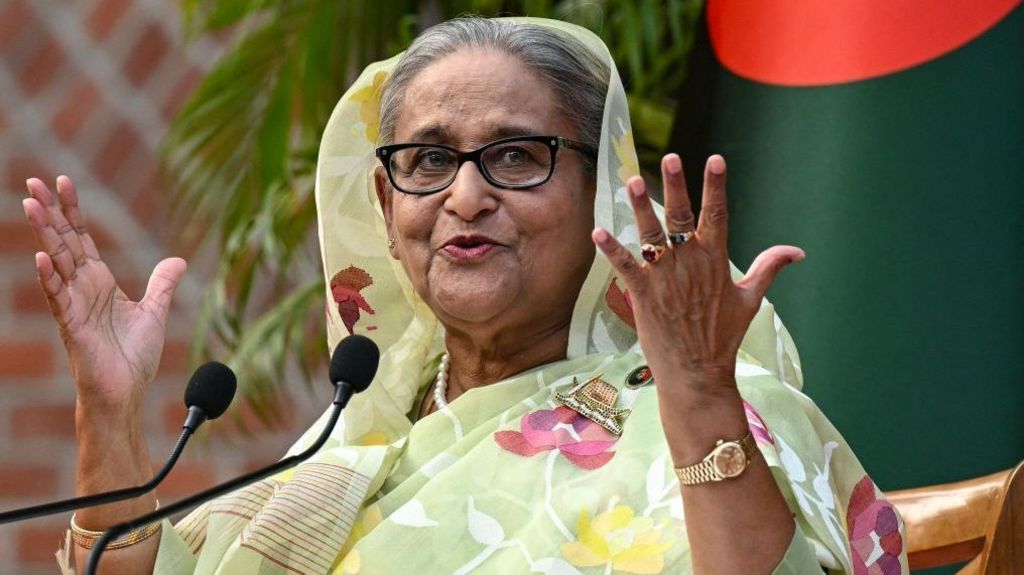
Nearly four months after fleeing to India in August 2024 amid a mass student-led uprising that ended her 15-year authoritarian rule, 79-year-old ousted Bangladeshi prime minister Sheikh Hasina has publicly named 16 December — Bangladesh’s national Victory Day, marking the 1971 liberation war triumph over Pakistan — as her official homecoming date, laying out multiple potential travel routes that have jolted the interim Dhaka administration and strained already tense bilateral ties between Bangladesh and India.
A spokesperson for Hasina confirmed the announcement, noting her planned itinerary ranges from requesting the Dhaka government arrange a direct repatriation flight from New Delhi, to booking a commercial air ticket, crossing one of nine pre-identified land border points across the 4,096-kilometre shared border spanning five Indian states, or even walking across the frontier if all other options fall through. Her top aide Abu Obaidha Arin emphasized the plan is deliberate and fully resourced, claiming the exiled Awami League, which has been formally banned inside Bangladesh, can mobilize up to five million supporters to form a human chain greeting her along the route from the border to the capital Dhaka.
The current BNP-led elected government in Dhaka has responded with uncompromising defiance. State Minister for Foreign Affairs Humaiun Kobir told local reporters that Hasina, convicted in absentia on crimes against humanity charges linked to a crackdown that the UN estimates killed 1,400 people during the 2024 uprising, will be arrested immediately upon crossing into Bangladeshi territory to face her already issued death sentence, rejecting any voluntary return as a regular passenger. Dhaka has formally submitted an extradition request to India, which New Delhi’s foreign ministry confirmed is being reviewed through established legal channels, while clarifying that any voluntary return by Hasina would constitute a separate, distinct matter outside the extradition framework.
From her exile in New Delhi, Hasina has spent the past months sustaining the banned Awami League’s organizational network via more than 300 multi-hour interactive Telegram audio sessions that reach party activists across all 64 of Bangladesh’s districts and 300 parliamentary constituencies, even as thousands of party members face arrest and criminal charges at home. In recent months, scattered flash protests organized by remaining Awami League supporters have escalated into widespread unrest: data from conflict monitoring group ACLED records 40 formal demonstrations and over 140 riot incidents up to 23 November, including targeted arson on police stations, torching of ruling BNP leaders’ properties, and highway blockades using felled trees and burning tyres, with at least 11 people killed in related political violence this month alone. Hasina’s ancestral district of Gopalganj has proven particularly ungovernable for security forces, who have partially withdrawn from some local areas to avoid further casualties.
Political analysts in Dhaka widely view Hasina’s high-profile return announcement as a calculated strategic move rather than a simple personal homecoming plan: it aims to test the current government’s authority, force the long-taboo topic of the Awami League back into mainstream national political discourse, and exploit growing rifts between the ruling BNP and its former uprising allies Jamaat-e-Islami and the youth-led National Citizen Party over proposed constitutional reforms under the July Charter and upcoming national referendum. While many local observers remain sceptical Hasina will actually risk returning to face execution, the campaign has already successfully reversed the Awami League’s near-total political erasure that followed her ouster.
The unfolding crisis has also pushed long-simmering tensions between India and Bangladesh to a breaking point. Despite New Delhi’s extensive diplomatic outreach to the new Dhaka administration — including appointing a cabinet-rank high commissioner and offering new rounds of talks on trade and border security — newly inaugurated Prime Minister Tarique Rahman has still not made a formal visit to India 10 months into his tenure, after a planned August 2024 trip was derailed by a public political press conference Hasina held on Indian soil. Key bilateral agreements including the expiring Ganges water sharing treaty and long-awaited transit access for Bangladeshi garment exporters remain stalled, with only tourist and medical visa services restored to date.
Leading South Asia politics scholar Avinash Paliwal of SOAS University of London notes that Hasina’s latest return announcement has shifted the full burden of resolving the impasse to the Dhaka government, rather than New Delhi. He argues India no longer sees value in restraining Hasina’s political activities, as bilateral relations appear unlikely to improve significantly regardless of New Delhi’s actions, and that long-term Indian interests are better served by supporting political reconciliation in Bangladesh that rehabilitates the Awami League under new leadership to restore balance to the country’s political ecosystem. Independent Dhaka foreign policy experts warn that the lead-up to 16 December will bring widespread unrest and heightened public anxiety across the country, with no clear resolution in sight until either Hasina returns to Bangladesh or the two nations restart formal bilateral negotiations to untangle the overlapping domestic and diplomatic crisis.