After months of protracted negotiations, Turkish Transport Minister Abdulkadir Uraloglu confirmed to Middle East Eye that Ankara and Baghdad have ironed out all remaining hurdles to secure financing for the landmark 12,000-kilometer Iraq Development Road, with a formal signing targeted before the close of 2024. Uraloglu made the announcement immediately following high-level bilateral talks in Baghdad on Wednesday, where he met with his Iraqi counterpart and a cohort of senior national officials to lock in final terms for the $16 billion infrastructure initiative.
First unveiled in May 2023 as a transformative “dry canal” alternative to maritime shipping lanes, the Development Road is designed to connect Iraq’s Grand Faw Port in Basra directly to Turkey’s national transport networks and onward to European markets via integrated high-capacity road and rail corridors, with planned extensions for cross-border energy pipelines and fiber-optic data links. The project has navigated a series of setbacks since its public launch: initial funding pledges from original regional partners including the United Arab Emirates and Qatar fell through, forcing both governments to pursue alternative financing frameworks to keep the initiative alive.
The breakthrough solution, a Turkish-devised oil-for-construction mechanism, will see Iraq export between 130,000 and 150,000 barrels of crude oil per day to Turkey, with all associated revenue deposited in a designated Turkish public bank. A joint Iraqi-Turkish consortium will oversee the dedicated fund, disbursing payments directly to construction contractors only upon verified completion of pre-agreed project milestones, a structure modeled on Turkey’s past public-private partnership work with the European Union. This framework is engineered to eliminate reliance on high-interest foreign commercial loans, insulate payment flows from volatility in Iraq’s national public finances, and reduce the risk of project disruption stemming from routine government turnover in Baghdad. Uraloglu noted the two nations intend to prioritize the railway component of the network, which will run full fiber-optic cabling along its entire length to create a dedicated high-speed data corridor linking Basra directly to Turkish digital infrastructure.
The minister added that both governments are targeting a formal signing of the finance deal as early as next month, with full construction completion projected within a four-year timeline. Iraqi leadership has already proposed a public groundbreaking ceremony in January 2025, with Turkish President Recep Tayyip Erdogan in attendance to mark the launch.
The path to this final agreement was far from smooth. Since 2023, repeated changes in Iraq’s prime ministerial office and turnover among ministerial portfolios overseeing the infrastructure portfolio brought the Development Road perilously close to cancellation, with critics noting no tangible on-ground progress had been made in three years of planning. A high-profile diplomatic misstep occurred during Iraqi Prime Minister Ali al-Zaidi’s July visit to Ankara, when Iraqi Transport Minister Wahab al-Hassani notably skipped a scheduled MoU signing ceremony, leaving Turkish President Erdogan visibly confused; Zaidi ultimately intervened to secure the signing over an official dinner, after it emerged that Iraqi Kurdish opposition to the originally proposed route, which largely bypasses the Kurdistan Regional Government (KRG) to reach the Turkish border near Ovakoy, had triggered the last-minute hesitation.
Recent regional geopolitical shocks have added new urgency to the project’s execution. Escalating tensions between the U.S. and Iran have created a critical choke point in the Strait of Hormuz, the maritime route that carries 80% of Iraq’s total crude exports, putting Baghdad’s core national revenue stream at severe risk of disruption. As regional Iraq Development Road specialist Mehmet Alaca explained to MEE, the Hormuz crisis served as a “wake-up call” for Prime Minister Zaidi, pushing his administration to prioritize cross-border connectivity projects to diversify Iraq’s export routes away from vulnerable chokepoints.
Significant unresolved challenges remain, however. A recent Iraqi constitutional court ruling has seen Zaidi’s government demand the KRG cede full control of its border crossings and hand over operations of oil fields in territories classified as disputed under Iraq’s national constitution, sparking fresh political tensions between Baghdad and Kurdish authorities. Alaca noted that the standoff has raised the risk of wider conflict, though there is room for negotiated compromise on the Development Road’s route: Ankara has indicated it is open to minor adjustments to the main railway alignment, as well as the addition of spur links connecting the core line to stations in Iraqi Kurdistan, though final decision-making authority over any route changes rests exclusively with the Baghdad central government. Senior Turkish officials have emphasized that these Kurdish-related frictions will not derail the project in the long term.
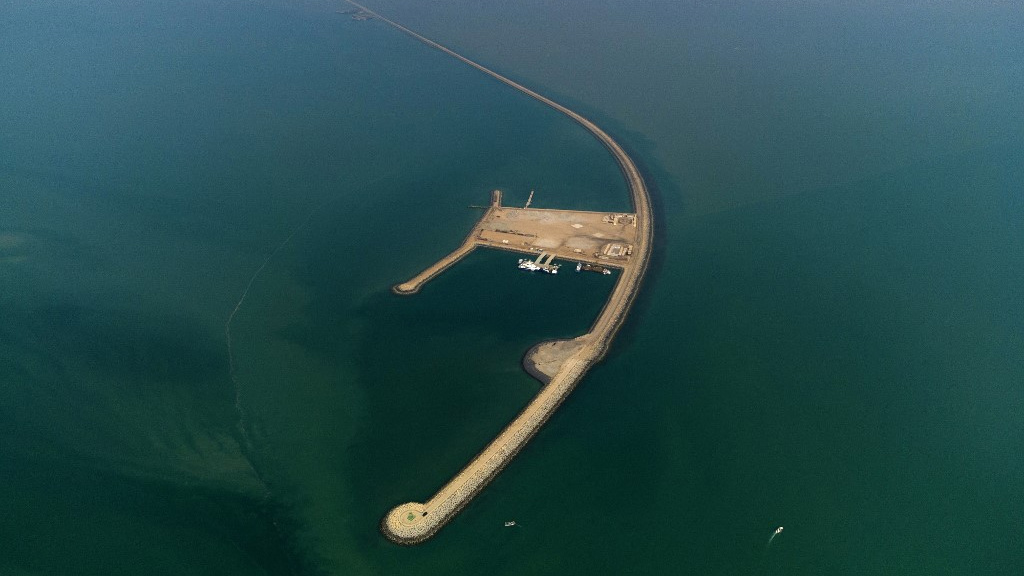
A separate long-running territorial dispute between Iraq and Kuwait over shared land and maritime boundaries has also prompted external questions about the project’s long-term viability, though Uraloglu stressed that both Ankara and Baghdad see no immediate operational barriers, noting that ongoing construction work at the Grand Faw Port is progressing on schedule. He added that Kuwait is also welcome to join the initiative, as the transport corridor would allow Kuwaiti operators to ship their own crude to Turkey over land, creating mutual economic benefits for all participating states. Official government estimates project that the Iraq Development Road will contribute $61.5 billion to the Turkish economy over its first 10 years of full operation, creating an average of 71,000 new jobs annually via the development of new production hubs and logistics centers across the corridor.
Turkey and Iraq close in on oil-for-construction deal to fund $16bn Development Road