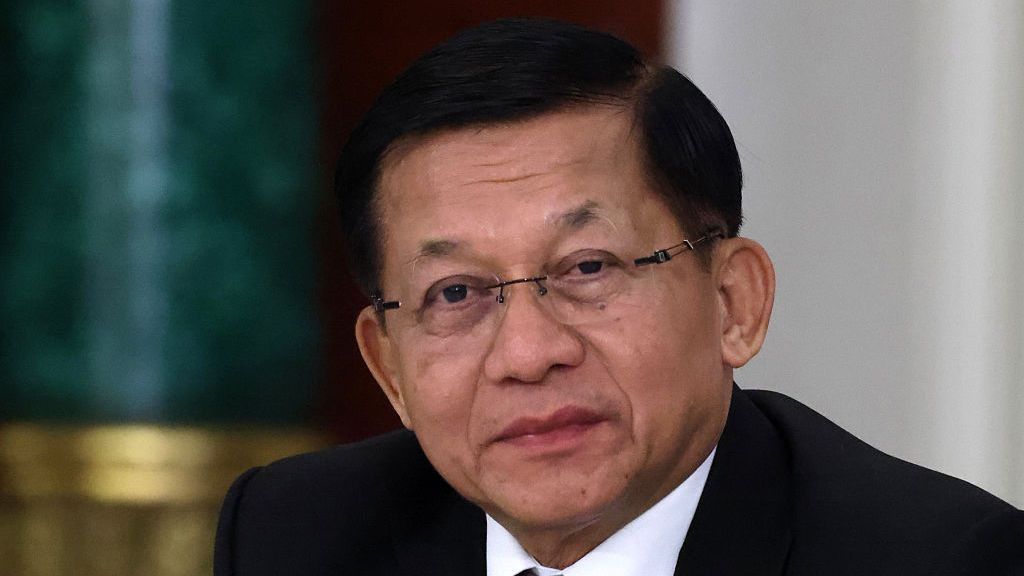
Nearly one week after the International Court of Justice (ICJ) issued a historic ruling finding Myanmar responsible for perpetrating genocide against its Rohingya Muslim minority, the country’s military junta chief Min Aung Hlaing has publicly announced the regime will refuse to adhere to segments of the verdict it deems “inappropriate”.
As documented by Myanmar state media, the coup-installed president made the remarks during a Wednesday closed-door official meeting, marking his first public response to the unprecedented global court decision. Min Aung Hlaing claimed the formal genocide designation had inflicted severe, unwarranted damage on the Southeast Asian nation’s global reputation, and stated his administration would only act in ways it deemed befitting a “responsible sovereign state”, without clarifying which specific clauses of the ICJ ruling it intended to disregard.
The watershed ICJ verdict, delivered via a 9-6 majority vote by the panel of 17 international judges, marks the first time a national government has been formally found in breach of the 1948 Convention on the Prevention and Punishment of the Crime of Genocide. The case was originally filed in 2019 by the West African nation of The Gambia, which brought litigation on behalf of the Rohingya community over the 2017 military “clearance operations” in Rakhine State, a majority-Rohingya region of western Myanmar.
Court investigations confirmed that approximately 10,000 Rohingya civilians were killed in the 2017 crackdown, with over 700,000 people fleeing across the border to Bangladesh via land or sea, and a total of 815,000 Rohingya targeted for violence or displacement. The ruling, which is legally final with no avenue for appeal, also found Myanmar had violated multiple additional provisions of the Genocide Convention, and ordered the regime to cease all ongoing abuses against the Rohingya, launch full criminal investigations into perpetrators of the atrocities, and pay proportional reparations to affected communities, with the exact monetary sum to be determined in subsequent proceedings.
Notably, the ICJ lacks independent enforcement authority, and must rely on the UN Security Council and coordinated global diplomatic pressure to ensure its rulings are implemented. Though the verdict carries limited immediate punitive weight, it has been widely celebrated by Rohingya diaspora communities and global human rights organizations that have spent decades documenting systemic abuses against the minority group.
In the wake of the ruling, more than a dozen national governments have formally endorsed the ICJ decision, with the United Kingdom unveiling new targeted sanctions against multiple senior figures in Myanmar’s ruling military leadership. The junta, which seized power in a 2021 coup that ousted the country’s elected civilian government, has overseen a devastating ongoing civil war that has left the nation a global diplomatic pariah subject to sweeping international penalties. Min Aung Hlaing’s administration has spent years attempting to negotiate re-entry into global diplomatic circles, but remains largely excluded from major multilateral forums and international institutions.
Myanmar refuses to comply with ‘inappropriate’ parts of genocide ruling