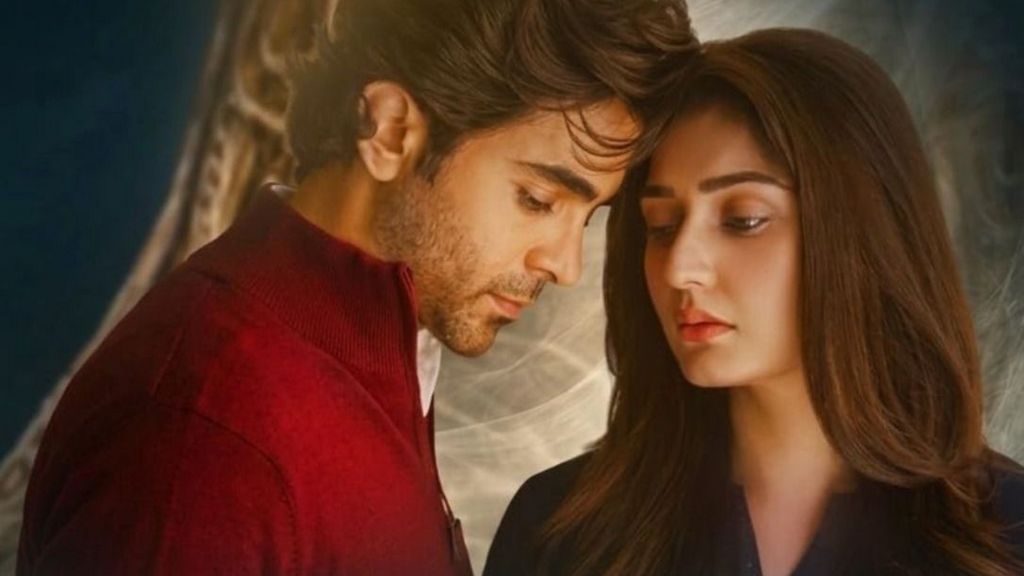
A surge in Indian viewer fascination with Pakistani entertainment has collided headlong with long-simmering cross-border political frictions, as planned public and private screenings of the breakout Pakistani drama *Dar-e-Nijaat* were scrapped across two major Indian cities this week following widespread online backlash and law enforcement scrutiny. The ARY Digital-produced serial, a quiet character-driven story of marital healing, faith, and personal redemption penned by renowned Urdu novelist Umera Ahmed, has amassed a massive cult following on Indian social media, where lead character Abu Bakar’s gentle, compassionate treatment of his wife has turned him into a viral viral “green flag” icon for local audiences. Though the broadcaster’s official YouTube channel is blocked in India, unauthorised uploads of the episodes have circulated widely on third-party platforms, drawing tens of millions of views from Indian fans. Just weeks ago, organisers in Bengaluru had planned two separate fan events: one ticketed restaurant gathering pairing episodes of the show with a Persian and Arabic themed dinner, and a smaller private residential screening that encouraged guests to wear traditional Pakistani attire. A separate fan meetup in Delhi, complete with trivia games and a planned virtual Q&A with the show’s director, had already sparked heated online debate the week prior. But as promotional materials for the Bengaluru events spread across X (formerly Twitter), hundreds of users demanded police intervention, framing the gatherings as insensitive to the families of victims of cross-border militant violence. Both events were subsequently cancelled. The *Dar-e-Nijaat* controversy has dovetailed with a formal lobbying push from the All Indian Cine Workers Association (AICWA), which sent an open letter to Prime Minister Narendra Modi this week calling for a total ban on Pakistan’s first Netflix original series *Jo Bachay Hain Sang Samait Lo* ahead of its December 4 global premiere. Starring beloved cross-border favourites Fawad Khan, Mahira Khan and Sanam Saeed, the production has a massive pre-existing fanbase in India, but AICWA officials argue its release would disrespect the sentiments of communities impacted by terrorism, a longstanding Indian government allegation that Pakistan has consistently denied. The industry body is also pushing for permanent national legislation to bar all Pakistani entertainment content from Indian distribution channels, while Netflix has yet to confirm whether the series will be made available to Indian subscribers. The latest flare-up has reignited a decades-long cultural policy debate in India over whether artistic and cultural ties should be decoupled from volatile geopolitical relations between the two nuclear-armed neighbours, who have maintained fraught ties ever since their 1947 partition from British colonial rule. For generations, shared South Asian cultural heritage has created massive cross-border demand for each other’s media: Pakistani ghazal artists have long held adoring fan bases in India, while Indian Bollywood productions have historically dominated Pakistani box offices. Exchanges flourished notably in the early 2010s, when Pakistani stars Atif Aslam and Rahat Fateh Ali Khan became staple voices in Hindi film soundtracks, and the launch of India’s Zindagi TV channel brought Pakistani serials directly into millions of Indian households, drawing acclaim for their grounded, nuanced depictions of everyday domestic life. By 2016, Pakistani leading man Fawad Khan had become a mainstream Bollywood star, appearing in several top-grossing local productions. That same year, however, a deadly militant attack on Indian security forces in Uri, followed by the 2019 Pulwama bombing, saw formal cultural ties almost completely severed, as both governments imposed sweeping restrictions on each other’s media output. Even as official collaborations collapsed, Pakistani dramas and music continued to reach Indian audiences via informal YouTube uploads and global streaming platforms, until a devastating April 2025 militant attack in Pahalgam, Kashmir that killed 26 mostly tourist civilians triggered a new wave of diplomatic and military escalation. India launched targeted military strikes on alleged militant infrastructure across the border in May 2025, leading to four days of direct armed conflict before a mutual ceasefire was brokered. In the aftermath, the Indian government ordered streaming platforms to remove all Pakistani-origin content, blocked the social media profiles of dozens of Pakistani entertainers, and halted the release of a highly anticipated Bollywood comeback vehicle for Fawad Khan. For months following the clashes, Indian popular media was dominated by nationalist espionage thrillers focused on cross-border security tensions. But in recent months, a quiet, grassroots revival of public interest in Pakistani entertainment has emerged, with viral Pakistani pop tracks and domestic drama series gaining millions of young Indian fans online. Organisers of the scrapped private Bengaluru *Dar-e-Nijaat* screening told local outlets that they had initially planned the small gathering only for close family and friends, and never anticipated that the invitation would leak to social media and be framed as a political statement. Despite the backlash, many Indian viewers continue to defend their right to access Pakistani creative content, arguing that shared cultural narratives transcend ongoing political hostilities.