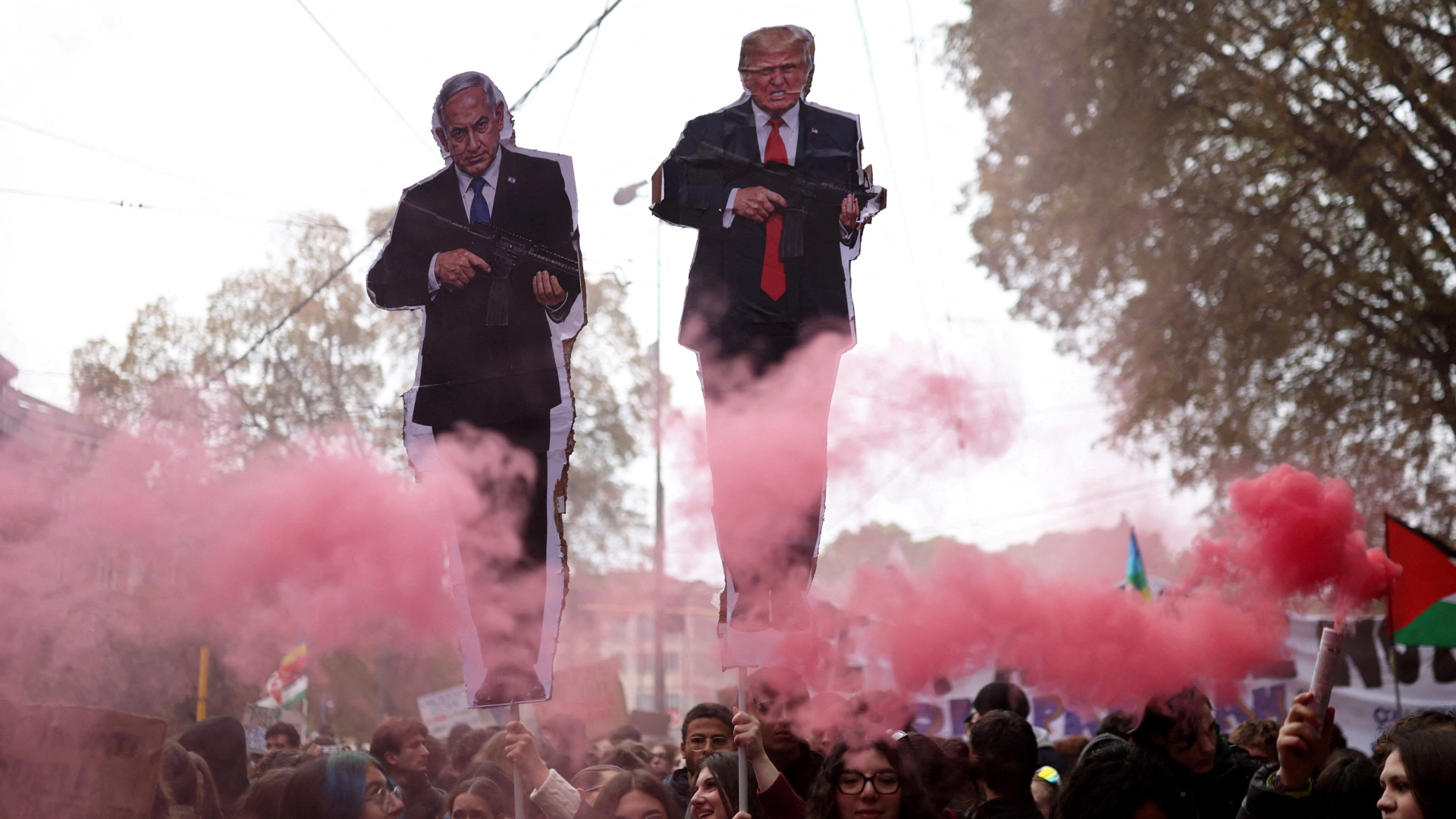
A public discrepancy has emerged between top U.S. diplomatic leadership in Israel and sitting President Donald Trump over the timeline for ending longstanding U.S. military assistance to the Middle Eastern ally. U.S. Ambassador to Israel Mike Huckabee, a former Arkansas governor, self-identified staunch Zionist and evangelical pastor, told attendees at Tel Aviv’s Institute for National Security Studies conference on Tuesday that he does not foresee an abrupt, year-end halt to U.S. aid disbursements to Israel, directly contradicting remarks Trump made earlier this month.
The existing bilateral aid framework is anchored in a 10-year memorandum of understanding running from 2019 through 2028, which allocates $3.8 billion in annual funding: $3.3 billion earmarked for foreign military financing, and an additional $500 million dedicated to collaborative missile defense initiatives. Formal negotiations to replace this current MOU first launched back in May, when Israel’s Ministry of Defense confirmed both nations were exploring a structural shift away from one-sided aid to a mutually beneficial, reciprocal partnership centered on joint research, development, and domestic weapons production on both sides. A non-partisan June report from the U.S. Congressional Research Service, which provides policy guidance to federal lawmakers, corroborated these ongoing talks, noting that officials on both sides were actively mapping a post-2028 transition away from direct military aid toward shared collaborative programs.
Legislative momentum around this restructuring picked up in July, when the Republican-controlled U.S. House of Representatives narrowly passed a $1.5 trillion Department of Defense budget that included a controversial provision embedded in the must-pass National Defense Authorization Act (NDAA). The clause, formally designated Section 219, establishes the United States–Israel Defense Technology Cooperation Initiative, a permanent bilateral framework that would integrate U.S. and Israeli military technological advancement. As former Israeli Prime Minister Benjamin Netanyahu framed the policy, the provision would elevate Israel from its longstanding status as a foreign aid recipient to a full, equal defense partner, binding future U.S. administrations to the collaborative arrangement and preventing unilateral withdrawal by sitting presidents. The initiative mandates three core priorities: identifying jointly developed or Israeli-origin technologies for integration into U.S. military systems, creating cross-border safeguards for sensitive technology across government, private sector and academic stakeholders in both nations, and aligning joint operations with key U.S. defense bodies including the Irregular Warfare Technical Support Directorate, the Defense Innovation Unit, the Missile Defense Agency and U.S. Space Command.
Ambassador Huckabee defended the value of this deepened partnership during his Tel Aviv address, noting that U.S. national security is strengthened daily by intelligence shared by Israeli allies, directly saving American lives. His remarks stand in sharp contrast to statements Trump made on November 3, when the president claimed during a Fox News appearance that he and Netanyahu had reached a private, months-old agreement to end annual U.S. military aid to Israel entirely by the close of 2024. Trump framed the shift as a practical measure, arguing Israel no longer required direct aid, and emphasized that formal military ties would persist through unrestricted U.S. weapons sales and targeted emergency support if Israel faced urgent security needs. “We’ve already agreed that by the end of this year we won’t be paying Israel,” Trump told Fox News, adding that Israel would retain full ability to purchase top-tier U.S. military hardware on the open market, alongside other U.S. allies in Europe.
The political context surrounding this policy rift is shaped by shifting domestic U.S. electoral dynamics: ahead of recent midterm elections, both Republican incumbents and establishment Democratic congressional candidates faced mounting voter pressure over their unwavering support for Israeli state policy. The election results delivered a so-called “blue tsunami” that elevated a progressive Democratic bloc with explicit pledges to curb unconditional U.S. aid to Israel, flipping control of the U.S. Senate to Democratic hands starting in January. Led by Maryland Senator Chris Van Hollen, a group of 12 Senate Democrats has already announced plans to strike the Section 219 defense cooperation provision from the final NDAA when the upper chamber takes up the must-pass defense spending legislation in upcoming sessions.