This analysis, previously co-published by Think China and Pacific Forum and reissued with official permission, unpacks Taiwan’s decades-long cautious awareness of the fragility of U.S. support, a mindset forged by decades of abrupt shifts in American foreign policy priorities. For Taiwan’s governing officials, the bitter memory of 1949, when the U.S. abandoned the Chiang Kai-shek government that it had backed as a key World War II ally against Japanese forces and later a partisan in the Chinese civil war, remains a core reference point for all cross-strait and U.S.-Taiwan engagement. The Chiang administration only avoided a feared full-scale communist military assault after the 1950 outbreak of the Korean War, which prompted Washington to reverse its earlier withdrawal and position Taiwan as a critical Cold War containment bulwark against Soviet-backed mainland China for the following 20 years. That hard-won security framework was upended again in the 1970s, when Washington terminated all official diplomatic ties and its mutual defense treaty with Taiwan to meet Beijing’s non-negotiable precondition for normalizing U.S.-China relations, a shift entirely outside of Taiwan’s control.
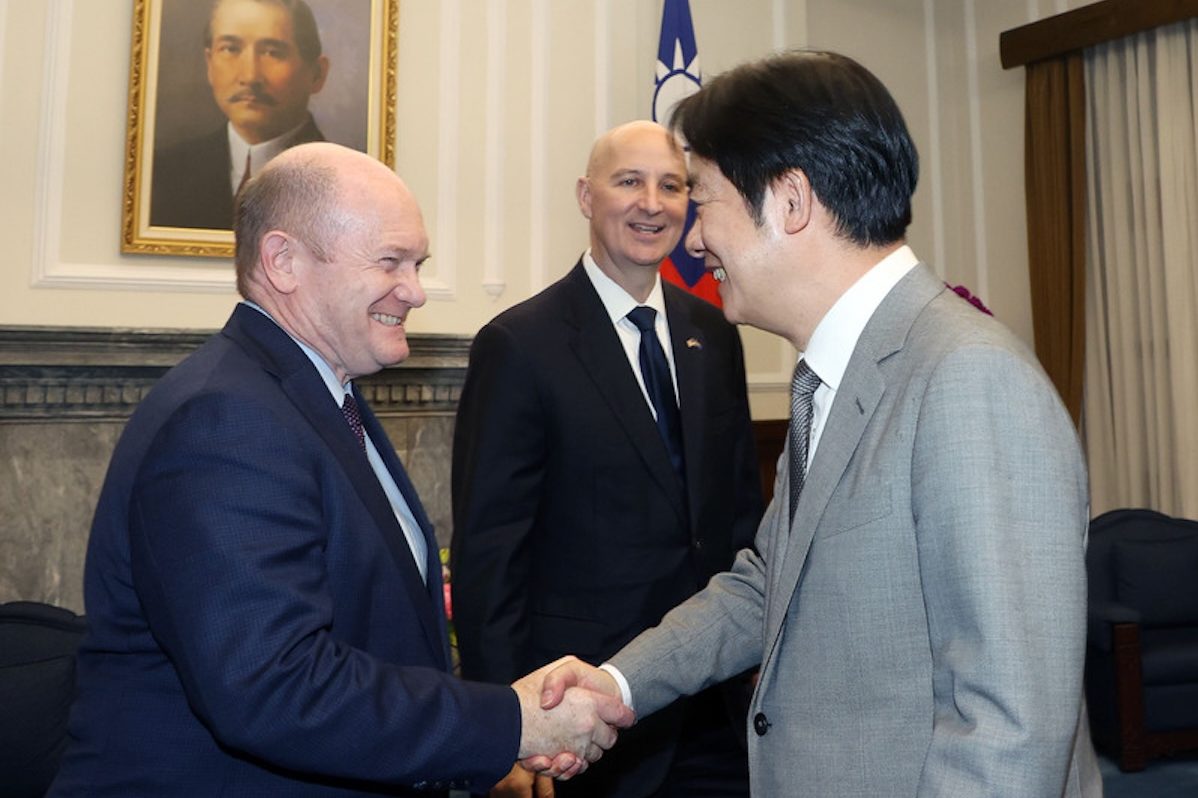
Against this turbulent historical backdrop, Taiwan’s diplomatic corps, deployed across a large Washington representative office and 13 regional liaison posts across the U.S., has long prioritized cultivating bipartisan American support, recognizing that U.S. domestic political dynamics, particularly the role of Congress, exert far more influence over Washington’s Taiwan and China policy than any other Indo-Pacific policy portfolio. For nearly a decade, Taiwan has reaped substantial benefits from Washington’s broader strategic pivot away from decades of engagement with Beijing, as bipartisan consensus hardened to counter multifaceted Chinese geopolitical, economic and military challenges, bringing unprecedented levels of U.S. military aid, economic cooperation and diplomatic backing to deter coercive cross-strait actions targeting Taiwan.
The post-midterm election landscape in the U.S. presents a nuanced mix of risks and favorable outcomes for Taiwan. On the side of near-term concerns, Taiwanese officials have noted that a cohort of long-serving, reliably pro-Taiwan congressional incumbents lost their seats, replaced by freshmen legislators with limited familiarity with cross-strait dynamics. A small faction of newly elected populist Democrats, aligned with a longstanding small but influential Republican isolationist bloc, has signaled intent to scale back overseas U.S. commitments to prioritize domestic U.S. social and economic welfare.
However, these concerns are largely offset by structural constraints that significantly limit the ability of former President Donald Trump to make unilateral concessions on Taiwan to court Chinese leader Xi Jinping, after a year of repeated high-level summit engagements between the two leaders dating back to October 2025, with a further meeting scheduled at the December 2026 Miami G20 summit. Over that period, Trump has repeatedly sidelined Taiwan’s interests, delaying a $14 billion approved arms sales package for more than a year as a purported bargaining chip, and openly advocated for a new “G2” bilateral U.S.-China governing framework that would allow the two superpowers to set global agenda terms, a structure that Beijing could easily exploit to erode Taiwan’s status.
As previously outlined in a July 2025 analysis for Think China, Trump faces insurmountable domestic barriers to any formal deal that sacrifices Taiwan’s security: large bipartisan majorities in Congress have spent years leading the shift toward a tougher U.S. posture on China, and remain far more consistent in their pro-Taiwan stance than the transactional former president. Even the Biden administration, which entered office with initially dismissive views of Chinese strategic risks, shifted rapidly after national security briefings to join the congressional-led “Washington Consensus” focused on countering Chinese challenges and supporting Taiwan.
The 2026 midterm results have further amplified these constraints: the Republican caucus, led by Vice President JD Vance, has increasingly distanced itself from Trump’s controversial outreach to Xi, while long-serving Democratic leaders including decades-long China critic Senate Majority Leader Charles Schumer have clear partisan and substantive incentives to aggressively block any unilateral concessions on Taiwan. The incoming leaders of key congressional oversight committees, including Senate Foreign Relations Committee chair Chris Coons, Senate Armed Services Committee leaders Jack Reed and Roger Wicker, Senate Appropriations Committee leaders Patty Murray and Lisa Murkowski, and House counterparts Gregory Meeks, Rosa Delauro and Adam Smith, all have well-documented track records of supporting U.S. alliances and pushing back against Chinese assertiveness, mitigating the risk posed by inexperienced freshman legislators. The small populist isolationist faction within the Democratic caucus remains a distinct minority, outvoted by a large bloc of moderate Democrats from red states who reject retrenchment from U.S. Indo-Pacific commitments. Even Beijing has no confidence that any last-minute promises Trump makes regarding Taiwan would survive his remaining term, eliminating any incentive for Xi to make meaningful concessions to give Trump a diplomatic “win” at Taiwan’s expense.
While disruptive, unscripted actions from Trump could still introduce unforeseen volatility to the landscape, the overall post-midterm trajectory remains broadly favorable to Taiwan’s security and international status in the near term. This analysis is contributed by Robert Sutter, a professor of international affairs at George Washington University with 33 years of U.S. government service focused on China and Indo-Pacific policy, and author of the 2024 book *Congress and China Policy: Past Episodic, Recent Enduring Influence* published by Lexington Books.