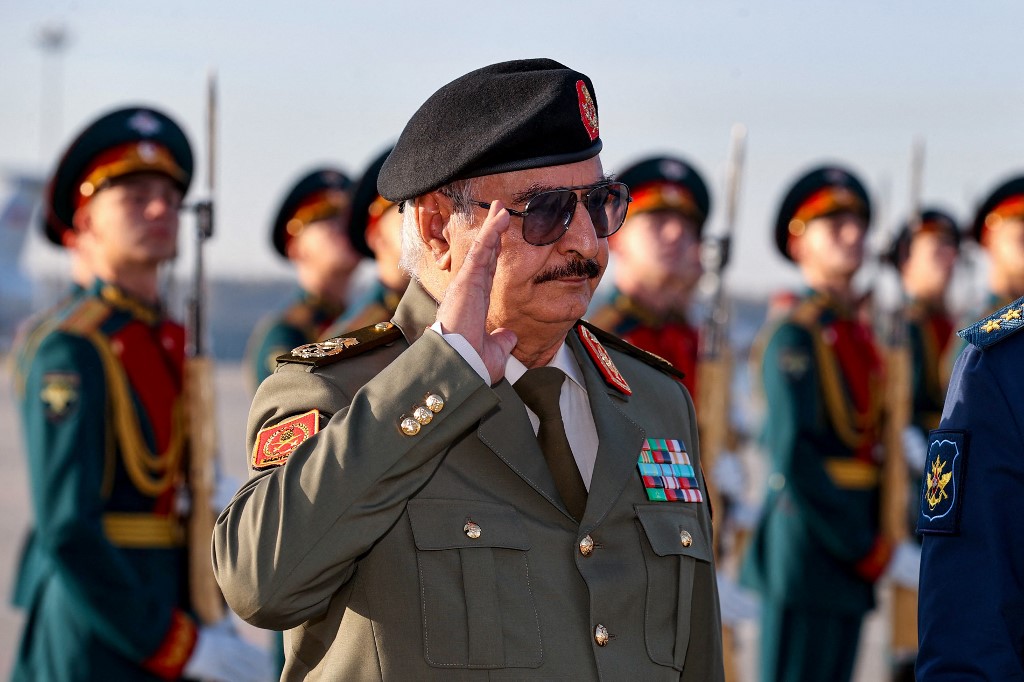
On Tuesday, prominent Libyan military commander Khalifa Haftar landed in the Turkish capital of Ankara for an official visit, two Turkish sources with direct knowledge of the arrangements confirmed exclusively to Middle East Eye. Reuters corroborated the arrival, noting the trip was extended via a formal invitation from the Turkish national government. Scheduled high-level engagements for Haftar, who serves as the de facto ruler of eastern Libya and head of the Libyan Arab Armed Forces (LAAF), include a closed-door meeting with Turkish President Recep Tayyip Erdogan, per one of the anonymous Turkish sources. The diplomatic encounter caps off years of steadily warming bilateral ties between Ankara and Haftar’s eastern Libyan administration, a relationship that has grown especially robust through deepened personal and institutional connections with Haftar’s son, Saddam Haftar. The momentum for closer cooperation accelerated last month, when Libya’s eastern parliament formally ratified a landmark maritime delimitation framework with Turkey, a milestone that formally opened a new, more collaborative chapter in bilateral relations. Tunc Demirtas, a regional affairs specialist at the Ankara-based SETA think tank, shared with Middle East Eye that Turkish authorities are actively planning to host Libya’s internationally recognized Prime Minister Abdul Hamid Dbeibeh in the near future, potentially aligning Dbeibeh’s trip with Haftar’s ongoing Ankara visit to create a direct, face-to-face mediation opportunity between Libya’s two rival power blocs. “Ankara has long prioritized its ‘One Libya’ strategic objective, and these coordinated high-level visits carry significant weight to break the long-running political and security deadlock that has fragmented the country for over a decade,” Demirtas explained. The analyst also revealed that President Erdogan is scheduled to travel to Libyan territory in December to attend the upcoming Turkey-Africa Summit, marking a major high-level diplomatic foray into the North African nation. The flurry of diplomatic activity follows a meeting over the past weekend in Istanbul, where Prime Minister Dbeibeh held separate constructive talks with Turkish Foreign Minister Hakan Fidan and Turkey’s national intelligence chief Ibrahim Kalin. Demirtas emphasized that growing regional spillover from the ongoing Russia-Ukraine conflict in international waters adjacent to Libya has further underscored the urgent necessity of establishing lasting stability across Libyan territory. He argued that durable, long-term security in the North African nation and its surrounding maritime zones can only be achieved through full national unification of its competing governing and military factions. The urgency of the maritime security concern was amplified just one day before Haftar’s arrival, when Ukrainian President Volodymyr Zelensky announced that Ukrainian naval forces had sunk a Russian corvette and a civilian cargo vessel operating off Libya’s western coastal waters. For months, Turkey and the United States have been engaged in coordinated backchannel negotiations to broker a full merger between Libya’s two competing military bodies: one force aligned with the Tripoli-based interim government in western Libya, and Haftar’s Benghazi-based Libyan Arab Armed Forces in the east. A previous attempt to finalize the unification deal collapsed last month after negotiating parties failed to reach consensus on the final text of the proposed framework. That mediation effort builds on a separate US-backed multilateral agreement, co-facilitated by Turkey and other regional stakeholder states, that representatives from Libya’s two rival political camps formally signed in Tripoli this past August. The terms of that August accord set a clear two-year timeline for holding nationwide presidential and legislative elections to establish a single, unified national governing body for the entire Libyan state.